After last year’s Laureato Fifty and Fifty Three Gold Bridges Tourbillon reveal, Girard-Perregaux opened 2026 with an impressive launch of time-only Fifty models, scaling the collection’s core lines and GP4800-based architecture to 39 mm and 36 mm sized cases.
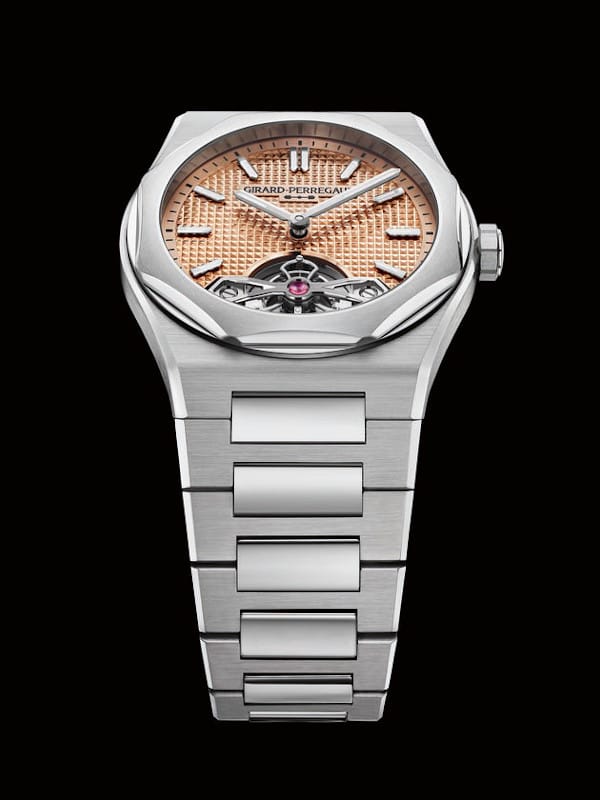
Late summer brings its most compelling addition yet: the Laureato Fifty Tourbillon Micro-Rotor 39. It extends that product philosophy to a high complication, applying the same design cues that have established the Fifty collection. And, in my view, here is the boldest Laureato Fifty ever.
From Laureato to Laureato Fifty 39
Girard-Perregaux has not revolutionised the Laureato. After five generations—the latest introduced in 2016 for the model’s 40th anniversary—the Fifty incorporates the long-standing Laureato DNA. The new one keeps the current titanium Laureato Tourbillon’s base layout.
Placed side by side, they look similar; still, the generational change is evident, inside and out.
Fifty has expanded, yet not replaced, the Laureato. The standard Laureato continues to fill the brand’s catalogue, along with the chronograph. We can’t wait to see the upcoming edition marking the brand’s new Williams Formula 1 partnership.
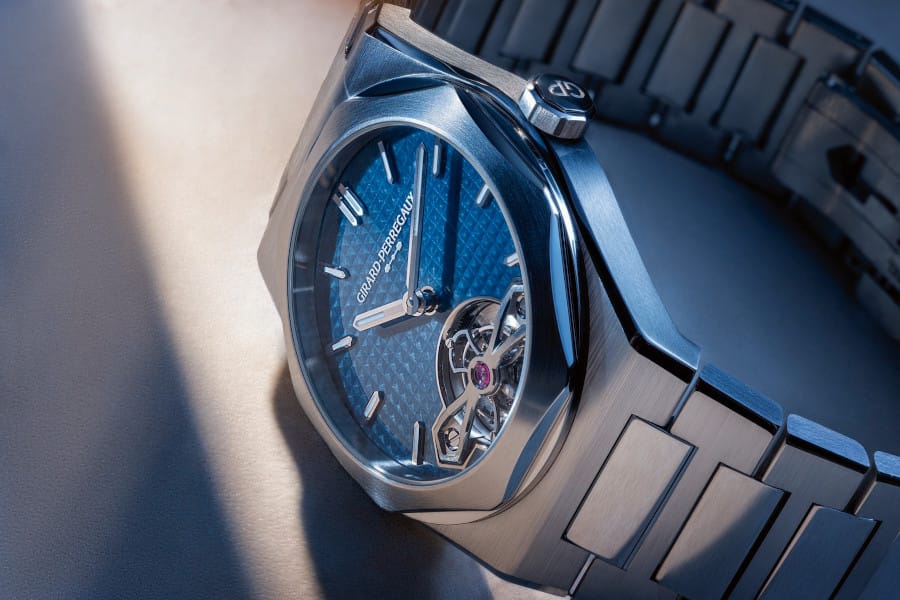
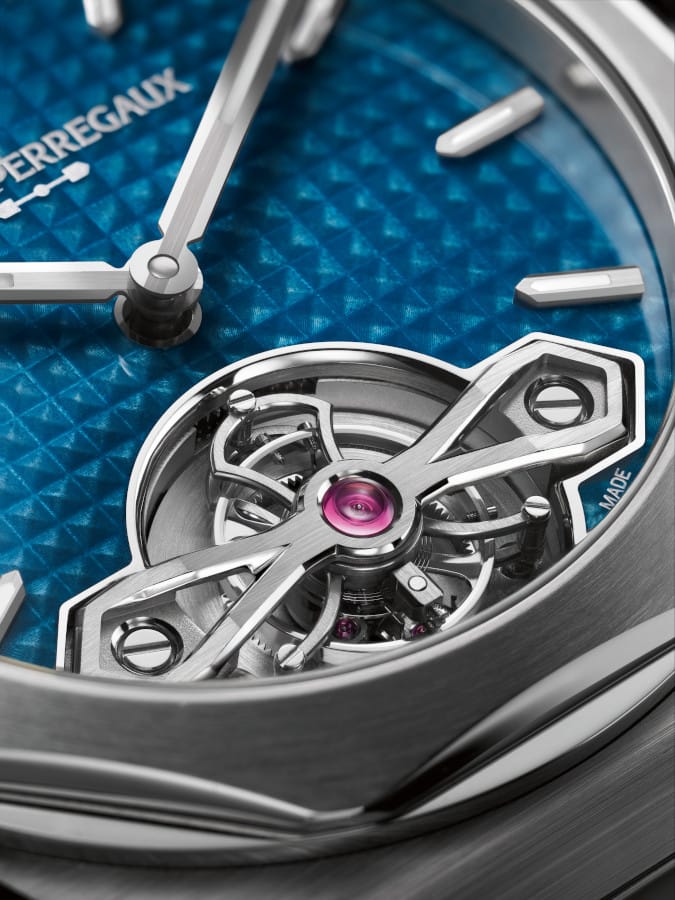
Meanwhile, the Laureato Fifty Tourbillon Micro-Rotor 39 builds upon the Laureato Tourbillon’s familiar architecture: a lyre-shaped cage at 6 o’clock, a bridge echoing the GP logo, and Clous de Paris decoration are all where you’d expect them to be. And a micro-rotor keeps winding the barrel, too.
What’s new
The design has evolved, bringing Neo Bridges‘ design language to the Laureato. It sharpens the contrast between classical and neo-vintage watchmaking, edgy design and finely executed details that enhance both perceived and actual quality. The movement is slimmer, the case more refined, and the bracelet, with its micro-adjustment, ensures superior comfort.
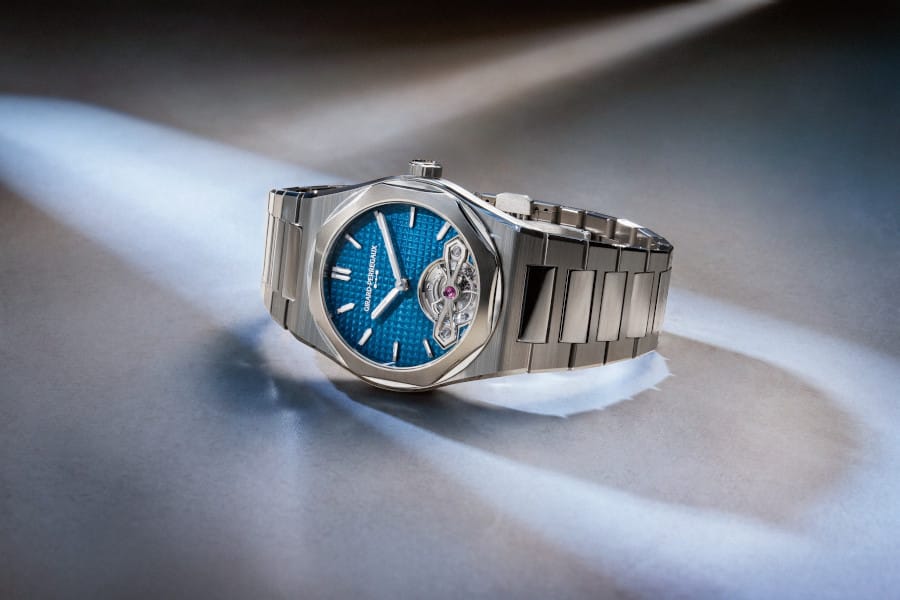
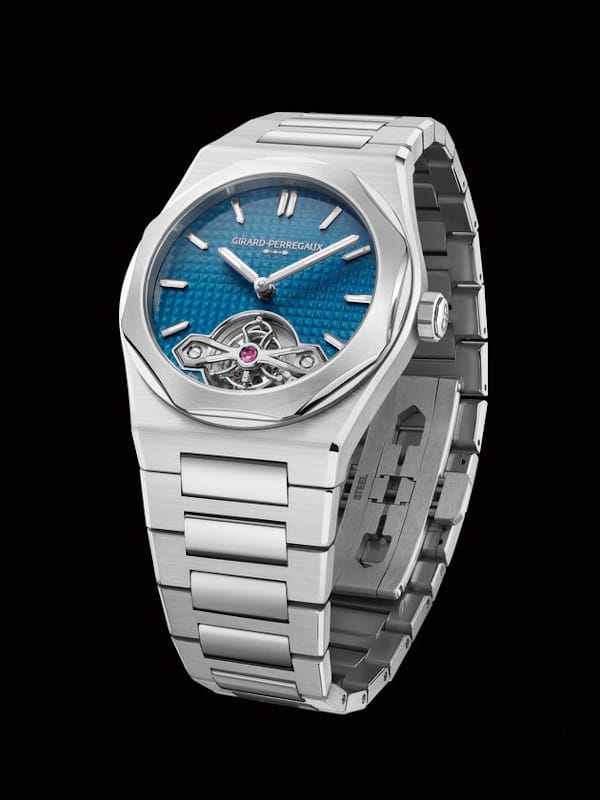
The Neo Bridge design modernises the dial without affecting the Laureato’s identity. Paired with the blue Grand Feu enamel dial, the white-gold bridge feels as striking as it is restrained. The watch measures 39.00 mm across and 10.00 mm thick—a remarkable achievement.
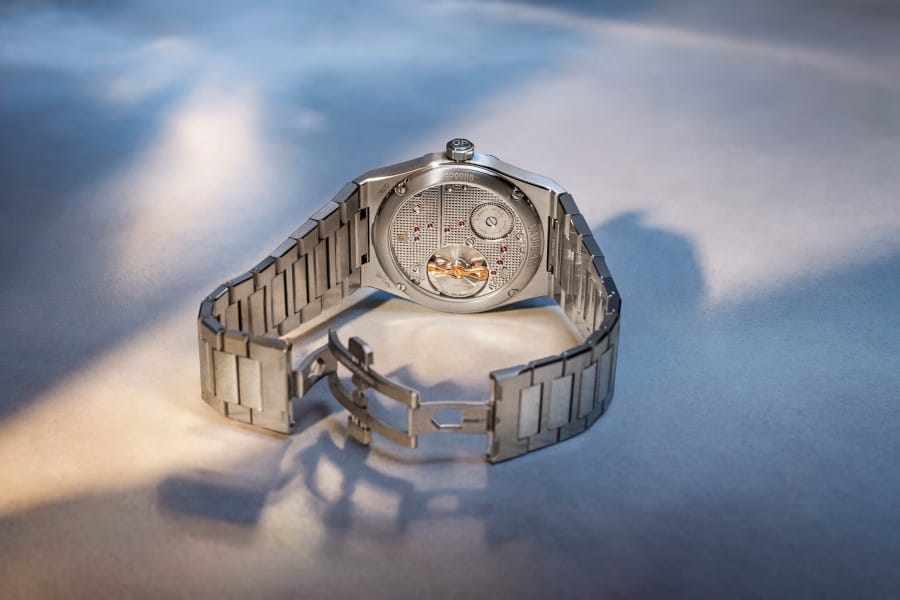
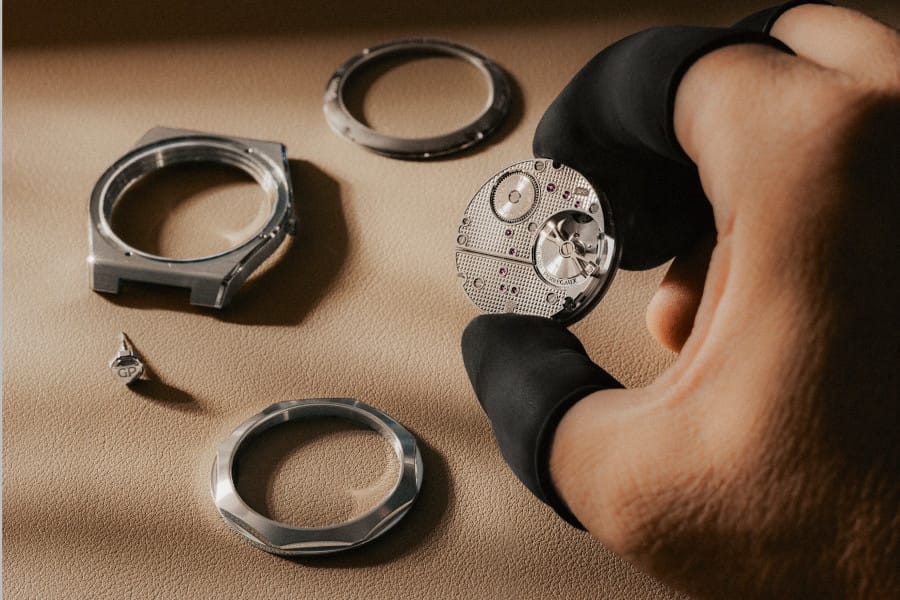
The new GP8410 calibre makes it thinner, more refined, and more capable, while delivering a 72-hour power reserve. The movement-side Clous de Paris guilloché is unique and leaves you speechless for a while. It clearly mirrors the dial’s texture and extends from front to back.
A Neo Bridges-style bridge is echoed on the movement too, set above the small platinum oscillating weight winding the barrel. Both options come on a bracelet with a butterfly clasp, but their characters are different.
The rose-gold dial is a more classical choice; the Grand Feu enamel version is sportier and more tempting. Its Clous de Paris texture softens the glossy effect often associated with enamel—and slightly too much for me.
Final thoughts
Expectations are always high for a brand that was among the first to develop Breguet’s invention. Girard-Perregaux has respected the Laureato’s DNA, as the first Fifty did, while making tangible progress in and out.
This shows real creative and technical momentum at GP—perhaps the brand’s strongest in the modern era. Reworking a collection as rooted and established as the Laureato is always a risk. Yet the Fifty collection underscores the brand’s clear vision and an Indie watchmaker’s approach—a mindset Girard-Perregaux has fully embraced.
(Photo credit: Horbiter®, Girard-Perregaux)
In this article:
Rotor
Part of an automatic watch that winds the mainspring by constantly rotating. Depending on the watch's winding capability, movement design, and value, it comes in various geometries, sizes, and materials.…
Complication
The addition of any mechanical complication to a movement that usually displays the time.
Chronograph
Complication that helps the wearer to measure time intervals without affecting the watch's standard time-telling function.
Barrel
It is a cylindrical metal box closed by a cover that contains a spiral spring called the mainspring, which provides energy to run the timepiece.
Case
It encases the mechanical movement and is crafted in one or more parts. It can also be a single piece, as with some professional diving watches, or made of unconventional…
Power Reserve
A mechanical watch feature displays, on the dial or the case back, the remaining power in a watch movement, showing the length of time until the timepiece must be rewound.
Calibre
A calibre is the type of watch movement encased in an assigned timepiece. Its name is usually associated with the manufacturer's name and a standard code, e.g., ETA 2824.