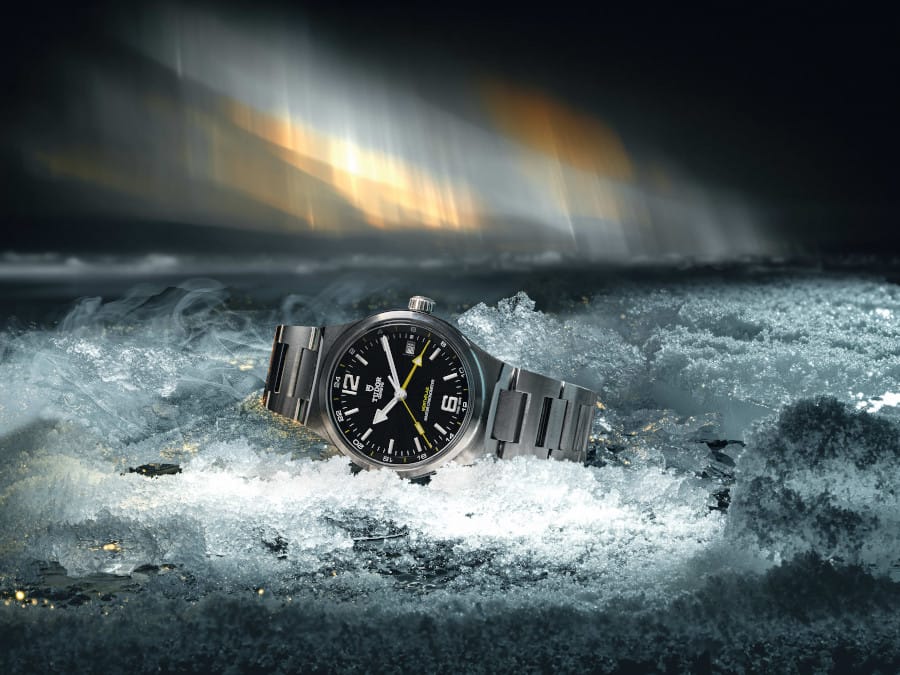
We were with Tudor when it revealed the Northflag more than a decade ago. Back then, it was an unknown name to the watch community; still, it ushered the brand into a new era.
Tudor has evolved painstakingly ever since. Design codes, brand image, and full verticalization have come, marking a giant leap in development as we look back. That watch drew a line between old and new Tudor watches.
The original Northflag kicked off Tudor’s verticalization process, proving the company could design and develop a timepiece end to end, including the mechanical movement.
After a decade driven by the Black Bay, Pelagos, and Royal product lines, the 2026 Northflag adds to the Master Chronometer-based offering while closing the circle.
Putting the Northflag in Context
Let alone a Northflag’s source of inspiration, being the 1970s Ranger II, the newer Northflag combines the explorer’s-watch product philosophy with an all-around value proposition: that is, a capable, everyday sports watch on an integrated H-link bracelet and a late 1970s to early 1980s popular design.
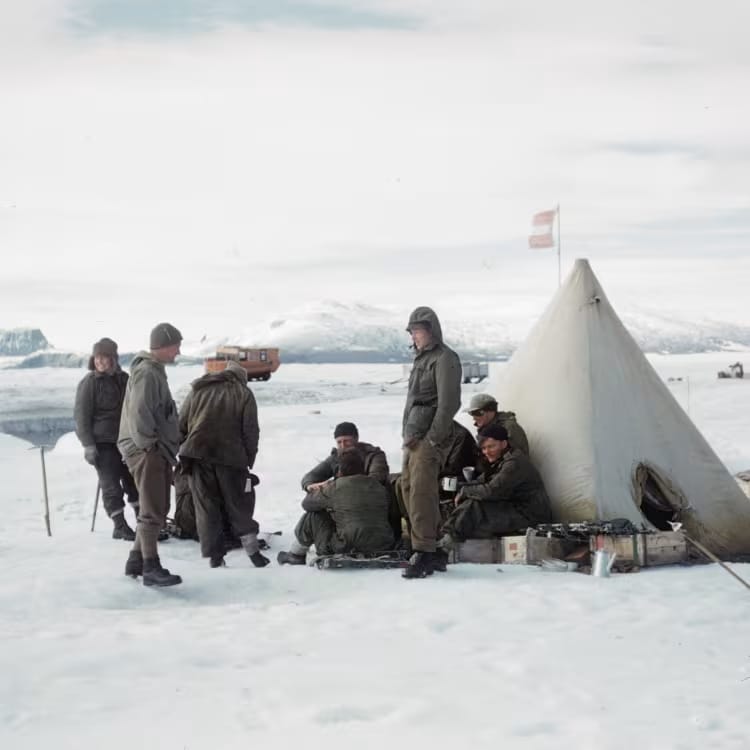
Tudor Ranger II (source: Pandolfini)
The first Northflag was never meant to be a head-turner, and when the Black Bay came, it rapidly became Tudor’s bread and butter, with the Northflag quietly slipping away from the product portfolio.
It now strikes back under a new light. Tudor has since expanded its manufacturing capabilities, sharpened its brand identity, and firmly established itself as an independent, industrially based watchmaker.
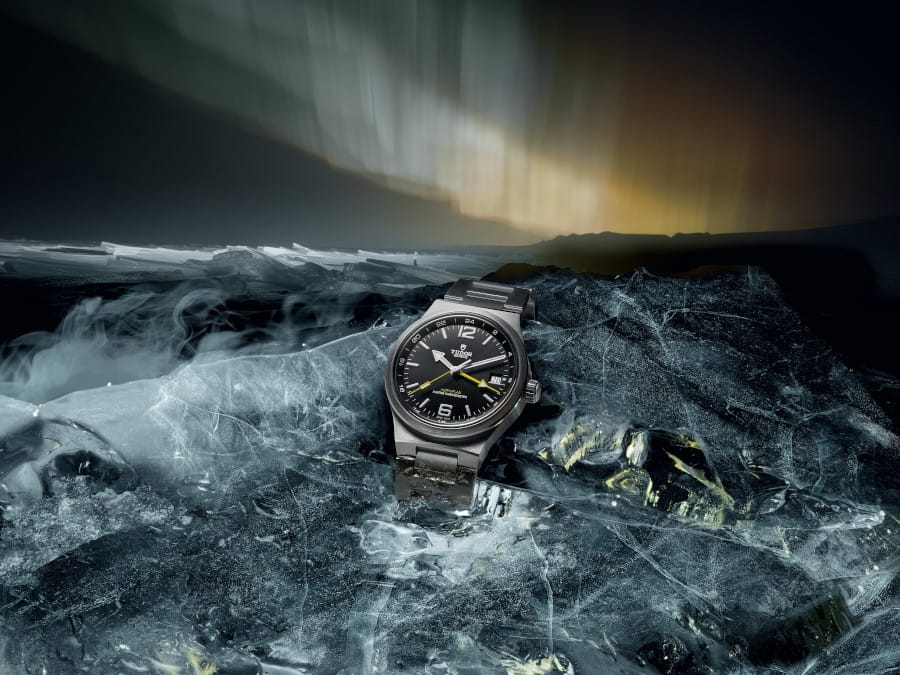
The Tudor Northflag Master Chronometer
The new Northflag keeps the original character. It is a clean, well-proportioned, and restrained wristwatch that fits seamlessly into the current Tudor lineup.
That’s the kind of watch you’ll wear anytime, anywhere: practical, easy to set, and fit for nearly any circumstances. Such was the case with the original Northflag, and so it is today.
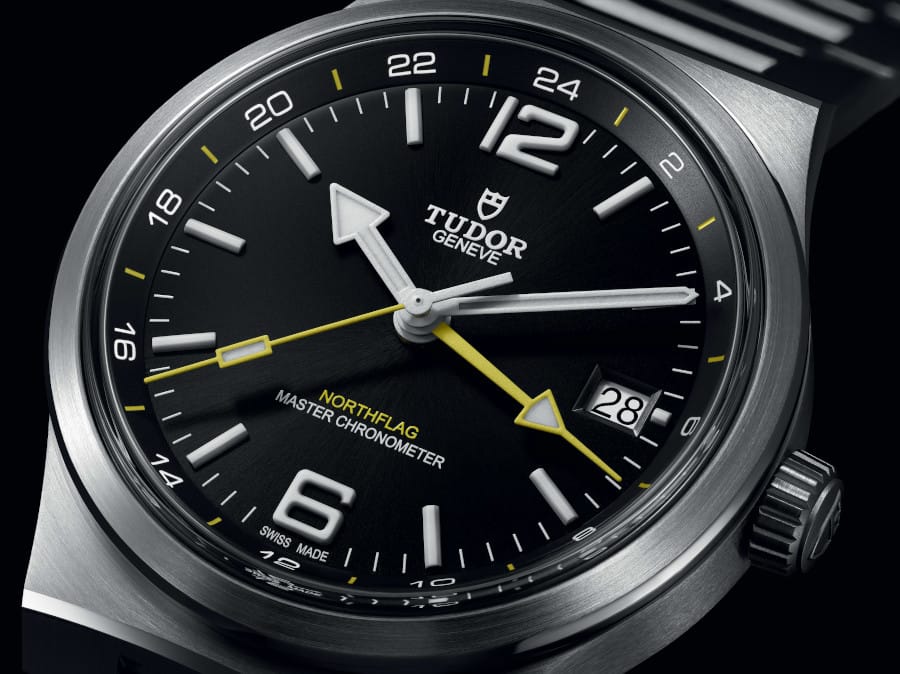
Tudor’s designers and product team refined that basic formula into a GMT with a matching 24-hour outer ring. Black and yellow were a Northflag’s signature colours and still are.
Still paying homage to the Original.
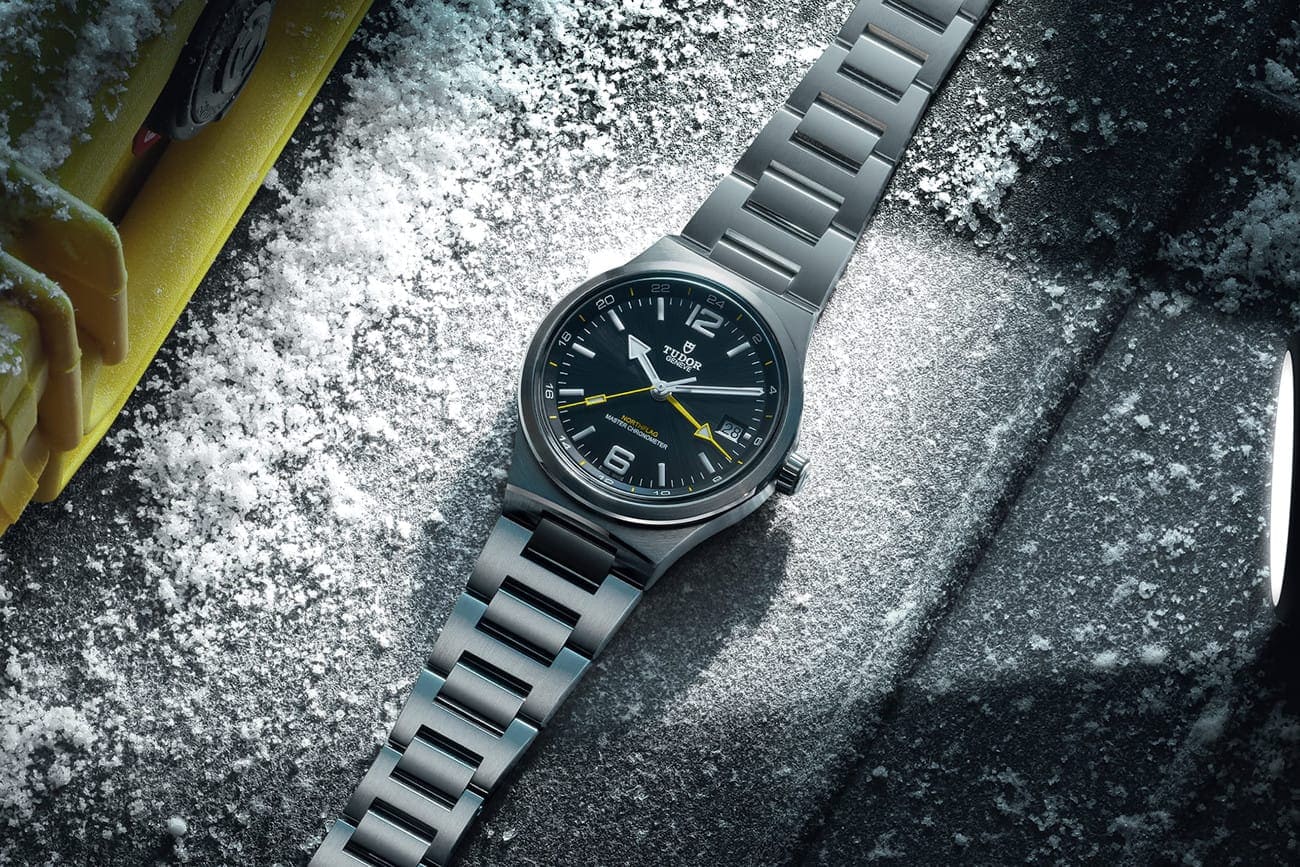
Tudor didn’t abandon the first Northflag’s silhouette. Instead, it used that as the foundation to develop a fresher model that shares some of the Monarch’s main traits and forward-looking design.
Sandblasted and micro-bead-blasted surfaces set the tone, giving it a titanium-looking feel. A few polished, sharp edges bring early-2000s IWC Aquatimer vibes.
The case is 40 mm in diameter and 12.7 mm thick. Domed sapphire crystals over both the dial and the exhibition caseback add depth and wrist presence.
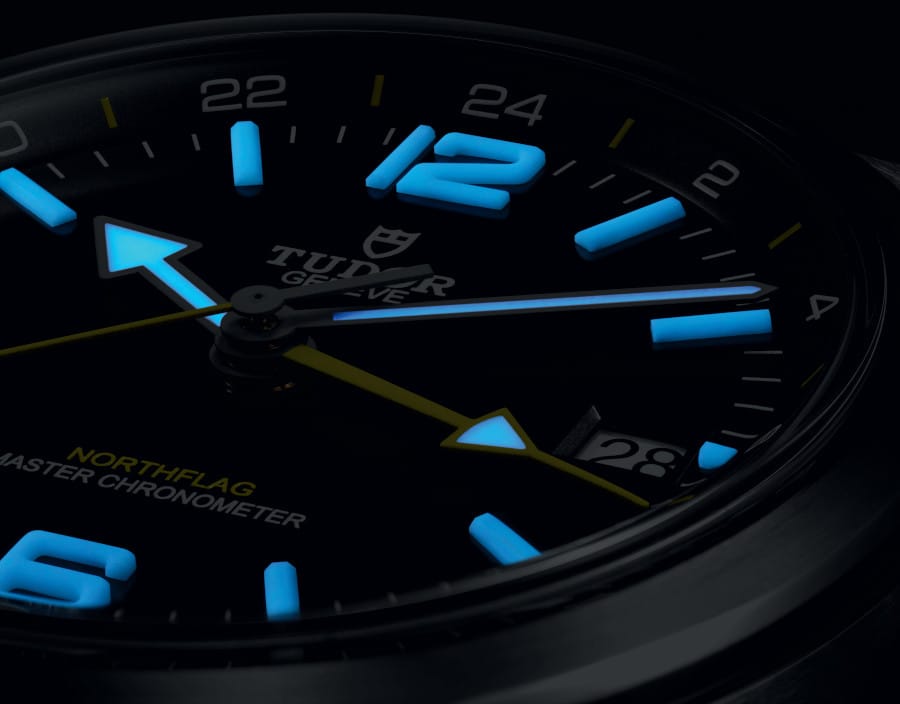
Tudor has boosted the dial’s 3D visual depth with raised luminous markers and Arabic numerals, surrounded by a 45-degree-inclined chapter ring.
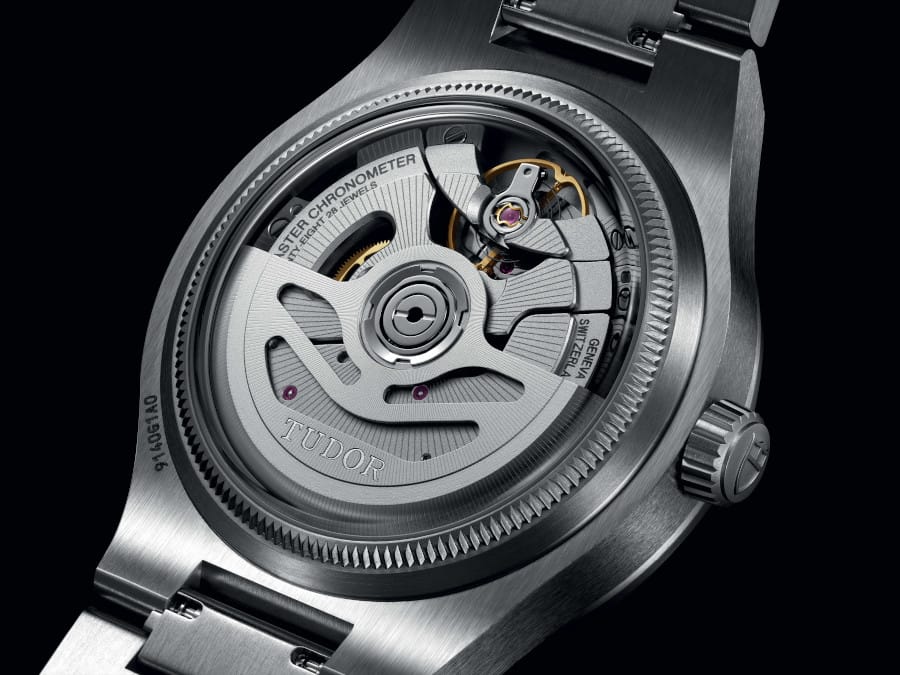
Gone are the ubiquitous snowflake hands, replaced by Northflag arrow-shaped hands, all glowing blue in the dark. With 100 meters of water resistance, a screw-down crown, and a manufacture movement delivering a 65-hour power reserve, the watch is Master Chronometer-certified.
The original Northflag was Tudor’s first watch to house a manufacture movement, displayed proudly through a sapphire caseback. This new model follows the rule. Still, a solid caseback would have been welcome, given the utilitarian, industrial look of the MT5652-U calibre.
First Impressions
Why did Tudor bring the Northflag back? First, I think Tudor clearly sees unexplored potential. And, as said, the brand needs to widen its portfolio beyond the Black Bay.
As it did with the Monarch, Tudor is building a new generation of models with a more contemporary look and state-of-the-art engineering. From that perspective, both the Monarch and the Northflag serve as a means to test and explore smoothly.
The 2026 Northflag addresses several of the original model’s shortcomings. It is more refined and detailed, and features a deep, highly legible dial. It also feels connected to Tudor’s current lineup while drawing a clearer line back to the Ranger II.
Technically, it bridges across Tudor’s diverse collections.
At its core, the Northflag remains a more rational choice: it includes modern Tudor pros, such as the excellent T-Fit clasp with its quick-adjustment and extension system, and is priced at €5,110.
(Photo credit: Tudor)
In this article:
Line
It is the measurement unit that identifies the size of a movement. According to this measurement system, one line corresponds to 2,255mm.
Chronometer
An instrument for measuring time very accurately. For any watch to be called a chronometer, it must meet the standards set by the C.O.S.C. (Contrôle Officiel Suisse des Chronomètres).
Case
It encases the mechanical movement and is crafted in one or more parts. It can also be a single piece, as with some professional diving watches, or made of unconventional…
GMT
It is the acronym for Greenwich Mean Time and identifies a complication capable of displaying two or more time zones on the dial. The complication usually couples a 24-hour rotating…
Power Reserve
A mechanical watch feature displays, on the dial or the case back, the remaining power in a watch movement, showing the length of time until the timepiece must be rewound.
Crown
Placed on the case side, it winds the mainspring. When pulled out, it also sets the time and the date. A screw-down crown increases water resistance and protects the movement…
Calibre
A calibre is the type of watch movement encased in an assigned timepiece. Its name is usually associated with the manufacturer's name and a standard code, e.g., ETA 2824.