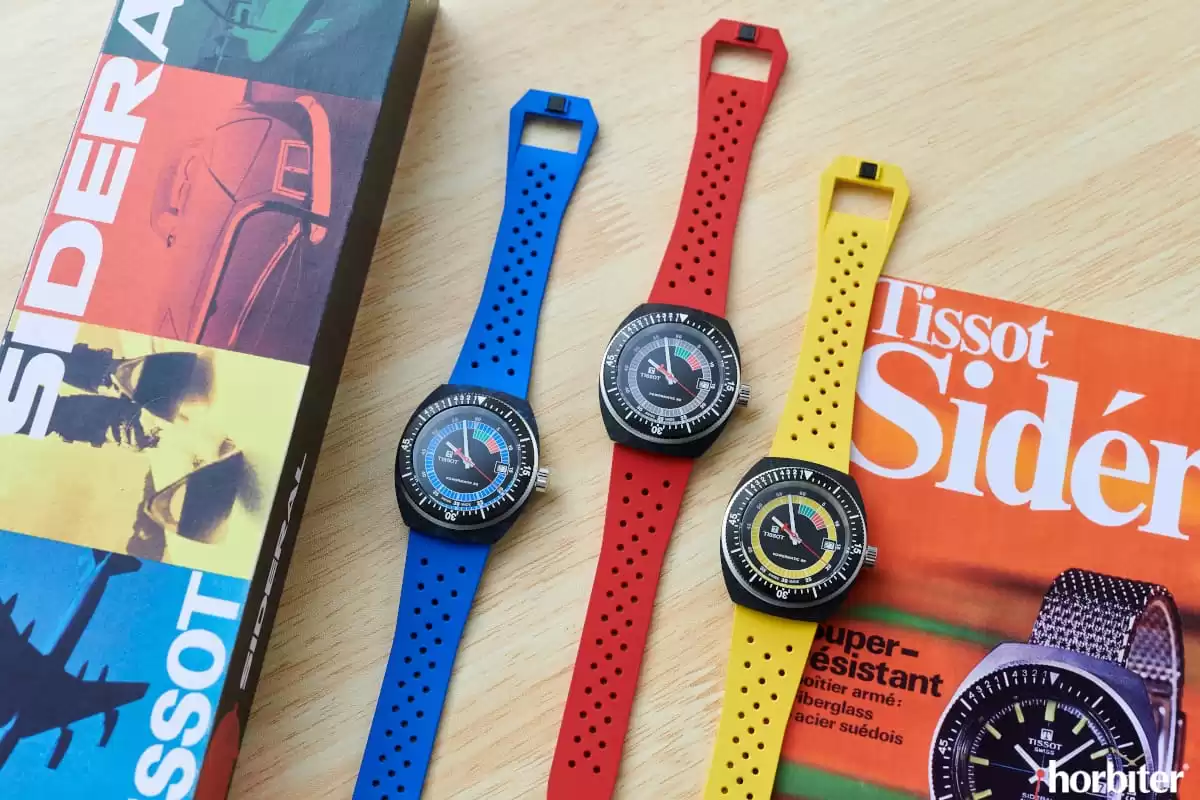
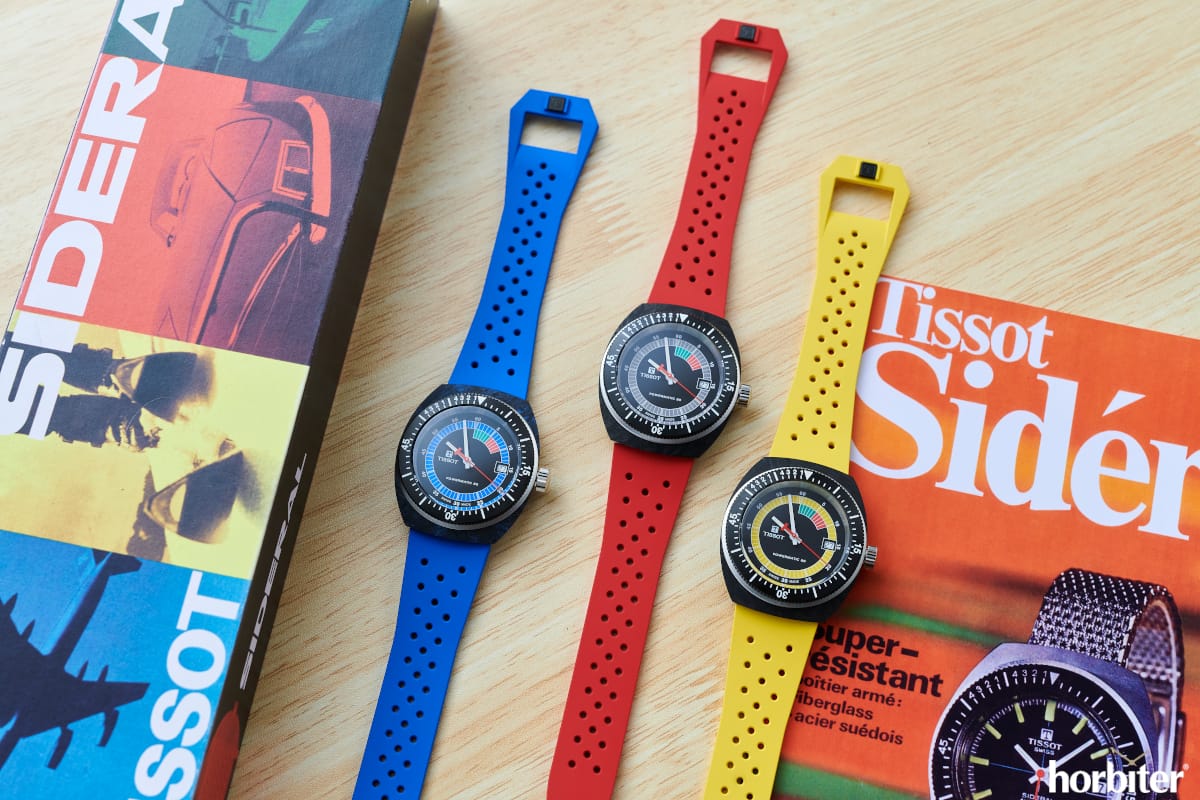
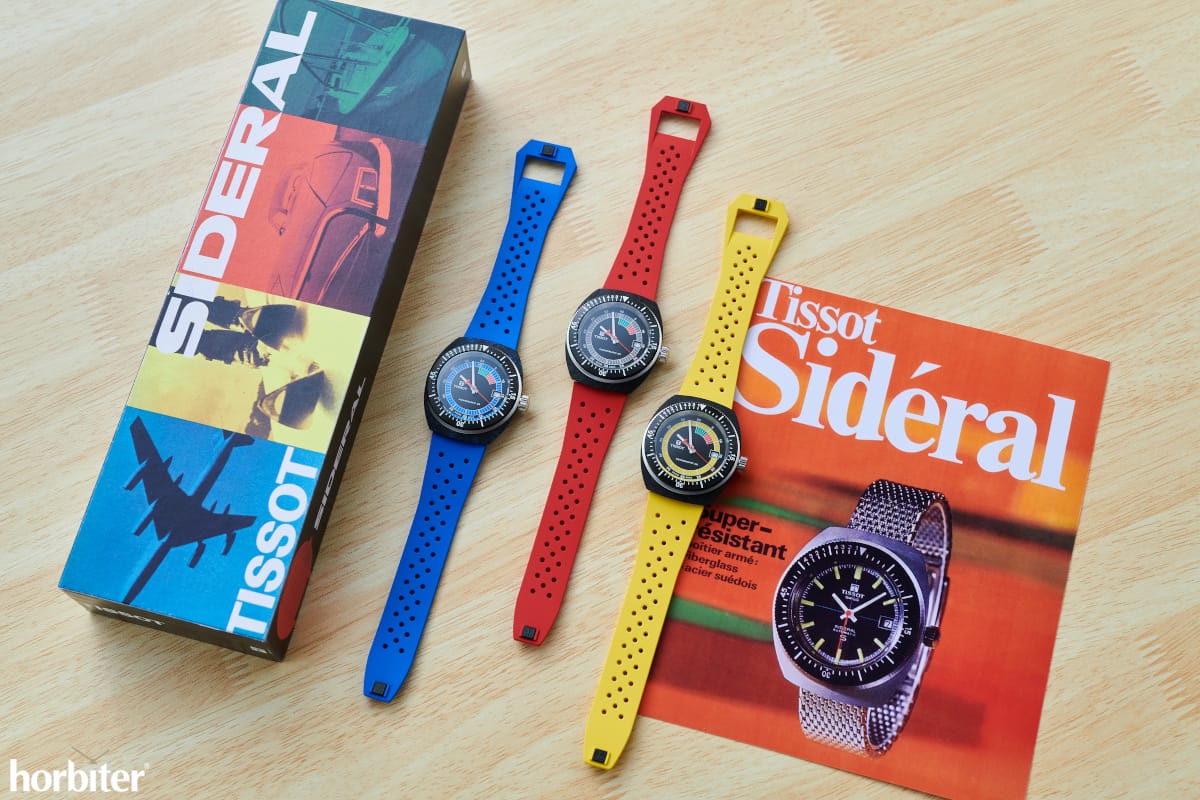
Launched in 1969, a landmark in history given the first moon landing and the rapidly-growing analogue-to-digital transition, the Tissot Sideral encompasses the brand’s DNA, whose foundation dates back to as early as 1853, but whose approach has always been visionary and constraint-free, boasting today every kind of timepiece, be it a pocket watch, a classic sports chronographs or a Touch-screen driven model.
While the PRX holds as the brand’s hero, Tissot is historically associated with out-of-the-ordinary watches, pioneering the industry with unexpected new materials and features, and the original Sideral is no different. From fashion to home design, space exploration or the first-ever commercial flight over Mach 1, the seventies stood as a turning point and fostered many advancements in technology and innovation.
Fiberglass became popular and widely used across several product categories, Swiss-made watchmaking included. As a pioneering brand, Tissot adopted fibreglass when engineering the first-gen Tissot Sideral, a one-case-piece three-hander, whose S (Sport) variant housed an odd-looking multi-perforated rubber strap when it hit the market. It ended up being a staggering market success.
Fast forward to 2023, while we’re close to getting back to the Moon and building space stations over there, as once envisioned by legendary TV series Spazio 1999, the Tissot Sideral still looks as contemporary as it gets, and the new collection fills the gap between new and old eras. The designers aimed to recreate the most modern yet faithful take on the Sideral S by preserving the original case shape and dial while introducing an array of new features which make the 2023 product a class of its own.
Welcome to Forged Carbon
Carbon fibre is widely used in most industries today; from aerospace throughout Formula One, up to America’s Cup yachts, such technology is mainstream, but what has perhaps made carbon fibre composites so popular (and less expensive, too) is forged Carbon better known as “Forged Composites”; here is Tissot’s option for the new Sideral’s case structure. Forged Carbon was invented by Italian engineer Paolo Feraboli who, since 2007, partnered with Lamborghini, the first outcome being the stunning Sesto Elemento concept.
Forged Carbon is a composite material where small pieces of carbon fibre are high-pressure compressed within a resin into a mould. The process allows manufacturers to engineer every kind of size and shape, whose appearance is a grey and black compound and unparalleled resistance to weight performance: on average, a final product’s density is one-third of titanium, while the mechanical resistance is higher.
Tissot is not the first brand to have adopted forged Carbon in the industry but now prides itself on being the first mainstream brand to make it large-scale and price-competitive. Why didn’t Tissot opt for ceramic instead? It would make it easier for them to mimic the original Sideral design. We assume that forged Carbon is quite as unique as fibreglass was back then. According to official sources, it took ten months of development to engineer the final case design.
Ceramic is impressive but not fitting the brand’s pioneering spirit, as much as a Rock Watch or an Astrolon Idea 2001, for instance. This product choice ranks Tissot among the few brands mastering Forged Carbon, including Audemars Piguet, which extensively adopted it and other notable boutique brands like Squale.
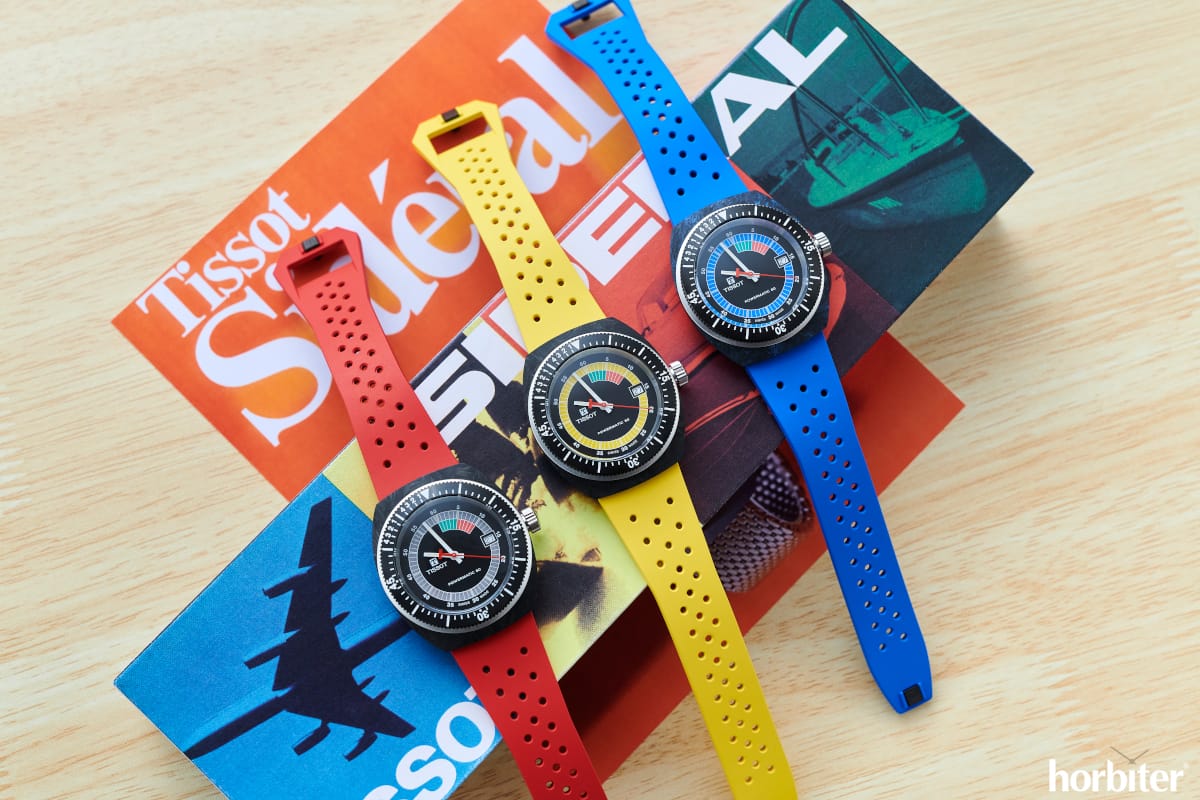
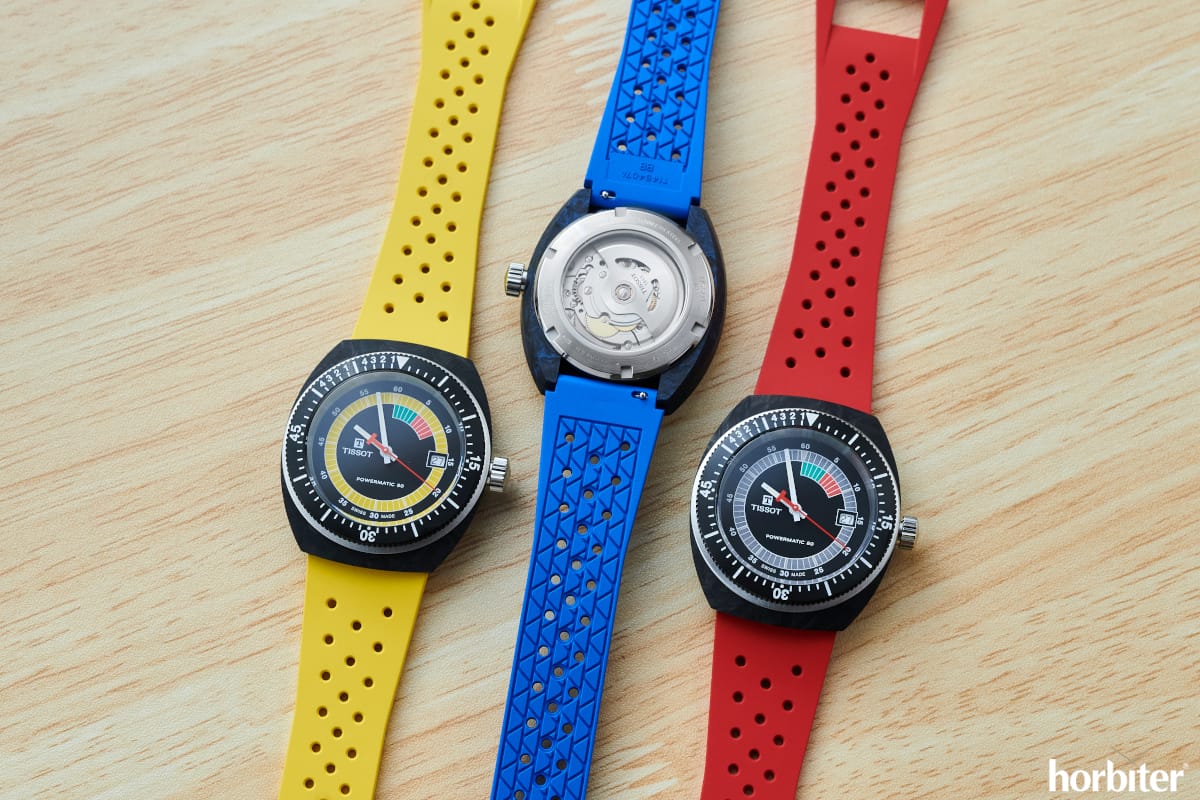
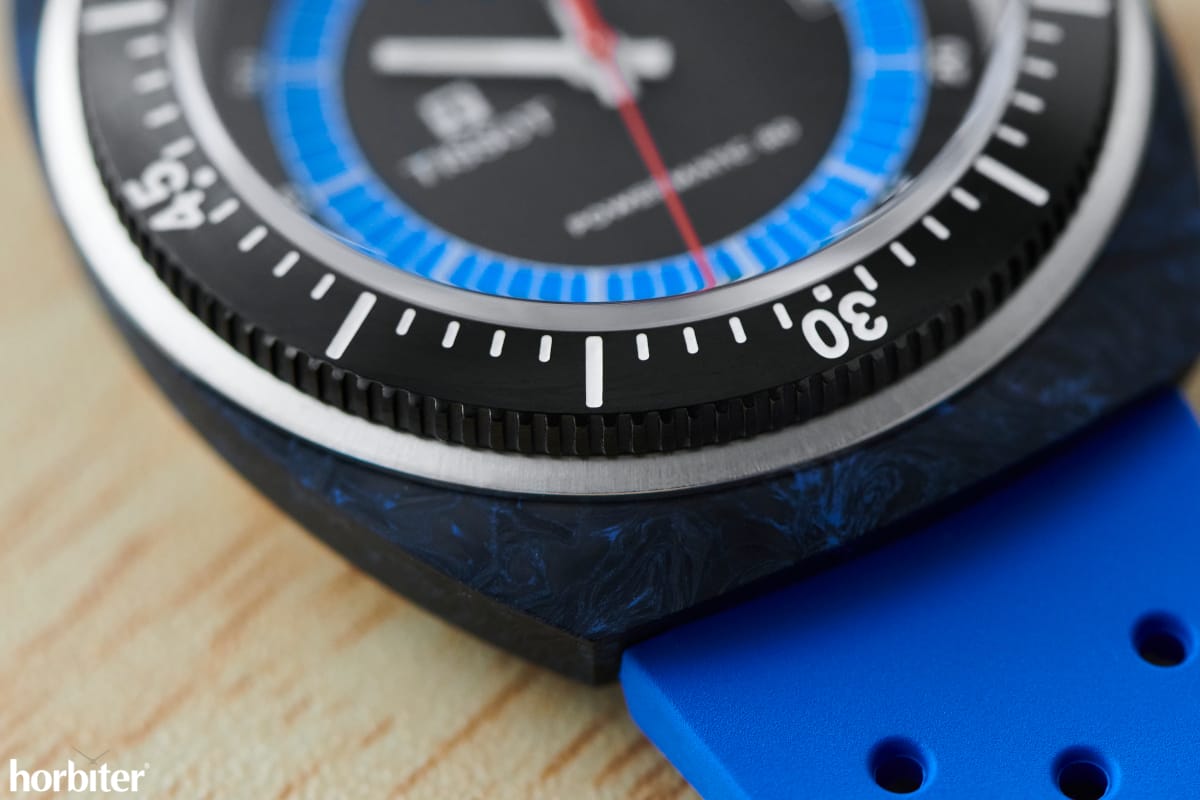
While not allowing the countless colour options you can get with ceramics, forged Carbon allows for some customization, as proven by the new Sideral’s blue option, whose texture includes blue pigments.
Case and bracelet
The new Sideral’s case measures 41,0 mm across and has a lug-to-lug distance of 46,5 mm, with the unidirectional rotating bezel measuring 39 mm across instead. According to our measurement, case thickness and overall weight are 13,9 mm and 91 grams, respectively.
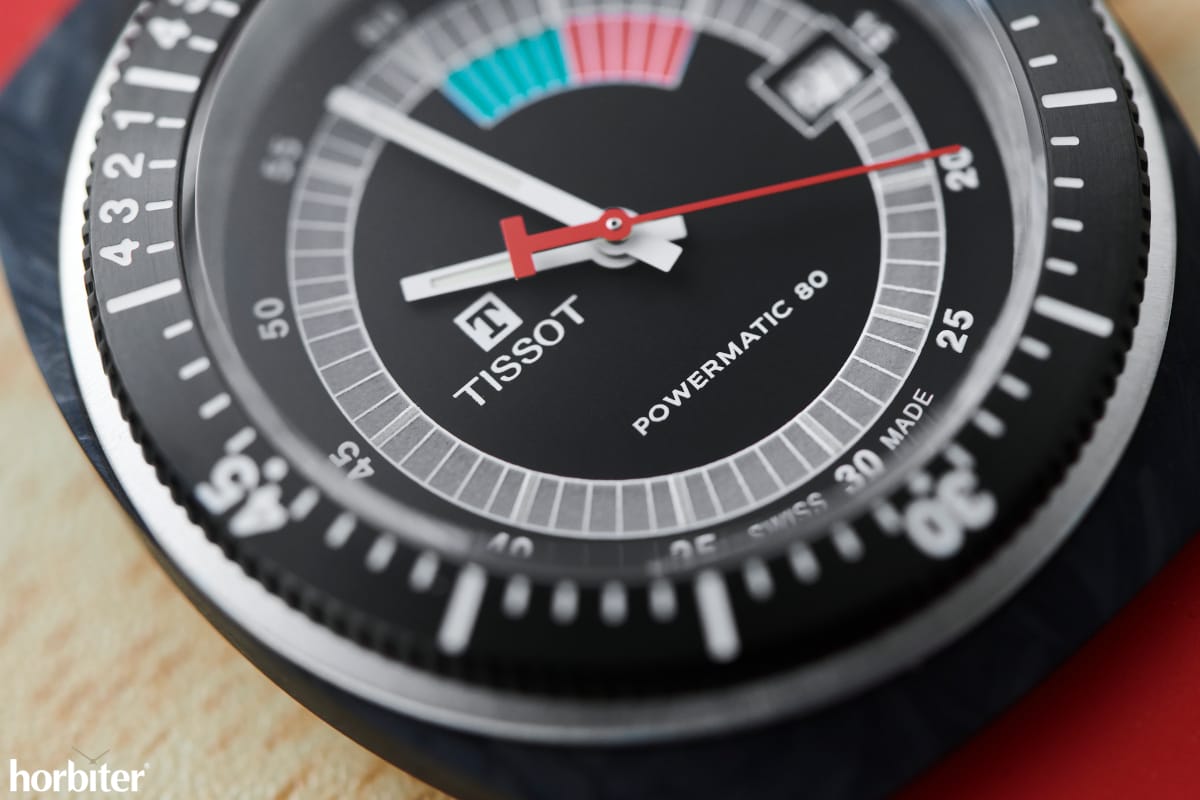
The unidirectional rotating bezel comes in PVD-treated steel and couples with a polished ring that works as a contrasting, finishing part as much as a means to hopefully improve the rotation.
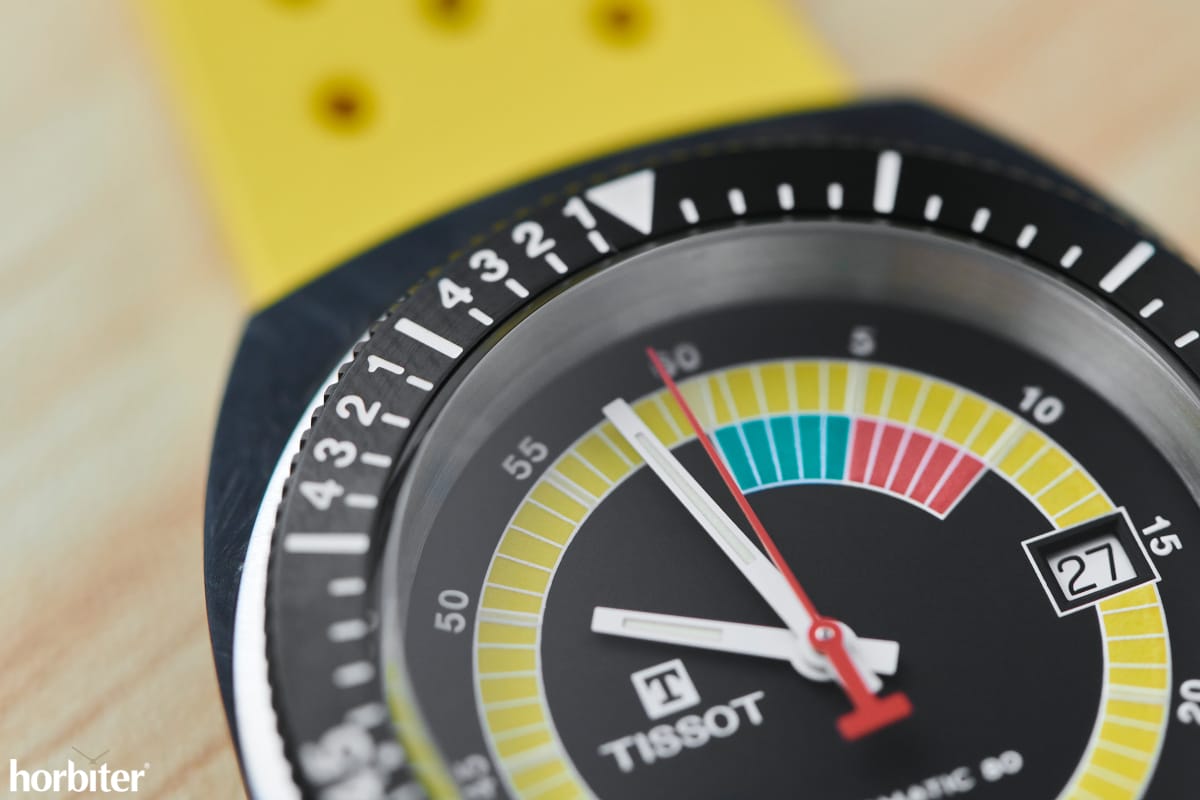
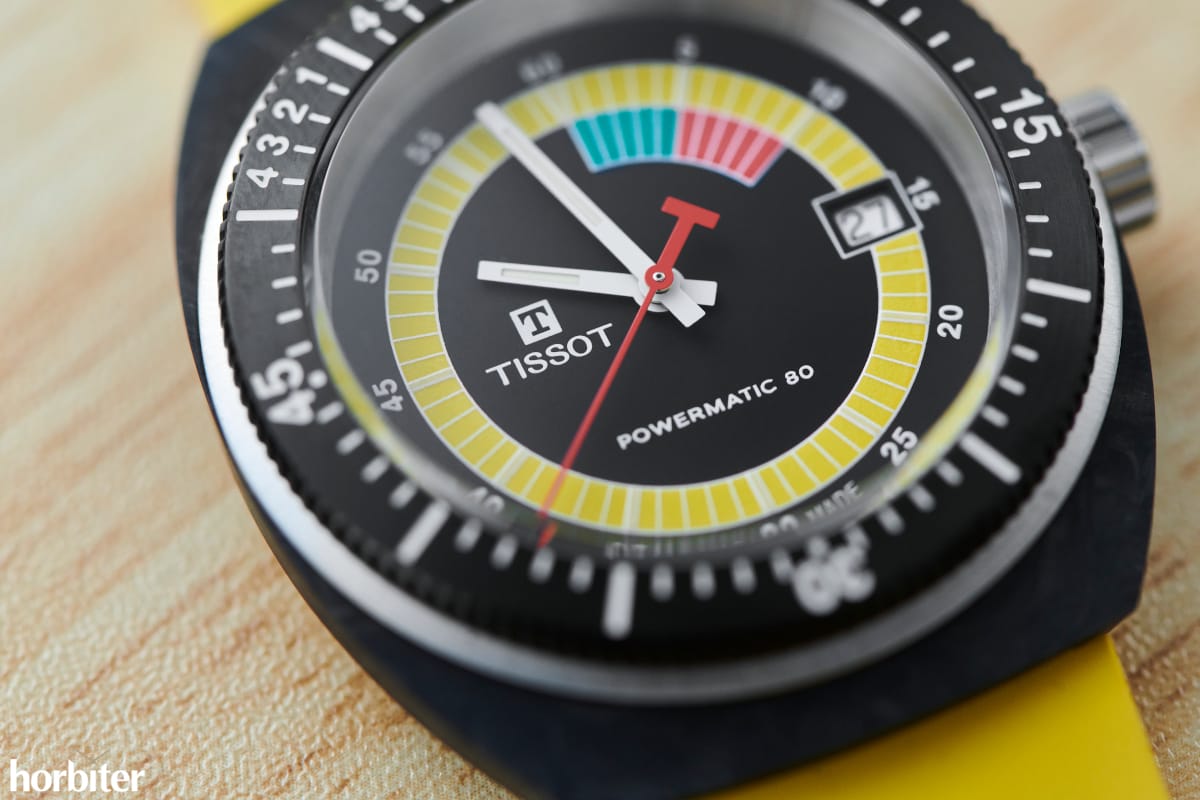
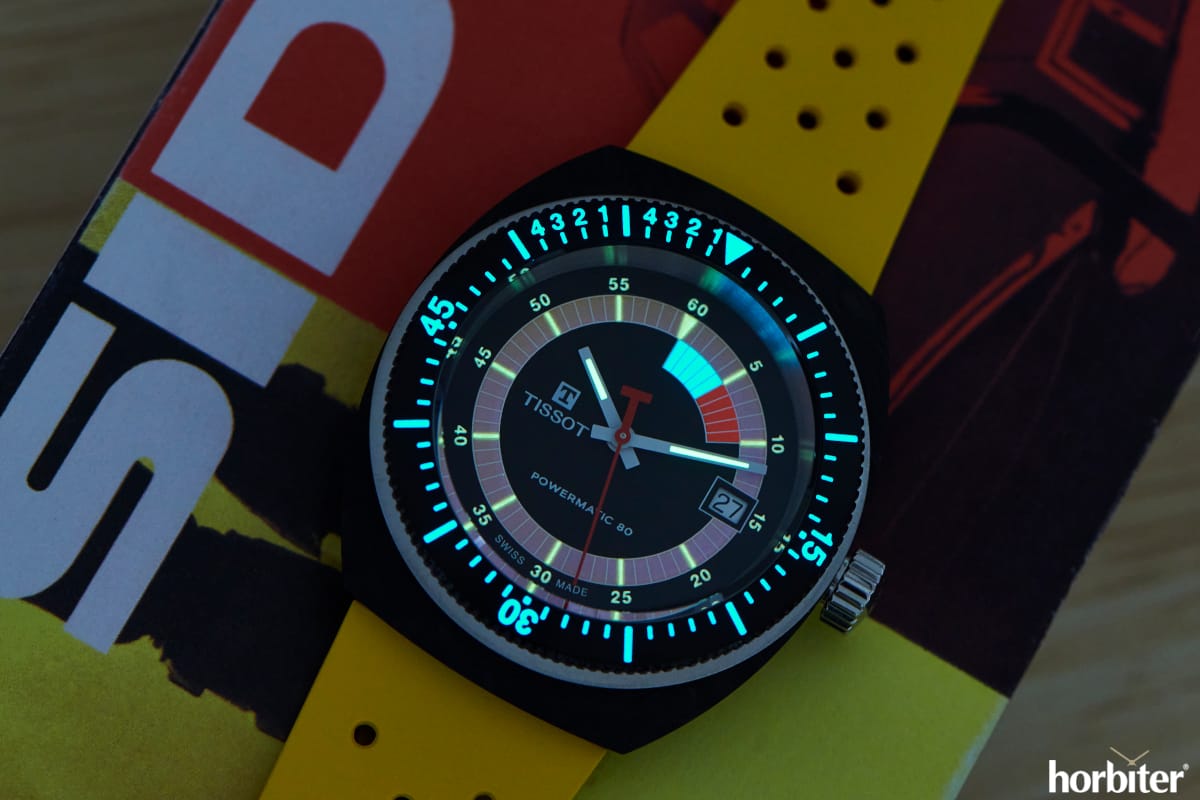
The new Tissot Sideral is waterproof up to 300 meters and comes equipped with a regatta gauge represented by a green and red coloured sector on the dial, plus a five plus five minutes countdown markings on the bezel. The Regatta gauge is filled with Super-LumiNova®, as are the baton-shaped hands. Once again, the 2023 Sideral confirms its multi-purpose pedigree.
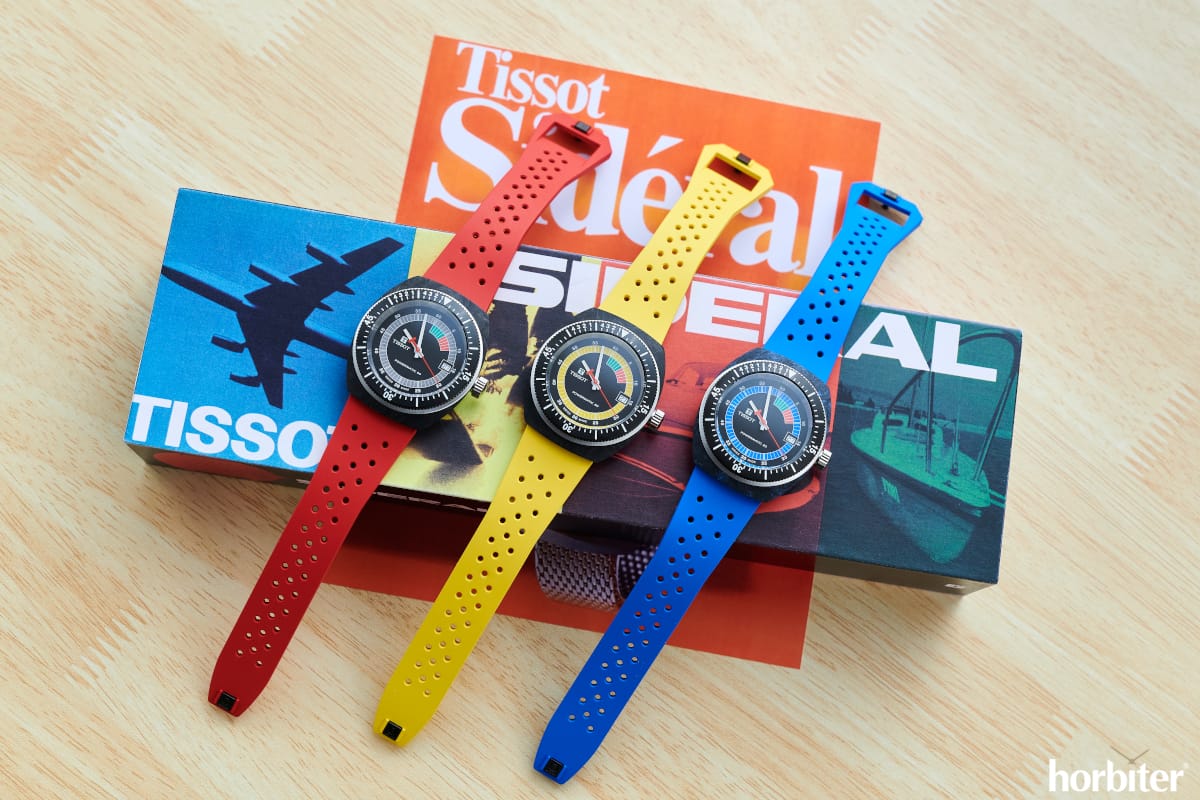
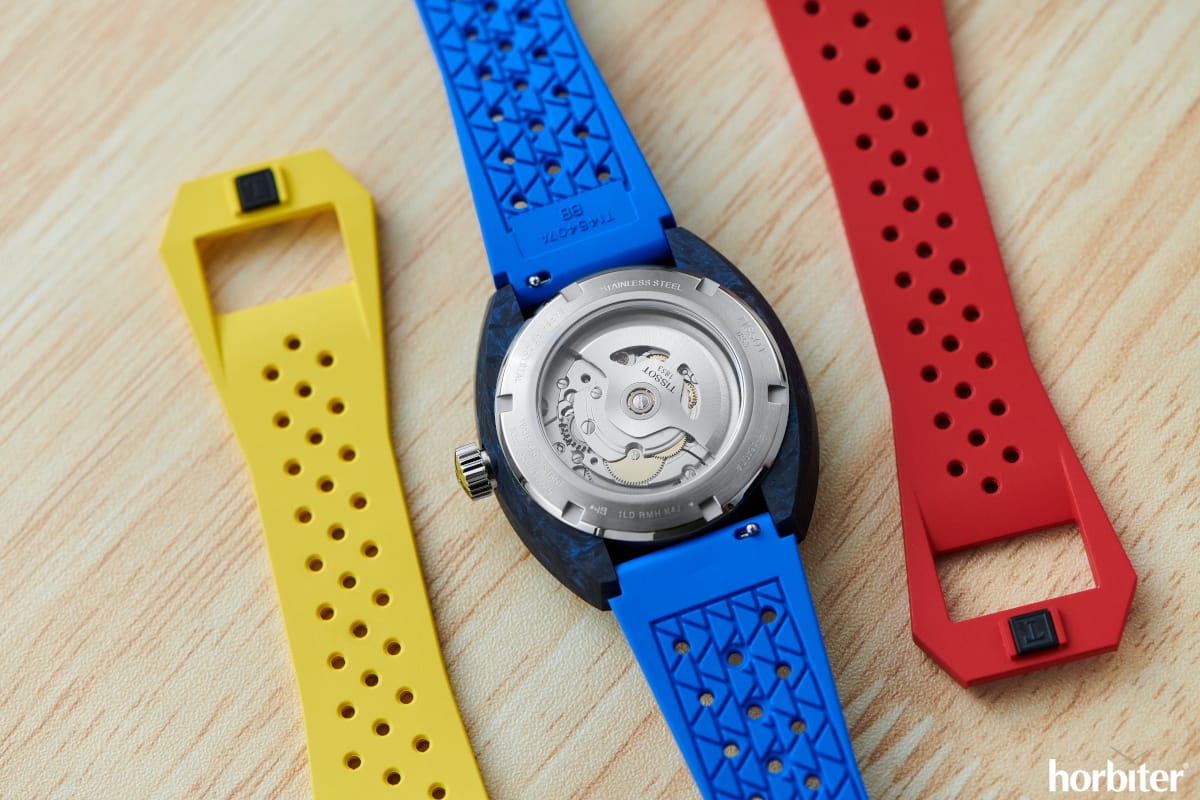
The dial is a nod to the original: you’ll spot the historic Tissot logo on the left and the red central second hand holding a T-shaped end. What a pity the designers didn’t reproduce the lovely “Sideral S” logo on the right-hand side instead. The strap is unique: it’s a soft rubber fully-perforated double strip, each part holding a pin button to secure the watch onto your wrist once fastened.
That’s a “No buckle” strap which softly tapers the wrist thanks to a part-free design. It’s a game-changer if you’re looking for superior comfort, especially during the summer season.
The Tissot Powermatic 80 Nivachron™ movement
According to the specifications we found on the Internet, the original Sideral S is magnetic resistant to as much as 150 Gauss, thanks to a Faraday cage surrounding the mechanical movement. The new Tissot Sideral houses the Nivachron™ hairspring equipped Powermatic 80 self-winding movement. Nivachron™ is a titanium-based patented non-magnetic alloy featuring excellent resistance to shocks and sudden temperature changes.
Nivarox-FAR, its manufacturer, claims a Nivachron™ hairspring is ten to twenty times magnetic resistant compared to an ordinary nickel-steel hairspring, but the brand has not disclosed the overall performance. Since the new solution adopts the standard production process, Nivachron™ hairsprings are large-scale produced at a reasonable cost.
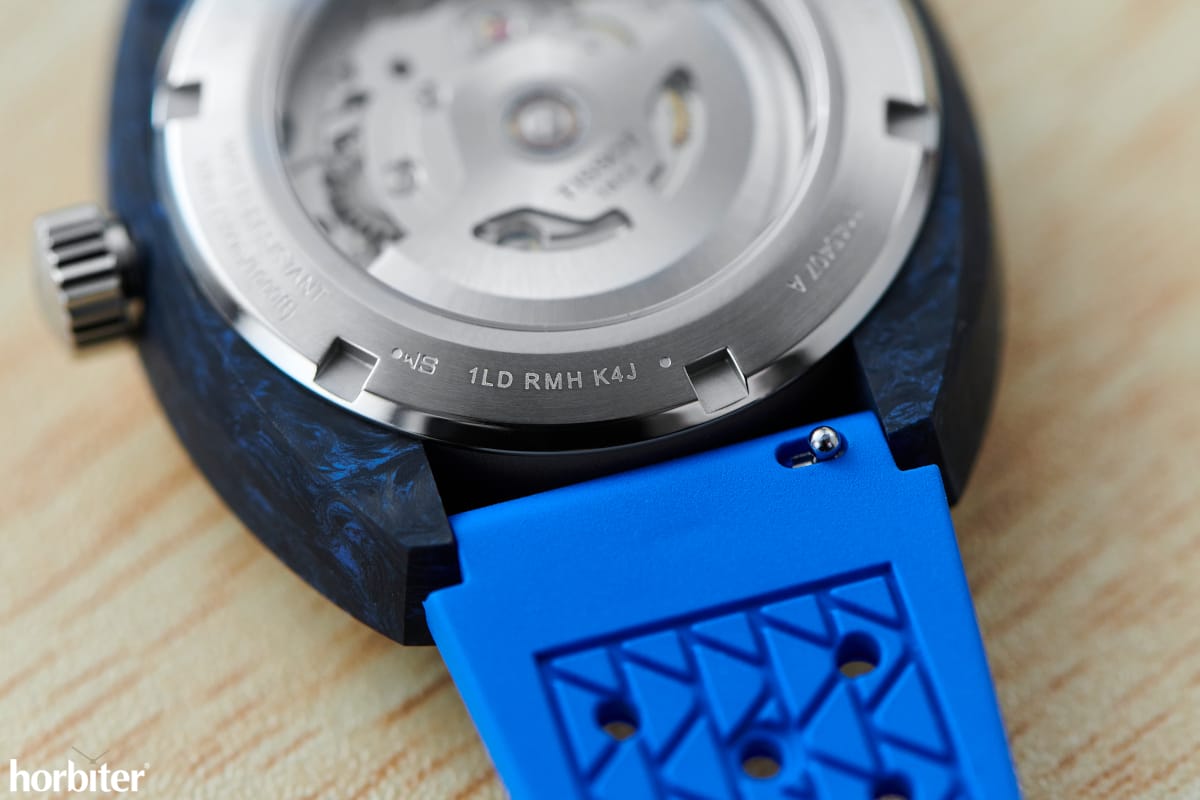
By picking the most prestigious Powermatic 80 available, Tissot has loaded the Sideral with an attractive technical package on par with the project’s ambitions. The movement houses a newly designed oscillating mass; however, I would have gone all in with a closed case back, ideally mimicking the monobloc case of the Sideral S.
Final thoughts
The new Sideral is not the first-ever forged-carbon Tissot watch; head up to the brand’s website, and you’ll find out it’s a T-Race Cycling model instead. However, this is the first attempt on one of its mechanical watches. The 2023 Sideral is a brilliant example of a multi-functional, technological, yet self-winding sports watch pairing strength and durability with a fun factor.
Here is a forged carbon watch in the 1,000 Euro area – the retail price stops at €1,075 – packed with tons of features, easy to use and wear, and a nice story to tell.
I would have just added a full white option to the launch collection. From a style perspective, the blue variant, featuring a blue-coloured carbon case, is the most attractive, but my hero is the yellow one; it holds the Sideral S’s DNA. Unlike the old model, I don’t think the new Sideral is solely “a young watch for young people”.
Here is a proposition whose audience is large and knows no boundaries and whose multi-purpose design, storytelling and materials add to the uniqueness of its value proposition.
A leather, rubber or other material band that secures the watch to the wearer's wrist.
Case
It encases the mechanical movement and is crafted in one or more parts. It can also be a single piece, as with some professional diving watches, or made of unconventional…
Ceramic
Widely used for crafting a watch case and, in recent years, also for the bezels of diving watches and dials. Obtained from zirconia powder (ZrO2), ceramic offers superior scratch resistance…
Bezel
The bezel is particularly useful on diving watches, allowing you to check dive times. In this case, it unidirectionally rotates and usually comes in two parts: a metal (or ceramic,…
Case back
It can be screwed in, pressure-fastened, or secured to the case via screws. Occasionally, it comes as a single piece, with the case of specific professional diving watches (for example,…