The Tissot Heritage Navigator Chrono Auto 1973 watches hands-on
Giovanni Di Biase7 January 2021
0 Comments
I have spent the last couple of days watching plenty of videos from Formula One‘s and 500 Class Grand Prix‘s golden age racing: the seventies. Starring was Lauda and Hunt on the one hand, and equally crazy riders like Barry Sheene and Kenny Roberts, on the other.
Back then, tonneau-shaped racing chronographs were popular inside and out of the paddock, and Tissot joined the party with its Navigator Chronographline up of wristwatches, featuring a two-counter based layout and a panda or a reverse panda dial, produced in countless options, including an odd-one showcasing a bracelet whose links mimic an armadillo, from afar.
In 2019Tissot began reviving its remarkable racing pedigree by introducing a reissue of the Navigator Chronograph, which marked the brand’s partnership with Alpine, Porsche and, last but not least, Loris Kessel, the founder of Kessel Racing and owner of the most prominent Ferrari dealer in Ticino, today. I often emphasize how hard it is sometimes to reissue historical timepieces; by doing so, a brand allows room for criticism by die-hard vintage fans who keep telling that nothing is as authentic as the first one.
The 2019 sales volumes confirmed last year’s limited edition model was an unquestionable success, thus encouraging Tissot to replicate and duplicate. The Navigatorcase’s design, whose traits are familiar to some timepieces produced by Heuer and Omega, back then, is never getting old. Tissot‘s marketing move is consistent in the benchmark, given that old and new ones share the same self-winding architecture.
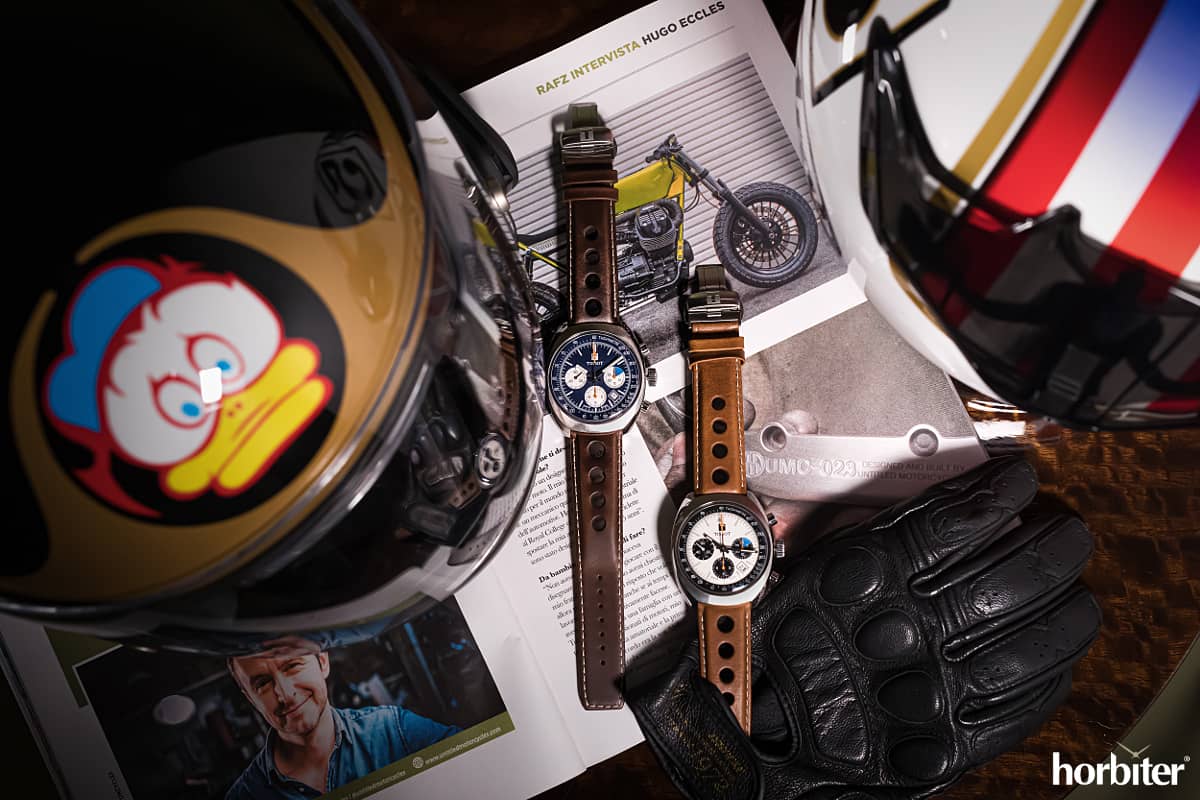
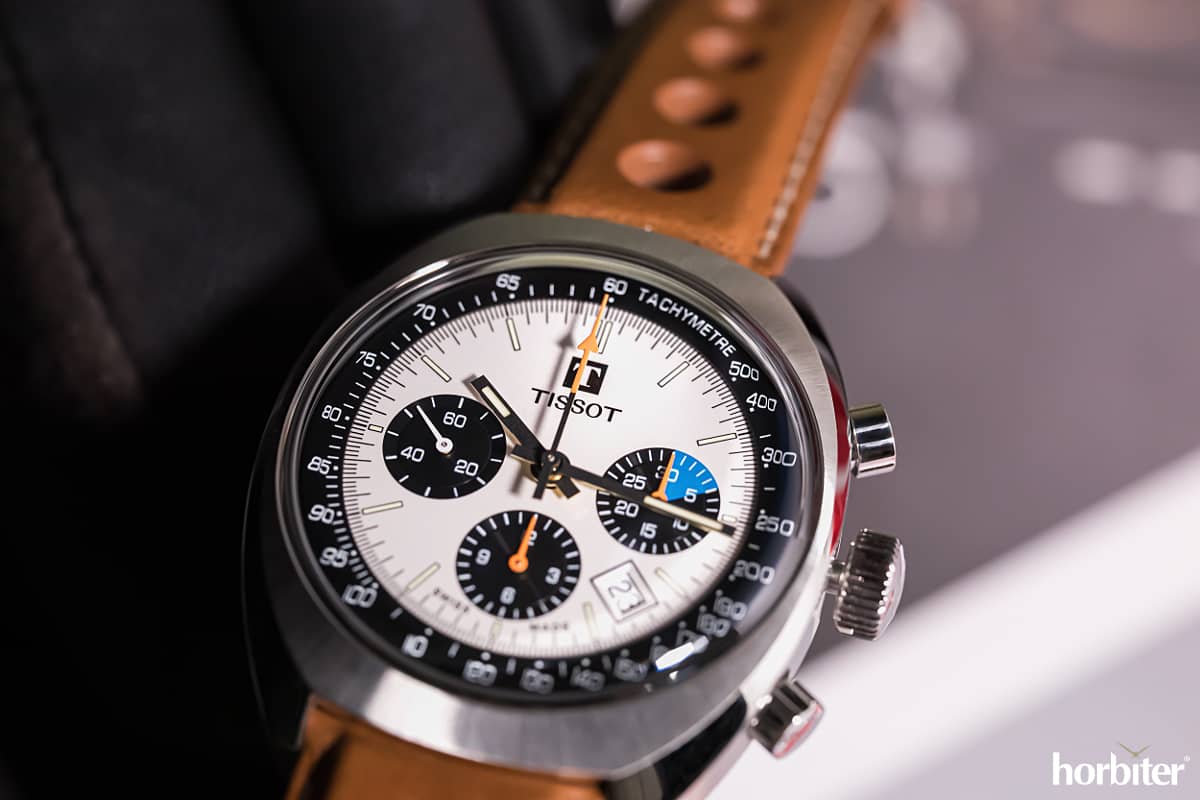
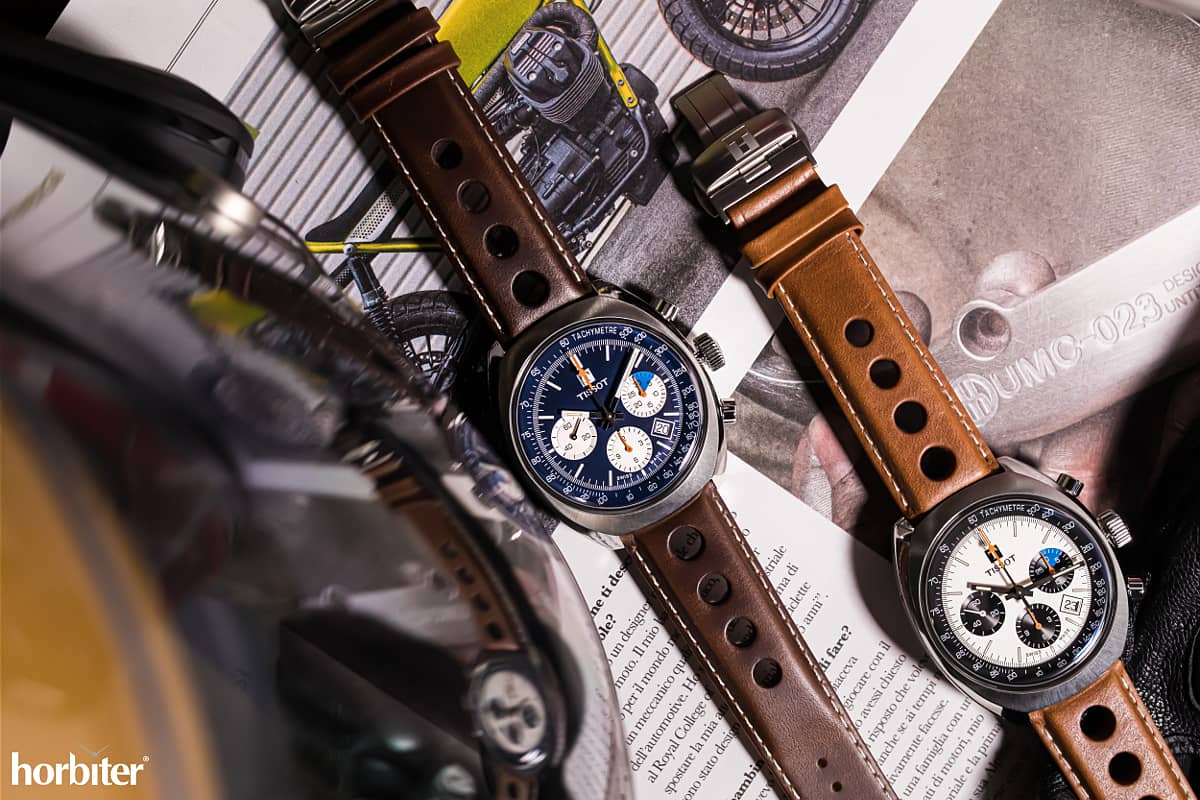
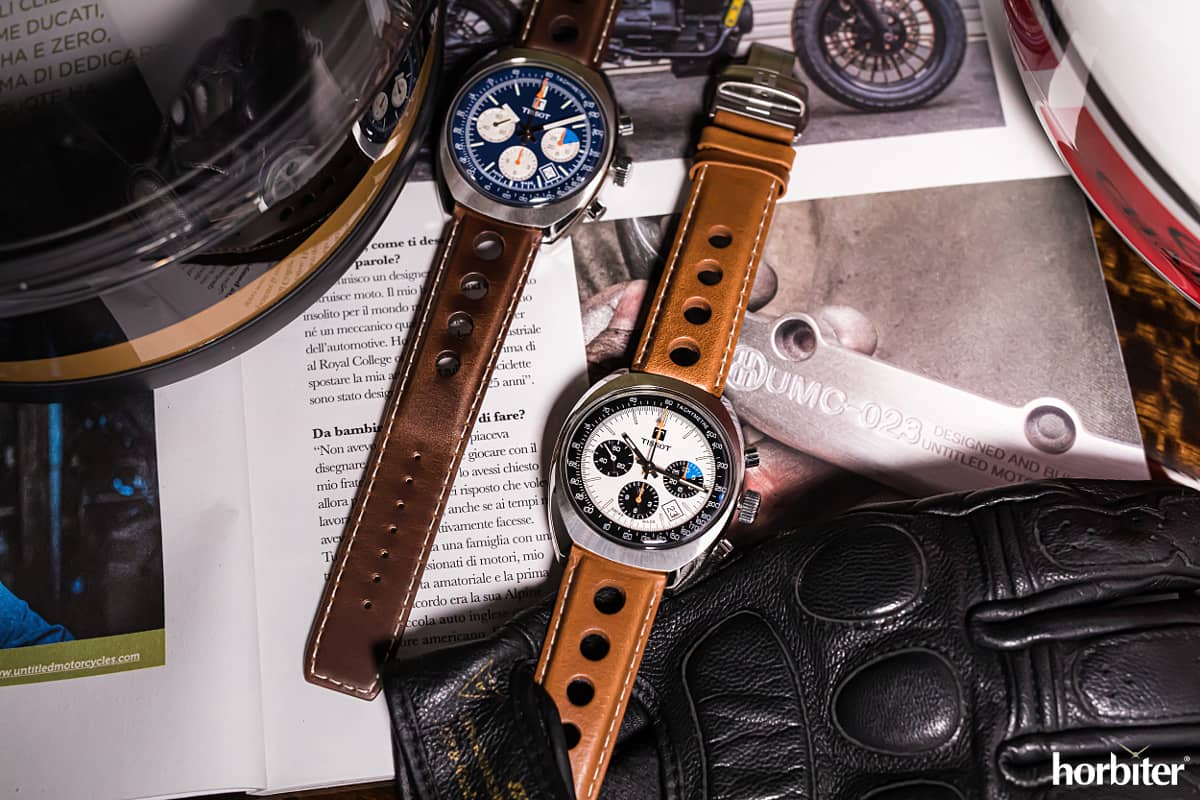
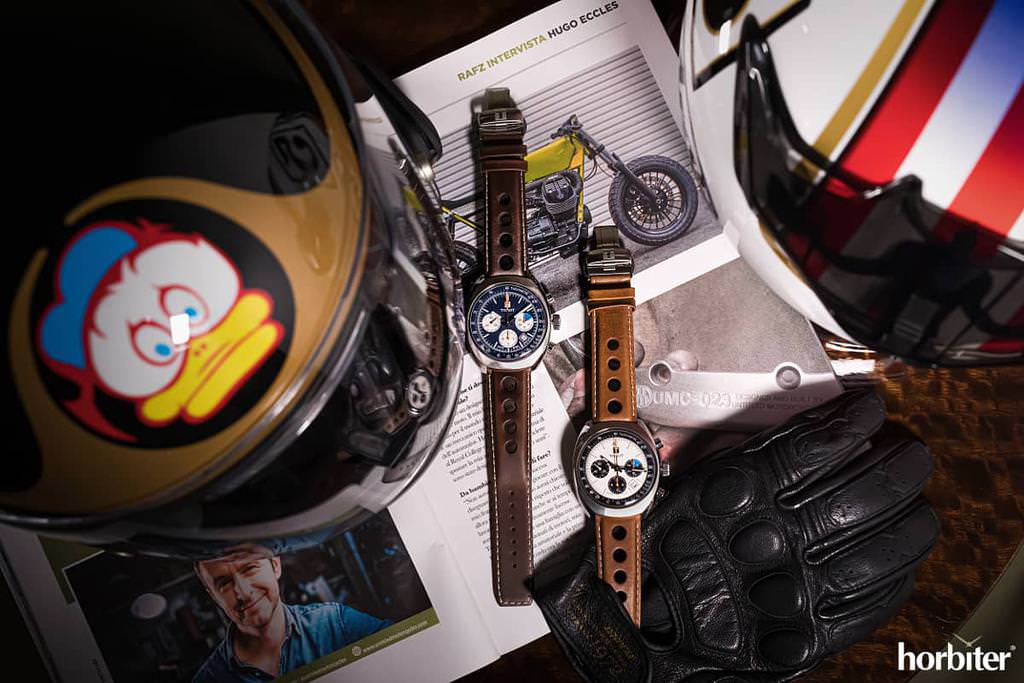
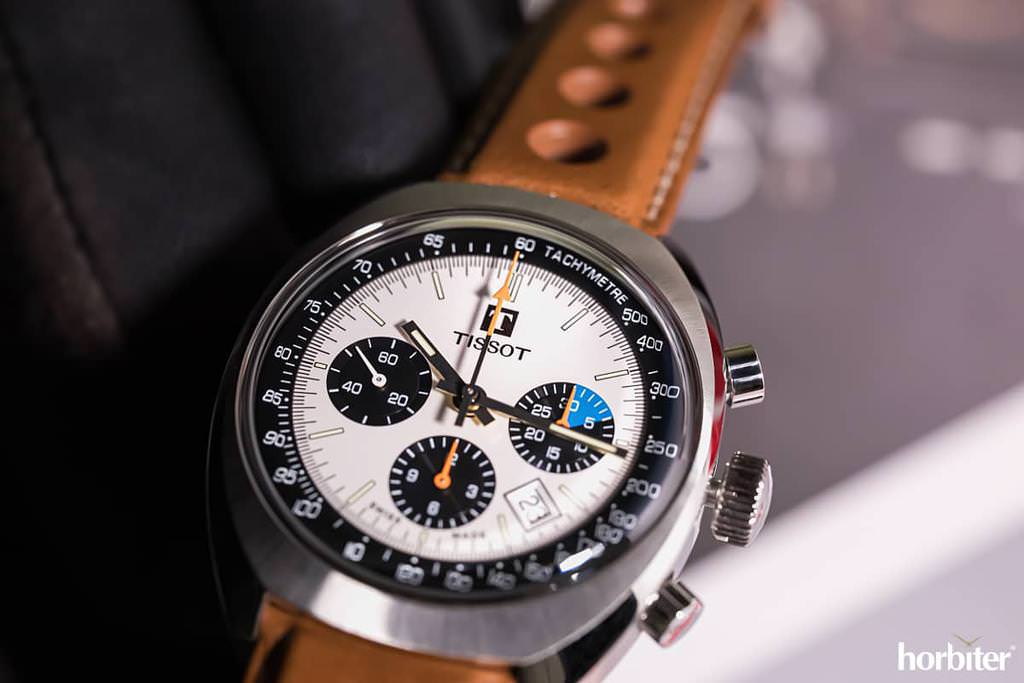
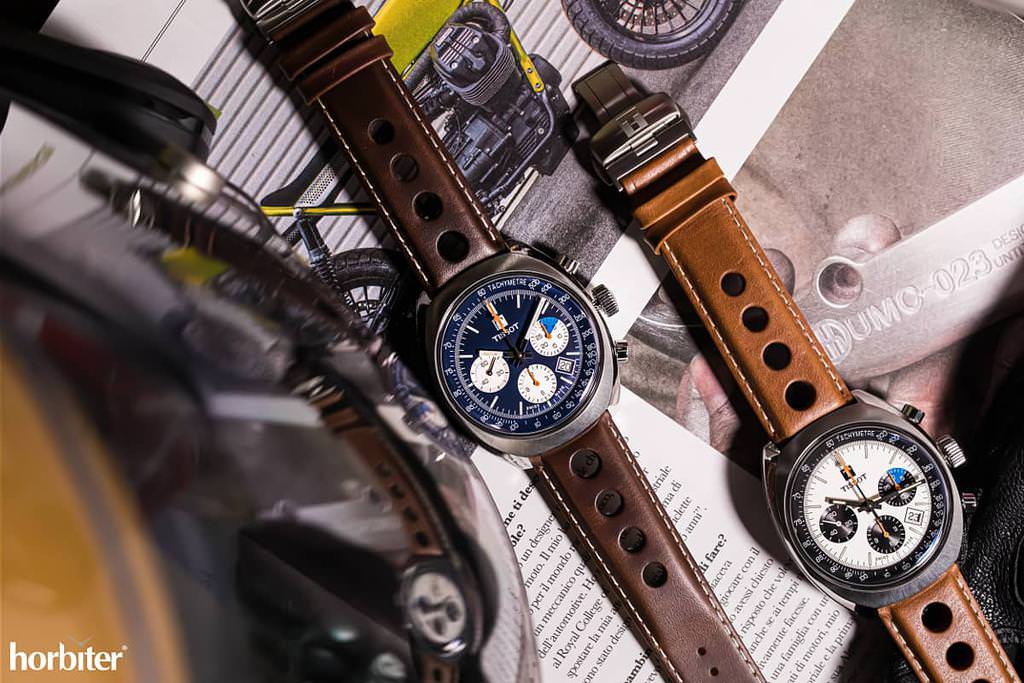
The 2020 Tissot Heritage Navigator Chrono Auto 1973 comes with either a panda or a reverse panda dial (two options). The designers built upon the 2019 platform by upgrading the dial and the mechanical movement (technically improved, with a multi-spoke rotor design); aesthetically, it showcases the same Tissot logo as seen on the original reference, along with a 500-based tachymeter scale, baton indexes, and the original font on both the tachymeter scale and the Chrono registers.
A two-counter layout made the NavigatorChronograph a distinctive timepiece, whereas the current V-layout turns the Heritage Navigator Chrono Auto 1973 into a kind of a mainstream design like an Omega‘s Mark II, for example.
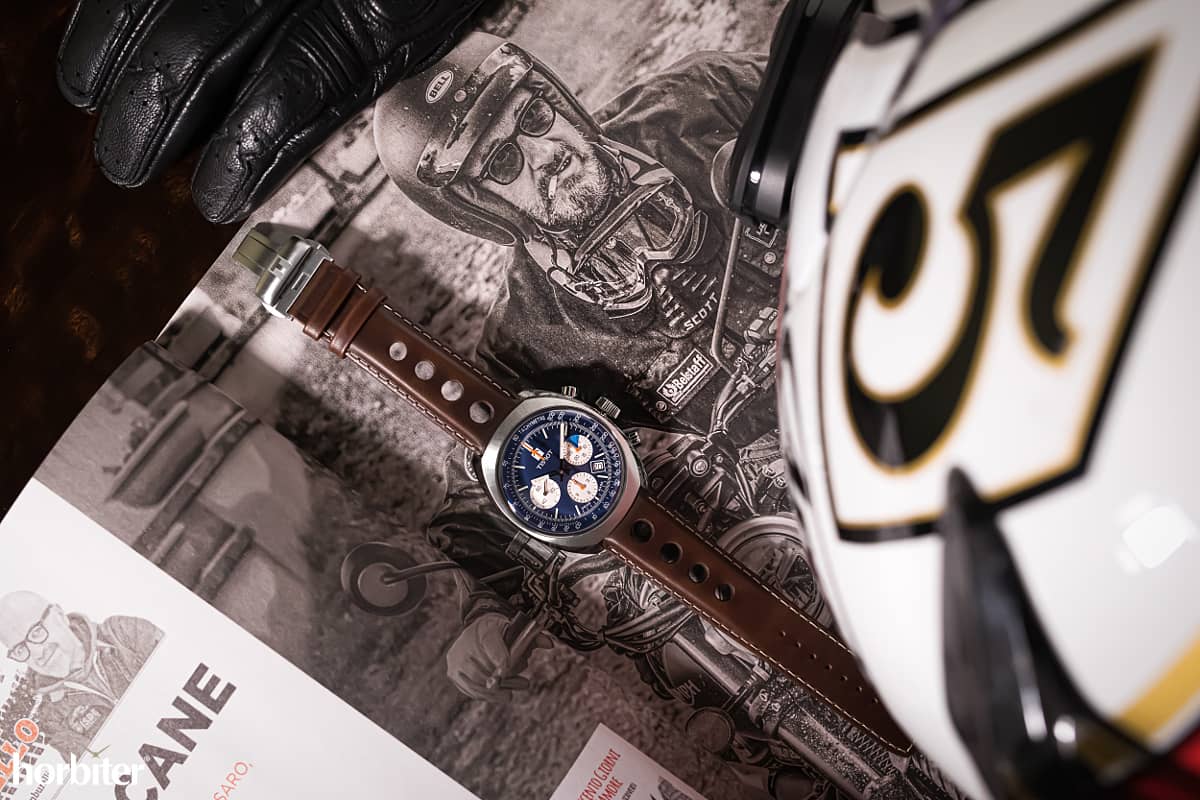
The color combination pairs original and matte new tones, with the addition of vivid orange as seen on the central Chrono hand whose tip is in the shape of an aircraft, and pale blue on the minute counter’s first five minutes. The sapphire bubble-shaped crystal is almost flat in the middle and complements this Tissot‘s one-piece looking case, featuring no lugs and a brushed-on-top polished-on-the-borders case finish.
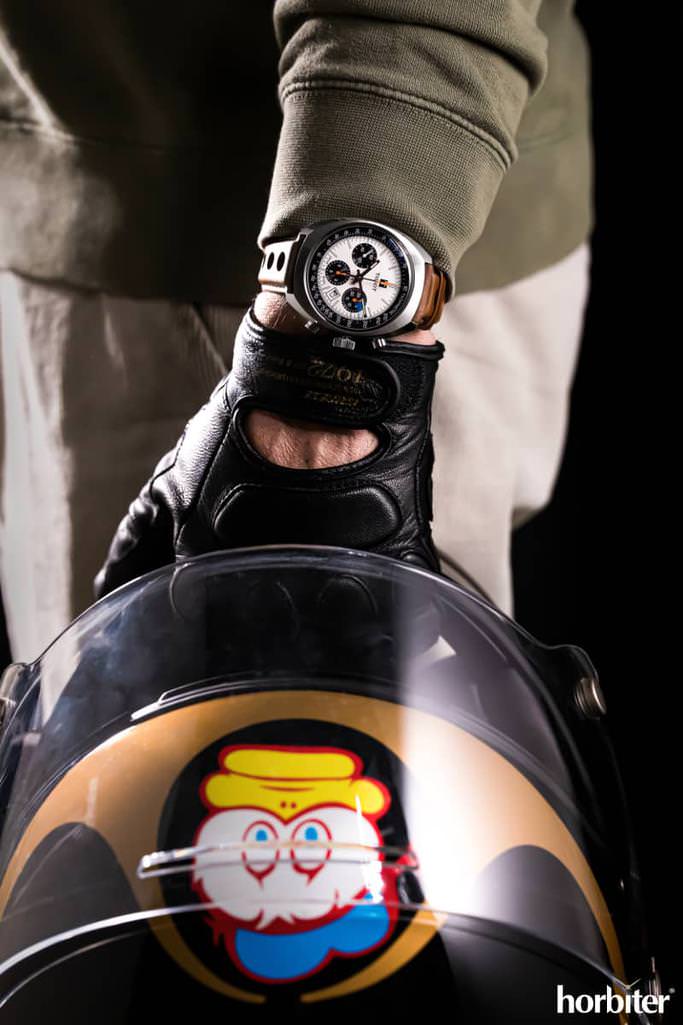
The case measures 43mm across (crown not included), hence four more than its original counterpart. From six to twelve, it measures 46,6mm instead. The crown is as oversized as you’d expect since the case’s thickness stops at a whopping 14,8mm.
The 1973 Tissot Heritage Navigator Chrono Auto is a big watch, by all means. As mentioned above, the original one was self-winding as the new one is; the Navigator Chronograph housed a Lemania, while Tissot is here adopting a Valjoux A05.H31, whose base caliber is a Valjoux 7753.
It ensures 60 hours of power reserve when fully wound. The only letdown is a perceivable winding noise which is mainly due to the rotor loading in one direction. It does not feature any column-wheel mechanism found elsewhere across the Swatch Group but offers proven reliability and low service cost.
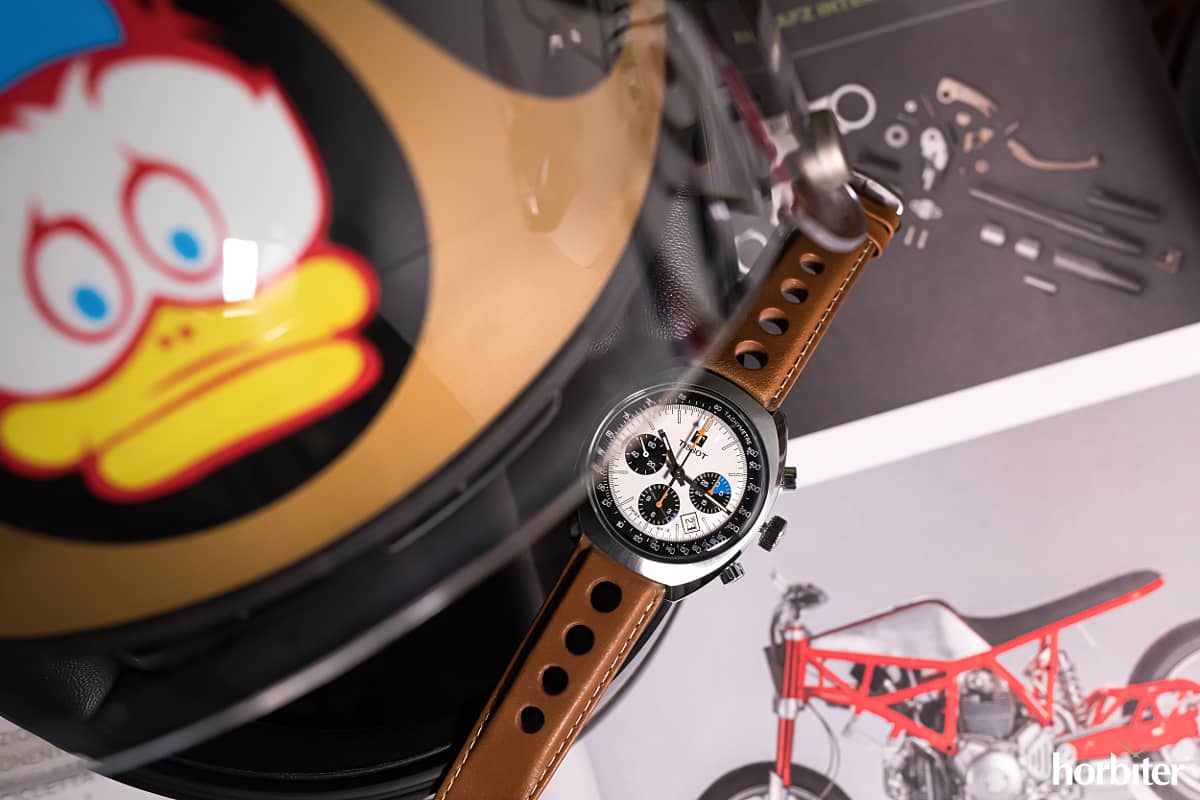
The Tissot Heritage Navigator Chrono Auto 1973 is exclusively available with a perforated leather Rally Strap; it is thicker than any other OEM or aftermarket rally strap out there and stiffer too. I guess designers had to opt for a strap as sturdy as possible, given case size and weight. Be patient if you’re wearing one as it’ll take some time to soften and wrap around your wrist as you’d like it to do.
Nonetheless, I suggest Tissot would consider adding a bracelet option anytime soon; the Navigator Chronograph from the seventies also came with a rugged integrated bracelet, but I hope they manage to reduce size and weight altogether, considering the current one stops at 125 grams already.
I’d love to see a 39mm option, then, and I’m sure most watch aficionados would appreciate it too. Meanwhile, and any guessing apart, the 1973 Tissot Heritage Navigator Chrono Auto retails at 2,075 Euros. It is a sturdy chronograph; it is big but offers remarkably good build quality and comes with an authentic pedigree. Also, it comes at a fair price, given the current market scenario where the majority of watch brands keep raising their price list, again and again.
(Photo credit: Horbiter®)
Gaetano C @Horbiter®
In this article:
Line
It is the measurement unit that identifies the size of a movement. According to this measurement system, one line corresponds to 2,255mm.
Chronograph
Complication that helps the wearer to measure time intervals without affecting the watch's standard time-telling function.
Case
It encases the mechanical movement and is crafted in one or more parts. It can also be a single piece, as with some professional diving watches, or made of unconventional…
Rotor
Part of an automatic watch that winds the mainspring by constantly rotating. Depending on the watch's winding capability, movement design, and value, it comes in various geometries, sizes, and materials.…
Crown
Placed on the case side, it winds the mainspring. When pulled out, it also sets the time and the date. A screw-down crown increases water resistance and protects the movement…
Power Reserve
A mechanical watch feature displays, on the dial or the case back, the remaining power in a watch movement, showing the length of time until the timepiece must be rewound.
Strap
A leather, rubber or other material band that secures the watch to the wearer's wrist.




 The 2020 Tissot Heritage Navigator Chrono Auto 1973 comes with either a panda or a reverse panda dial (two options). The designers built upon the 2019 platform by upgrading the dial and the mechanical movement (technically improved, with a multi-spoke
  The
The  The Tissot Heritage Navigator Chrono Auto 1973 is exclusively available with a perforated leather Rally
  I’d love to see a 39mm option, then, and I’m sure most watch aficionados would appreciate it too. Meanwhile, and any guessing apart, the 1973 Tissot Heritage Navigator Chrono Auto retails at 2,075 Euros. It is a sturdy