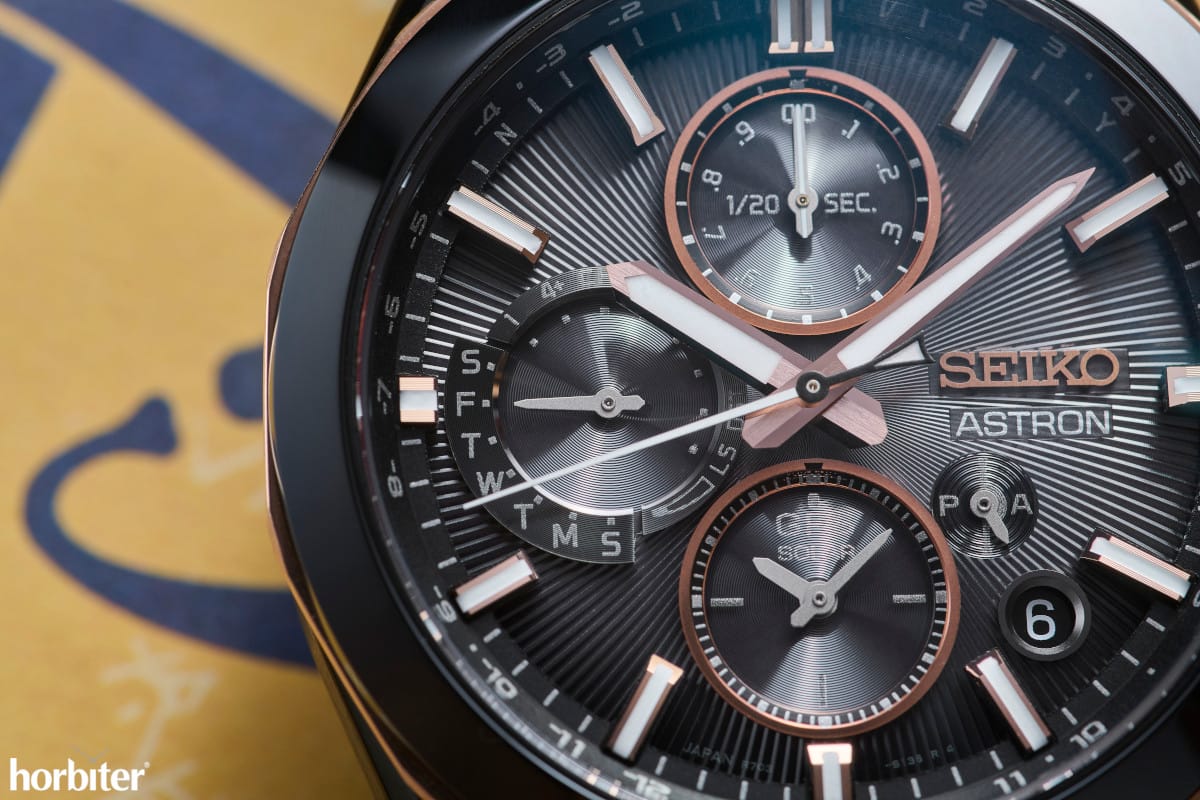
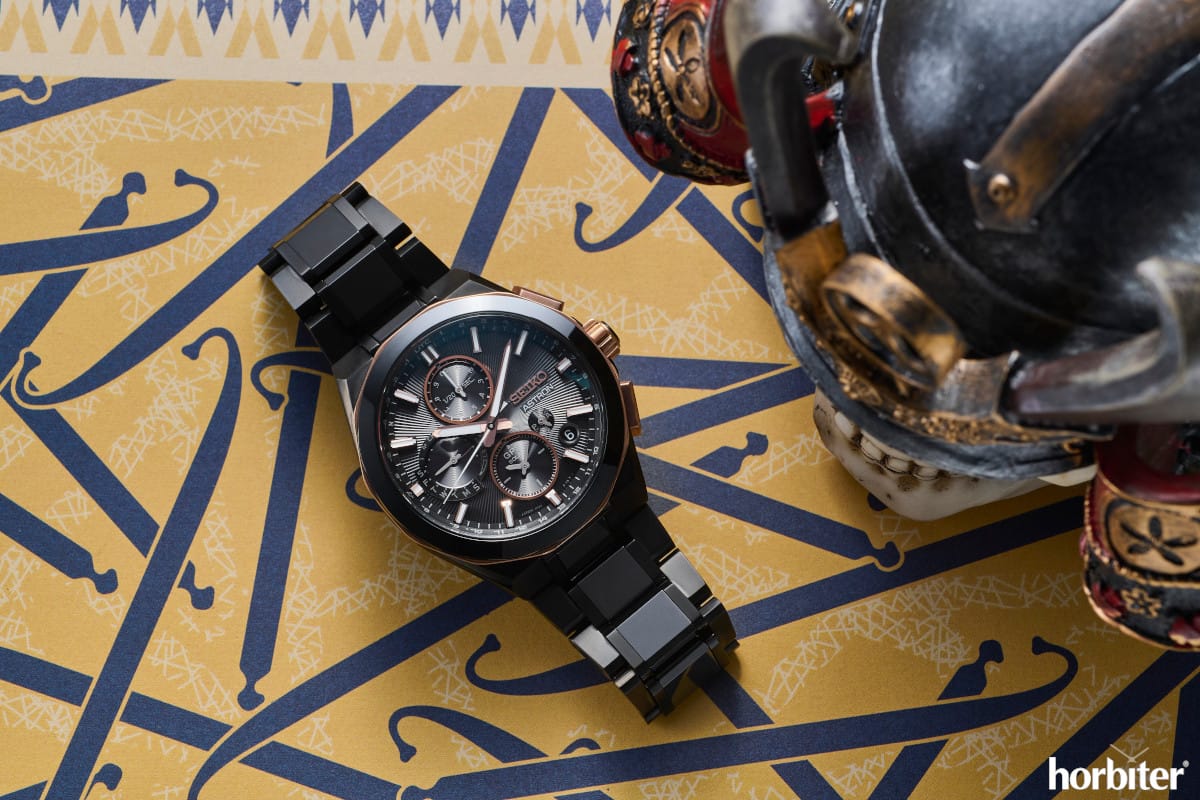
When the Japanese brand names a timepiece after its founder’s name, expect no other than a top-tier product, and so was with the most ambitious and refined Astron GPS Solar option in a decade.
As we enter 2024’s last quarter, Seiko has not yet finished pulling the trigger on its limited edition models. It proves how Astron and the 5X83 movement represent a prolific platform to such an extent that it requires all our effort to list the entire lineup. However, we were told that the model reviewed here officially ends the 100th-anniversary modelline.
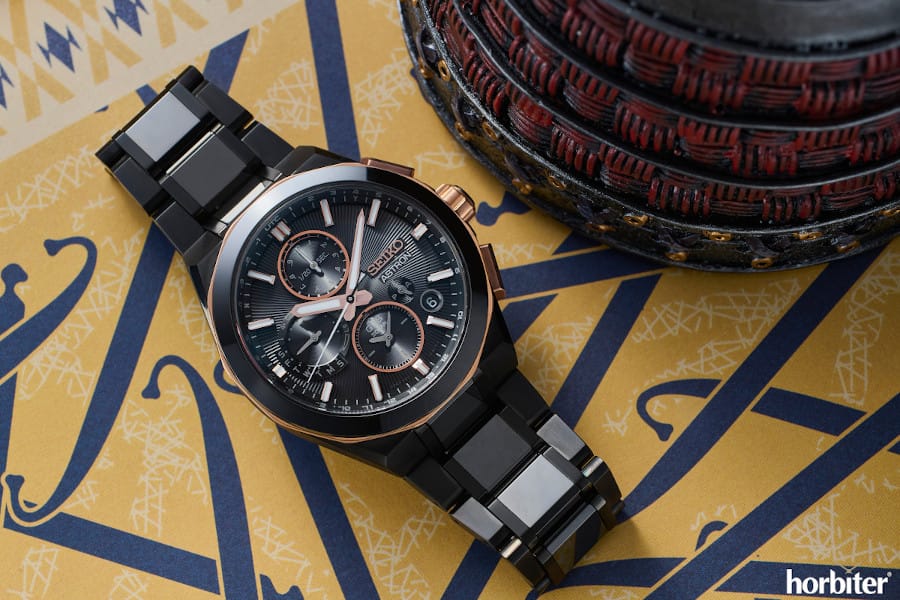
The new limited edition Astron SSH158J1
We extensively covered the 5X83-powered models, based on the renovated three-counter layout housing the days-of-the-week counter at nine o’clock. To learn more, head to one of our listed Seiko articles.
After merging with a Prospex model, the Astron GPS Solar is an option for the collector’s Kintaro Hattori, with the reference SSH158J1.
Among the collection’s assets and the reason it undergoes a relentless product evolution is how quickly the product development is compared to any standard mechanical Seiko watch.
In brief, the Astron is a “fast-moving”product from a technological development perspective. In contrast, it is much more affected by obsolescence. However, the refinement is so high that the technological leap between one generation and the following is often negligible.
It is the same (yet different) as an SSH156J1.
We would have gone for an SSH158J1 to SSH156J1 head-to-head, but it was a difficult mission given both products’ unavailability.
It would help us and the readers compare them in detail. An Astron SSH158J1 shares the same architecture as an SSH156J1 and primarily adopts the same combination of materials and treatments with a slightly different gold one.
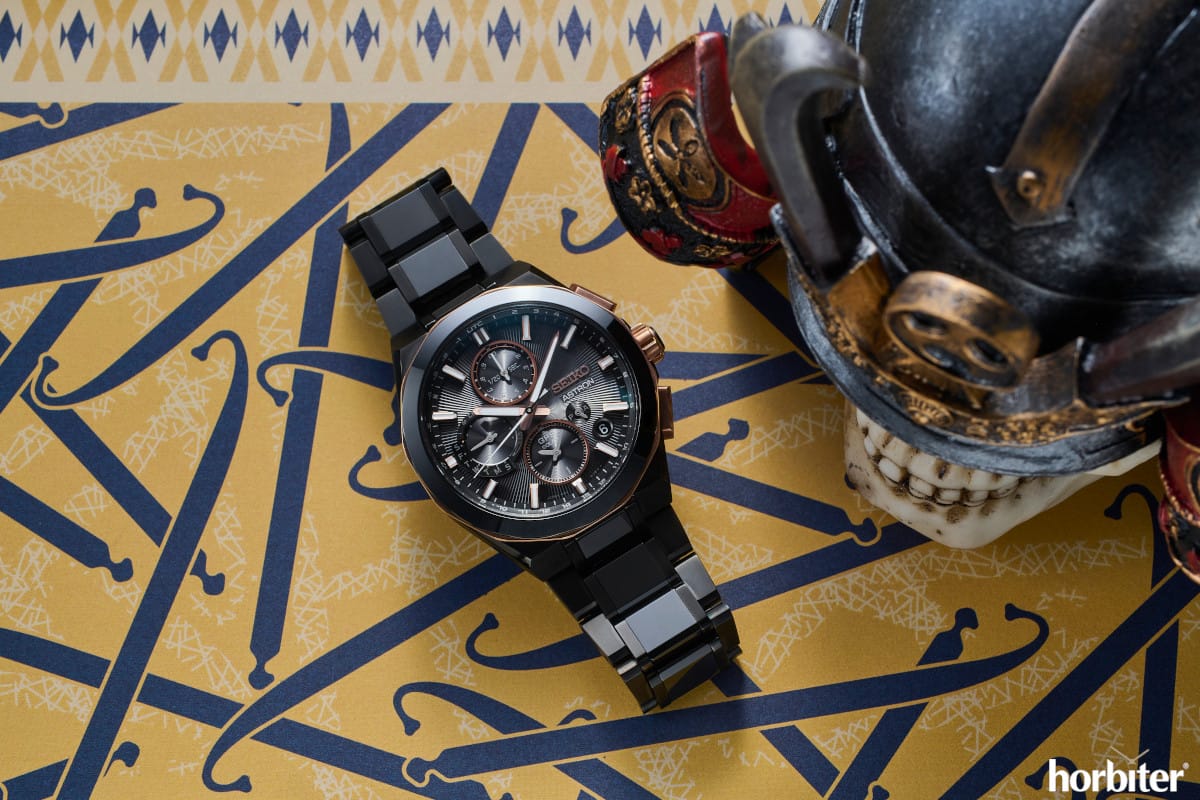
The case and bracelet are blackened with hardened titanium alloy for the case and outer links. In contrast, polished ceramic is used for the bezel and mid-links.
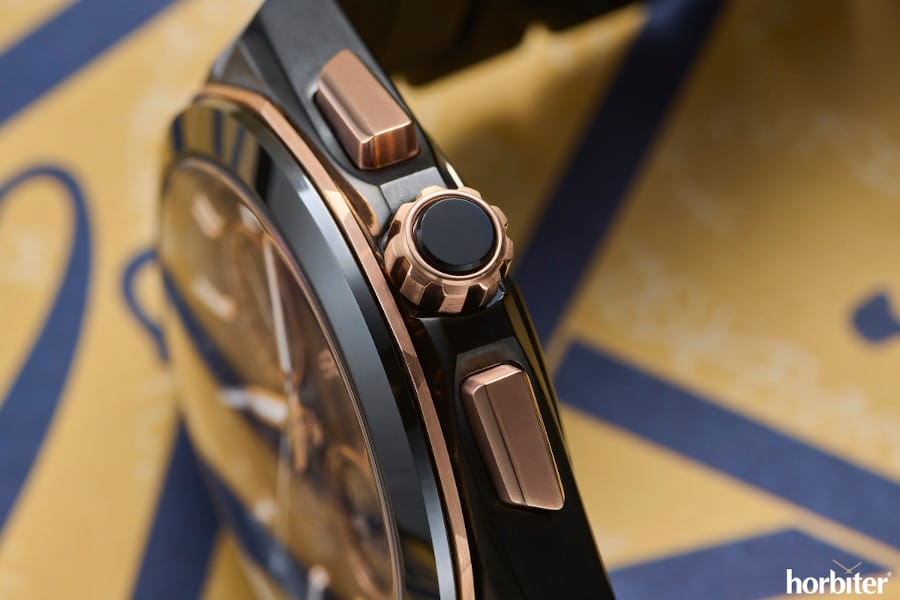
Rose gold appears on the crown, pushers, and the ring between the bezel and the case body.
However, we can spot some slight differences compared to a Kintaro Hattori: the case back is entirely black, and the bezel’s ceramic inlay is smooth compared to an SSH156J1, whose profile is wavy.
An SSH158J1 is softer overall since rose gold is more subtle than yellow gold. The high-contrast colours on the Kintaro Hattori embody the legendary black-and-yellow gold combination so popular since the early 1980s on many JDM diving watches and chronographs.
It is not small, but it is light.
At 43.4mm in diameter, 14.1mm in thickness, 49.5 mm lug-to-lug, the Seiko Astron SSH158J1 is a hefty watch by modern standards, in line with a self-winding mechanical chronograph. Yet, it is perceived size is not since it weighs 124 grams. Thus, it wins hands down in weight-to-size ratio and comfort once on your wrist.
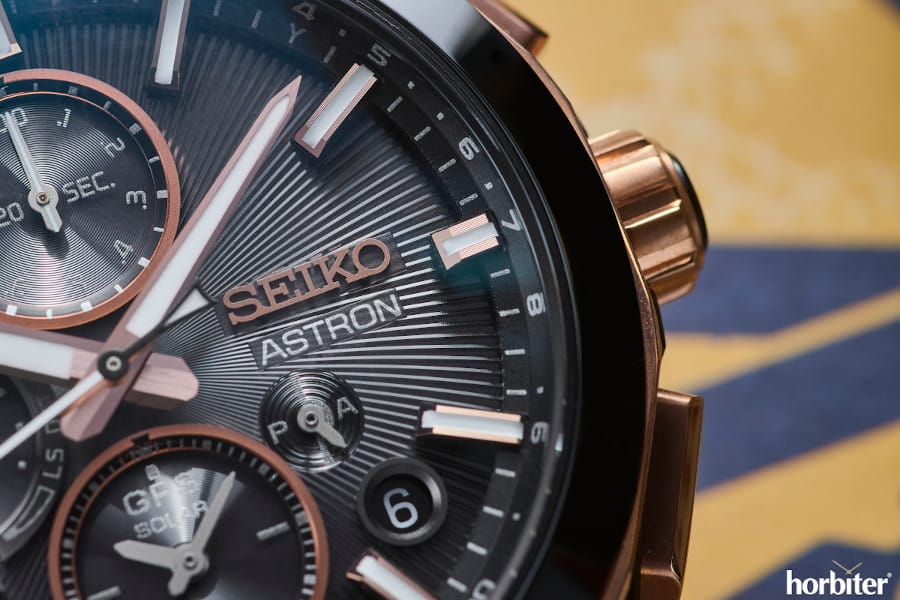
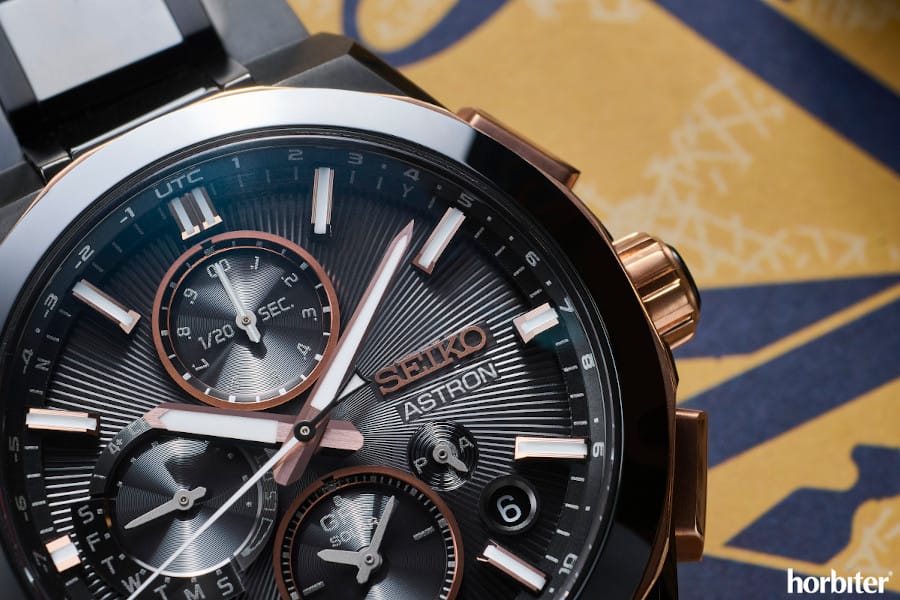
The watch exudes luxury from any angle, setting it apart from an ordinary satellite watch. Kudos to Seiko’s designers for playfully highlighting the matte to polished finish.
The Seiko Astron SSH158J1 100th Anniversary Seiko Brand Limited Edition combines state-of-the-art satellite technology with a premium feel, thus addressing a specific audience.
Final thoughts
The Seiko Astron GPS Solar SSH158 Seiko Brand 100th Anniversary Limited Edition debuted as a 1200-piece limited edition model. It retails for 3,200 euros, making it a direct competitor to an SSH156J1.
If you desire a more elaborate touch, a commemorative box, or an additional rubber strap (a relevant option on a 100-meter waterproof satellite watch), head to a Kintaro Hattori. The reference SSH156J1 is geared towards a more European-based audience whose appreciation for rose gold outperforms anything else in the benchmark.
(Photo credit: Horbiter®)
In this article:
Line
It is the measurement unit that identifies the size of a movement. According to this measurement system, one line corresponds to 2,255mm.
Ceramic
Widely used for crafting a watch case and, in recent years, also for the bezels of diving watches and dials. Obtained from zirconia powder (ZrO2), ceramic offers superior scratch resistance…
Case
It encases the mechanical movement and is crafted in one or more parts. It can also be a single piece, as with some professional diving watches, or made of unconventional…
Bezel
The bezel is particularly useful on diving watches, allowing you to check dive times. In this case, it unidirectionally rotates and usually comes in two parts: a metal (or ceramic,…
Crown
Placed on the case side, it winds the mainspring. When pulled out, it also sets the time and the date. A screw-down crown increases water resistance and protects the movement…
Case back
It can be screwed in, pressure-fastened, or secured to the case via screws. Occasionally, it comes as a single piece, with the case of specific professional diving watches (for example,…
Chronograph
Complication that helps the wearer to measure time intervals without affecting the watch's standard time-telling function.
Strap
A leather, rubber or other material band that secures the watch to the wearer's wrist.