The new Girard-Perregaux Minute Repeater Flying Bridges reinforces the brand’s status as an independent watch brand and represents a significant step in its development roadmap.
After comprehensively updating the Laureato with the Fifty edition, the maison celebrates another milestone by bringing back a combination of complications it has historically mastered: the tourbillon and the minute repeater.
If a Laureato is the brand’s hero and Laureato Fifty has possibly paved the way for a new generation, the highest complications embody the brand’s limitless capabilities that Kering hasn’t been able to bring to their full potential.
Tourbillon and Minute Repeater
Despite not patenting any of the complications mentioned above, Girard-Perregaux was among the first and most prolific brands to develop both, and was among the first to experiment with a multi-axis tourbillon.
While that expertise is well known among enthusiasts, Girard-Perregaux began developing minute-repeating watches (and chimes) with the same obsessive approach.
The pursuit of the purest acoustic performance and extreme attention to detail and decoration placed the brand’s production in a class of excellence.
Source: Sotheby’s
The first Girard-Perregaux watch combining a tourbillon and a minute repeater dates back to 1996 (reference 995550), featuring the beautiful hand-engraved three gold bridges visible on the caseback.
While referencing the historical product in the press kit, the brand celebrates the anniversary with an avant-garde approach that reflects its renewed identity.
Whether arranged in a row of three or as stand-alone structures, the bridges resemble exoskeletons, a shape often seen in modern architecture to highlight volumes and evoke natural geometries.
From the invention traditionally attributed to the legendary Jean-François Bautte, the new Minute Repeater Flying Bridges retains the classical architecture featuring gongs and hammers.
What is a Minute Repeater Flying Bridges watch Like?
If I had to define it with a single word, I would call it “architectural”. Here is a contemporary, bold watch that clearly sets Girard-Perregaux’s identity.
The design language belongs to the current Bridges collection and serves as the foundation for this new minute repeater. Form here follows function.
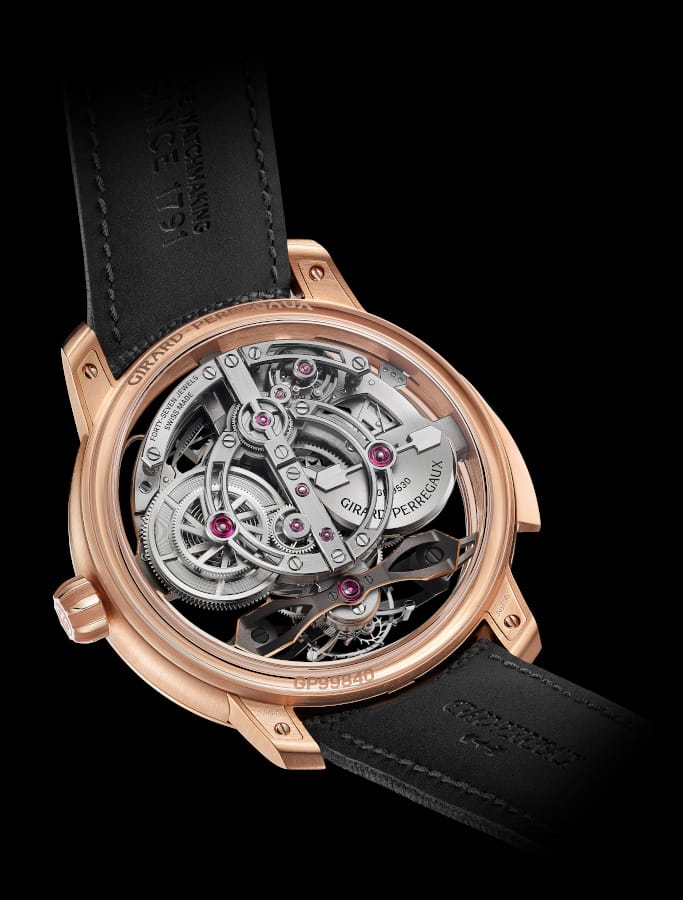
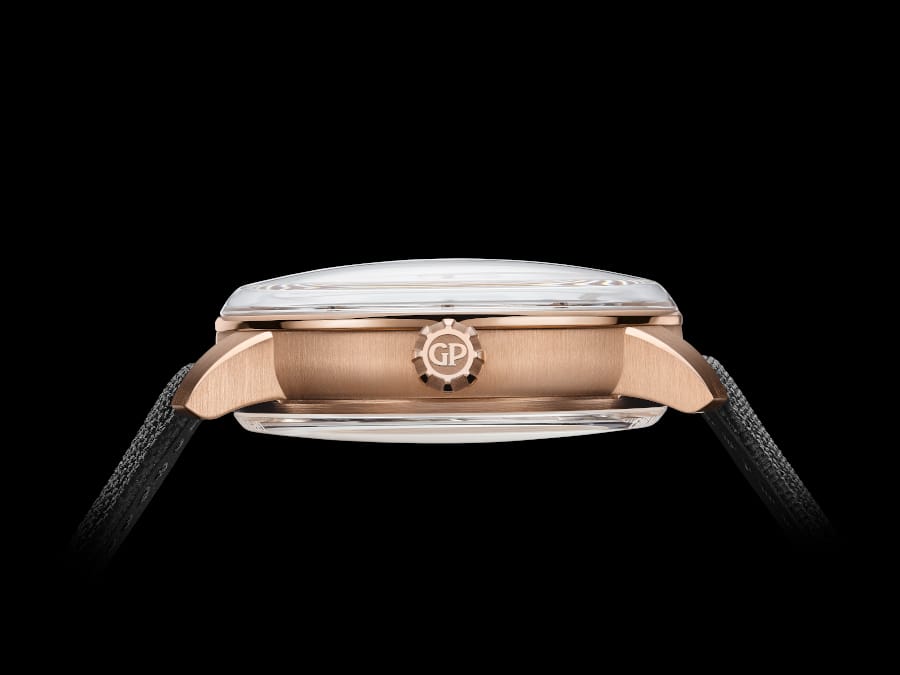
The double-domed sapphire crystal enhances the watch’s overall volume and improves acoustic performance. The gongs and the striking governor on the back of the movement all serve precise technical purposes.
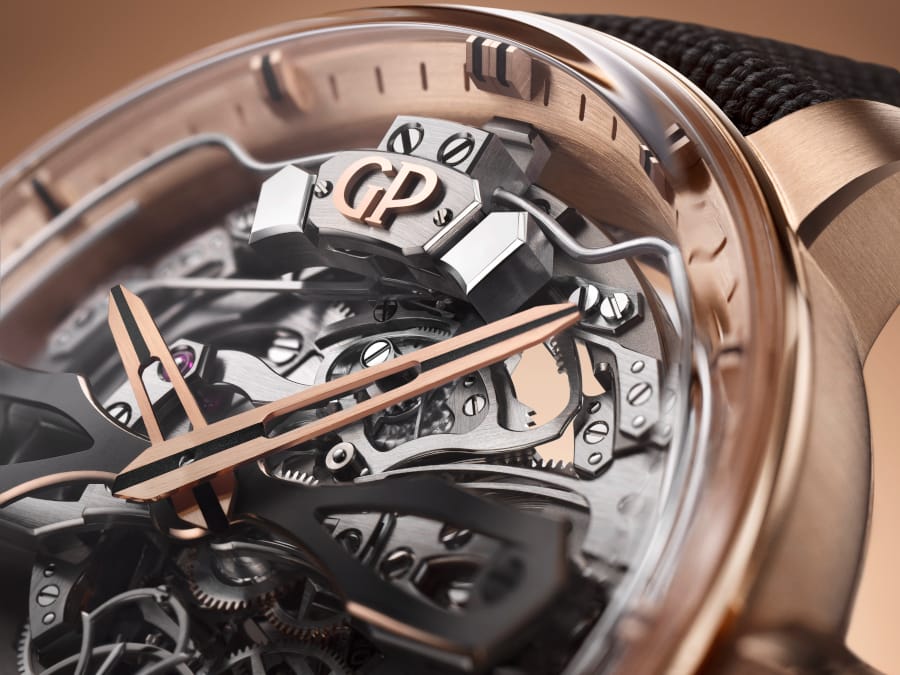
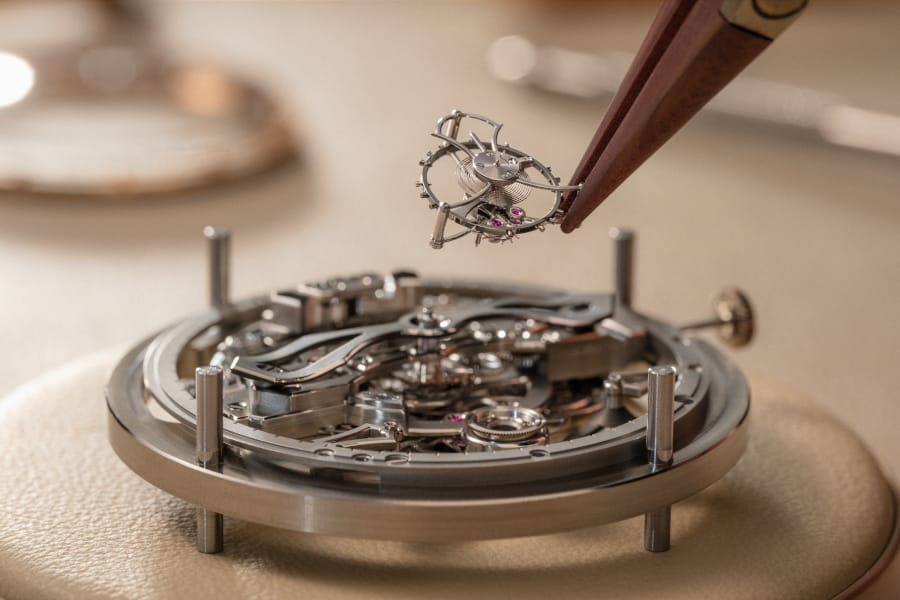
The watch houses the GP 9530 calibre, a deeply skeletonised self-winding movement with three separate bridges: two on the dial side and one on the caseback, fastening the one-minute tourbillon.
Built to enhance Pure Sound performance.
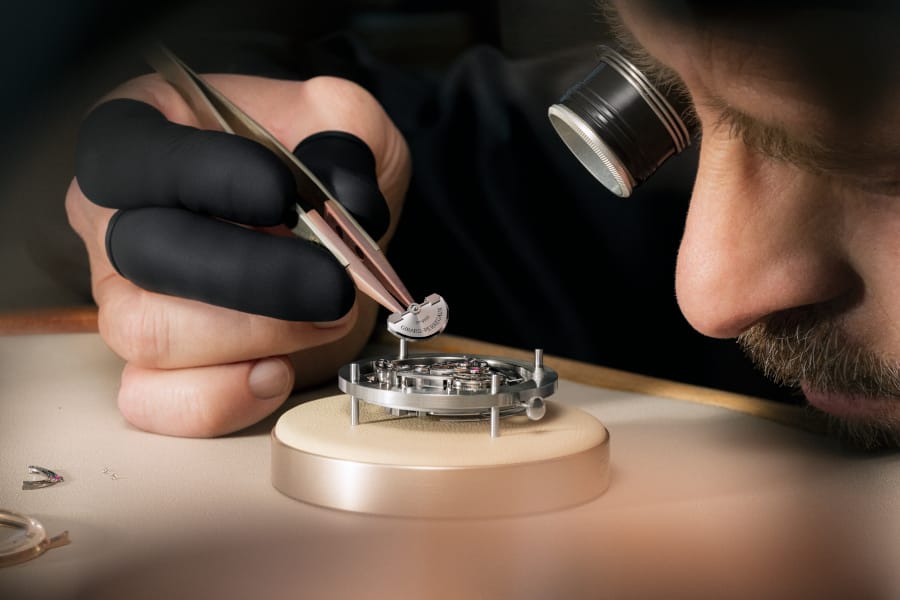
The extensive skeletonisation improves sound transmission and leaves the gongs and hammers visible, allowing the wearer to appreciate the intricate details of the mechanism fully; the two hammers are shaped like the terminal part of Girard-Perregaux’s signature bridge design. Their lightness is essential to achieving the right proportions and acoustic performance.
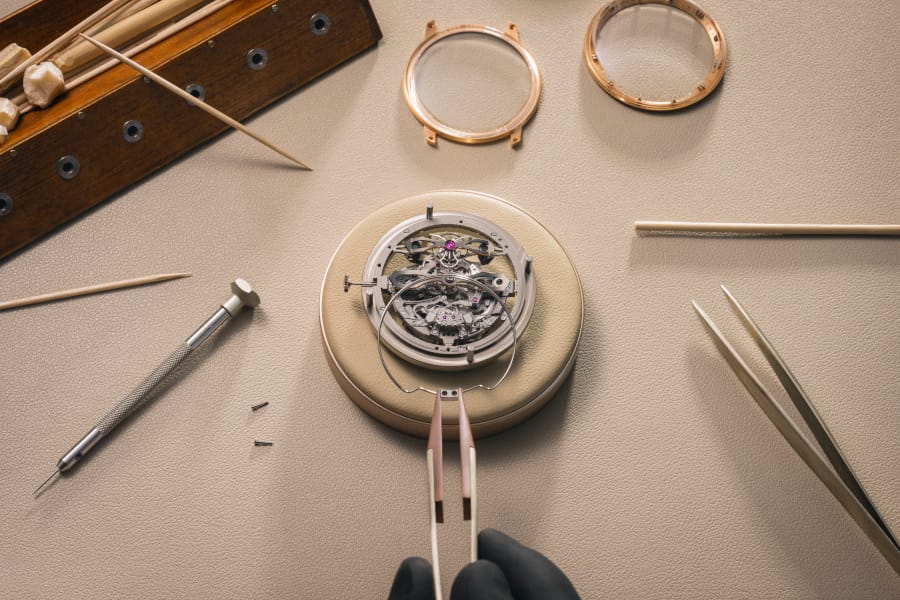
The mainplate is made of titanium and is seamlessly locked into the case. Titanium is not only lighter but also provides superior sound quality, which is why it is increasingly used in high-end chiming complications.
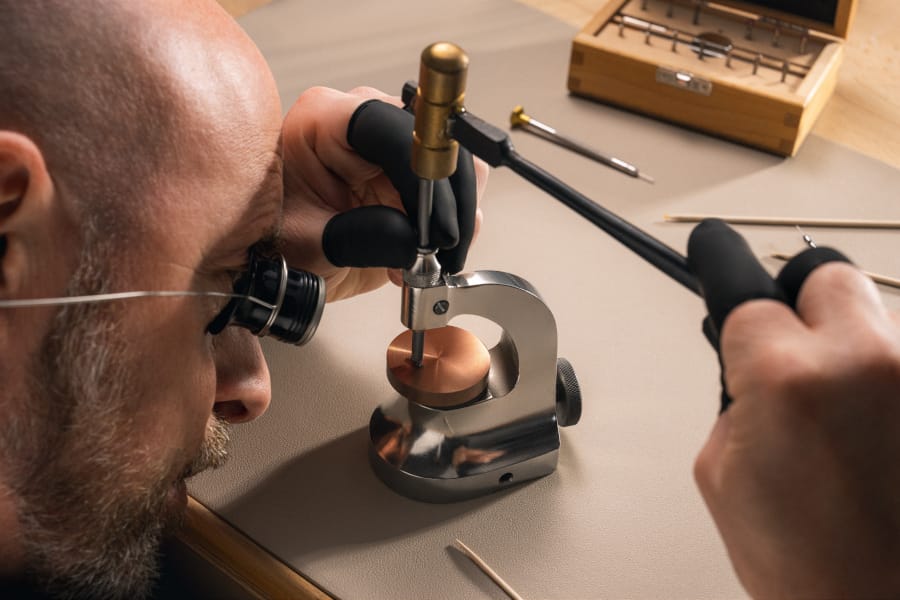
The edges emerging from the PVD-treated gold bridges demonstrate that you can combine contemporary aesthetics with traditional finishing, executed entirely by hand and requiring many hours of skilled craftsmanship.
Details and decorations
With 1,345 chamfered edges, including 295 interior angles, the calibre displays finishing worthy of the highest level of haute horlogerie.
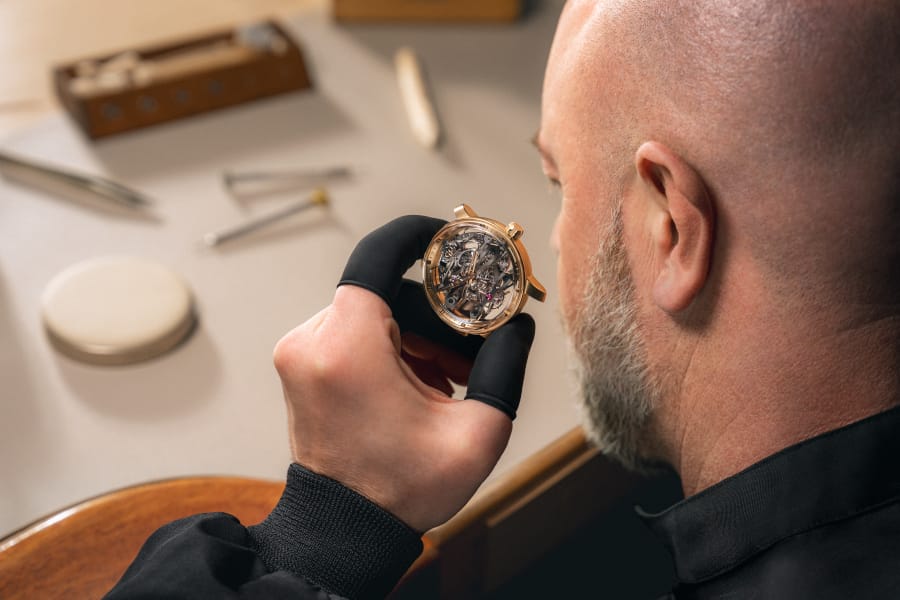
According to Jean-Luc Borel, head of the team responsible for assembling Girard-Perregaux’s grand complications, at least 240 hours are required for decoration alone, followed by an additional 200 hours to complete a single watch. Such figures give a clear idea of the level of craftsmanship involved.
In today’s haute horlogerie, advanced technology helps master acoustic performance, the final touch provided by master watchmaker Jean-Luc Borel, whose musical skills are excellent.
Most parts draw inspiration from Girard-Perregaux’s rich past: the lyre-shaped tourbillon bridge, the brand logo applied to the gold micro-rotor alongside the winding barrel.
The rose gold, hand-polished GP logo at twelve o’clock echoes the rose gold 46.00 mm across, 17.90 mm thick case, which extends well beyond the calibre’s 10.75 mm thickness.
Pumped-up volumes, along with extensive skeletonisation and right components, improved the chime’s acoustic performance, which you can activate via a lateral slide designed to ensure at least 30 meters of water resistance. This 3 Hz calibre can run for approximately 60 hours when fully wound.
Initial Thoughts
One cannot help but admire such a masterpiece. Anyone buying a minute repeater – the queen of complications – is a connoisseur of haute horlogerie, and can appreciate its sound performance.
The manufacturer’s credibility ultimately rests on this performance. Interestingly, collectors who decide to purchase a Girard-Perregaux Minute Repeater Flying Bridges do not necessarily have to place their name on a waiting list.
The watch is not a limited edition but part of the brand’s ongoing collection, though the number of pieces the brand is expected to produce each year is extremely small.
Jean-Luc Borel’s signature
With a European list price of €593,000, here is a watch for a selected few, a bunch of collectors who can access an on-request timepiece.
The Flying Bridges aesthetic is unmistakable and stands out within the extremely exclusive premium luxury category it belongs to. You can spot the brand’s classical design DNA in lots of details. Still, I would have underscored them further without stepping into a La Esmeralda Tourbillon “A Secret” Eternity Edition watchterritory.
Visually, the construction appears light and more harmonious on the caseback than on the dial side. The watch comes with a two-year warranty, which you can extend to five years, providing peace of mind for such a complex timepiece.
A rubber strap with a textile-like pattern, paired with a triple pink-gold folding clasp, suggests that the Minute Repeater Flying Bridges is aimed more at ultra-wealthy early adopters than seasoned connoisseurs.
(Photo credit: Girard-Perregaux)
In this article:
Calibre
A calibre is the type of watch movement encased in an assigned timepiece. Its name is usually associated with the manufacturer's name and a standard code, e.g., ETA 2824.
Case
It encases the mechanical movement and is crafted in one or more parts. It can also be a single piece, as with some professional diving watches, or made of unconventional…
Rotor
Part of an automatic watch that winds the mainspring by constantly rotating. Depending on the watch's winding capability, movement design, and value, it comes in various geometries, sizes, and materials.…
Barrel
It is a cylindrical metal box closed by a cover that contains a spiral spring called the mainspring, which provides energy to run the timepiece.
Strap
A leather, rubber or other material band that secures the watch to the wearer's wrist.