With an unexpected new partnership with Williams, Girard-Perregaux returns to the Formula 1 paddock with a different mindset. The brand continues to evolve, as its latest releases—such as new complicated models and the Laureato Fifty collection—clearly prove.
While today’s Formula 1 represents the technological pinnacle of motorsport, Girard-Perregaux’s approach embraces “Dolce Meccanica”: a broader celebration of fine mechanics, expressed through restraint and classicism. Those values are clearly reflected in the first watches born from this partnership.
The new Laureato Williams Editions capture that spirit while adding a few technical surprises. They fit the Swiss brand’s status and vision.
The New Laureato 42 Williams Editions
The Laureato was the natural choice for the first two watches Girard-Perregaux and Williams F1 created. Williams is one of Formula 1’s longest-serving teams, having competed in the championship since 1977 and secured nine Constructors’ titles and seven Drivers’ titles.
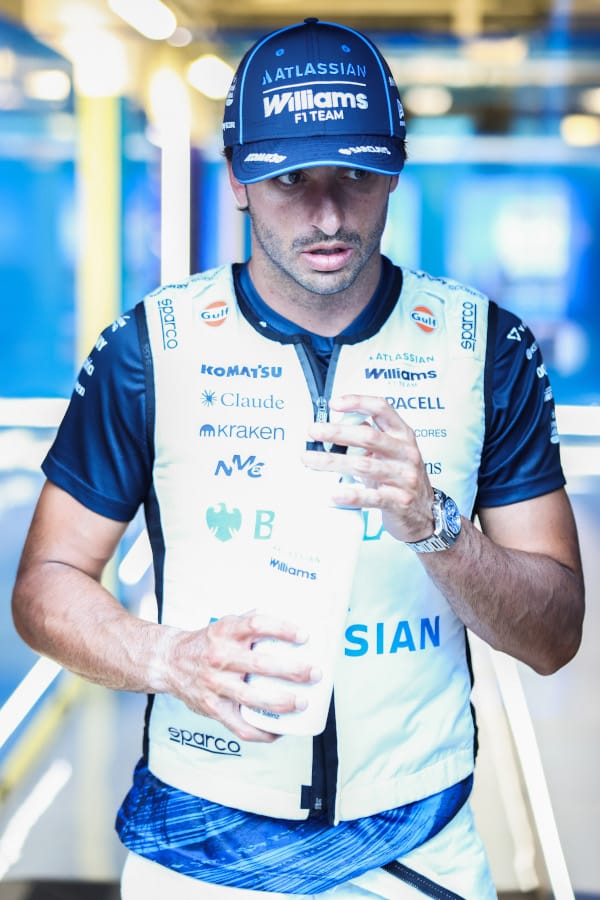
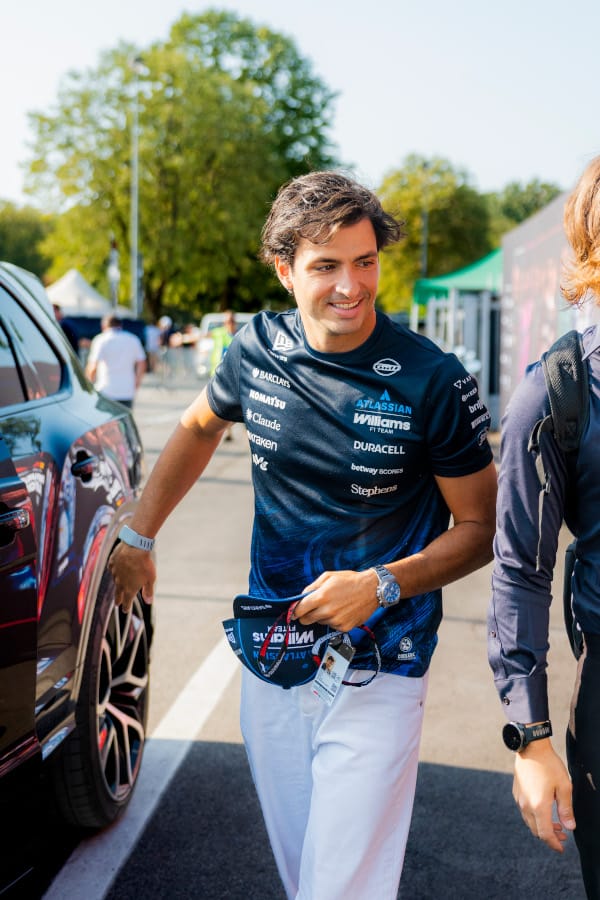
The team is now at the heart of an ambitious relaunch programme centred on Carlos Sainz and Alex Albon. Judging by the campaign images, Sainz is an ideal ambassador for both the brand and the collection.
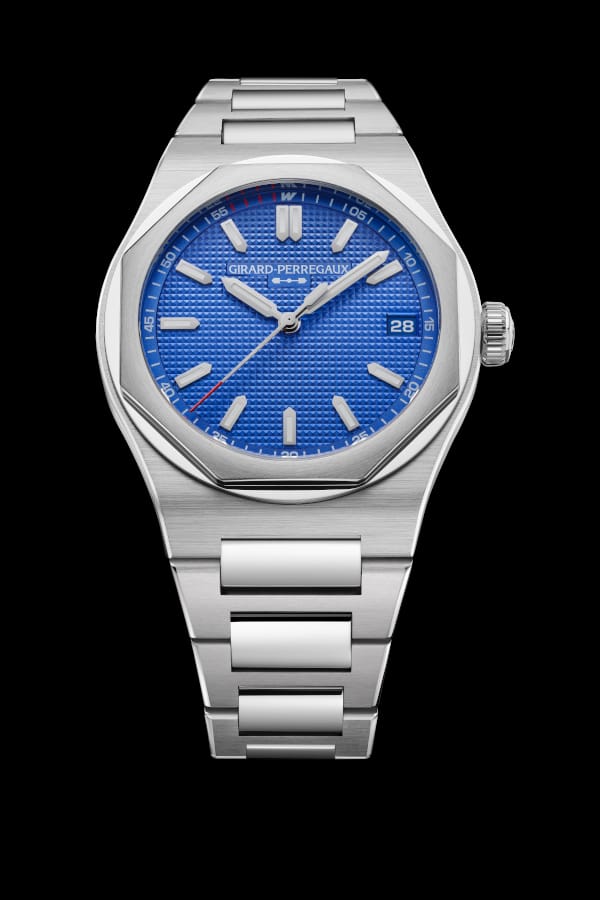
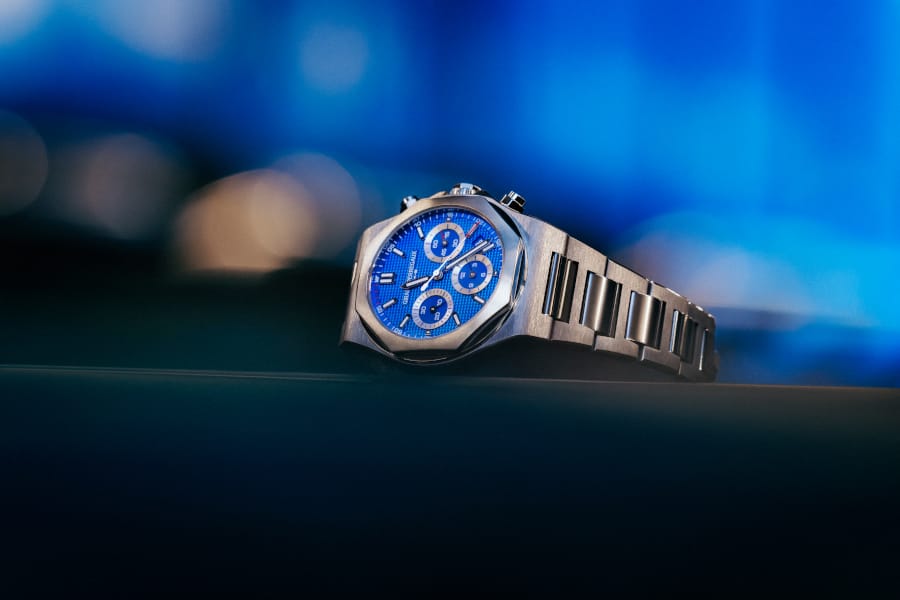
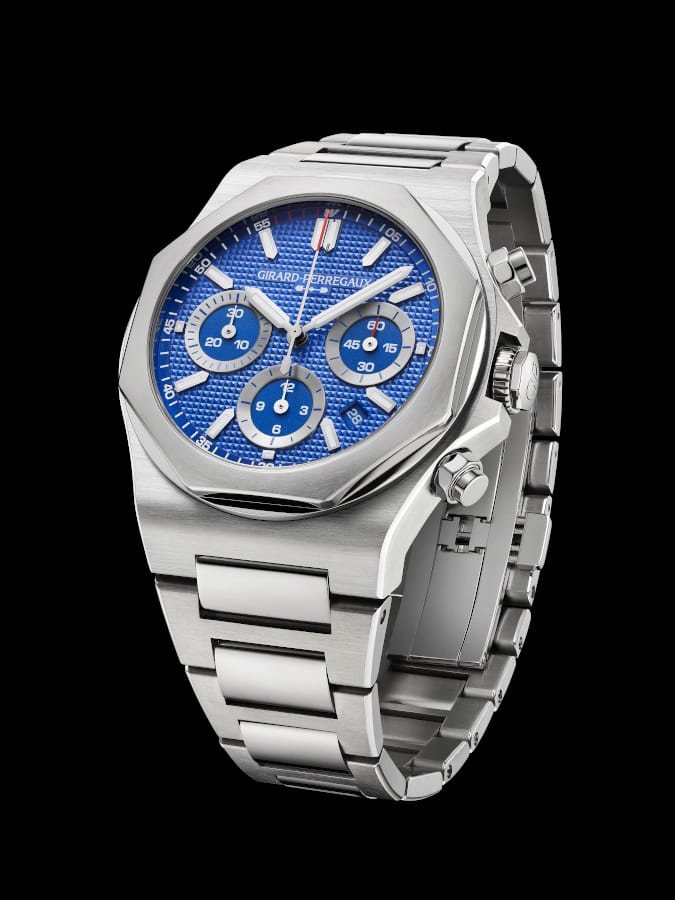
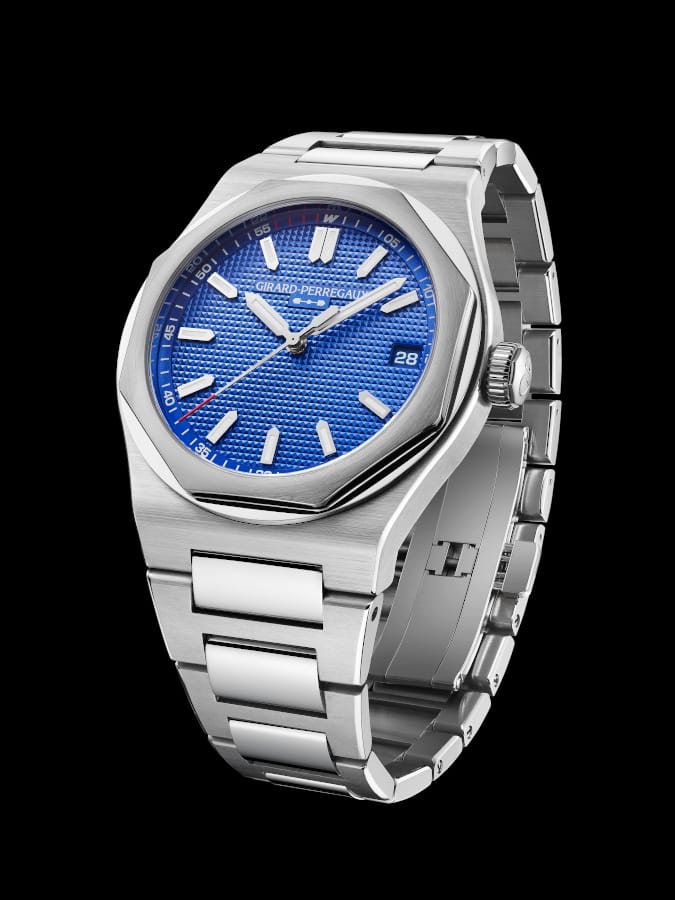
The time-only and chronograph models share a Clous de Paris dial in Williams blue, with the team’s distinctive “W” logo positioned at 12 o’clock.
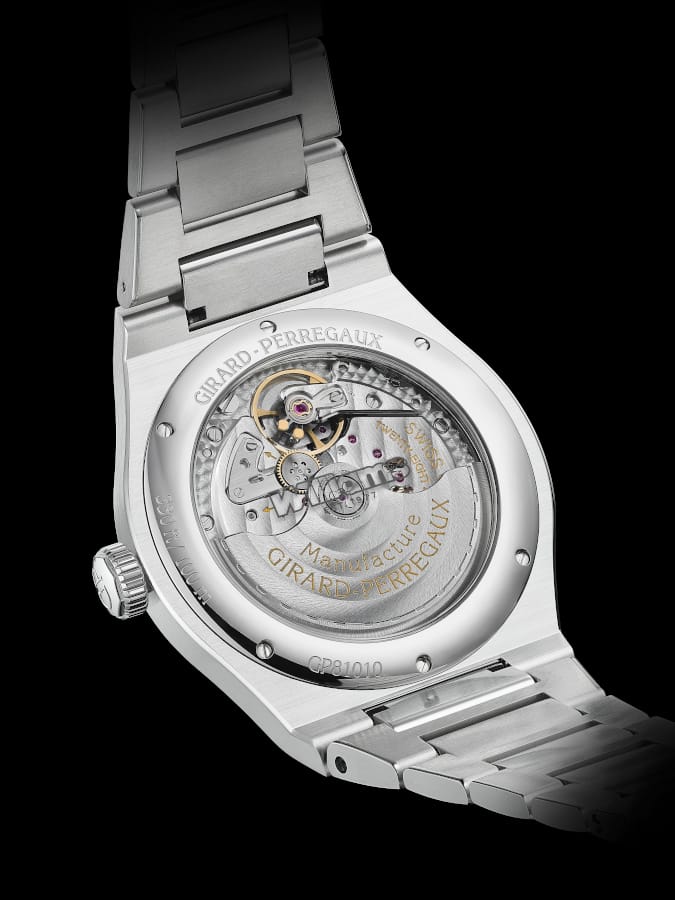
Red accents appear on the tip of the central seconds hand—used for chronograph seconds on the chronograph version—and on the final five minutes of the outer minute track. For the occasion, the sapphire case back features the full team name and logo.
Laureato 42 Williams Edition
Girard-Perregaux chose the 42 mm Laureato as the foundation for its first joint project with Williams. Over the generations, the Laureato has proved well suited to this type of collaboration; the BMW Oracle Racing editions, for instance, still enjoy a loyal following among collectors.
Measuring 42 mm across and 10.68 mm thick, the Laureato 42 Williams Edition is the entry point into the Girard-Perregaux x Williams universe.
Its blue dial and discreet team logo at 12 o’clock give it great commercial appeal. It is distinctive without overdoing it, with just a few well-judged motorsport references. It is also easy to wear and easy to pair.
Power comes from the automatic GP 1800-2892, with a 54-hourpower reserve.
It may not match the beauty of the new GP 4800 movement in the Laureato Fifty, but it is a well-established, tried-and-tested in-house calibre.
At €16,100, it is among the most attainable integrated-bracelet sports watches on the market—and arguably the most accessible Formula 1-linked option of its kind.
Laureato Chronograph 42 Williams Edition
The chronograph retains the strengths of the time-only model, while adding one notable specification: its case is made from 904L stainless steel.
This technical choice puts Girard-Perregaux in a club once dominated by Rolex, now also joined by Bvlgari with the Octo Finissimo and Ball Watch. The material delivers greater lustre, a more refined finish and enhanced corrosion resistance.
At first, I expected to prefer the ultra-clean Laureato 42. Yet the Williams chronograph arguably makes even more sense, given its direct link to Grand Prix timing.
It is powered by another tried-and-tested automatic movement, the GP3300-2893, which offers a 46-hourpower reserve. Retail price: €20,800.
First Thoughts
Girard-Perregaux returns to Formula 1 only a few months after the end of its previous partnership, but with a distinctly different approach—one that stands apart from its competitors.
Leaving mainstream brands aside, including the official timekeeper, Formula 1 continues to attract niche and independent watchmakers whose products echo the sport’s high-tech character through innovative materials and complex mechanics.
The first product of the Williams F1 partnership, by contrast, is relatively traditional. In this initial launch, it brings back some Gino Macaluso’s vibes—albeit brought forward to 2026.
The almost hidden “W” logo, the understated palette and the overall restraint—aside from the lettering on the sapphire case back—make for an elegant, understated collection.
That said, the partnership is still very new. It will be interesting to see how the project develops as the two teams get to know one another and have more time to share their ideas.
(Photo credit: Girard-Perregaux)
In this article:
Chronograph
Complication that helps the wearer to measure time intervals without affecting the watch's standard time-telling function.
Case back
It can be screwed in, pressure-fastened, or secured to the case via screws. Occasionally, it comes as a single piece, with the case of specific professional diving watches (for example,…
Case
It encases the mechanical movement and is crafted in one or more parts. It can also be a single piece, as with some professional diving watches, or made of unconventional…
Power Reserve
A mechanical watch feature displays, on the dial or the case back, the remaining power in a watch movement, showing the length of time until the timepiece must be rewound.
Calibre
A calibre is the type of watch movement encased in an assigned timepiece. Its name is usually associated with the manufacturer's name and a standard code, e.g., ETA 2824.