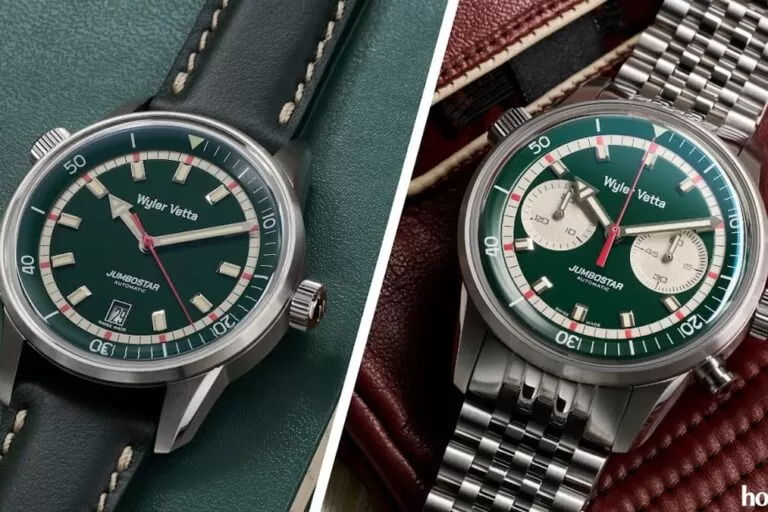
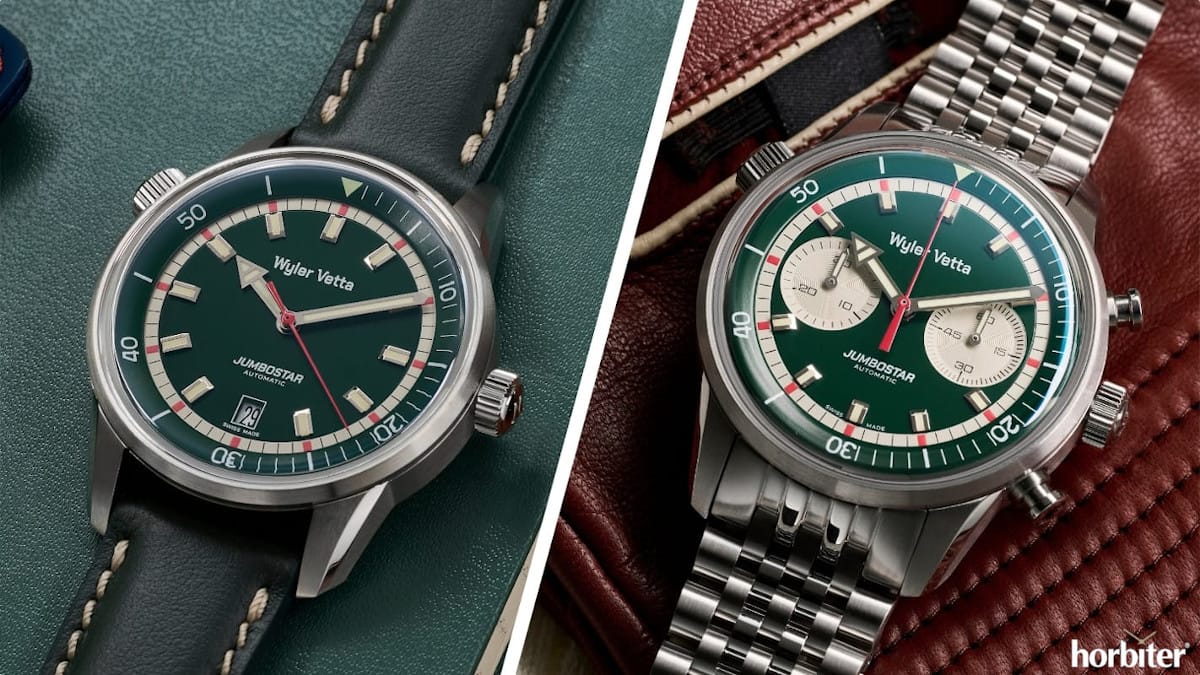
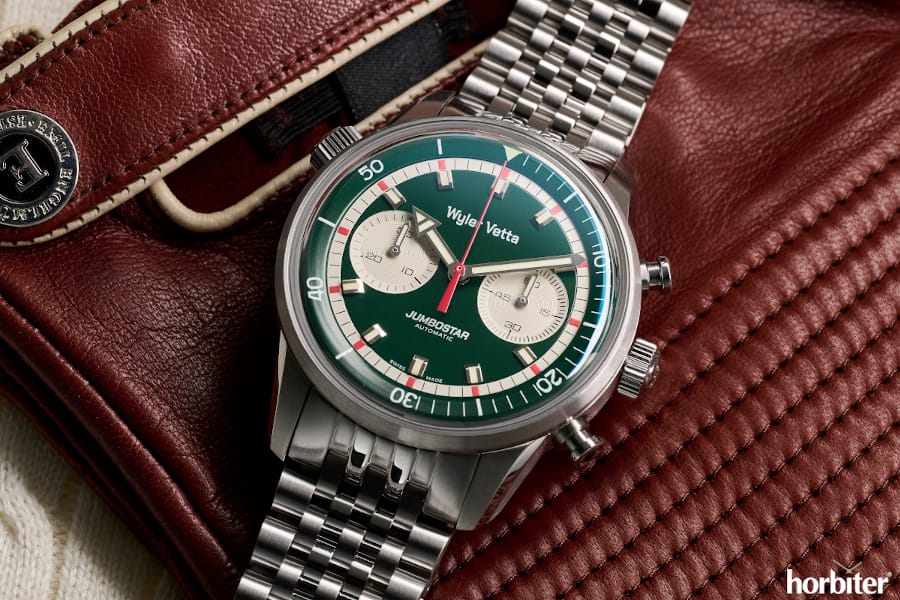
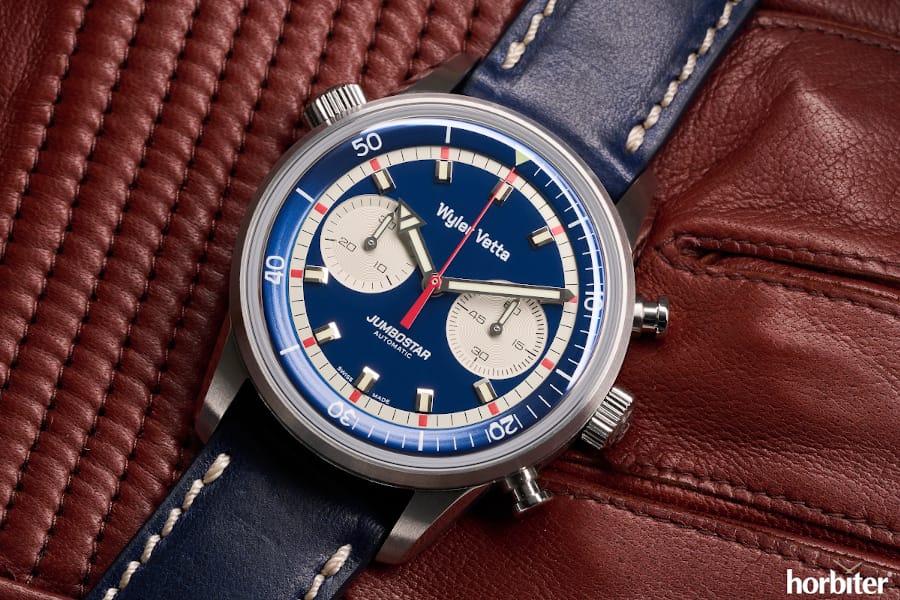
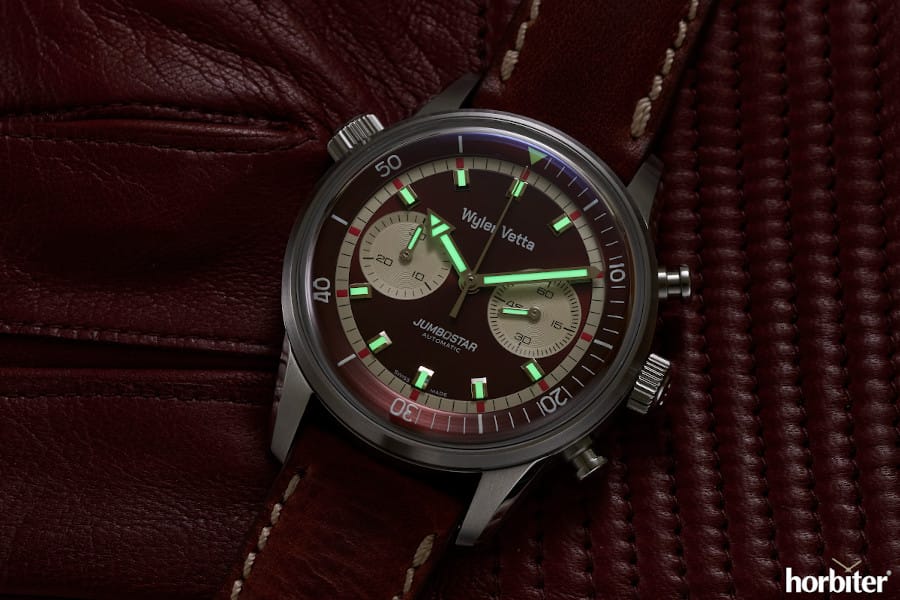
1968 was a turning year for many reasons. Ferrari launched the Daytona, Norton their Commando 750 and Stanley Kubrick revealed “2001: A Space Odyssey”. Back then, Wyler Vetta, the brand once chosen by Italian sportsmen and actors, which celebrated its hundredth anniversary in 2024, unveiled the Jumbostar Chrono.
During the anniversary celebrations held last May, the brand, whose management welcomed Beppe Ambrosini, a long-standing top executive in the premium luxury watch brand business, revealed its brand vision and new collections. The new Jumbostar collection holds a primary place in the roadmap.
The return of the Jumbostar
Wyler Vetta’s development team overhauled the whole collection while preserving its key pillars: the original Jumbostar’s golden size. Thus, the outgoing case downsized to 40 mm, like the 1968 original one. Jumbostar referred to the case’s Jumbo size, compared to the market’s upper-limit size of 38 mm. They raised the bar inside and out during the re-engineering process when comparing, for instance, the new Chrono with the brand’s 2021 Jumbostar Chrono re-edition.
The case and bracelet went under the loupe, along with renovated mechanical movements. The 40 mm large case comes standard with a thickness of 12.6 mm on the Chrono, the collection’s hero product, and 10.9 mm on the three-hands Jumbostar to fit as many wrist sizes as possible.
From this perspective, the “beads of rice” mesh bracelet ensures superior comfort: its links taper your wrist as seamlessly as possible. Such design provides an unparalleled everyday wearing experience and avoids pinching, making it the favourite option when designing a new bracelet.
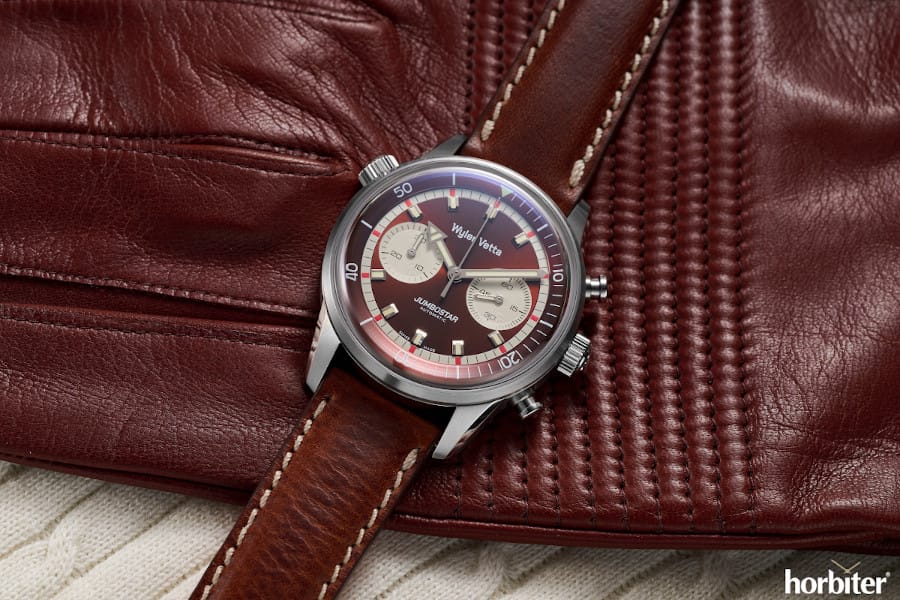
It houses seven links, with mirror-polished mid ones, and ends with a brushed double safety-button-secured clasp. Designers added a quick-release mechanism on both sub-collections so that it can easily be swapped with a Made in Italy leather strap on a pin buckle.
The dial: a nod to the original Jumbostar
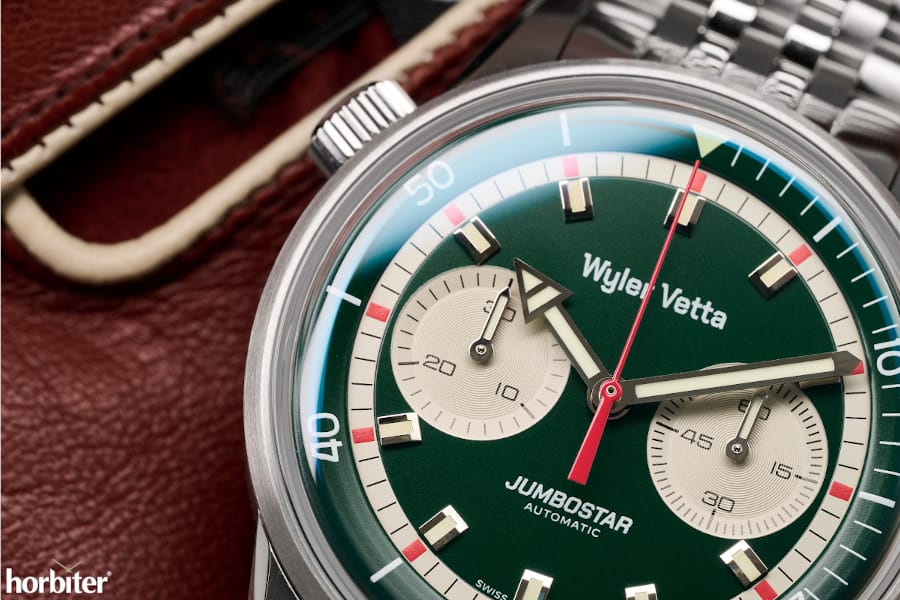
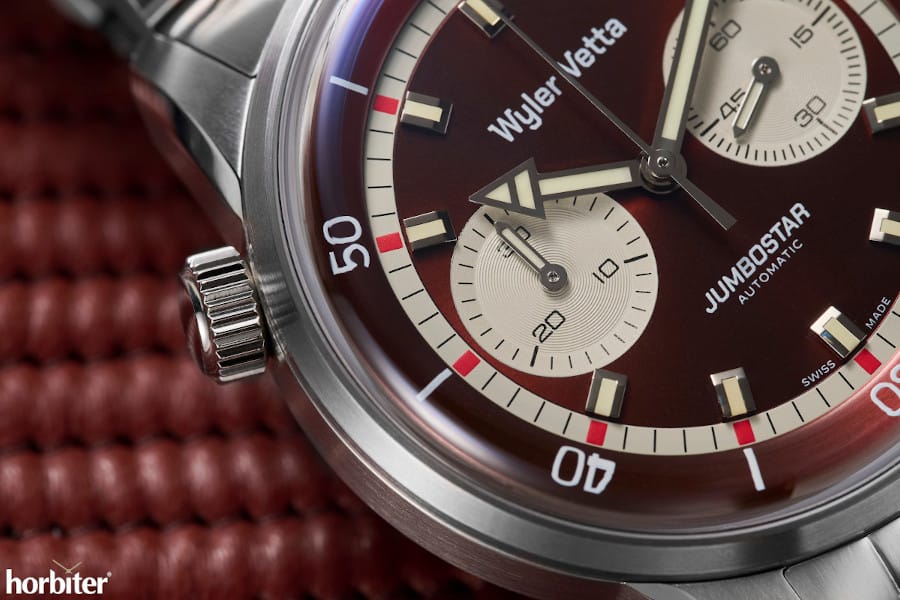
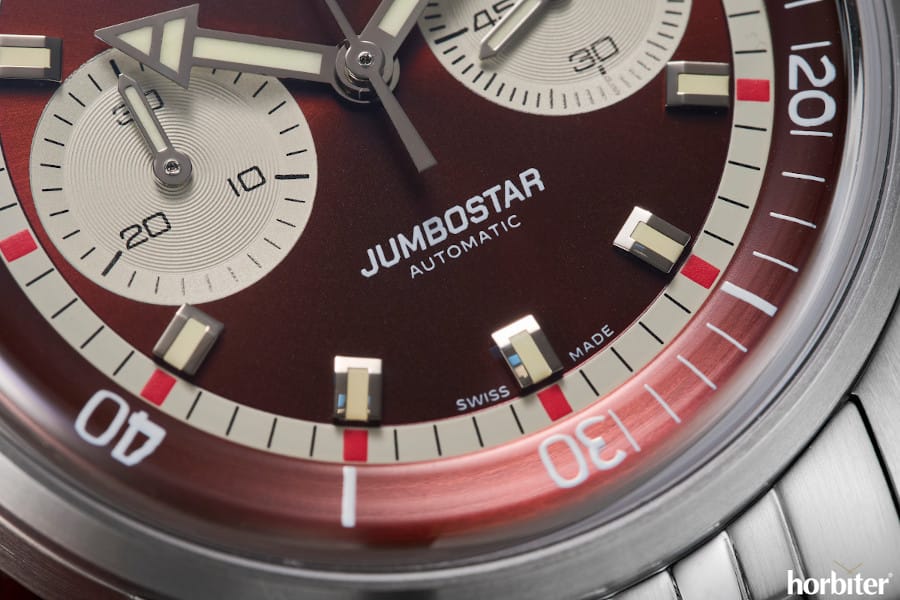
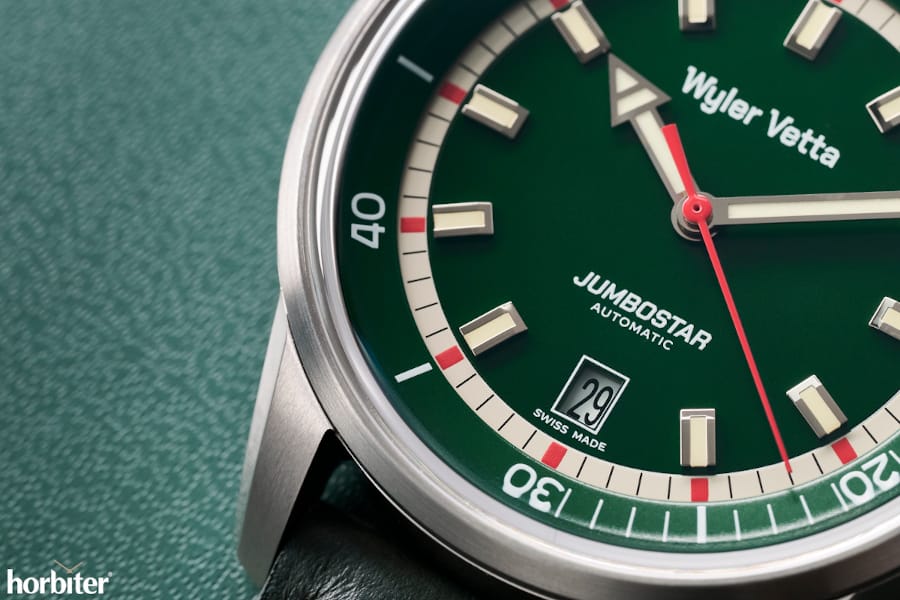
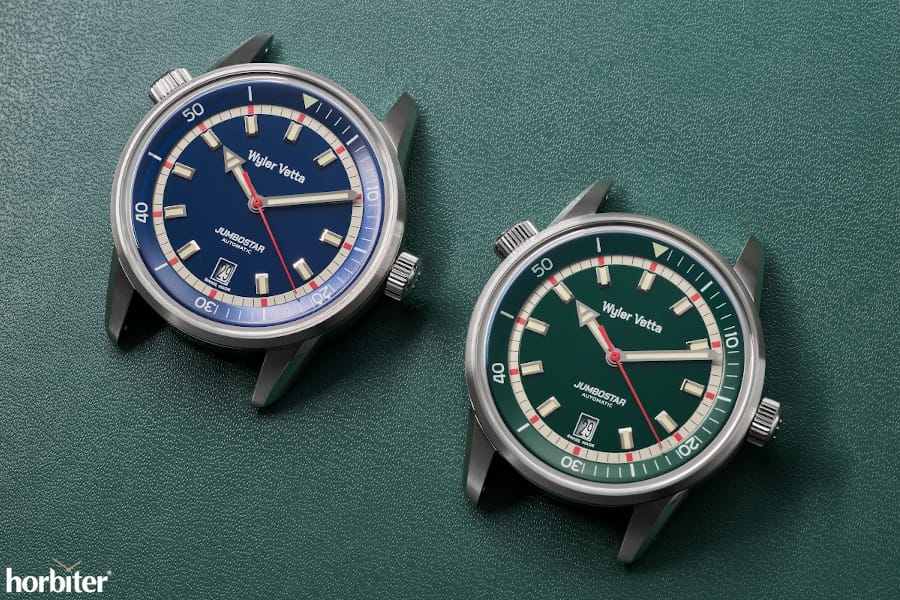
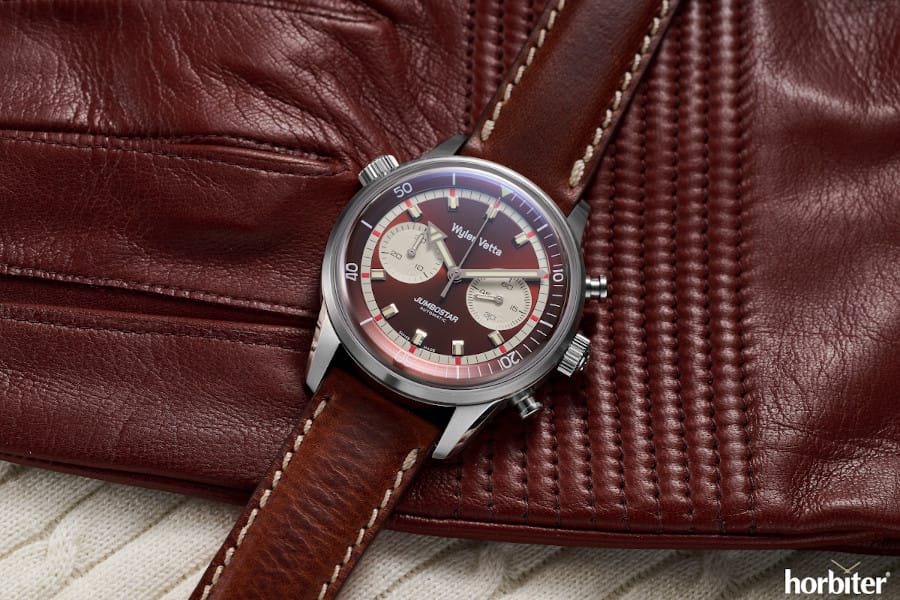
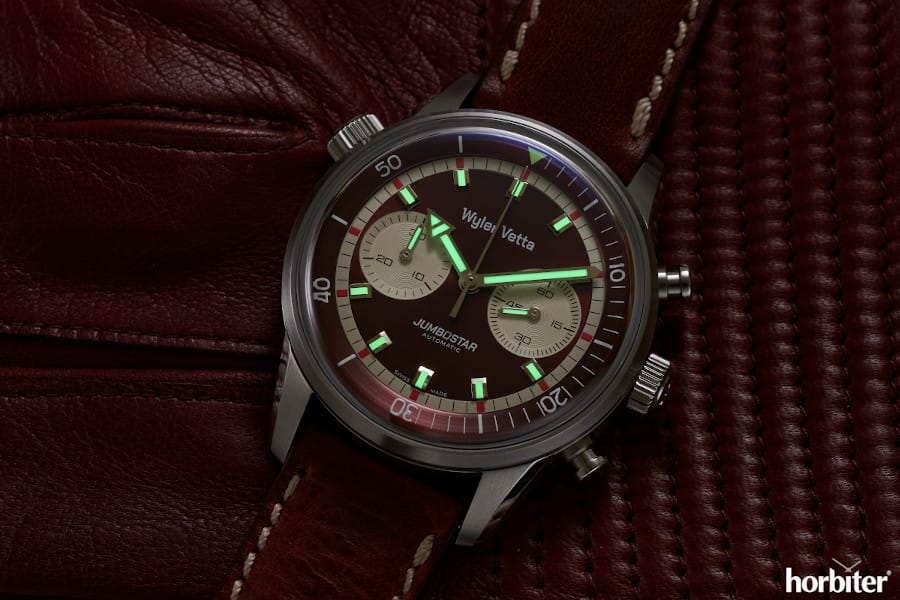
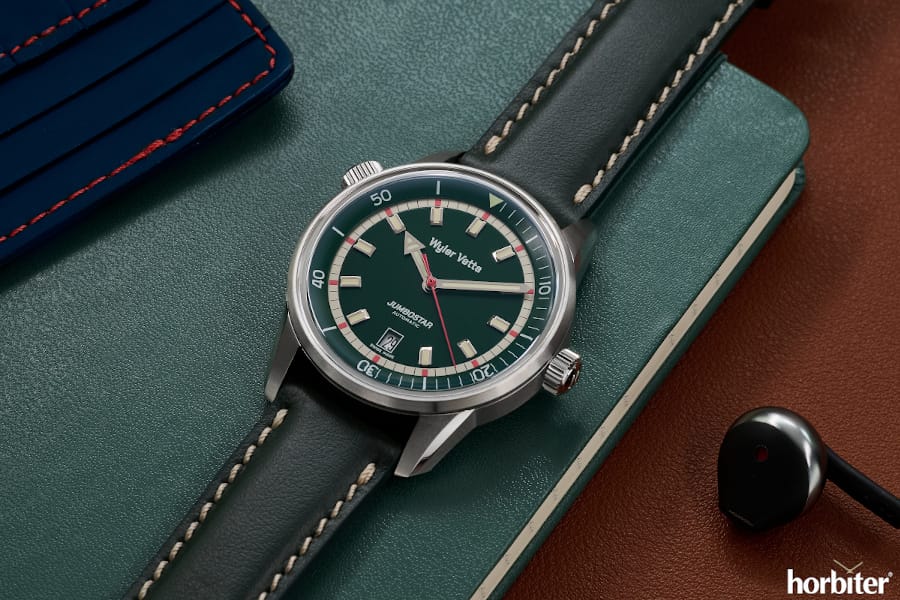
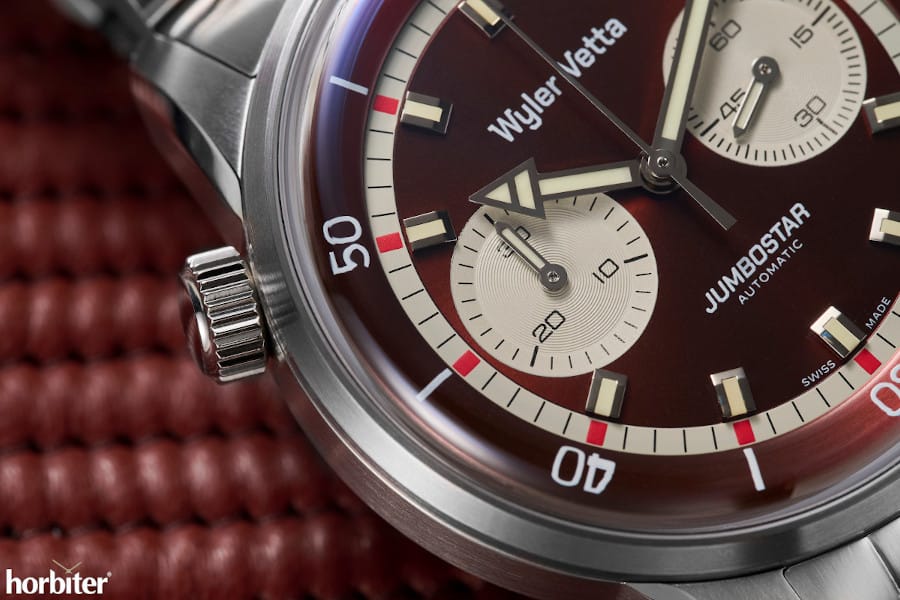
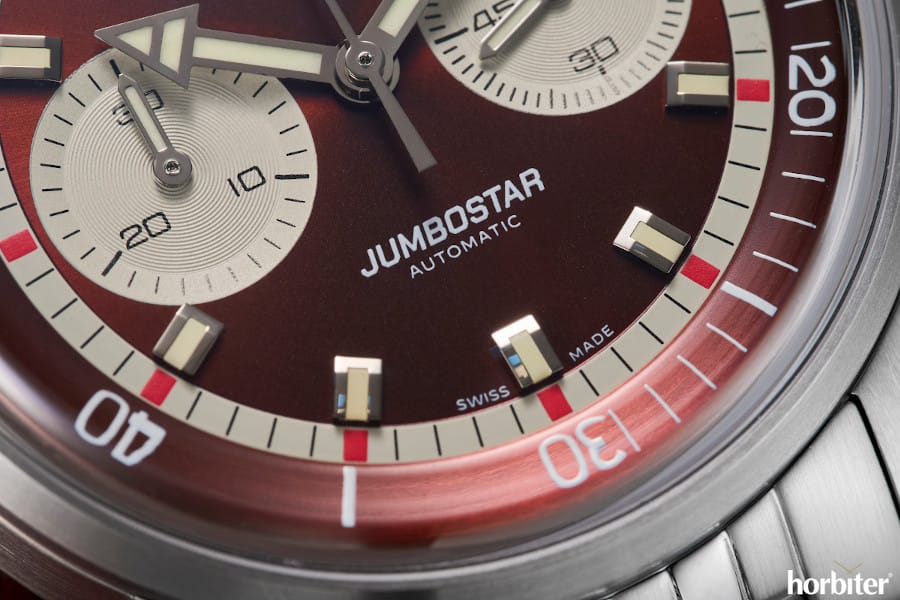
Four options are available: blue, black, green, and rust (brown), pictured here. However, the rust variant best exemplifies the new collection’s vintage DNA. Green and blue, whose tones are pale compared to the rust dial’s sunray finish, are warmer, especially on the Chrono, where they perfectly contrast the bright subdials. As far as I’m concerned, green sits at the top of my wish list.
Our perceptions differ on a Jumbostar 40. The blue dial nicely matches the three-hand layout and the matching red central running seconds hand. Again, the rust option plays as a classic outsider: the rhodium-plated central hand turns it into the most elegant three-hand Jumbostar.
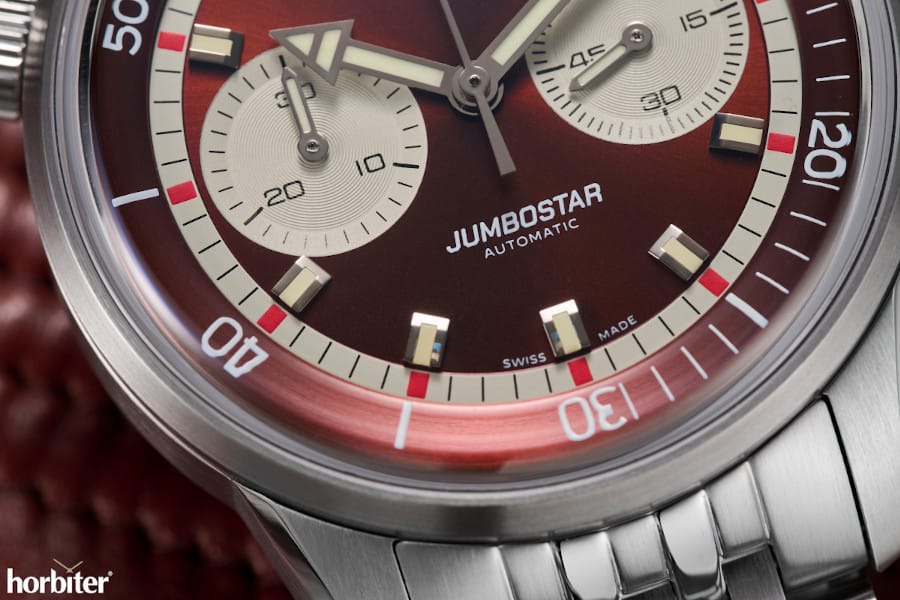
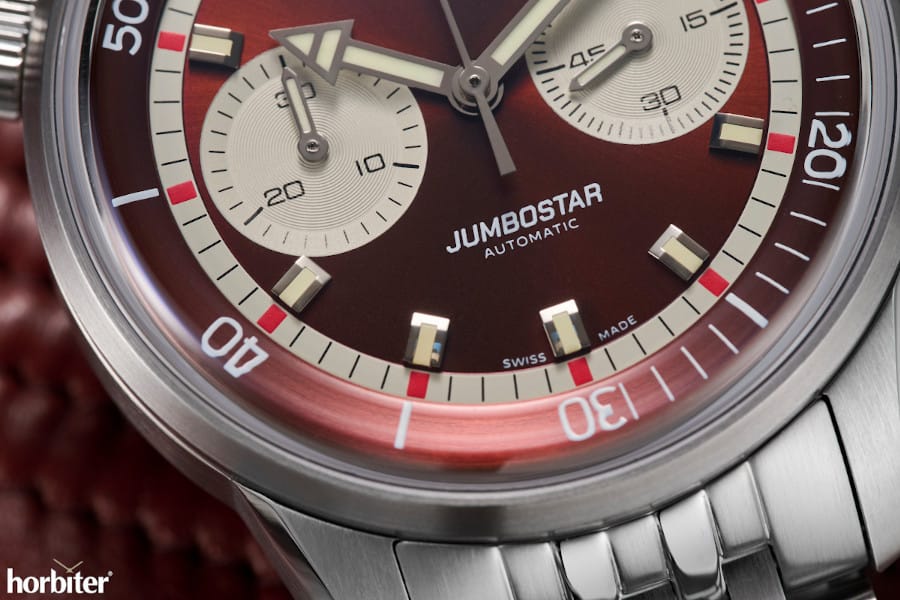
Both iterations vaguely resemble some patina dials, and such tone is stunning when paired with the no-date Chrono’s layout and the original “Jumbostar” font. Our macros highlight the multi-level displacement with the rotating inner bezel on top.
The slim case
A domed sapphire glass further highlights the tridimensional layout while showcasing how compact the case’s thickness is. The watch’s overall thickness, from the case to the sapphire glass, is 12.6 mm. The same goes for the Jumbostar 40, whose thickness stops below 11.0 mm.
It is an excellent achievement, thanks to the ETA 2894 calibre, which is known for being robust and easy to service, as it is compact. The Jumbostar 40 houses a La Joux Perret G100 instead. Here is a 4 Hz calibre boasting a 68-hour power reserve, thus outperforming the ubiquitous Sellita SW200-1 in thickness and performance.
Final thoughts
The key project choice was to place a Jumbostar where it belongs, i.e., as close as possible to its roots, taking the most out of the 1968 silhouette: a timeless design you can identify by removing any logo, showcasing lovely proportions between case, counters, lugs and bracelet. We’re here referring to the Chronograph. The Jumbostar 40 aims to attract an audience that loves a cleaner layout and has a smaller budget but loves Jumbostar’s style.
Sleek is the first term we would pick. The watch’s touch and feel are top-notch, and the folding clasp with double safety push buttons is our area of improvement. We would have gone for a bigger, brushed-to-mirrored polished clasp. Also, a 100-meter water resistance suggests a dial-colour-matching rubber strap option is a welcome addition, especially during summer.
Last but not least is its price point. The Wyler Vetta Jumbostar Chrono retails for 2,900 euros on a bracelet and 2,750 euros on a strap, and a Jumbostar 40 retails for 1.600 euros on a bracelet and 1.450 euros on a strap. Wyler Vetta built the best possible contemporary reissue of the Jumbostar. The Chrono drives us back to the late-sixties golden age of chronographs and offers a beautiful and easily recognizable style. The three-hander is simply the Jumbostar of sports watches in steel.
(Photo credit: Horbiter®)
Giovanni Maria Di Biase @Horbiter®
In this article:
Case
It encases the mechanical movement and is crafted in one or more parts. It can also be a single piece, as with some professional diving watches, or made of unconventional…
Strap
A leather, rubber or other material band that secures the watch to the wearer's wrist.
Date
It indicates the date of the month. There are different types of display: via a window or a pointer, where an additional hand is usually placed centrally or on a…
Bezel
The bezel is particularly useful on diving watches, allowing you to check dive times. In this case, it unidirectionally rotates and usually comes in two parts: a metal (or ceramic,…
Power Reserve
A mechanical watch feature displays, on the dial or the case back, the remaining power in a watch movement, showing the length of time until the timepiece must be rewound.
ETA
Swiss manufacturer of mechanical and quartz movements owned by the Swatch Group.
Calibre
A calibre is the type of watch movement encased in an assigned timepiece. Its name is usually associated with the manufacturer's name and a standard code, e.g., ETA 2824.
Chronograph
Complication that helps the wearer to measure time intervals without affecting the watch's standard time-telling function.