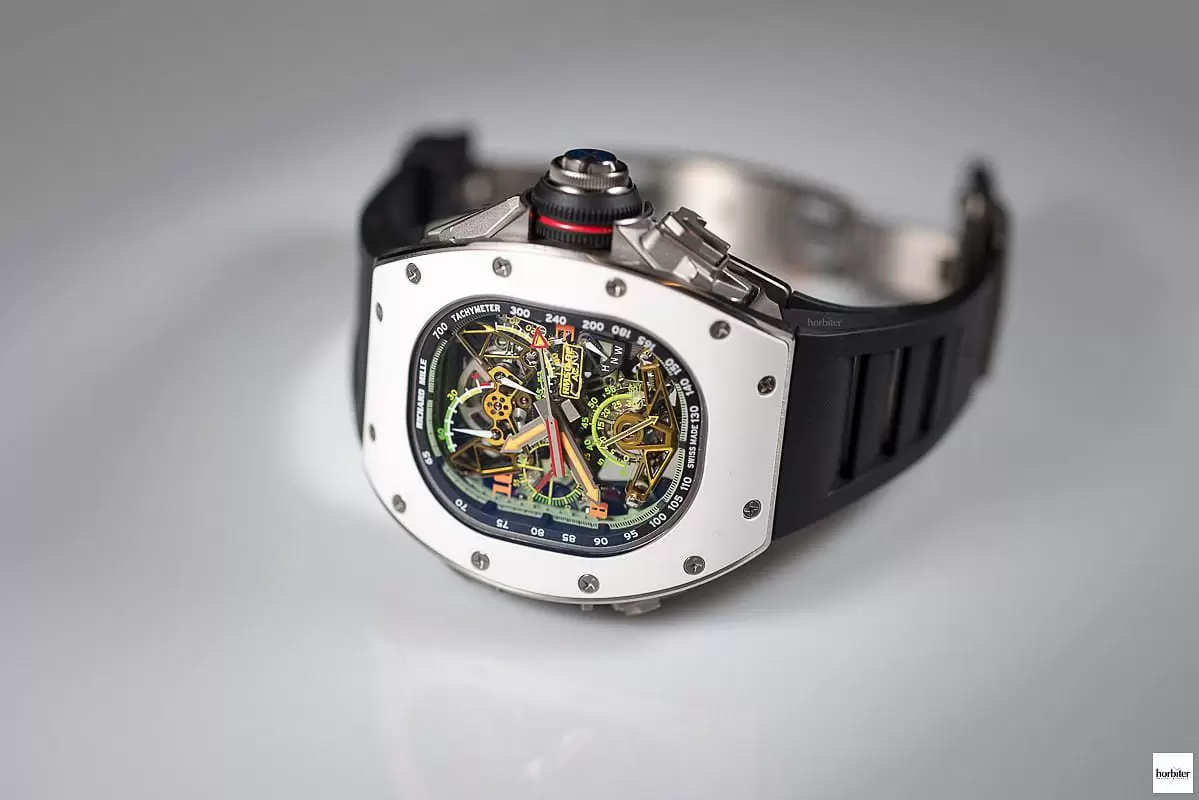
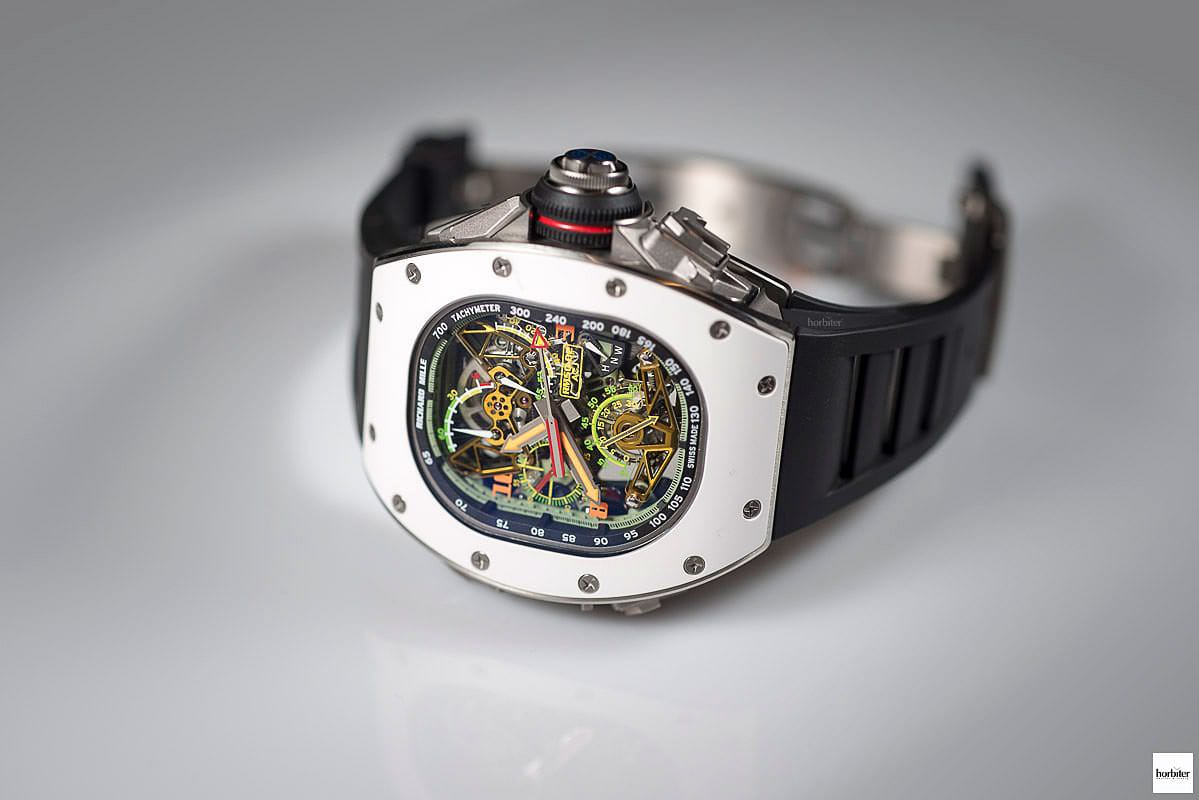
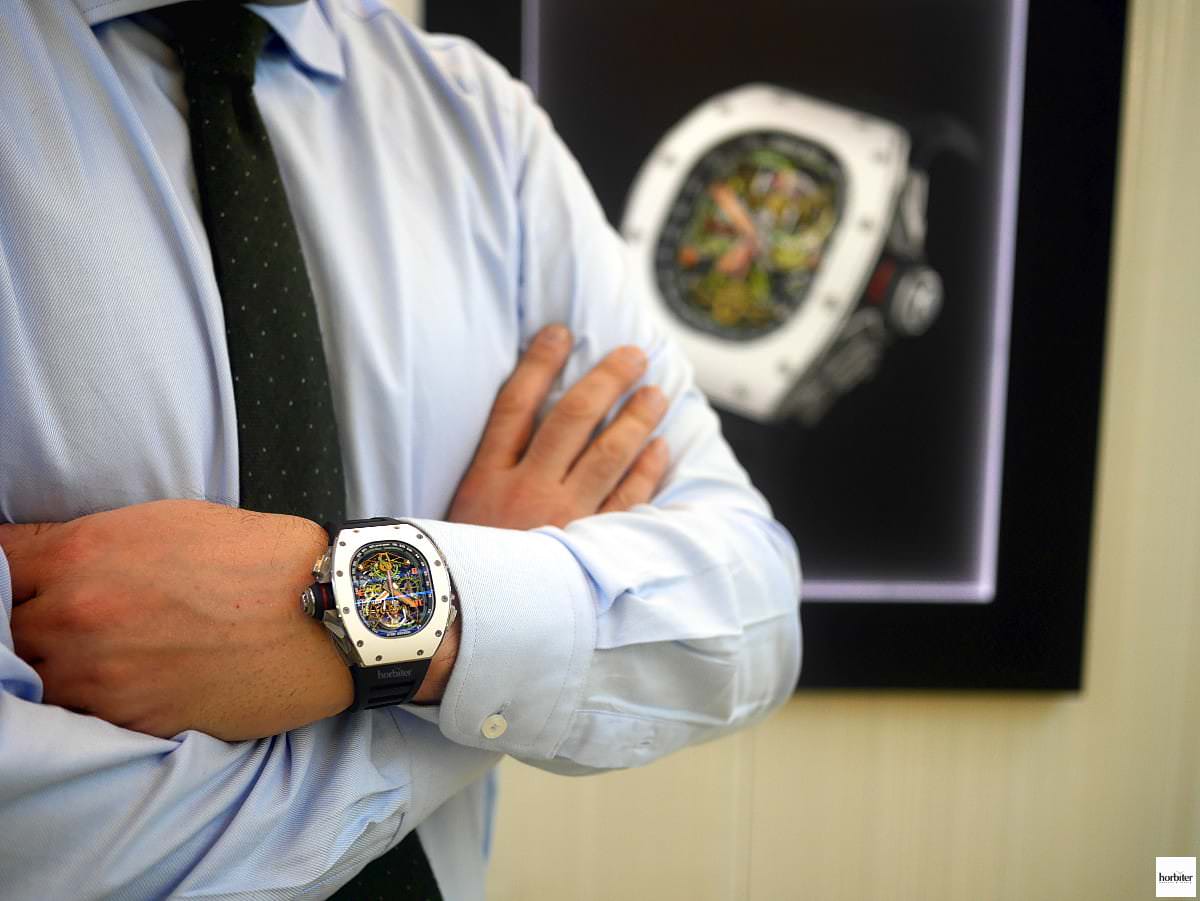
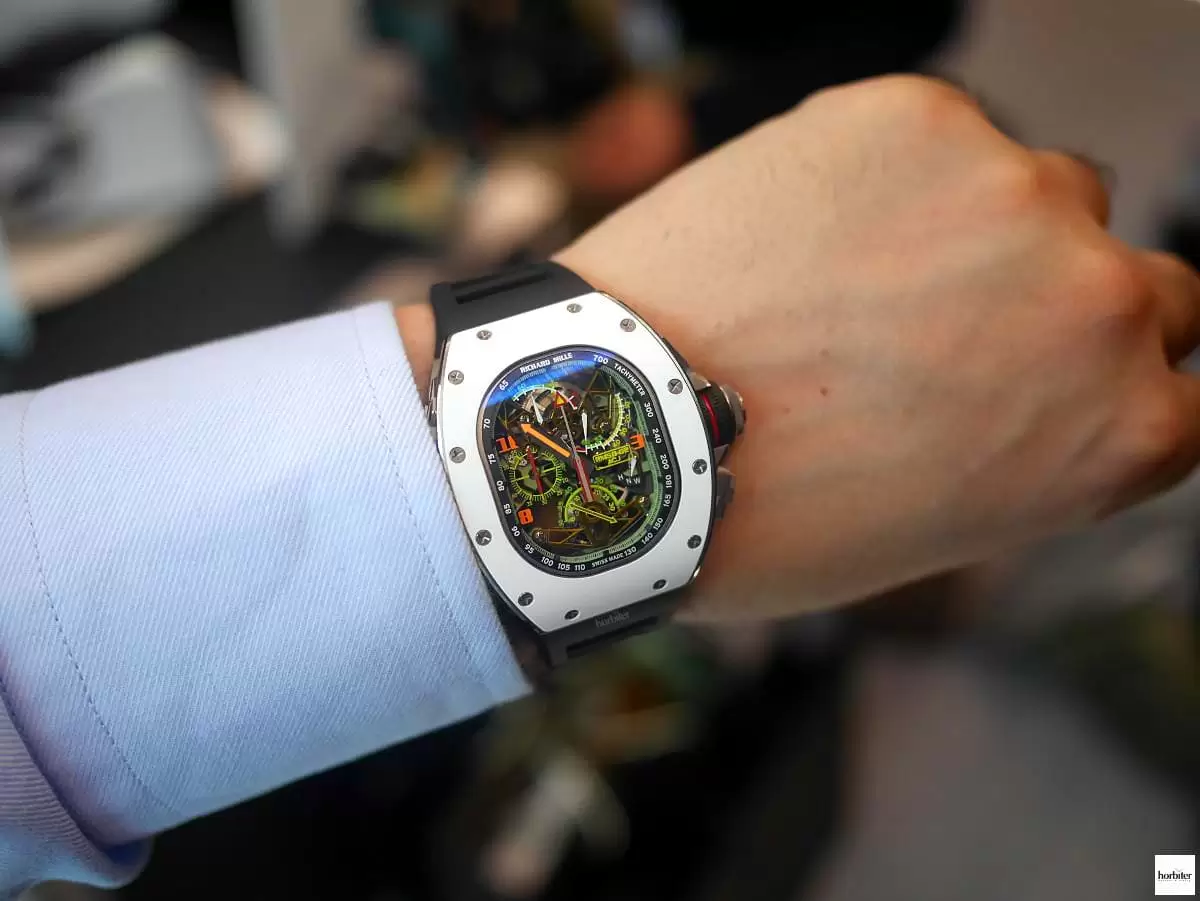
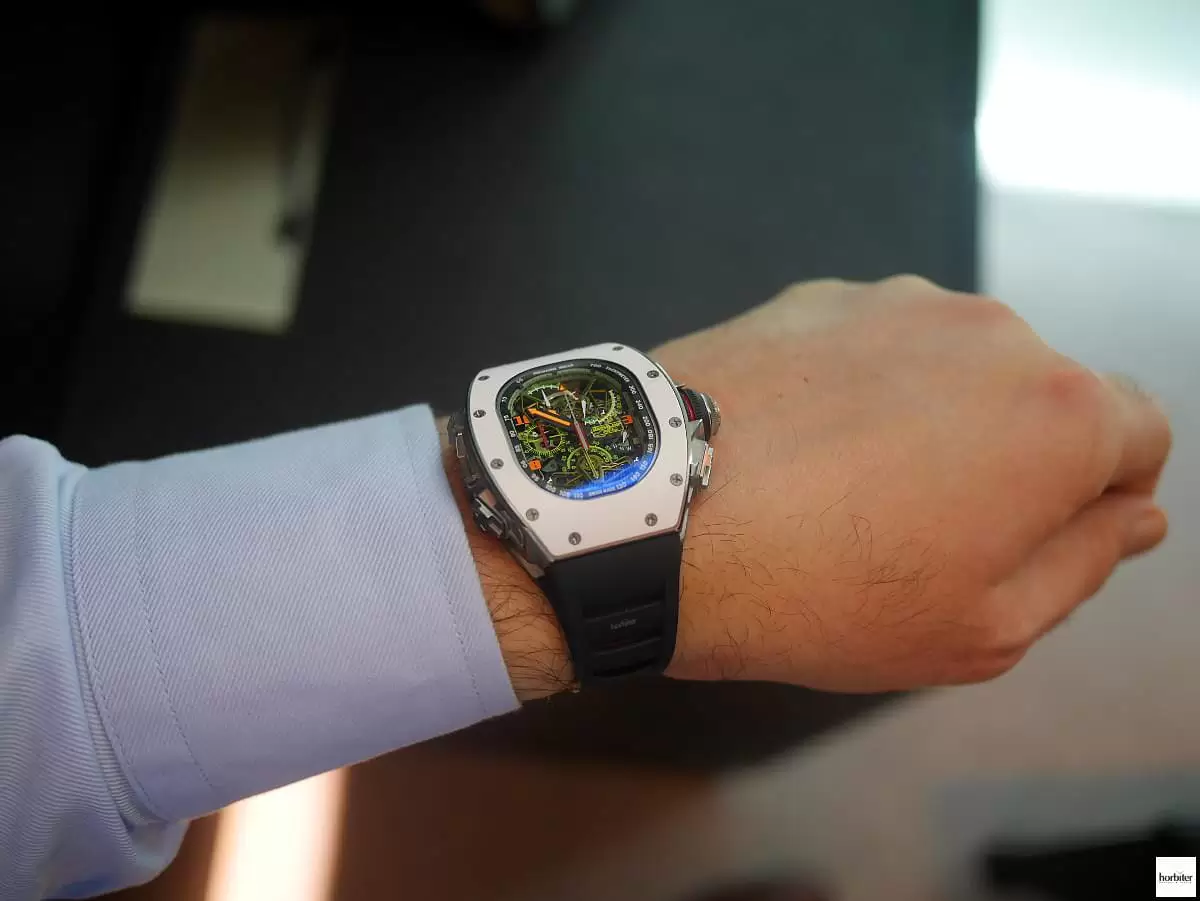
The new Richard Mille RM 50-02 ACJ shocked the industry when it came out for its sticker price rather than the specs sheet. Last Saturday, we posted our first picture on social media, receiving an impressive response after disclosing its retail price: 1.1450.000 euros.
What makes the Richard Mille RM 50-02 ACJ a one-million-euro-plus wristwatch? There are multiple factors contributing to such an impressive price, including technical and non-technical aspects.
Never build a retail price upon its full production cost; Richard Mille being Richard Mille, such a marketing rule has a whole new meaning when applied to the brand.
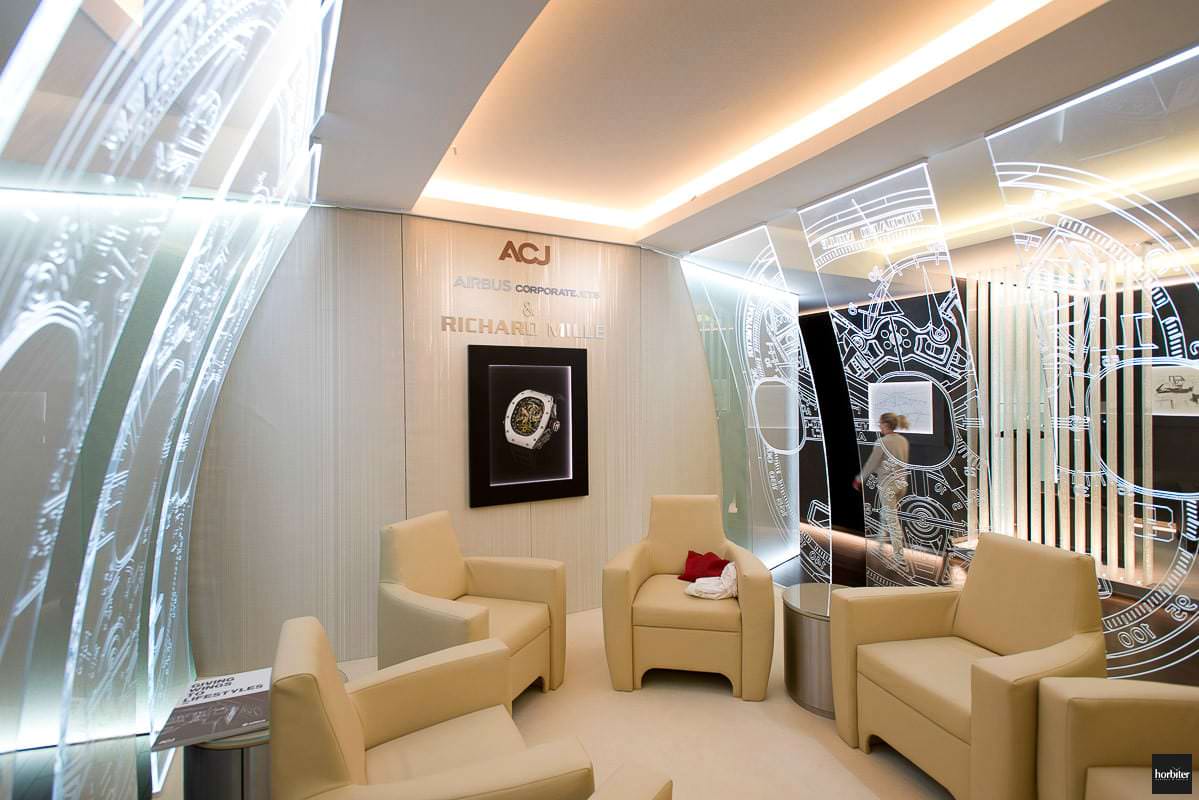
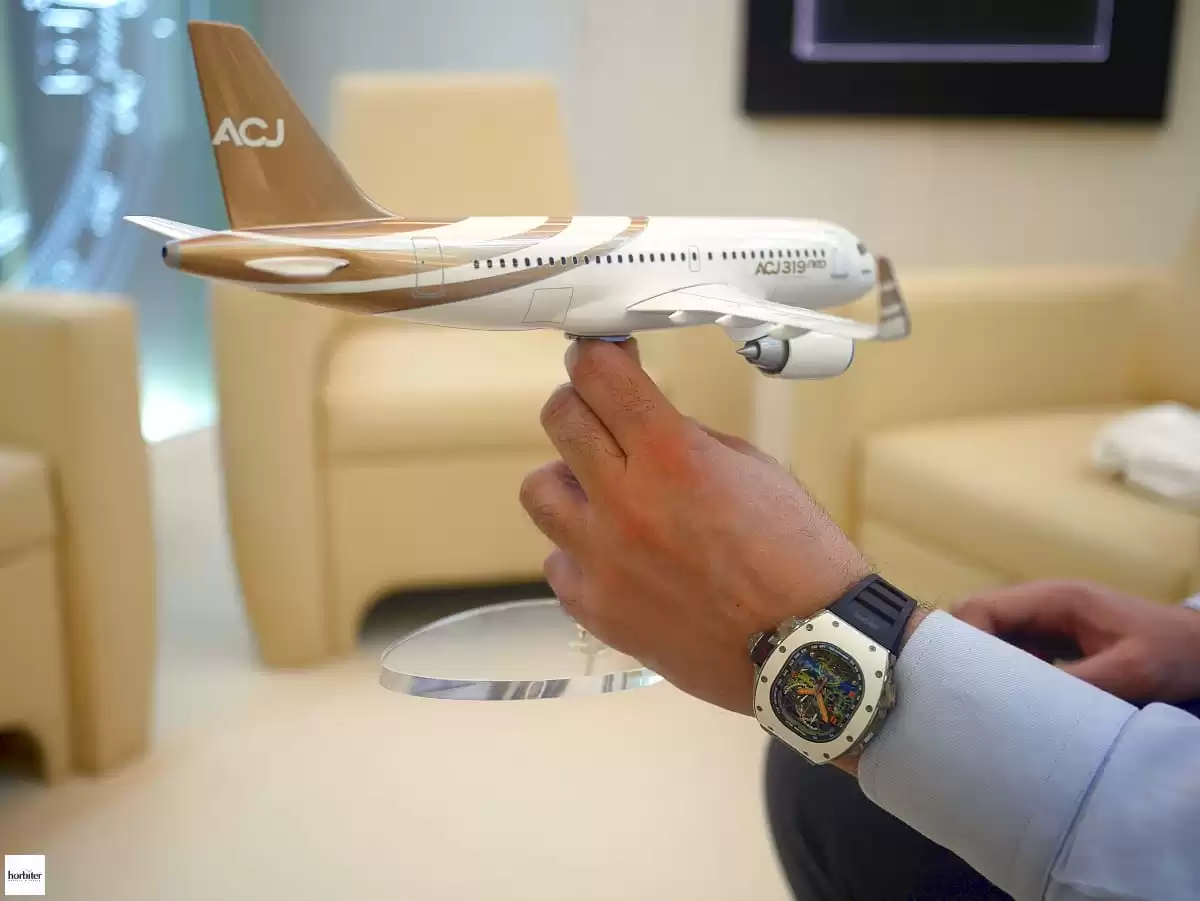
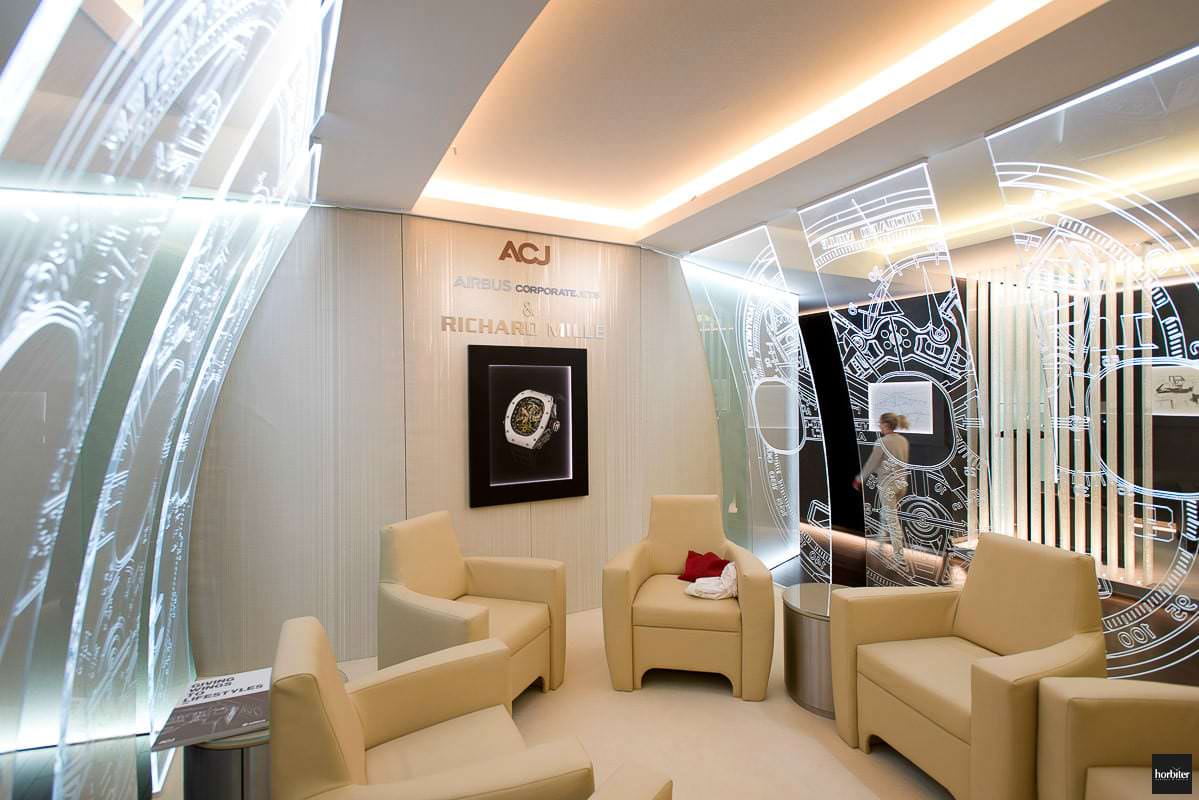
Richard Mille crafted their RM 50–22 ACJ upon signing an exclusive partnership with Airbus Corporate Jets, Airbus‘s department devoted to luxury corporate aviation, whose customers include top executives, CEOs, and entrepreneurs.
Richard Mille brought partnership to new heights; the brand introduced technologies mimicking F1, akin to a racing team, whose single seater often is the result of a car and engine sourced from different companies.
The brand and Benoit Defforge, Airbus Corporate Jets CEO, partnered to engineer a timepiece encompassing product and technology from both companies.
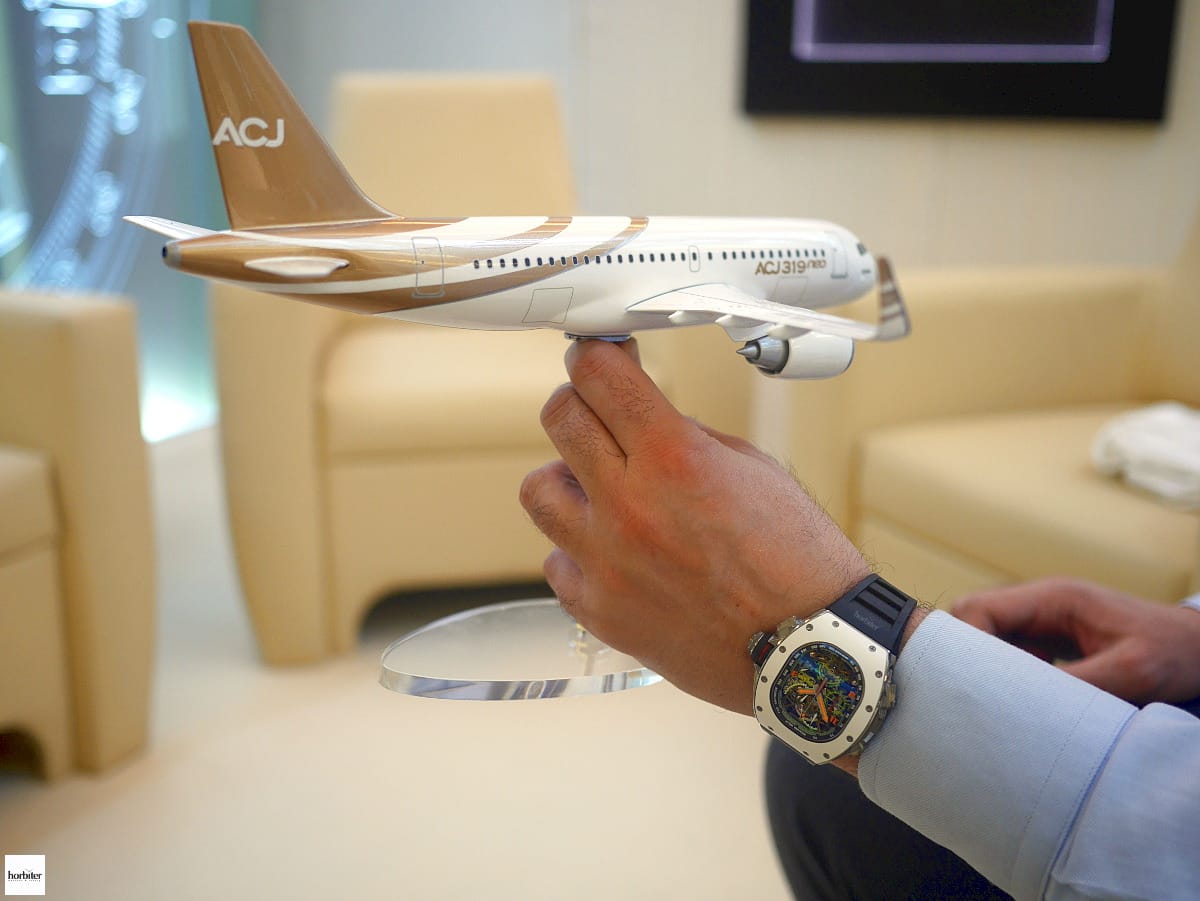 Don’t call it a “co-branding” project. The sole Airbus wording you’ll spot is the official brand’s logo etched on the crown.
Since it hit the market, Airbus stood out for advanced technology like “fly by wire” piloting – the Airbus A320 became, in 1984, the first aircraft ever to adopt a full-digital fly-by-wire control system – and composite materials for fuselage and other assemblies. Same Richard Mille did.
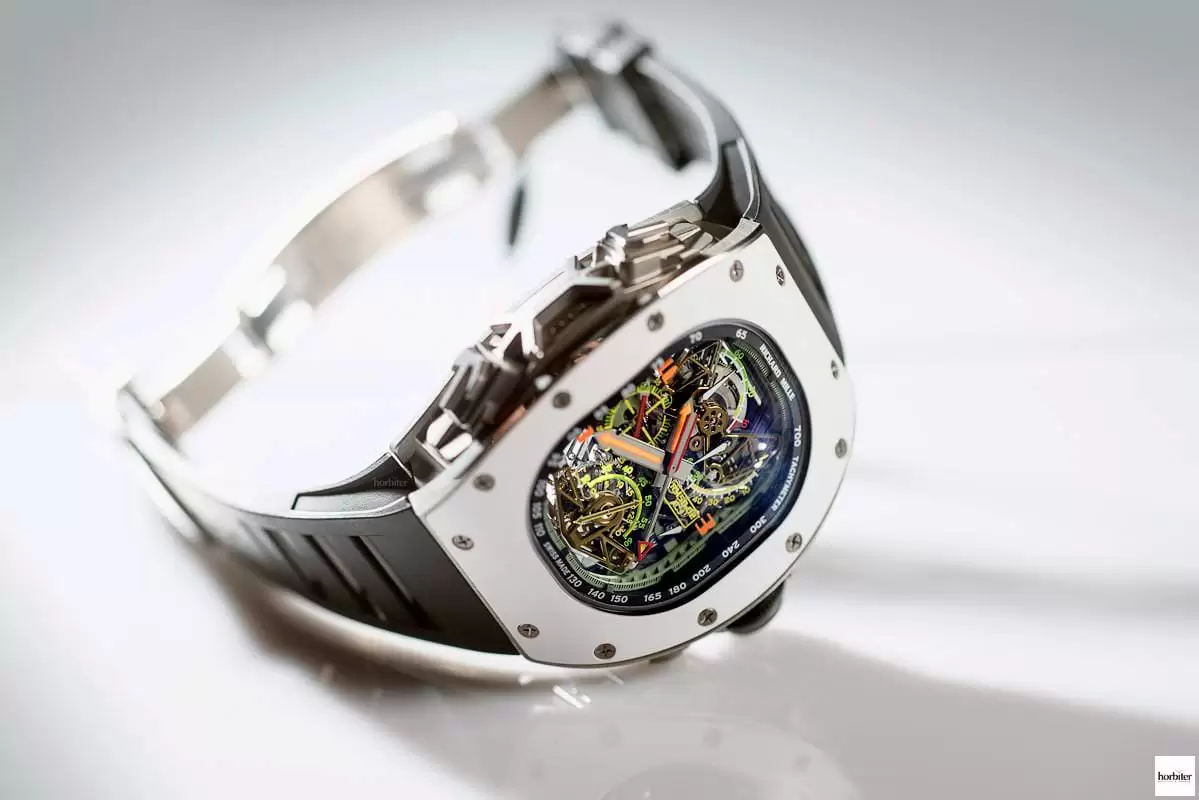
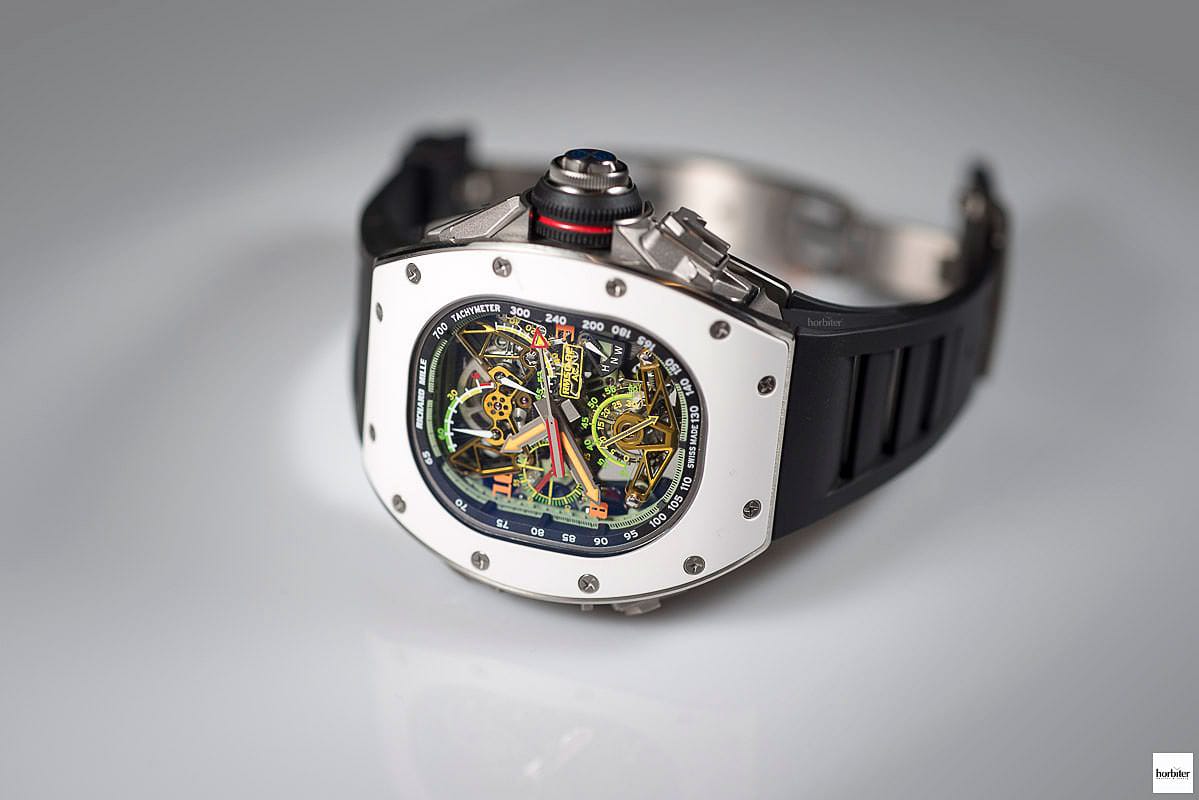
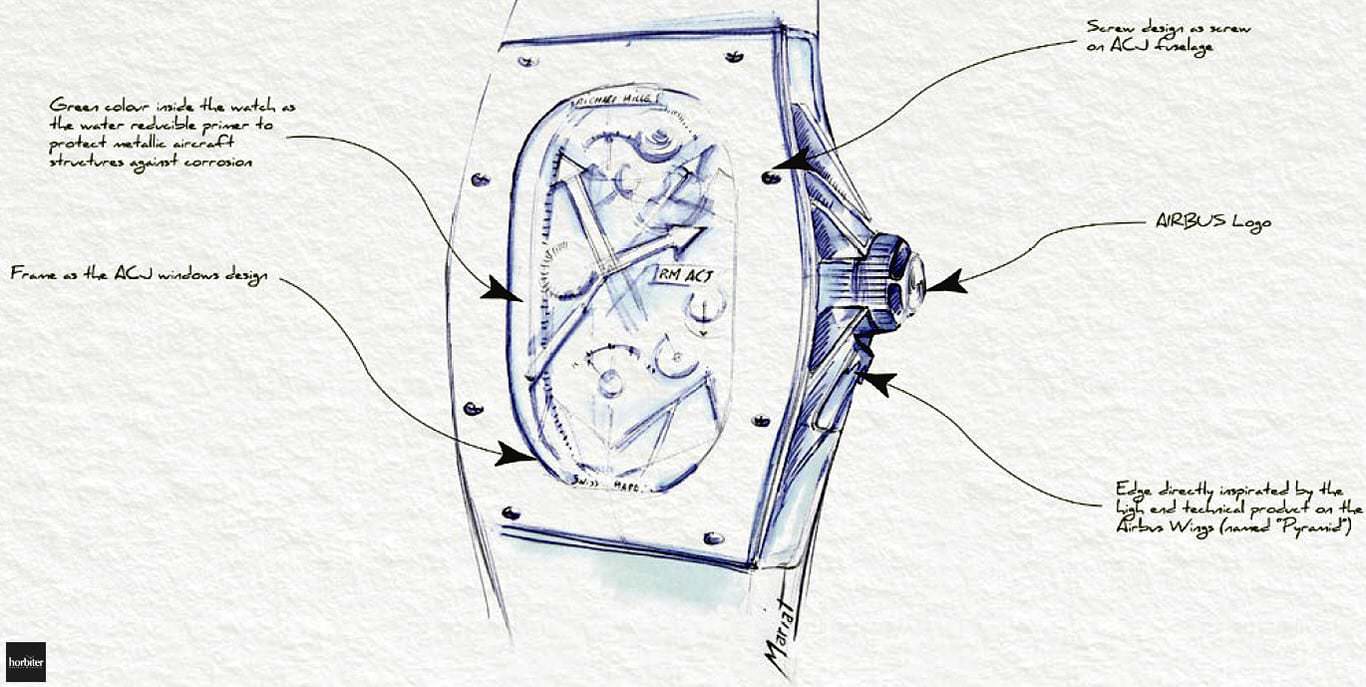 Sylvain Marian, Airbus Corporate Jets Creative Designer, sketched the Richard Mille RM 50-02 ACJ in the shape of a porthole-like case secured to the middle section via “Torq set” screws as seen on an aircraft.
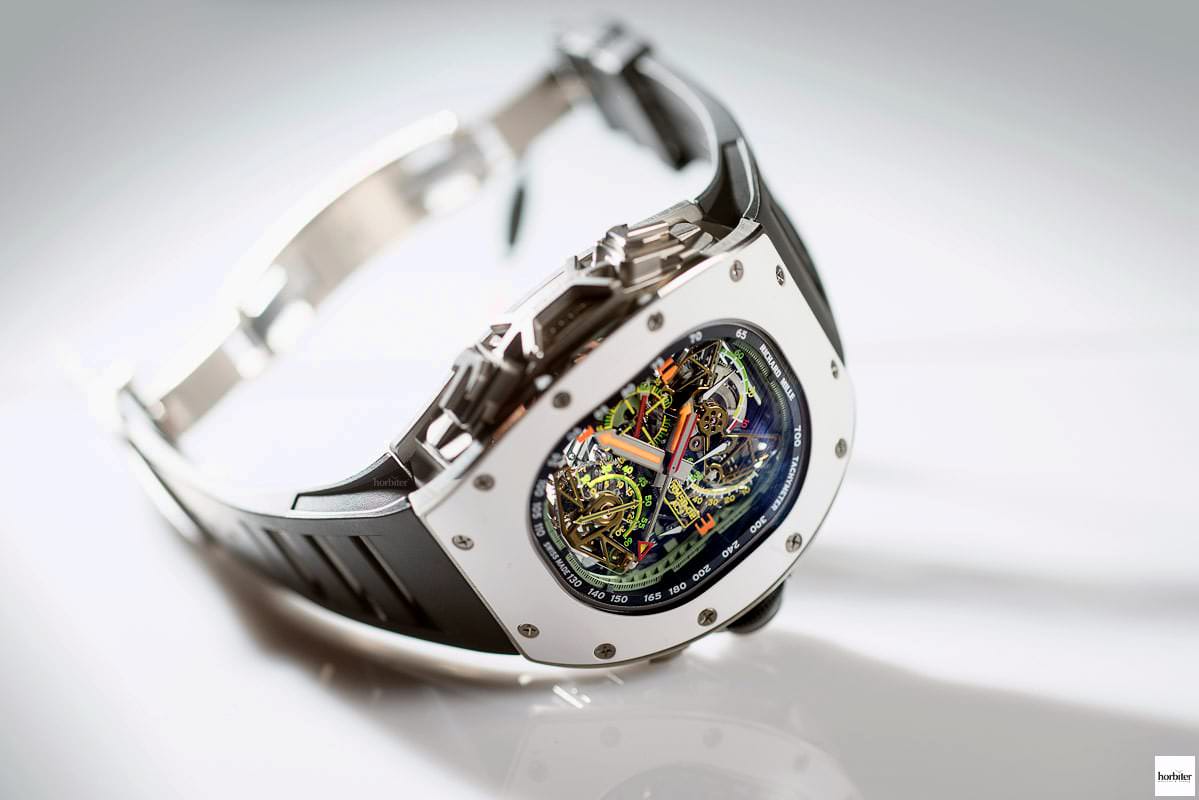 Such a screw is equally functional and aircraft-like since it allows the watchmaker to tune the torque finely, a fundamental requirement when assembling an aircraft.
Again, the chronograph push buttons are surrounded by frames drawing their inspiration from an aircraft engine’s supporting brackets.
 The white cover is a thin layer of matte white ceramic. Curved and soft touch, it covers a titanium–aluminium mid-section.
However, RM’s engineers adopted an ATZ composite – ATZ standing for “Alumina Toughened Zirconia“) – instead of standard zirconia oxide. ATZ‘s scratch-resistance stops at 1.400 HV; still, it is 20 to 30 times structurally more resistant than any zirconium–oxide–based ceramic.
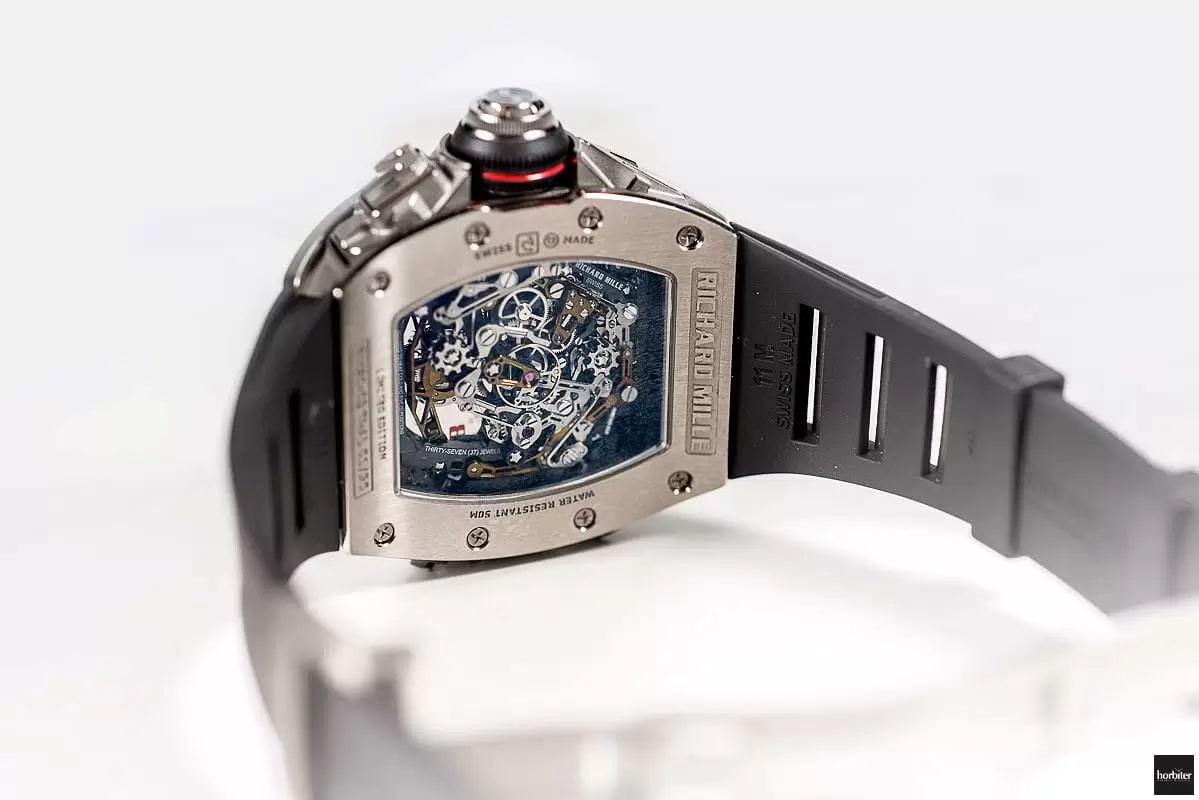
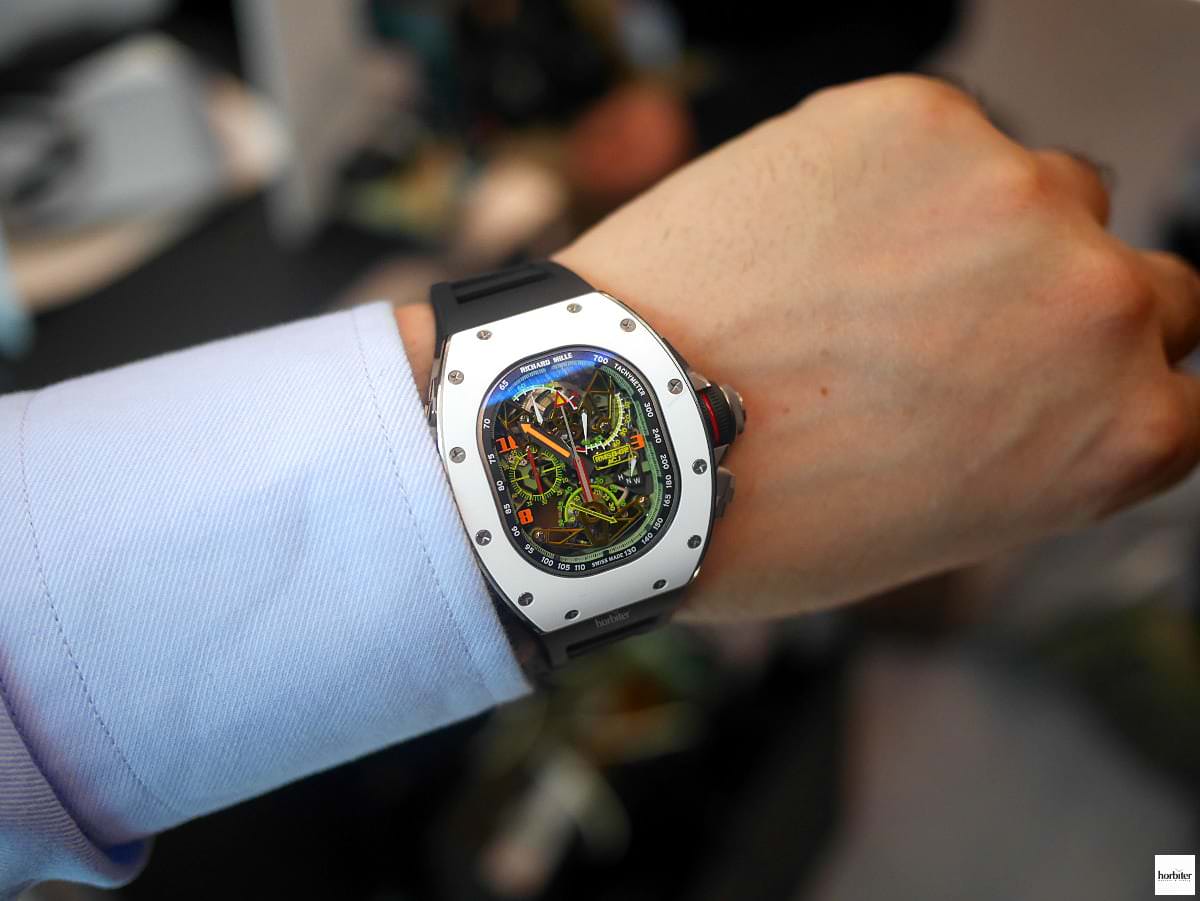 The case is Richard Mille from any angles, crafted in a titanium–aluminium Alloy called “TiAl“, often used to build a jet’s propeller.
Lightness and resistance are key design pillars at Richard Mille, as they are in commercial aviation, here applied to a tourbillon with a split–seconds chronograph.
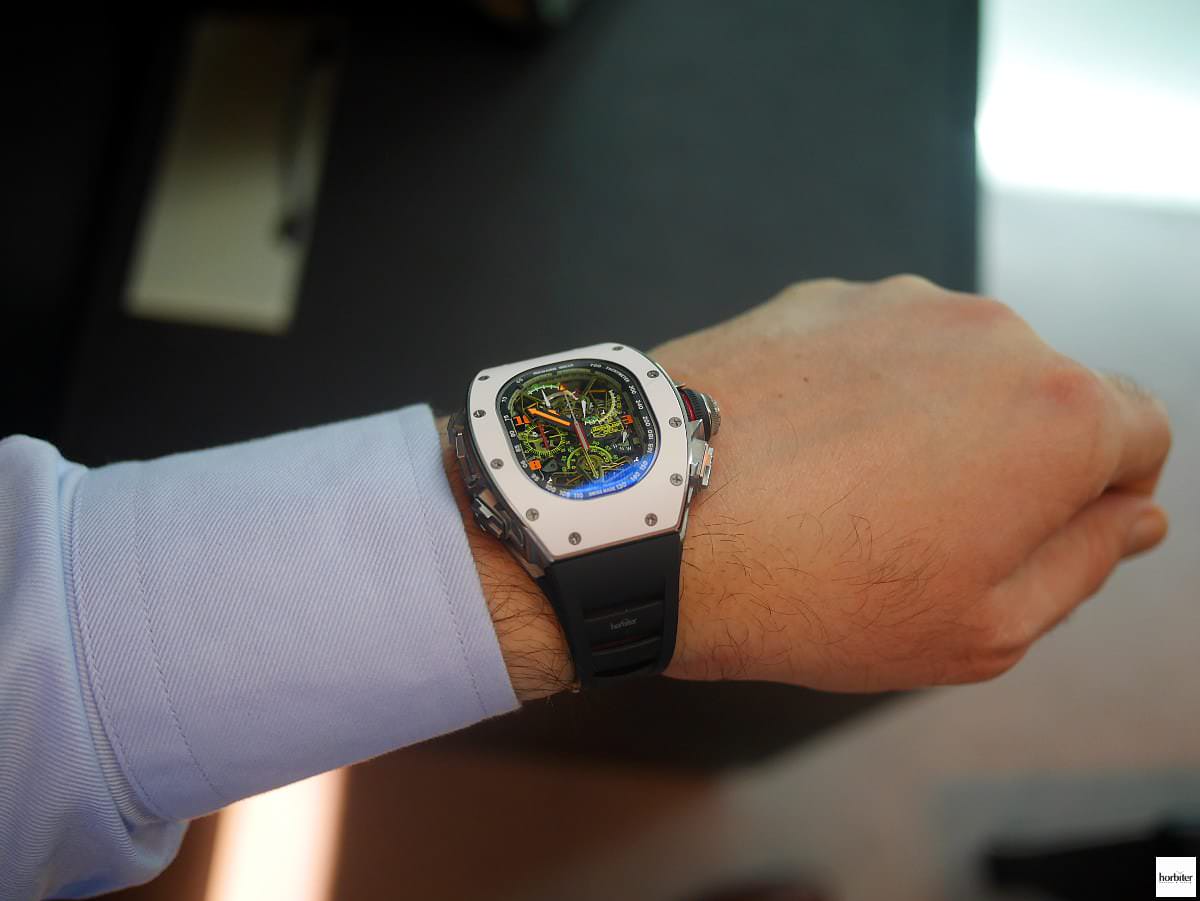
Every single part came with a purpose and a challenging weight-to-performance target. On a Richard Mille RM50-02 ACJ, such an approach is raised to new levels.
The split-seconds chronograph action is so precise and vibration-free, according to the brand, that no vibration during start, stop and reset is visible under a slow-motion camera.
Extreme skeletonisation helps the owner enjoy a view of gearings and fine engineering at work. Haute-horlogerie features include the signature H–N–W device engineered by Renaud & Papi, and a torque gauge to display the amount of power available in the mainspring.
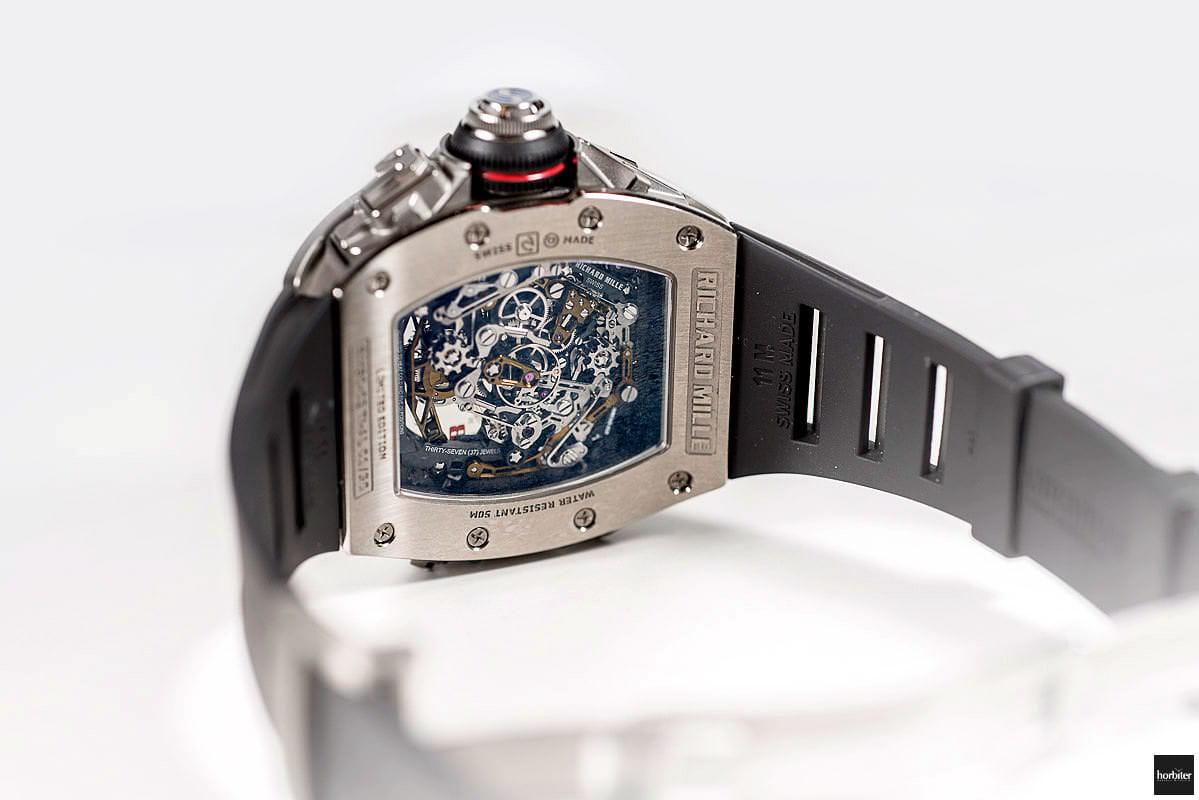 Is a Richard Mille RM 50-02 ACJ the ultimate “hyper sportswatch“? Yes, it is. Richard Mille, being Richard Mille, there’s no gap between marketing promise and content delivery, and that is what makes the brand outperform the competition.
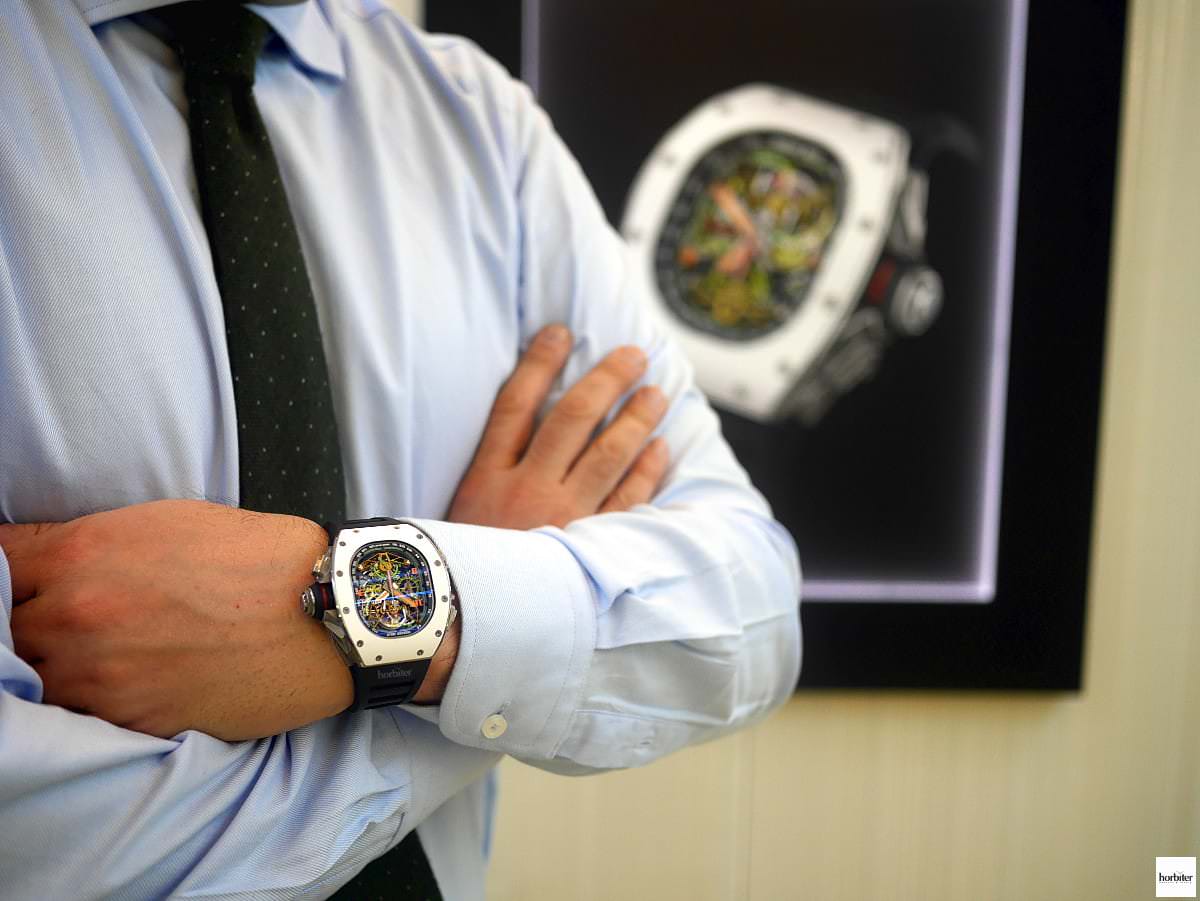 It is the closest watchmaking object to an aircraft or aerospace engineering you can get. RM’s approach to the industry made it what it stands for.
A portion of its retail price is in its exceptional concept and execution; the remainder is the unique value proposition that no other brand in the business can achieve.
(Photo credit: Richard Mille, Horbiter®)
Gaetano C @Horbiter®