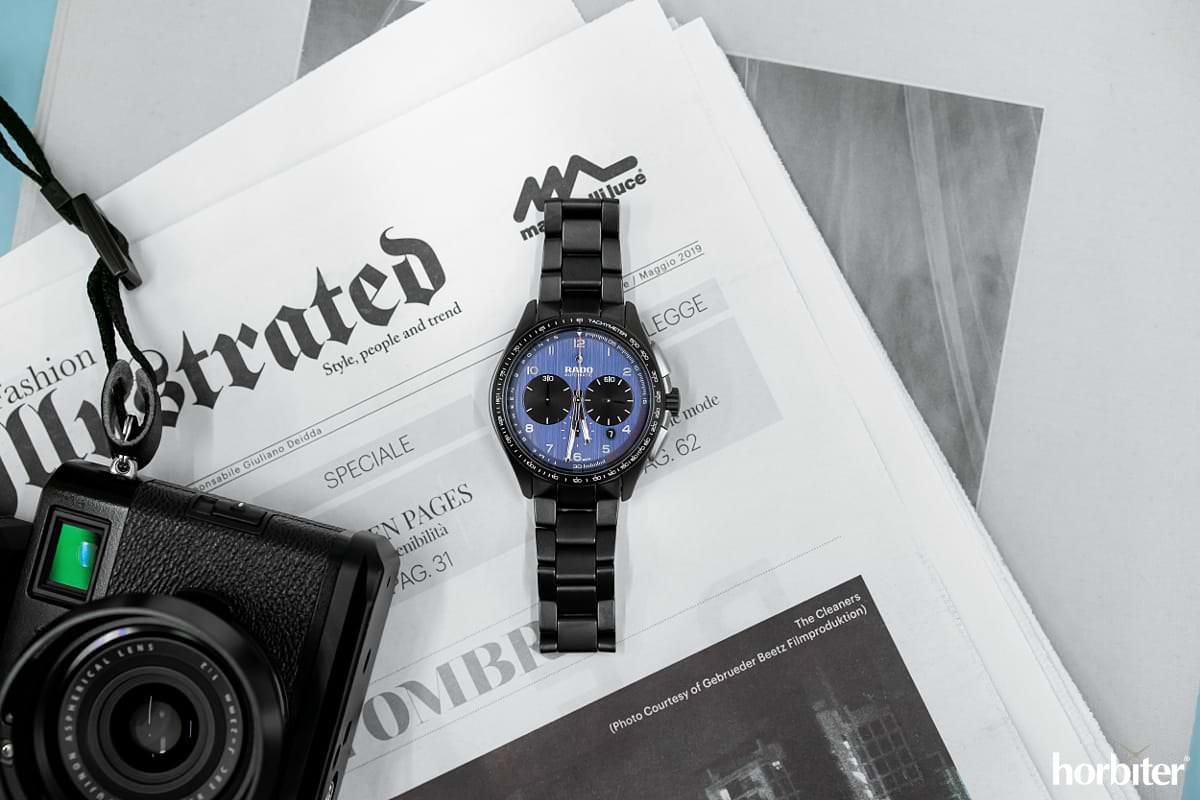
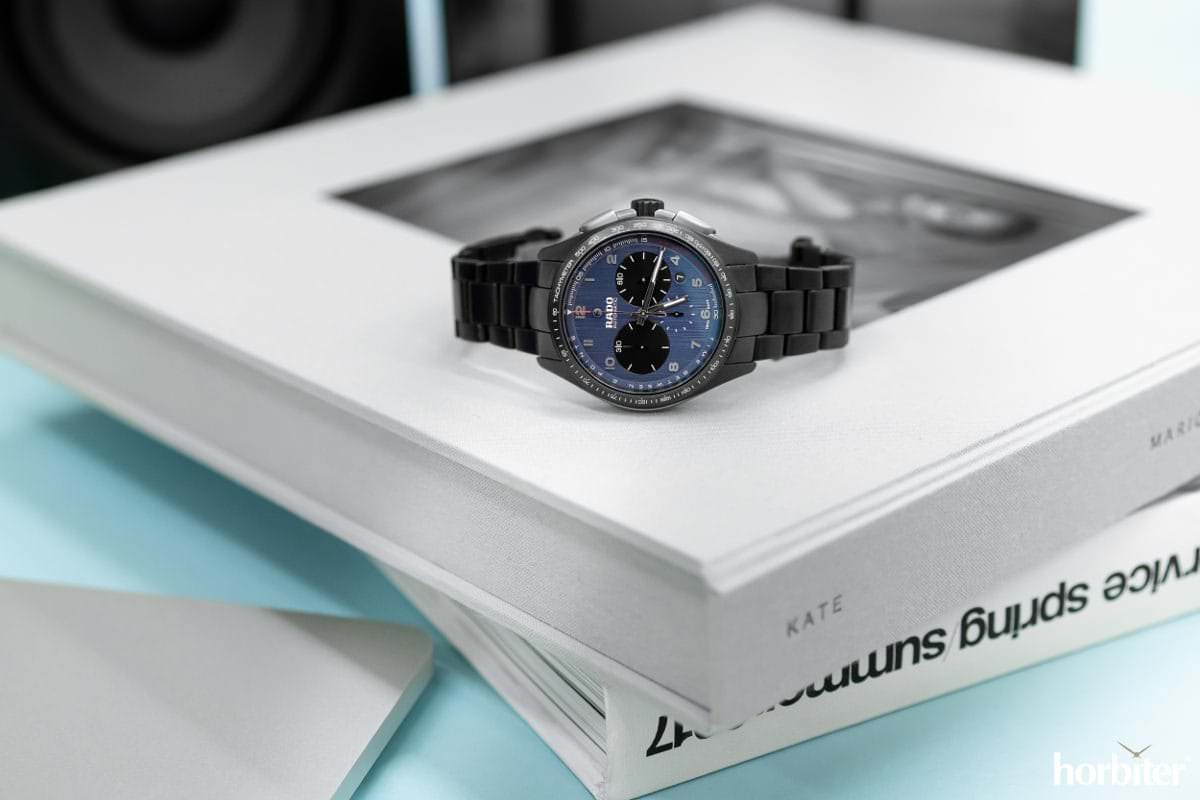
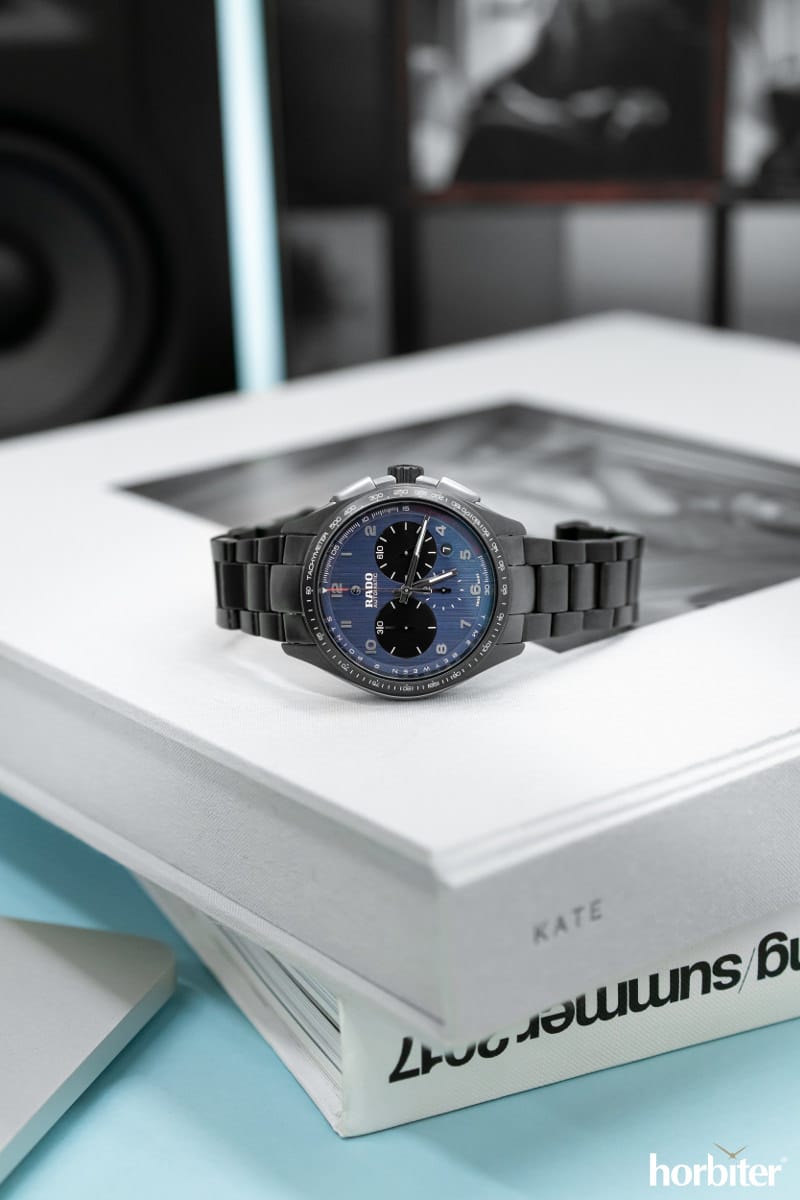
The Rado HyperChrome Tennis Chronograph Limited Edition watch
Giovanni Di Biase16 January 2020
0 Comments
Every year, Rado adds a new product reference to its top-of-the-lineRado HyperChrome Chronograph collection. Even though the brand is focusing on introducing re-issues of vintage iconic pieces, like the Rado Captain Cook Automatic and the Rado Original Captain MKII to name a few, the Swiss brand has never stopped launching new limited edition variants of their signature HyperChromeChronograph collection, and 2019 is no different.
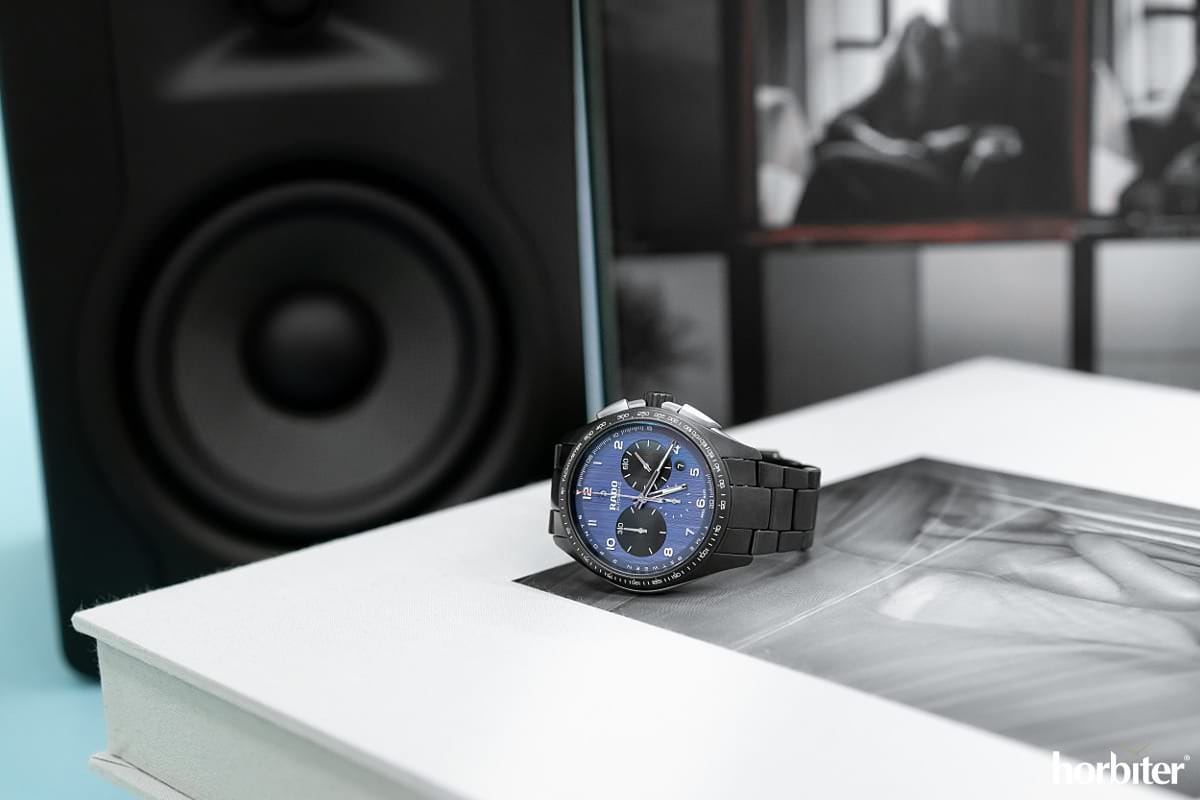
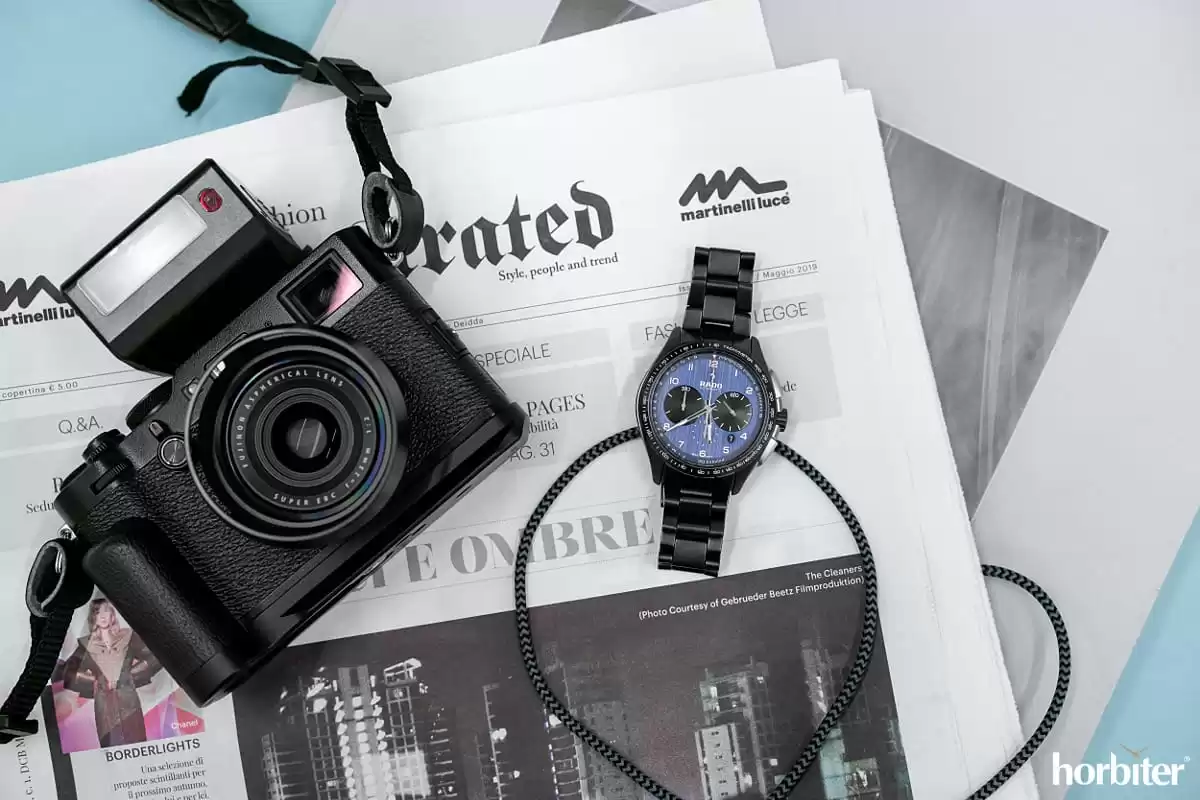
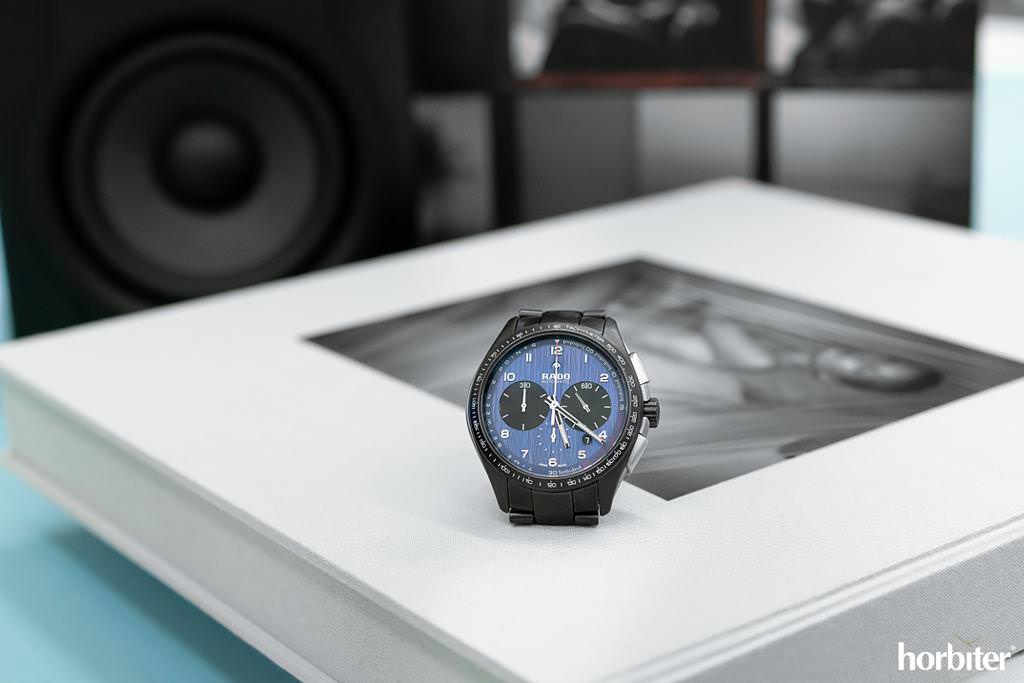
The 2019 Rado Hyperchrome Tennis Automatic Chronograph Limited Edition is, again, the only automatic chronograph ever made to combine, in this case, plasma ceramic, Ceramos™, steel, and titanium.
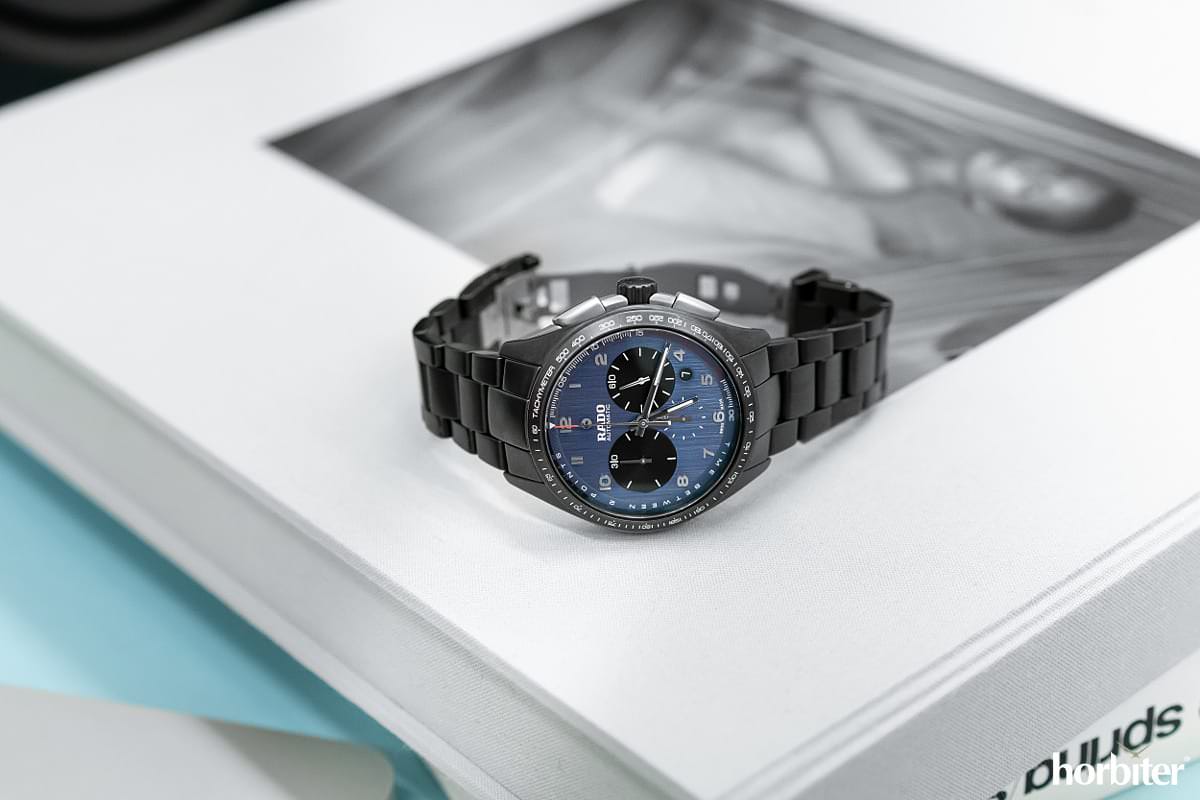
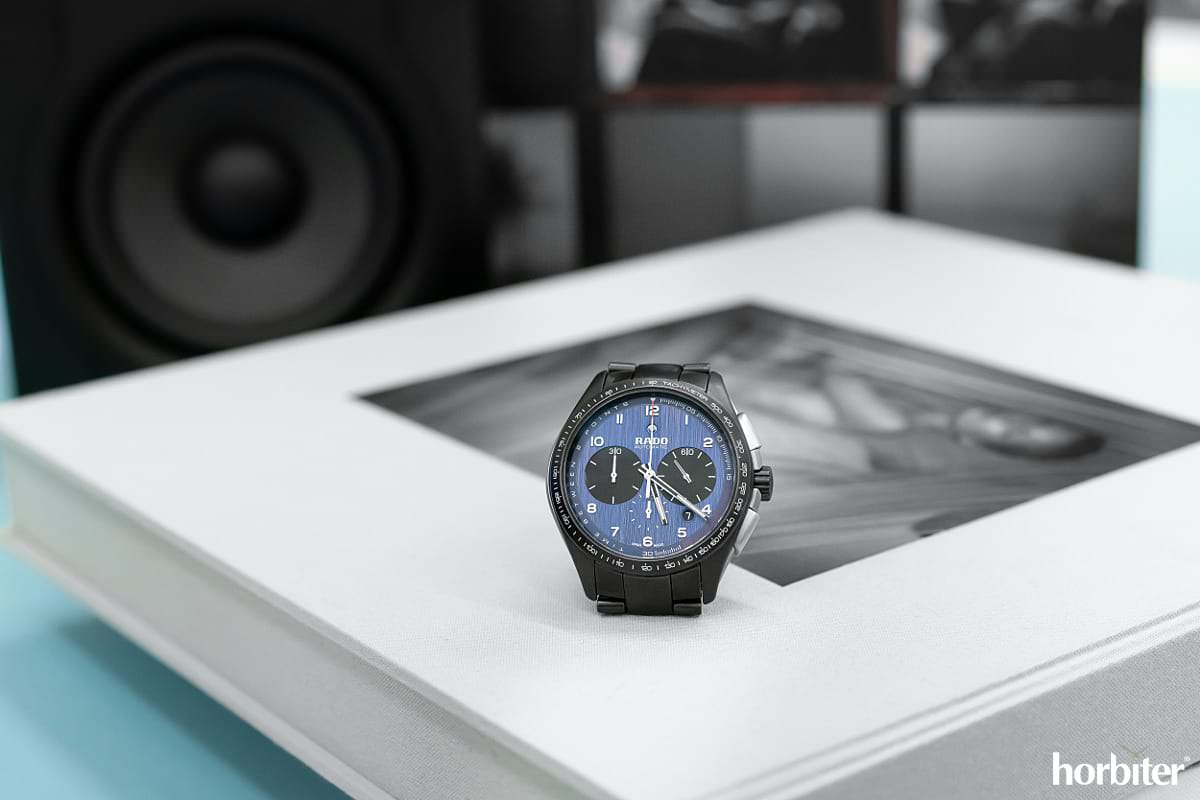
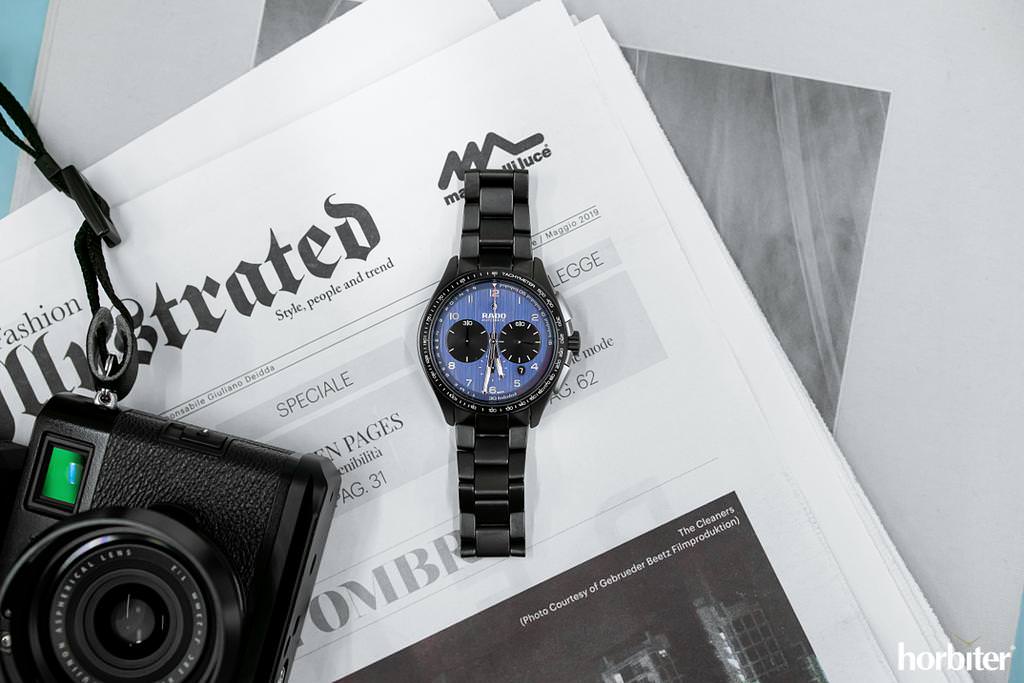
The case is a single piece of matte black high-tech plasma ceramic, whose ceramicbezel is filled with white lacquer providing a green luminescence over the tachymetric scale. The case-side inserts are in steel that has undergone a surface hardening treatment, along with crown and Chrono pushers.
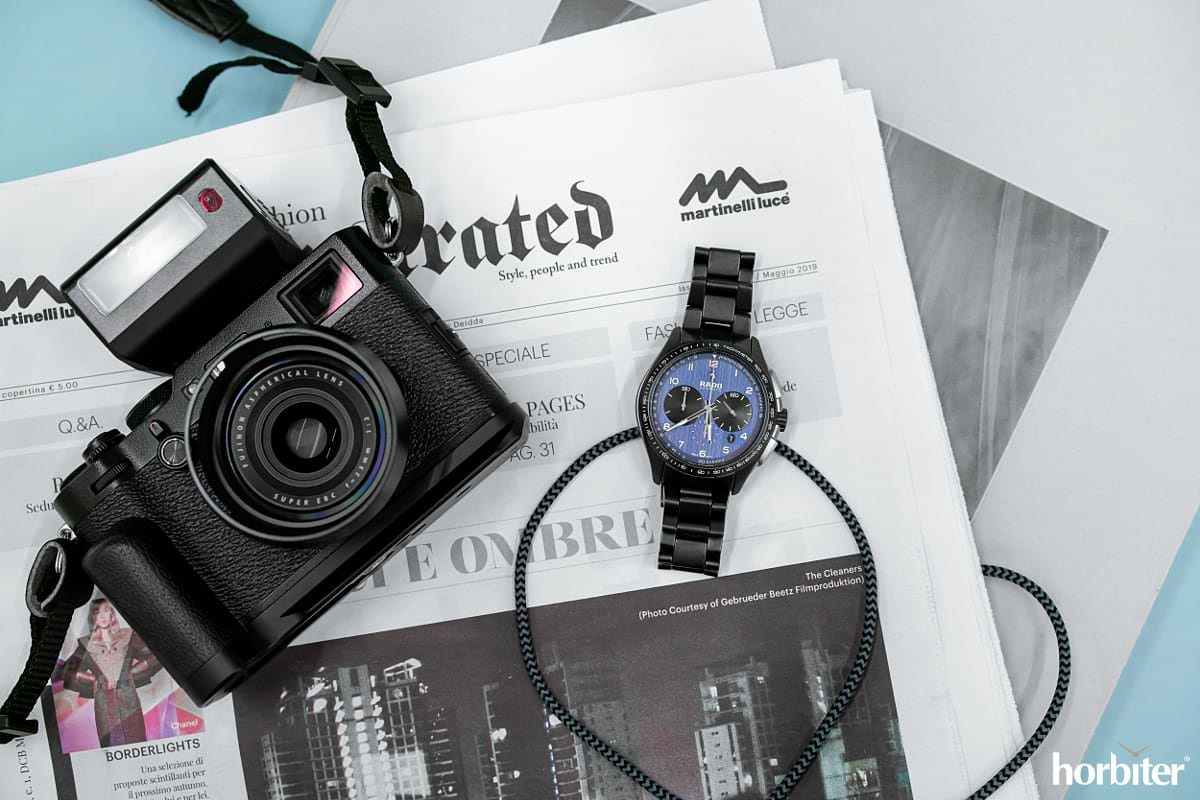
The case-back is in ceramics, too, whereas the bracelet is a combination of polished and matte links crafted in Ceramos™. Last but not least, the triple folding clasp is in titanium on the inside, paired to an external part in Ceramos™.
This uncommon bond of materials makes the Rado HyperChrome Tennis Automatic Chronograph Limited Edition hard to categorize and manufacture, too, considering how difficult it is to seamlessly combine materials that are so different from each other in terms of tolerances. Manufacturing and assembly processes are by far more challenging and less-standardized than those needed to craft the same watch in steel.
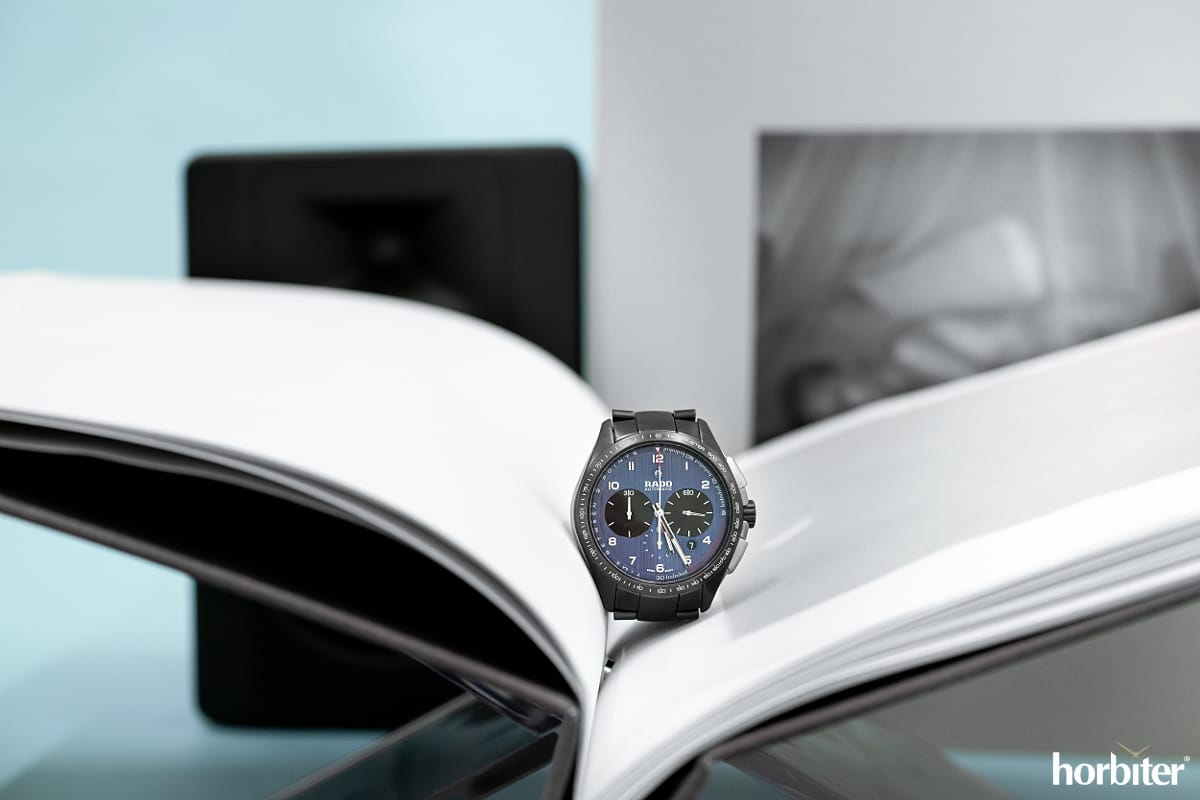
The term “Tennis” states this is not a standard Hyperchrome Automatic Chronograph but a limited series (999 pieces) of a collection that includes three product variations, as many as are the tennis courts’ surfaces available. This specific version sports a blue dial that mimics an indoor tournament’s hard surface, such as a Taraflex™ made one, for example, while the other two limited editions available sport a green or brown dial instead.
The blue dial is not polished nor matte; it has a vertically brushed finish coupled to rhodium treated applied Arabic numerals. It’s a combination I generally appreciate, and I prefer to others where it seems that Rado has created a two-counter configuration out of a V-shaped three-counter displacement.
However, I like a standard Rado HyperChrome Chronograph‘s baton indexes over the Arabic numerals, since the latter tend to dilute the HyperChrome‘s identity too much, in my opinion.
The Rado HyperChrome Tennis Automatic Chronograph Limited Edition is pleasing and has a remarkable build quality. It is lighter than you might expect despite the 45mm large and 13mm thick case, whose resistance to scratches is higher than any competitor’s; it is technically reliable too, thanks to the adoption of the ETA2894–2 mechanical movement, whose winding rotor has a signature Rado design.
However, 42 hours of power reserve are not too much for a timepiece that’s so innovative inside and out, whose provider ETA is committed to always designing something ahead of its competitors. With a Euro 4,700 sticker price, I think a Chronometer certification would have added even more value to such an outstanding timepiece, an excellent and original option to any standard mechanical chronograph in steel.
(Photo credit: Horbiter®)
Gaetano C @Horbiter®
In this article:
Line
It is the measurement unit that identifies the size of a movement. According to this measurement system, one line corresponds to 2,255mm.
Chronograph
Complication that helps the wearer to measure time intervals without affecting the watch's standard time-telling function.
Ceramic
Widely used for crafting a watch case and, in recent years, also for the bezels of diving watches and dials. Obtained from zirconia powder (ZrO2), ceramic offers superior scratch resistance…
Case
It encases the mechanical movement and is crafted in one or more parts. It can also be a single piece, as with some professional diving watches, or made of unconventional…
Luminescence
A luminescent material is applied to numbers, indexes, and hands to read the time in the dark or under dim light. The most renowned manufacturer of luminescent material in the…
Crown
Placed on the case side, it winds the mainspring. When pulled out, it also sets the time and the date. A screw-down crown increases water resistance and protects the movement…
Bezel
The bezel is particularly useful on diving watches, allowing you to check dive times. In this case, it unidirectionally rotates and usually comes in two parts: a metal (or ceramic,…
Rotor
Part of an automatic watch that winds the mainspring by constantly rotating. Depending on the watch's winding capability, movement design, and value, it comes in various geometries, sizes, and materials.…
Power Reserve
A mechanical watch feature displays, on the dial or the case back, the remaining power in a watch movement, showing the length of time until the timepiece must be rewound.
ETA
Swiss manufacturer of mechanical and quartz movements owned by the Swatch Group.
Chronometer
An instrument for measuring time very accurately. For any watch to be called a chronometer, it must meet the standards set by the C.O.S.C. (Contrôle Officiel Suisse des Chronomètres).


 A common feature to all the
  The
The 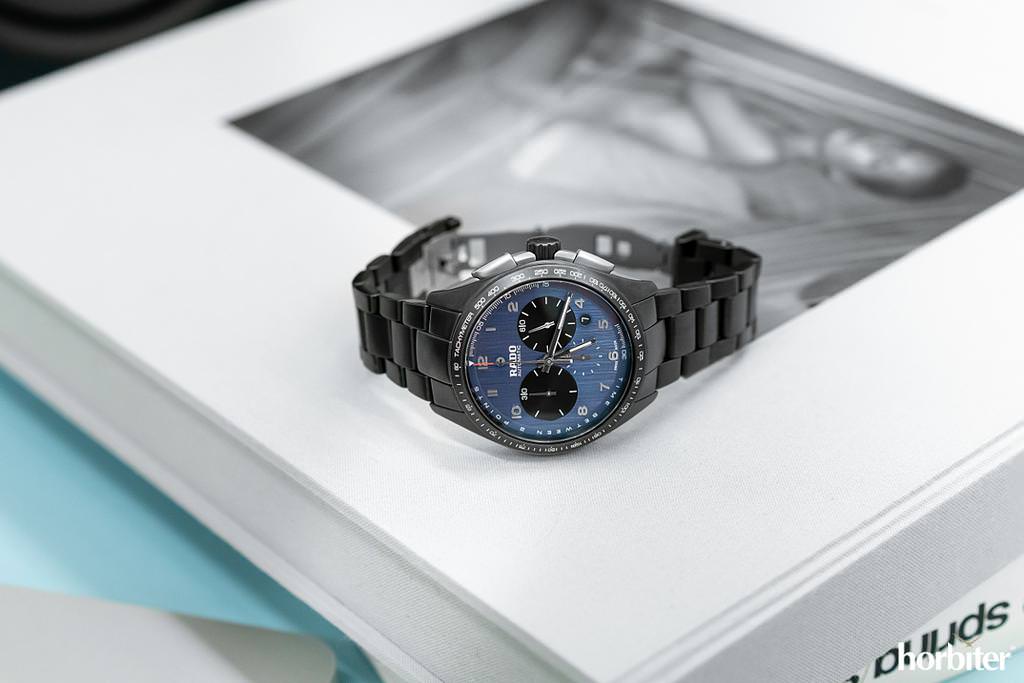 This uncommon bond of materials makes the Rado HyperChrome Tennis Automatic
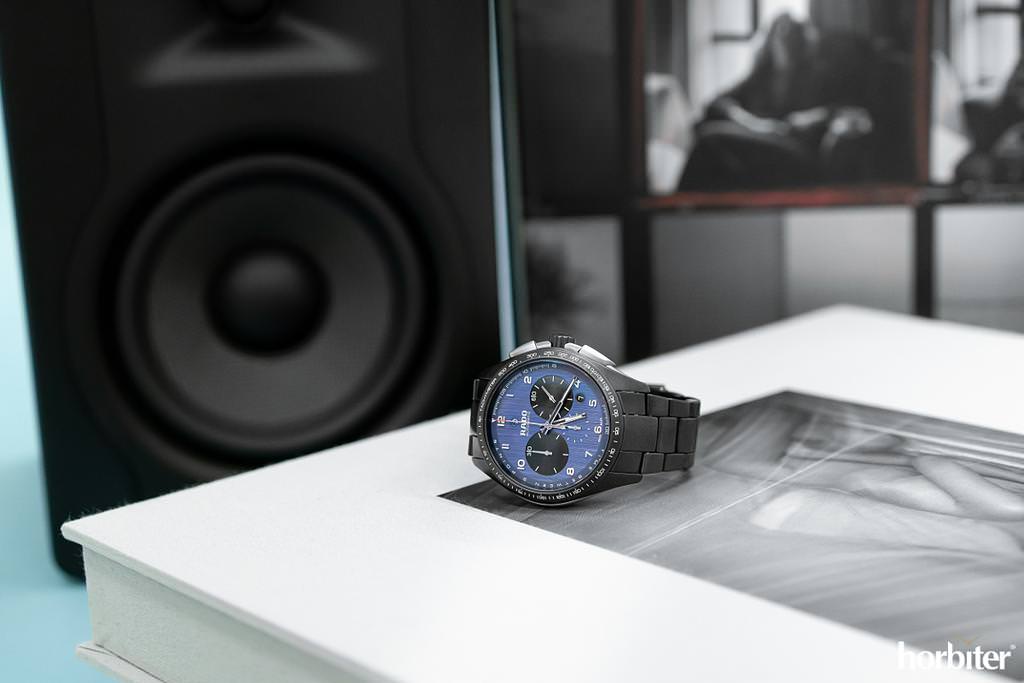 The blue dial is not polished nor matte; it has a vertically brushed finish coupled to rhodium treated applied Arabic numerals. It’s a combination I generally appreciate, and I prefer to others where it seems that Rado has created a two-counter configuration out of a V-shaped three-counter displacement.
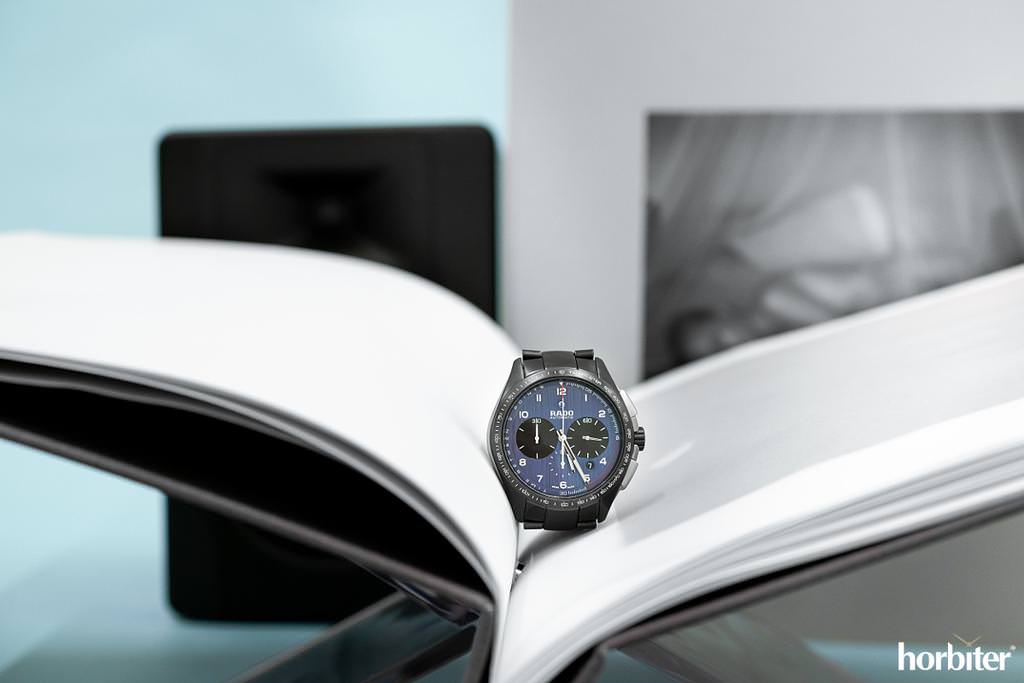 The Rado HyperChrome Tennis Automatic