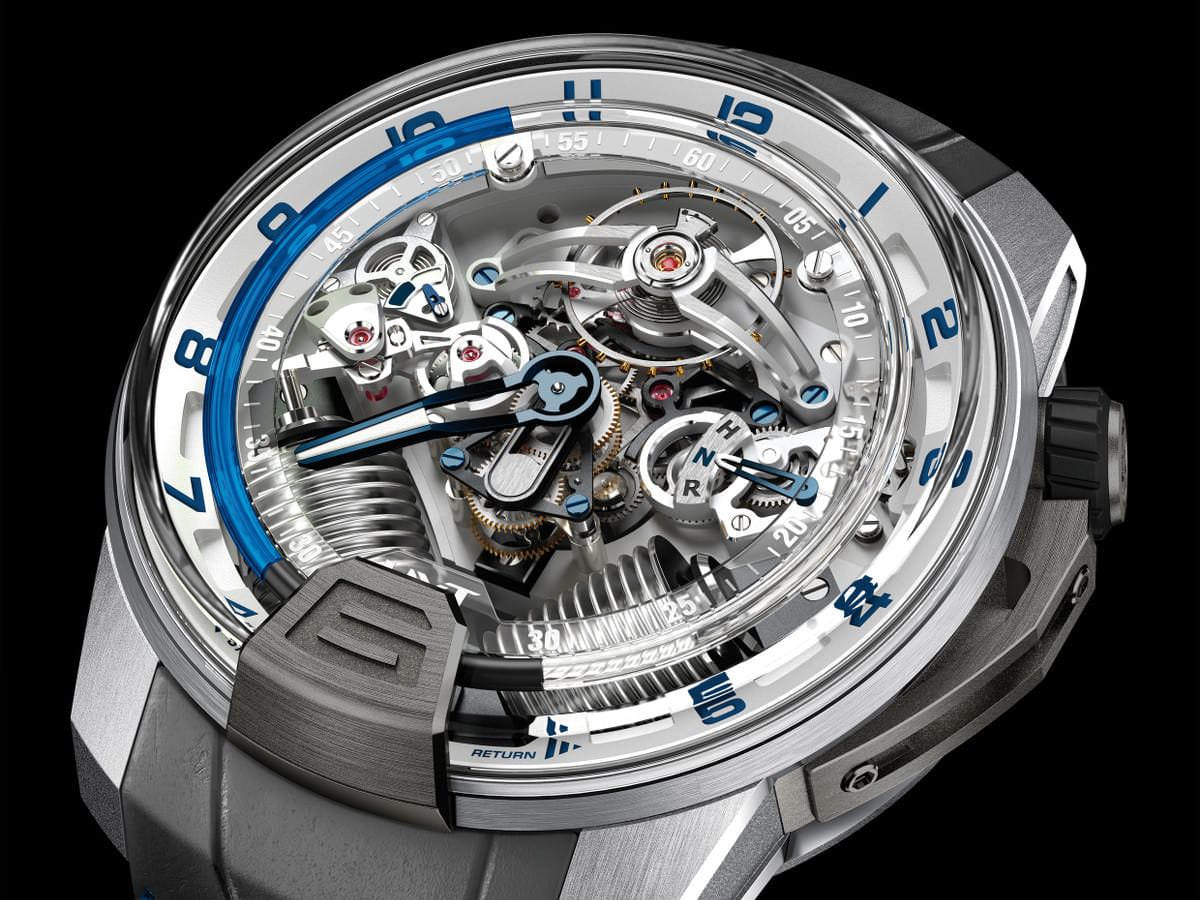
HYT Reloaded (and a sneak peek at Baselworld 2014)
Giovanni Di Biase18 March 2021
0 Comments
This article was initially conceived as a preview of the novelties that the high-end brand HYT will be unveiling at Basel later this month. Then, while I was writing it, I told myself that if I had not described to Horbiter’s readers what’s behind the HYT brand, not only Horbiter‘s article would have been meaningless (and predictability has never been our trademark), but this brand itself would have been perceived exclusively as another watch like those of many high-end brands with ultra-complicated mechanics.
The complication is there, but it is just a part of the entire story, because it is functional to making tangible a principle on which is based on a water clock or on an hourglass. This principle assumes just one fixed position in space, while our wrist assumes countless positions during a single day. A famous quote by Albert Einstein comes to mind: ”If at first an idea is not absurd, then there is no hope for it”.
The “absurd idea” about a water wristwatch came to nuclear engineer Lucien Vouillamoz‘s mind in 2002; he then re-developed it for many years and changed it into a timepiece with visualization via a ‘fluids’ display, and this trait does not remove this timepiece from the sphere of the exceptional.
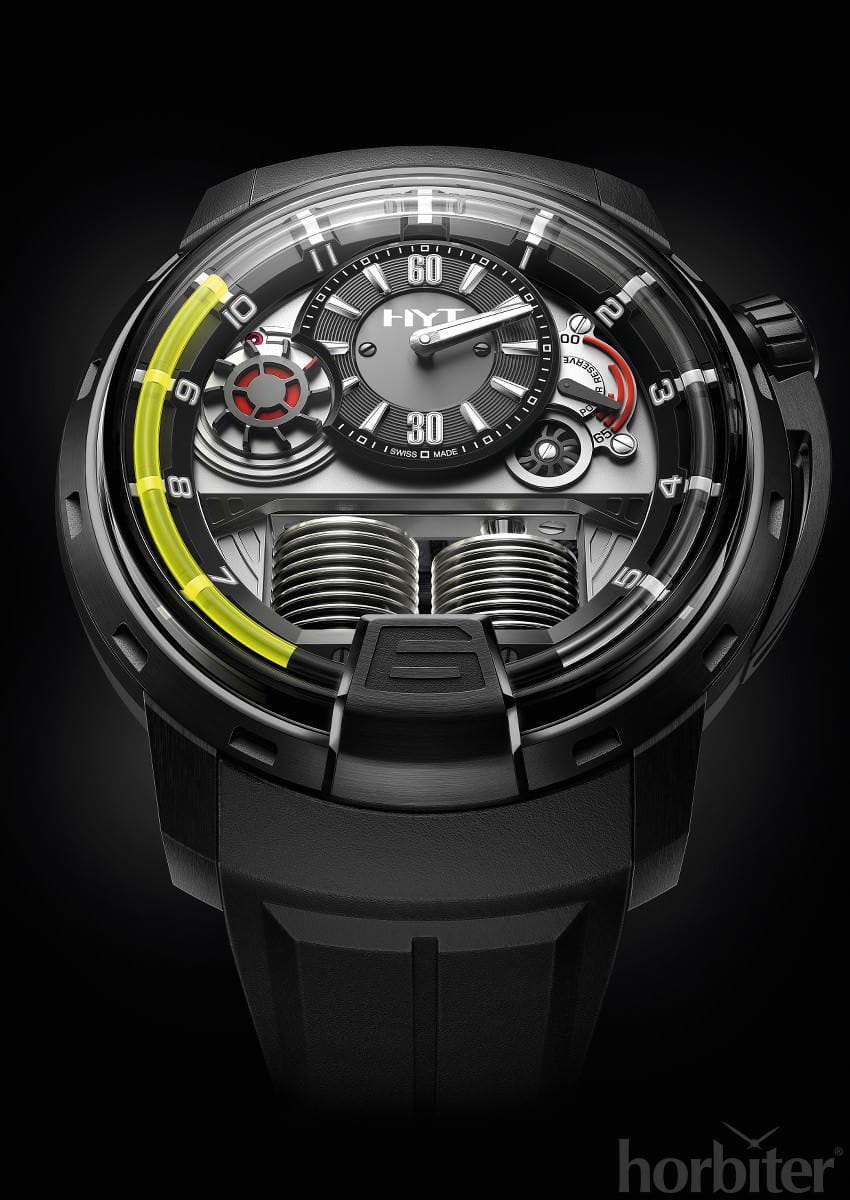
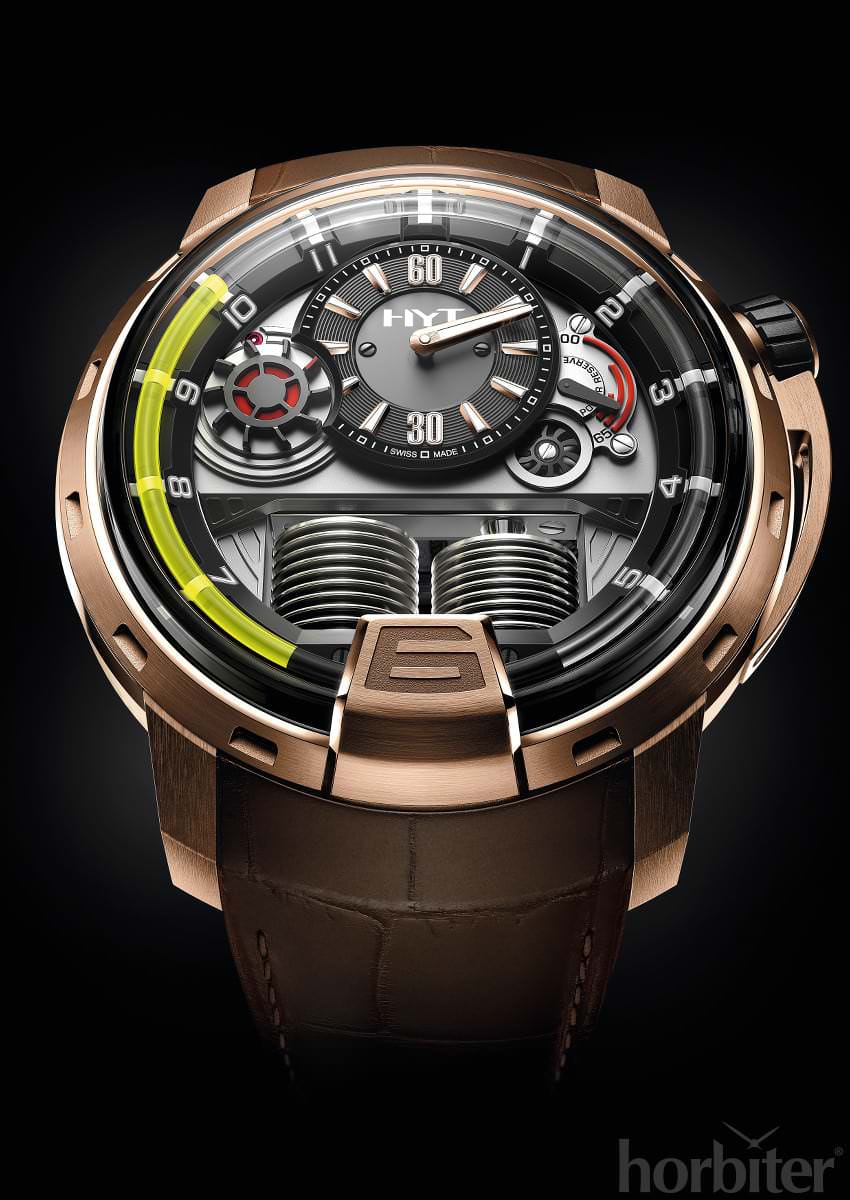
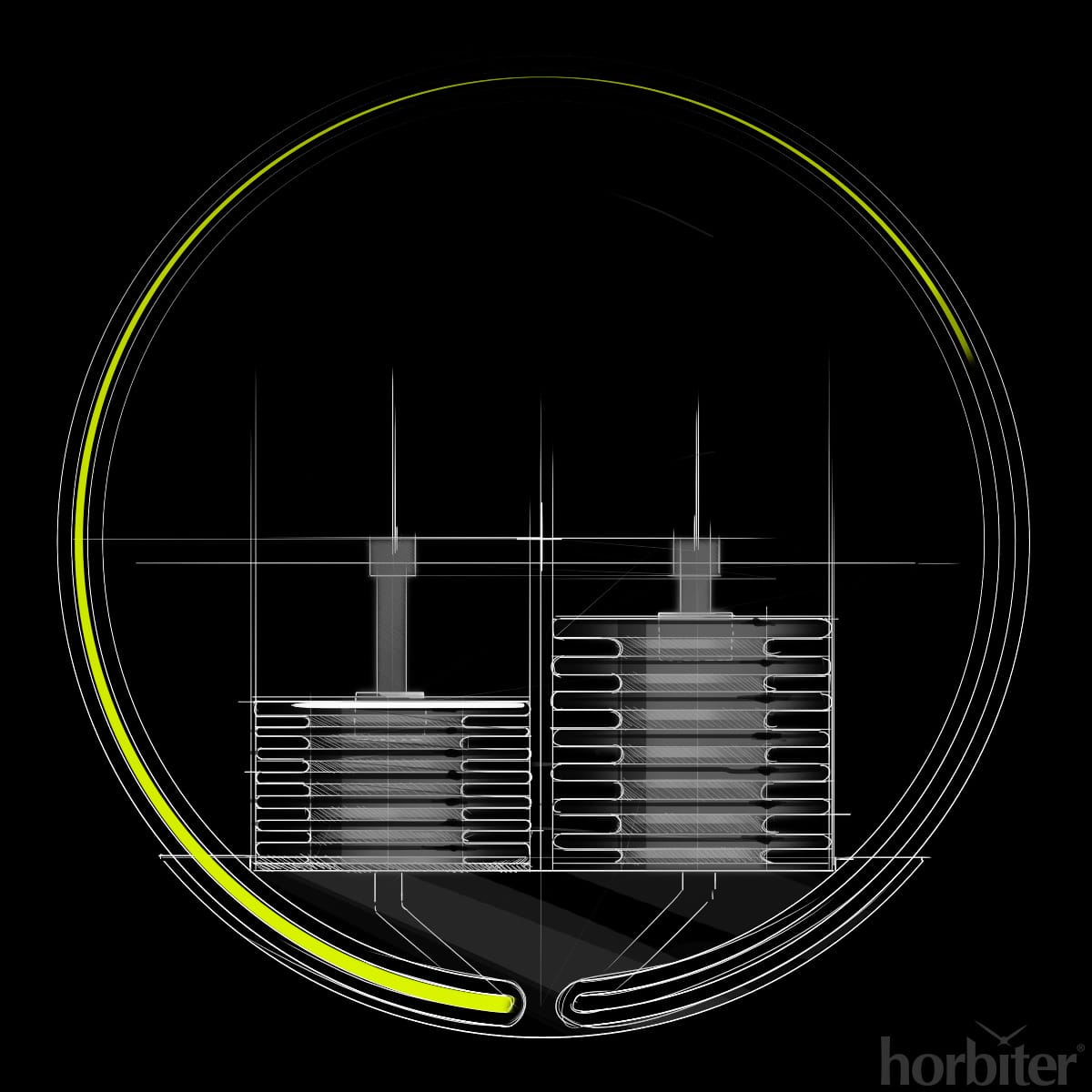
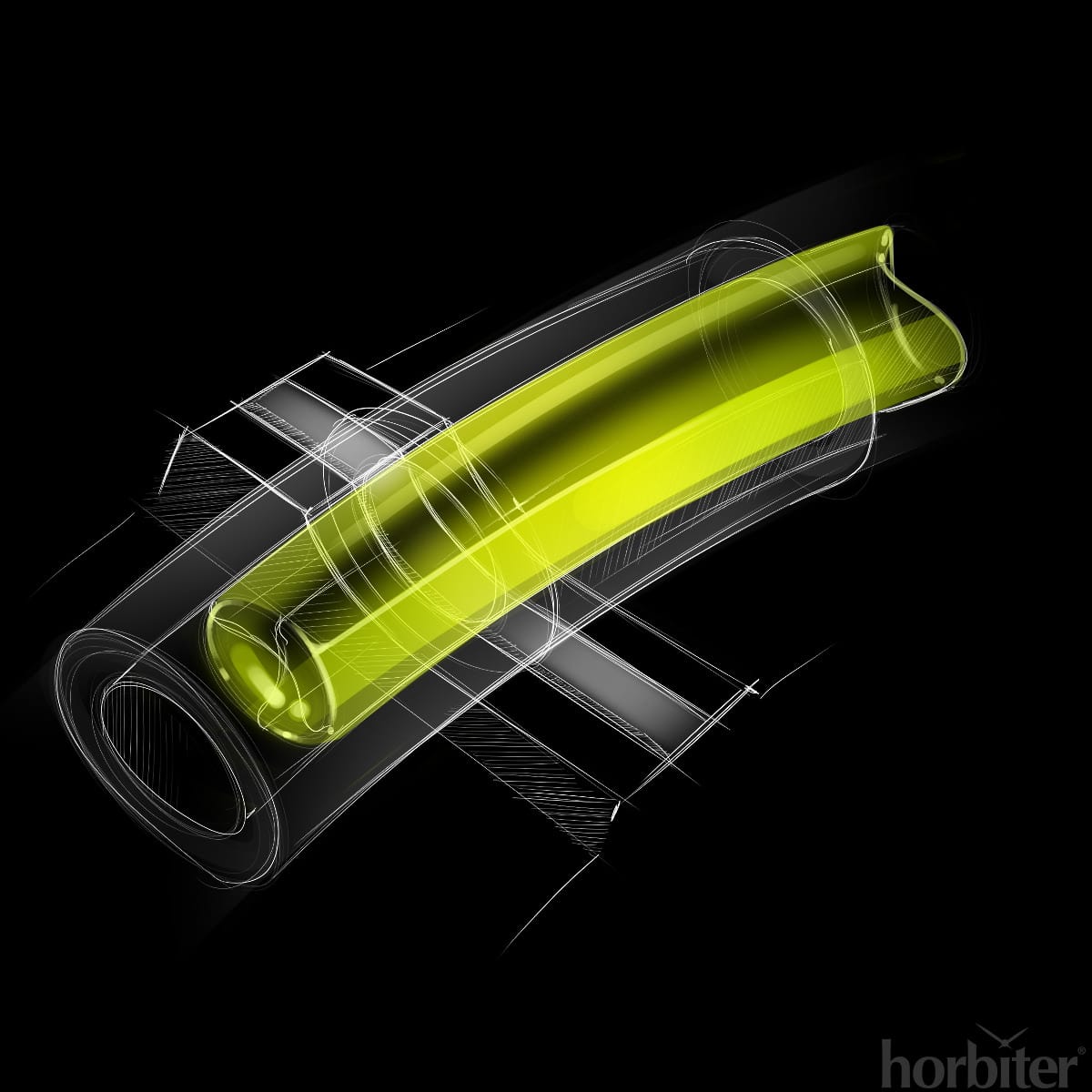
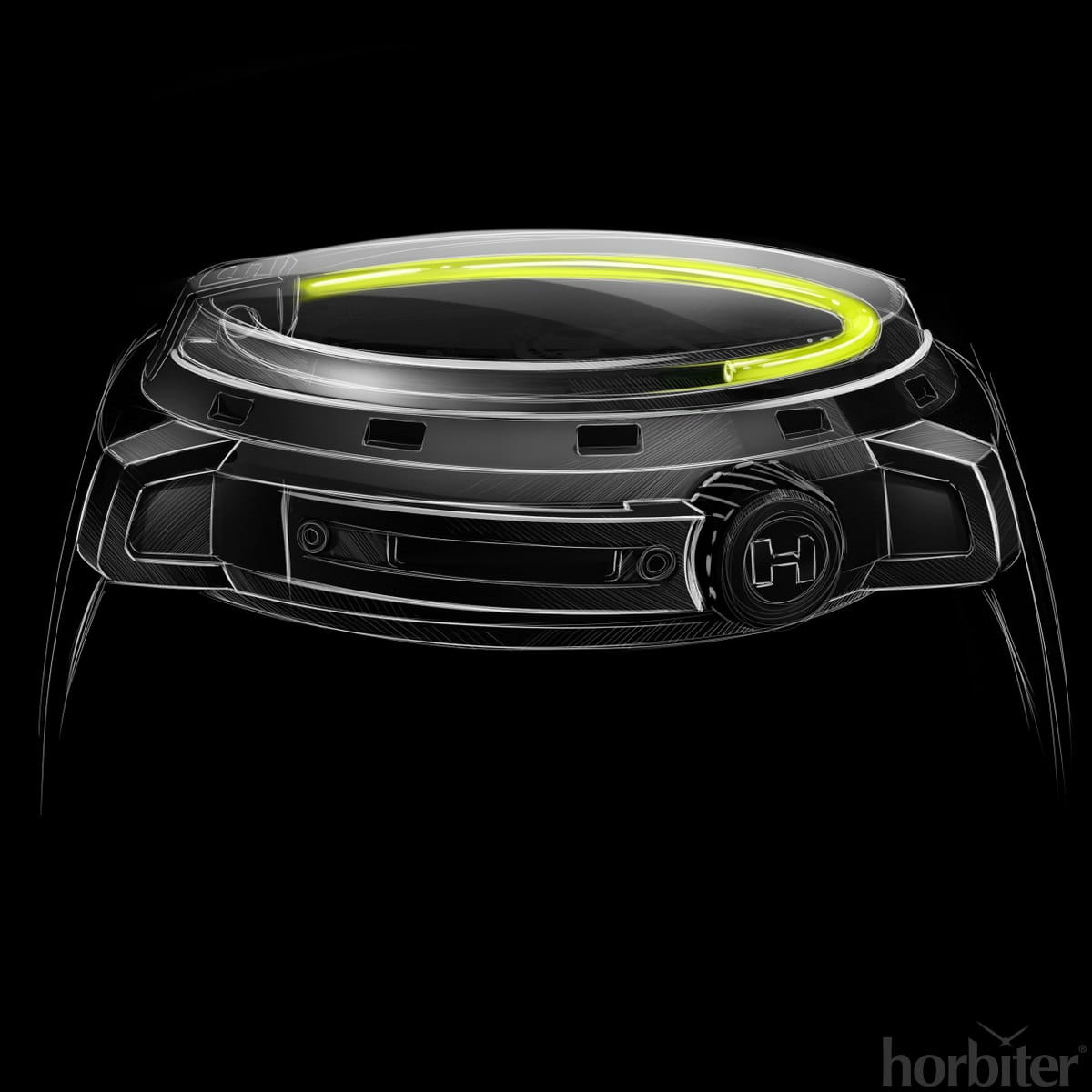
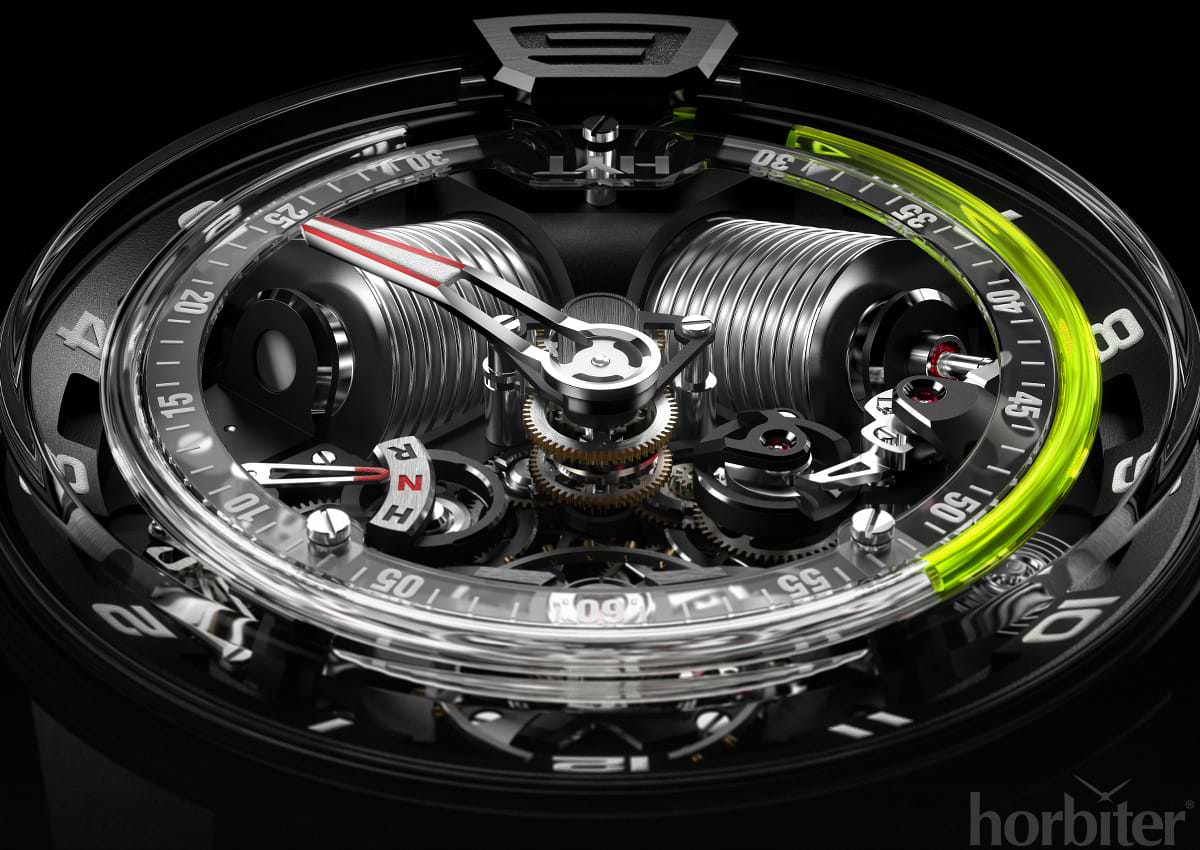
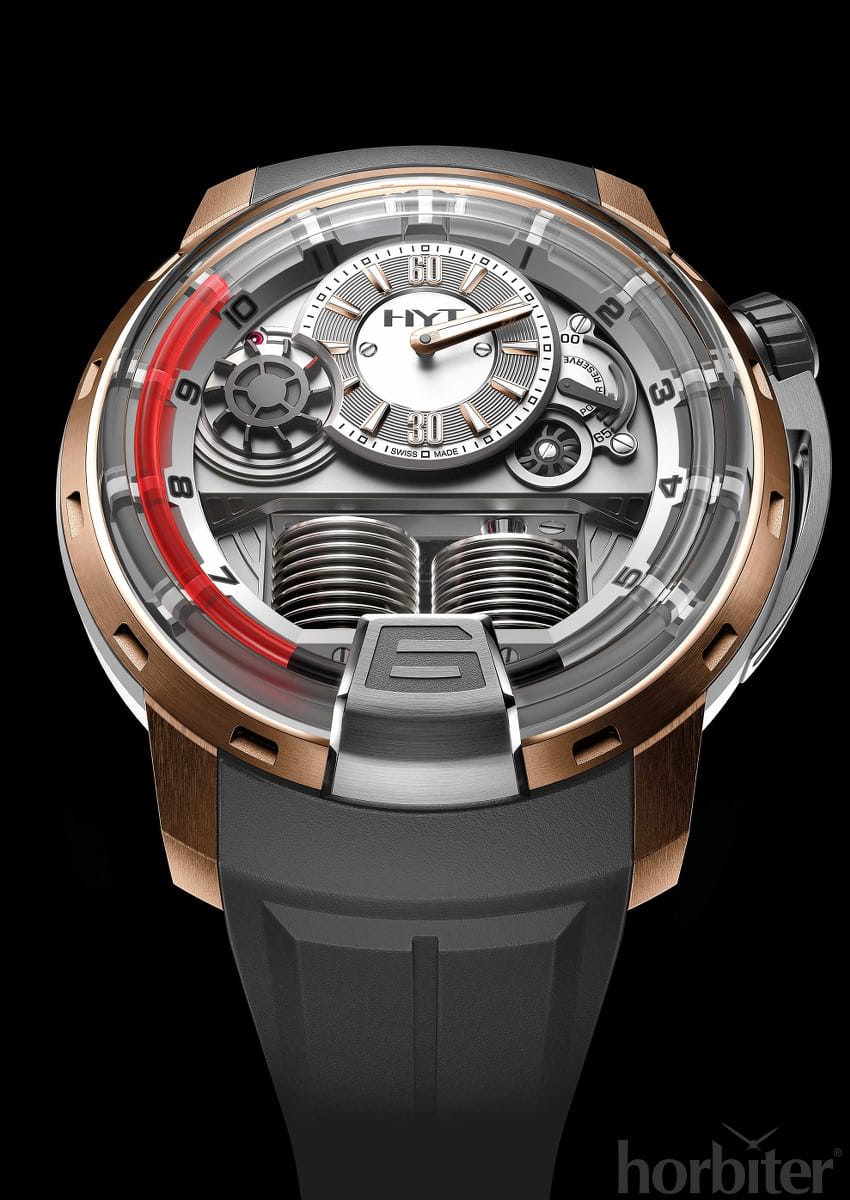
Vouillamoz developed this idea and completed it years after, partnering with Vincent Perriard, CEO of HYT. The result is the H1, the first and only timepiece ever to visualize time via a capillary tube 11 cm long and 1 mm thick, inside which two immiscible fluids press against each other.
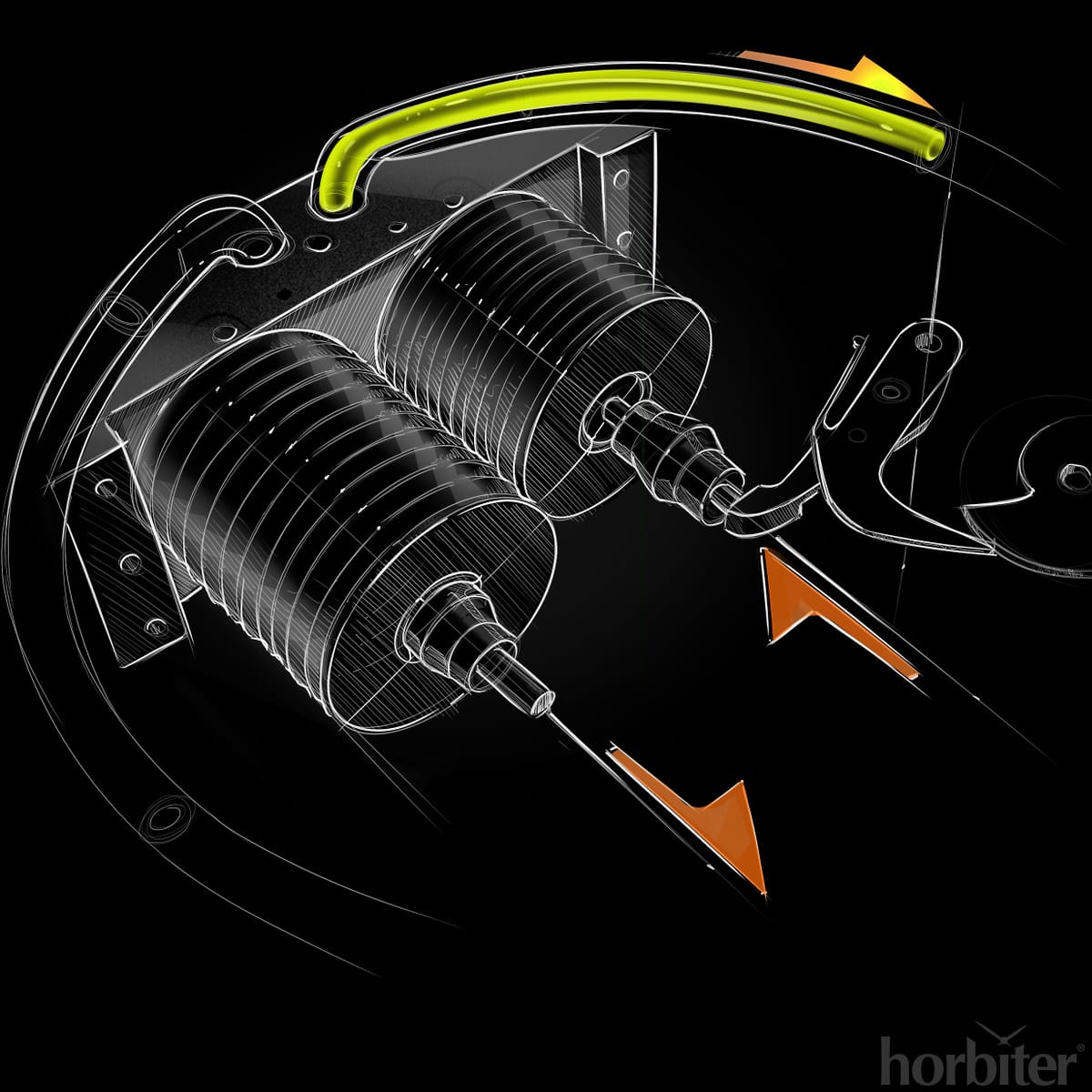
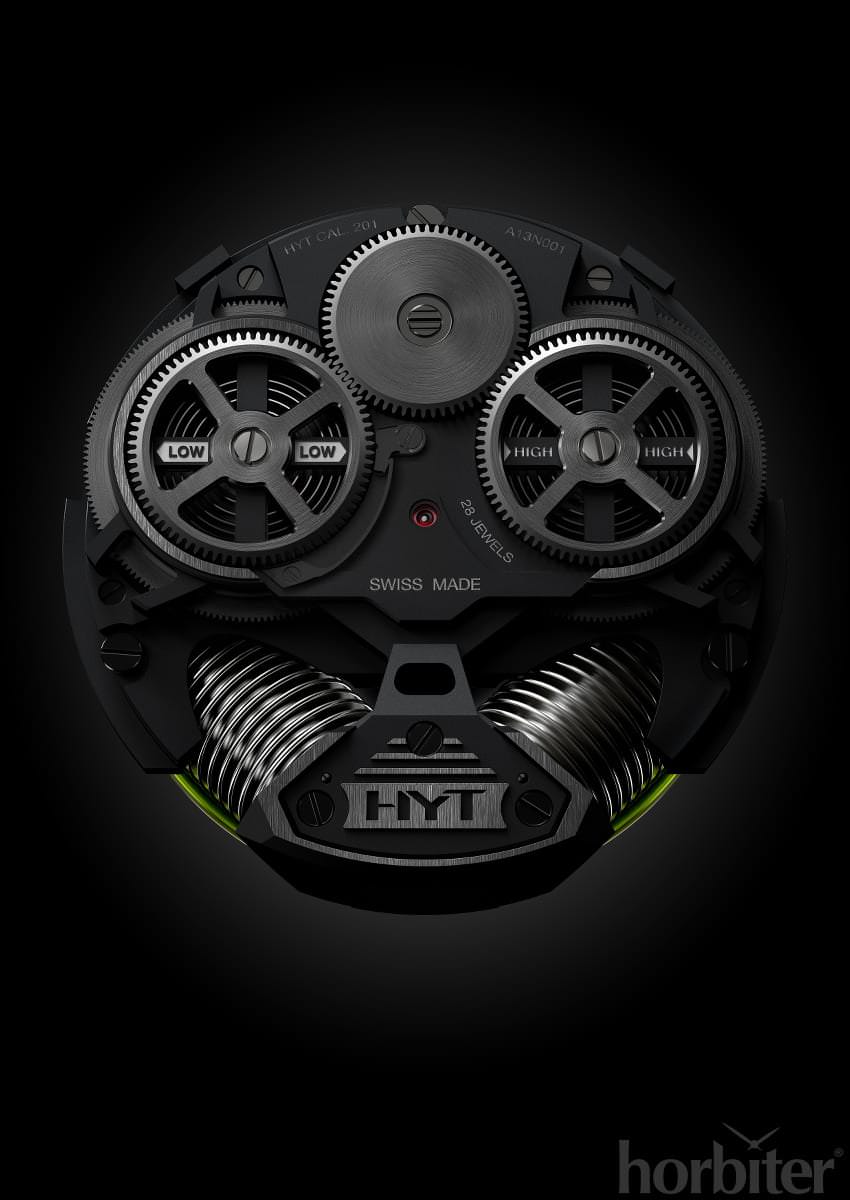
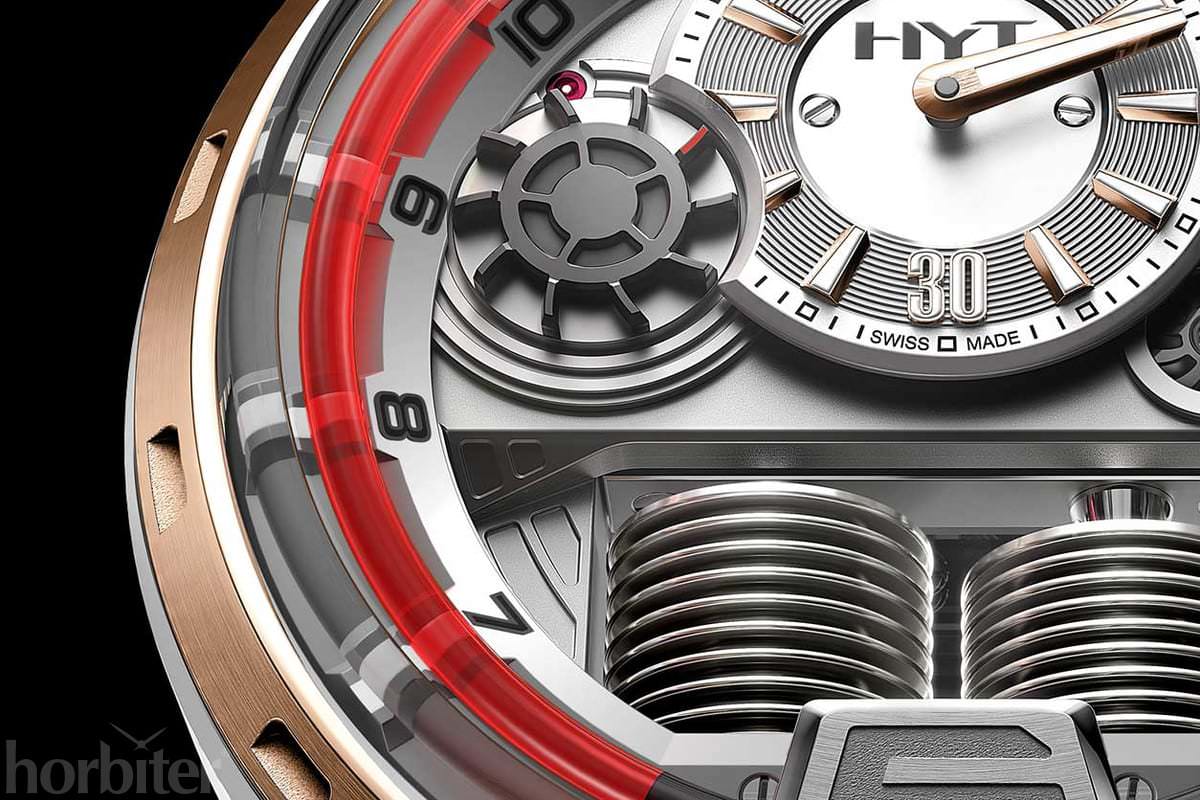
The far ends of these capillary tubes are connected to two small reservoirs shaped like bellows, inside which two fluids are stored, and whose far ends are operated by pistons with a mechanical movement: when a reservoir is compressing the other one is expanding and vice versa.
The latter happens, for instance, when it is 06.00 or 18.00: the capillary tubes are not a closed loop, hence the oil stored in the right reservoir starts to move and pushes the colored fluid counter-clockwise, which fills in the other reservoir, that expands. It is like wearing a timepiece with a retrograde hour.
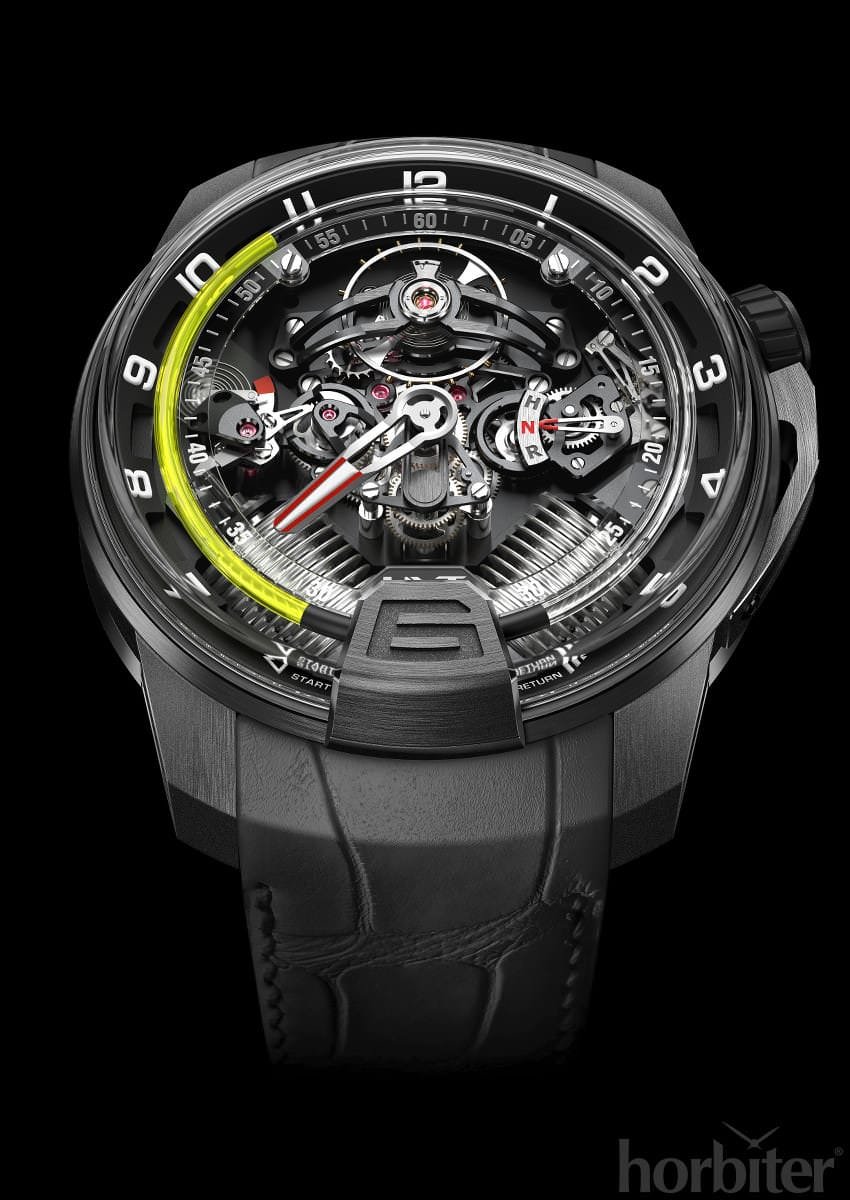
What powers the HYTH1‘s “flow” of time? As mentioned above, it is a (high-end) mechanical movement assembled in the upper side of the case, which is 48,8mm wide and made out of titanium, and it is hand wound, with the balance wheel vibrating at 4Hz, Côtes de Genéve finished bridges and a massive 65 hours of Power Reserve.
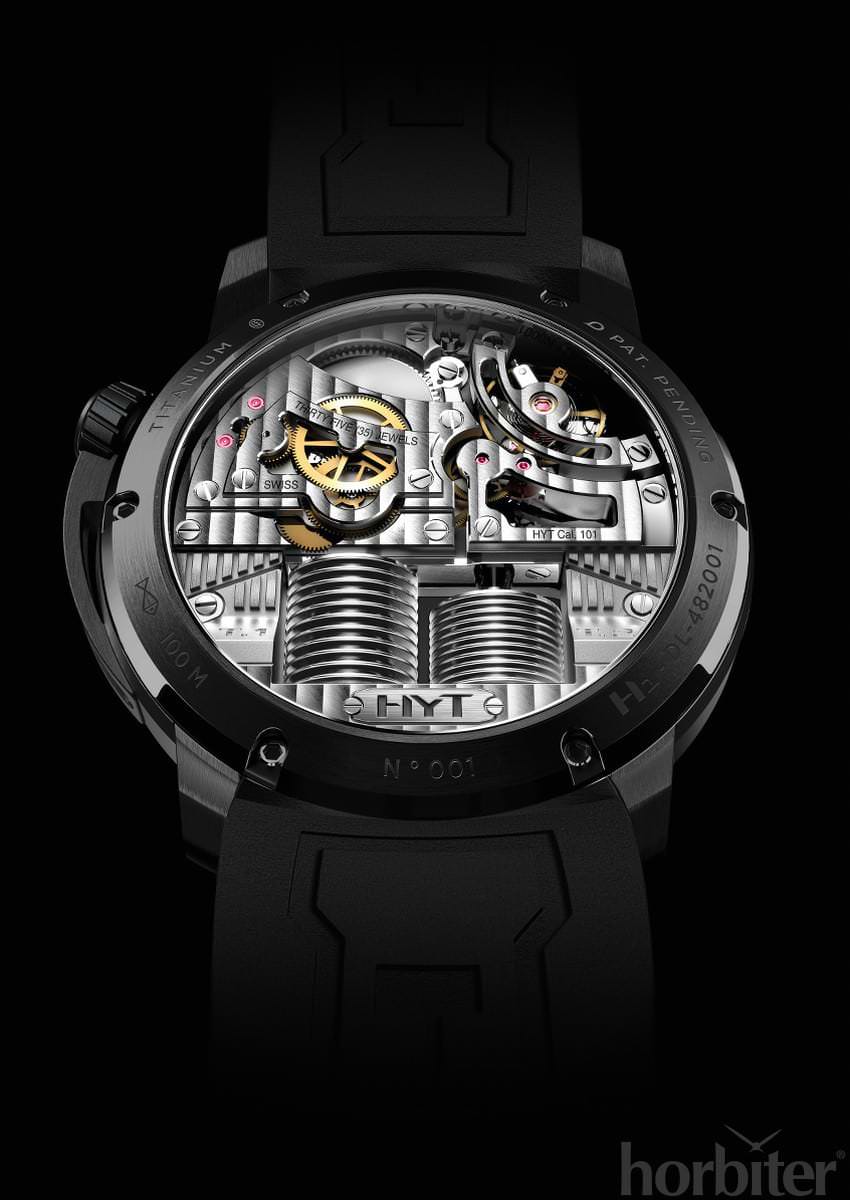
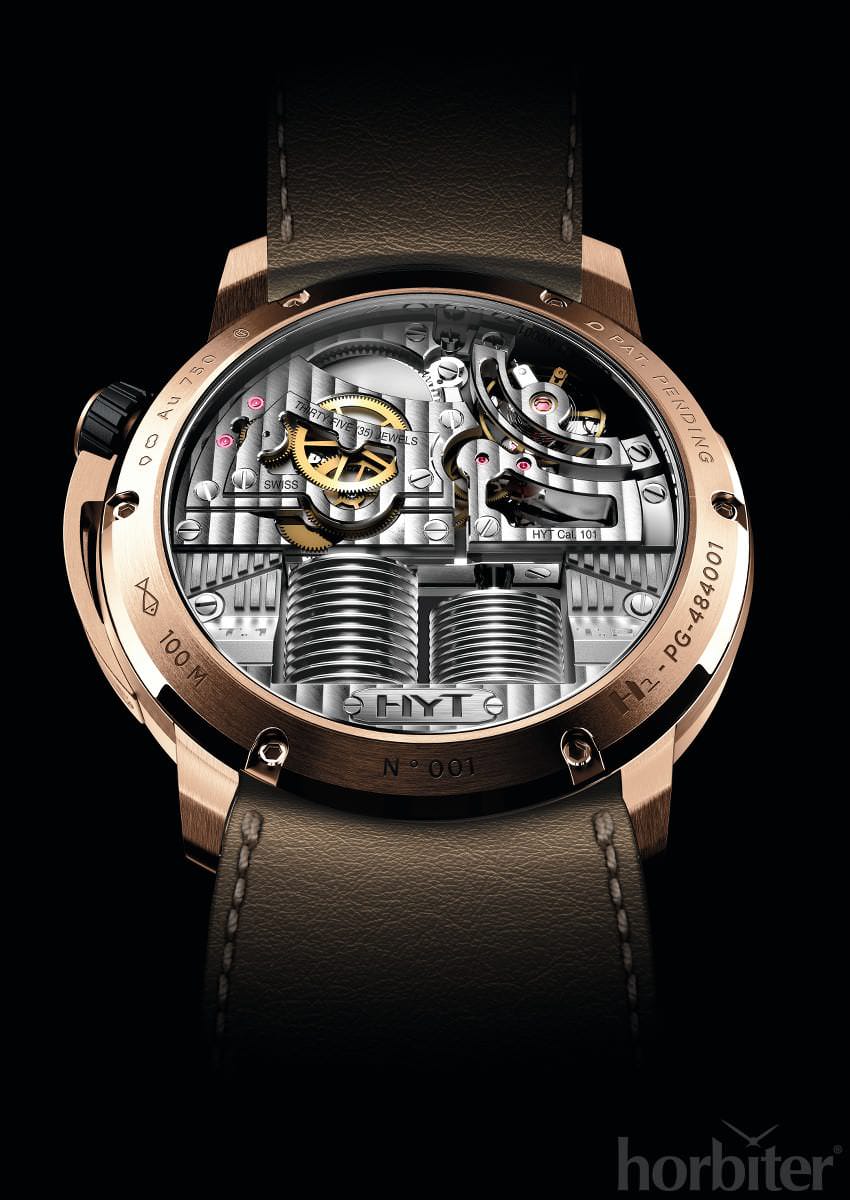
The movement operates the two reservoirs placed at 6 o’clock, both visible through the curved sapphire crystal and the transparent case-back via the two pistons. HYT is the acronym of HYdro-Mechanical Technolocy but that easily could be read HYbrid-Technology, as this timepiece is clearly a hybrid timepiece.
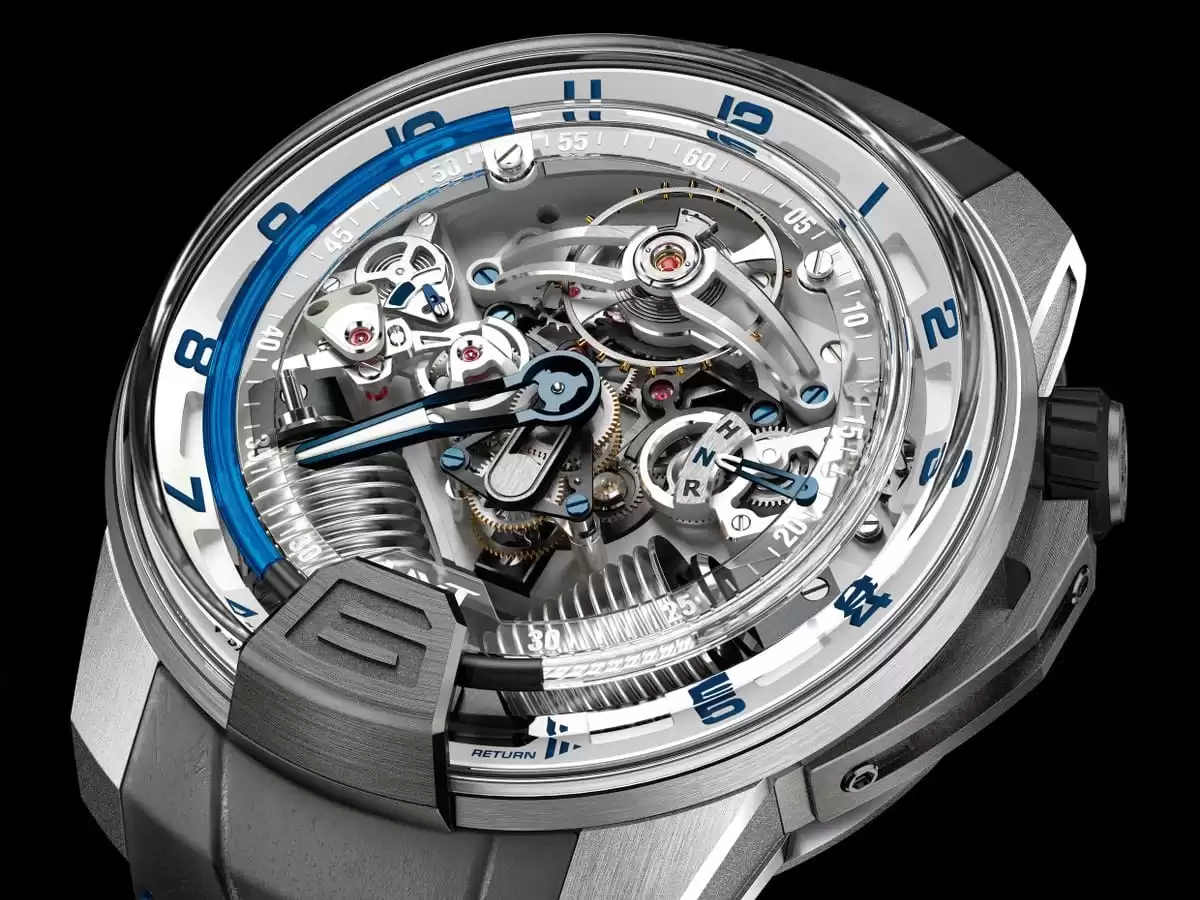
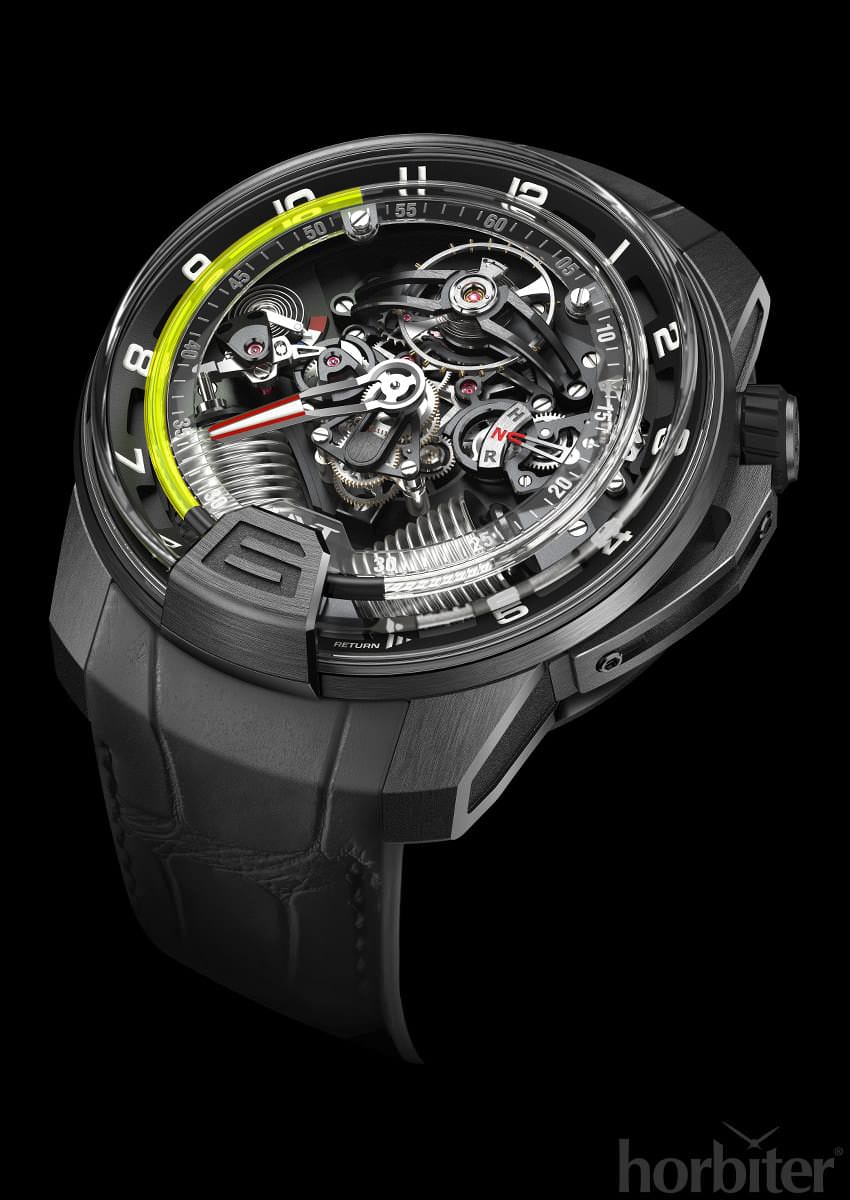
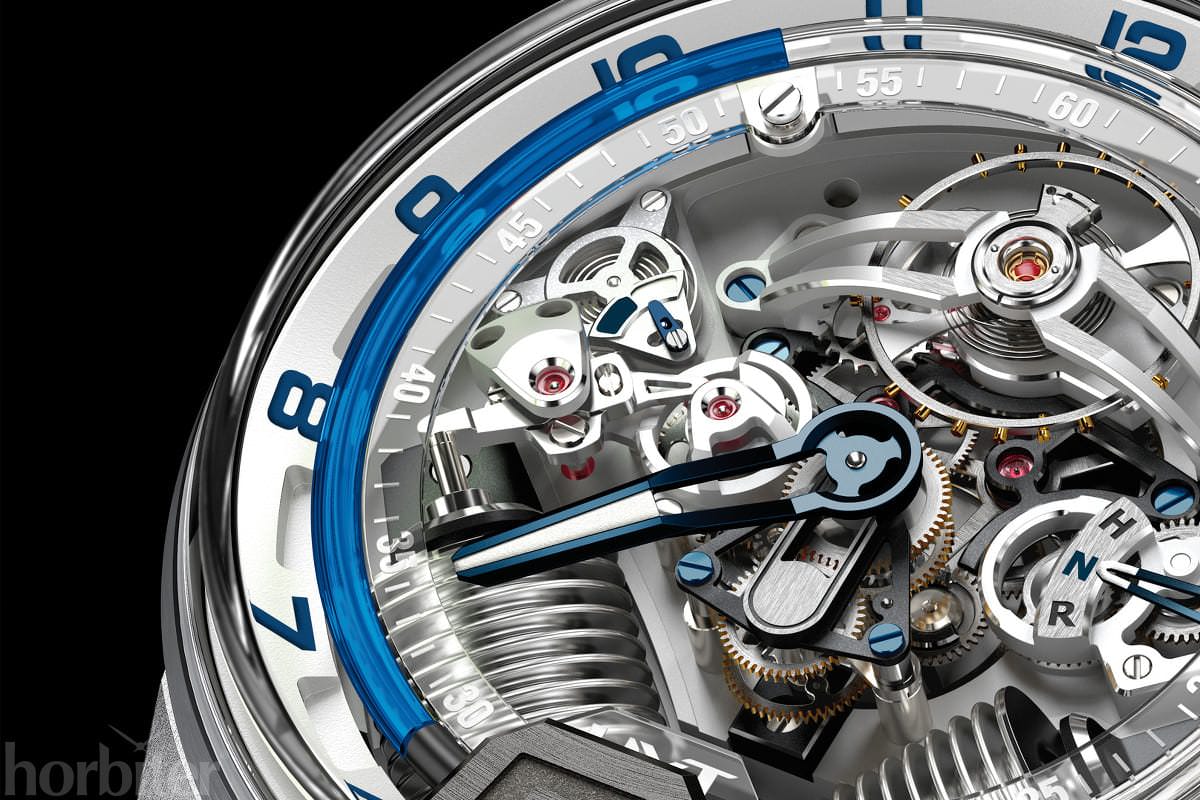
Minutes and seconds? They are both right before your eyes: the minutes are placed in a counter at 12 o’clock, the seconds are placed at 9:30 using a small wheel the shape, so it seems, of a Pelton turbine (which is also used in hydro-electric machinery). The power reserve indicator, placed at 2:30, completes the traditional time visualization package. The result of the H2 is a step up of what was developed for the H1. The H2 has a different reservoir placement, which reminds us of the aeronautical V cylinder engine, it has central jumping minutes, the balance wheel vibrating at 12 and the H-N-R indicator at 3, that reveal the Audemars Piguet Renaud e Papi‘s engineering.
As you can see, we’re talking about something outstanding! We may now reveal what to expect from HYT at Baselworld 2014: two new H1 versions are coming, the first one called Red 2, with a red fluid and red gold lugs; and the Alumen Blue, whose case is made out of an anodized aluminum alloy. The H2, instead, will come in three variations, all of them support the Titanium case, DLC treatment, and matching rose gold, white gold or platinum. In just a couple of weeks we will review them live just for you!
(Photo credit: HYT)
Gaetano C. @Horbiter®
In this article:
Complication
The addition of any mechanical complication to a movement that usually displays the time.
Power Reserve
A mechanical watch feature displays, on the dial or the case back, the remaining power in a watch movement, showing the length of time until the timepiece must be rewound.
Côtes de Genéve
Engine turning and polishing on a movement's parts or a dial (a Mido watch is an example) can obtain a regular wave pattern.
Case
It encases the mechanical movement and is crafted in one or more parts. It can also be a single piece, as with some professional diving watches, or made of unconventional…
Balance wheel
A part of a mechanical watch that oscillates, dividing time into equal portions.