It’s hard to believe that such a master watchmaker, a rare and contemporary combination of Breguet and Daniels, is the man who introduced quartz to high-end watchmaking. F.P.Journe is universally recognised for his ingenuity, making a classic timepiece great again and as commercially appealing as a steel sports watch. Its watches’ prowess and decoration are so distinctive that they have grown an endless waiting list of enthusiasts eager to secure one of its masterpieces sooner or later.
Since 2014, when the élégante hit the market, he has introduced the cheapest technology into premium luxury, achieving what most brands, namely Japanese luxury ones, still have not on a global scale.
Why did F.P.Journe conceive the élégante?
Why did a multiple award-winning master watchmaker embark on an eight-year project to create a quartz watch? It all began with a business trip to the Middle East, where he met and spoke to women about their experiences with watches. The outcome was not nearly what the mainstream told us for decades. Women choose quartz over mechanical but are concerned about the short battery life.
Francois-Paul Journe thus decided to approach Quartz the Journe way. He discarded the ordinary to avoid making the umpteenth quartz watch, instead opting for the F.P.Journe of luxury quartz watches. He adopted the same challenging and dedicated approach as any mechanical watch.
Back in Geneva (2005), he began scouting partners and found EPFL (Ecole Polytechnique Fédérale Lausanne) as the privileged technical partner to develop the brand’s first electromechanical watch, boasting an efficiency as high as never before in the industry. The outcome is a movement capable of efficiently managing a high-capacity battery, which adopts a “snooze” function after 30-35 minutes off the wrist to save as much energy as possible and a quick start once on the wrist again.
The case
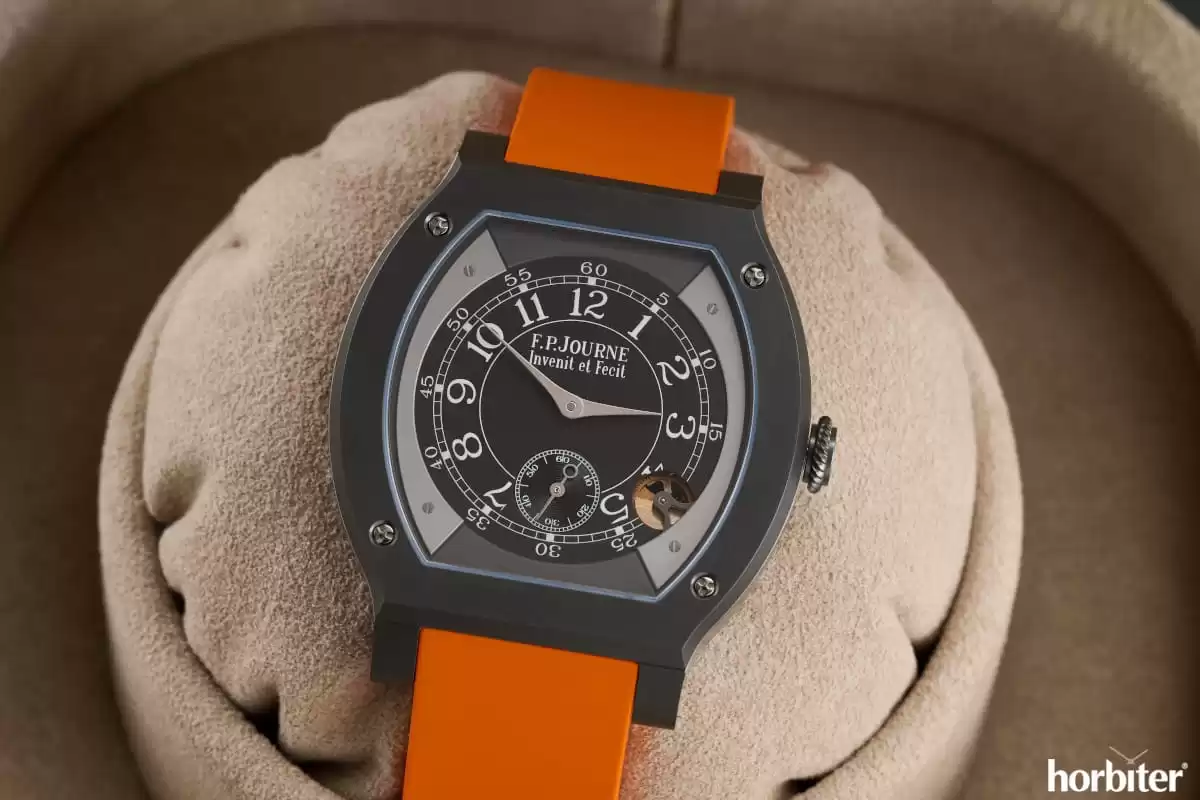
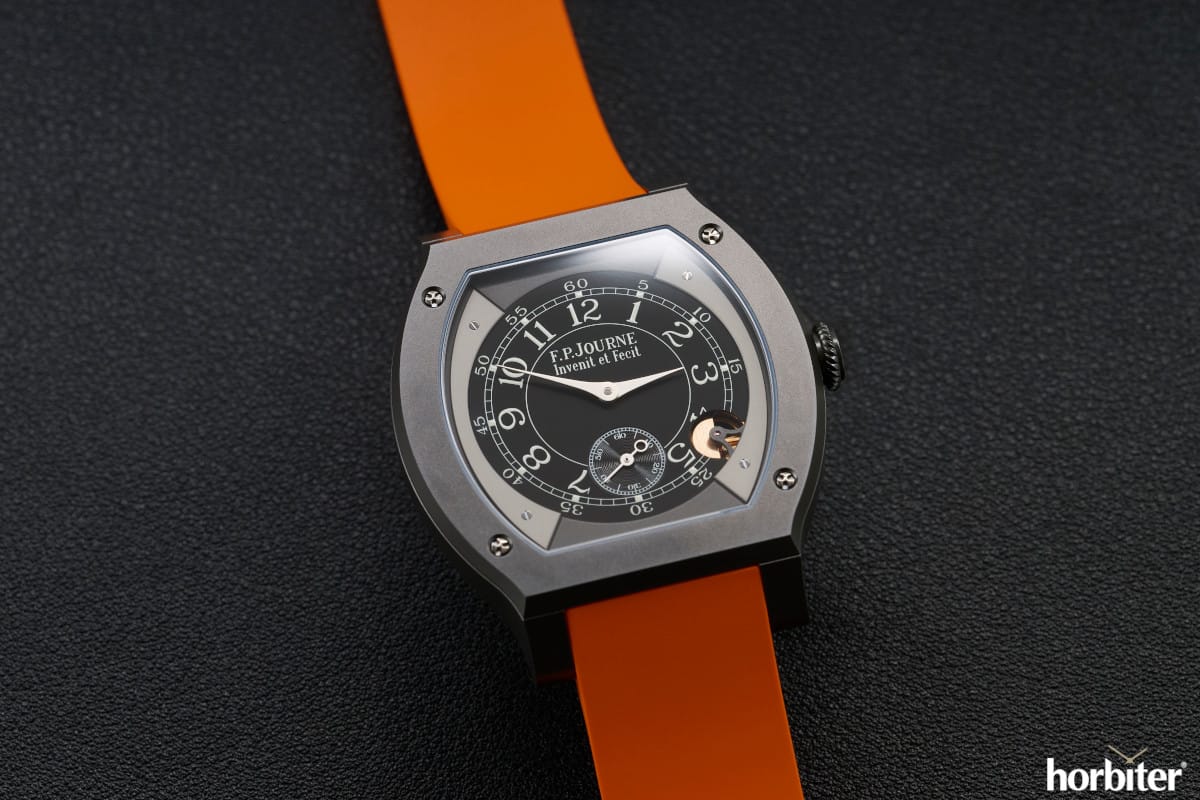
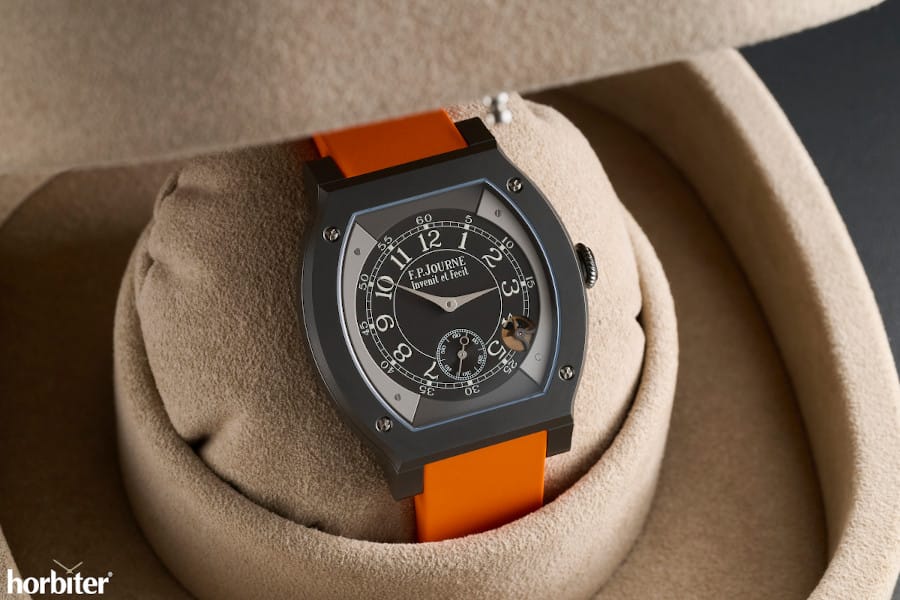
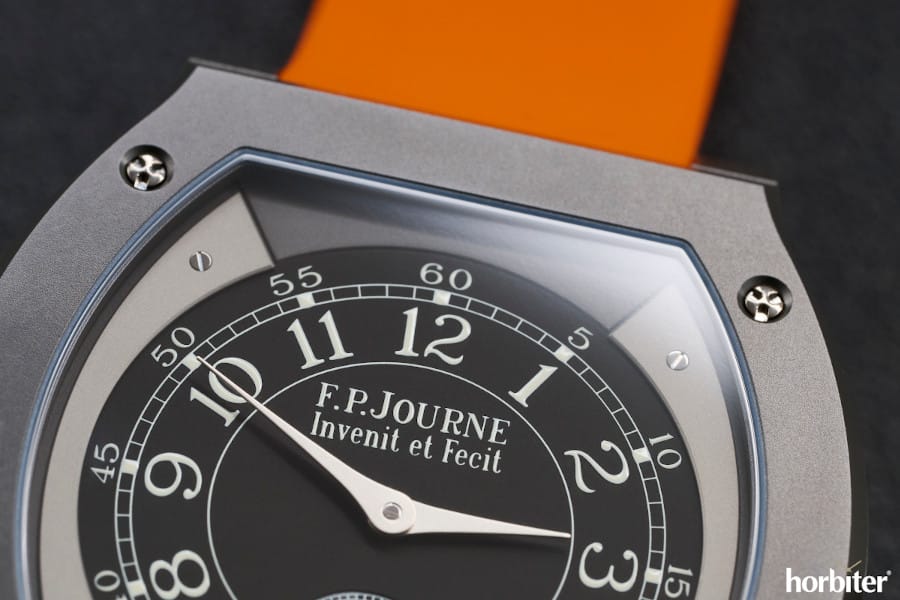
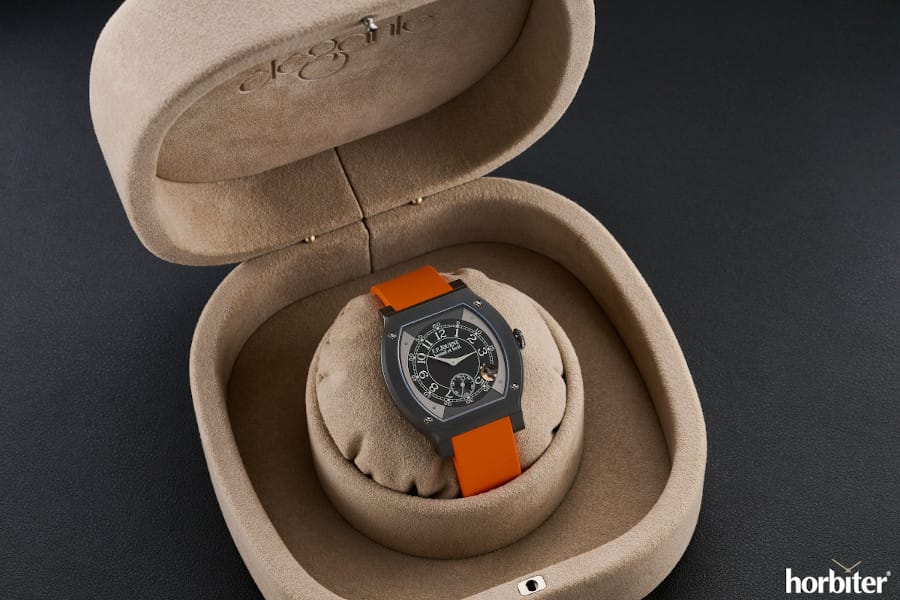
Packing such technology is a Tortue-shaped case you won’t expect from the custodian of classicism and a round-cased timepiece yet driven by technological pursuit. At first glance, the original 40 x 35 mm, 7.35 mm thick flat titanium case brings me some Cartier Tortue vibes in a technological and edgy attire.
That’s what I feel when spotting an élégante from afar. Since then, the élégante has evolved to 48 x 40 mm (7.95 mm thick) of the model pictured here to please a wider audience of men.
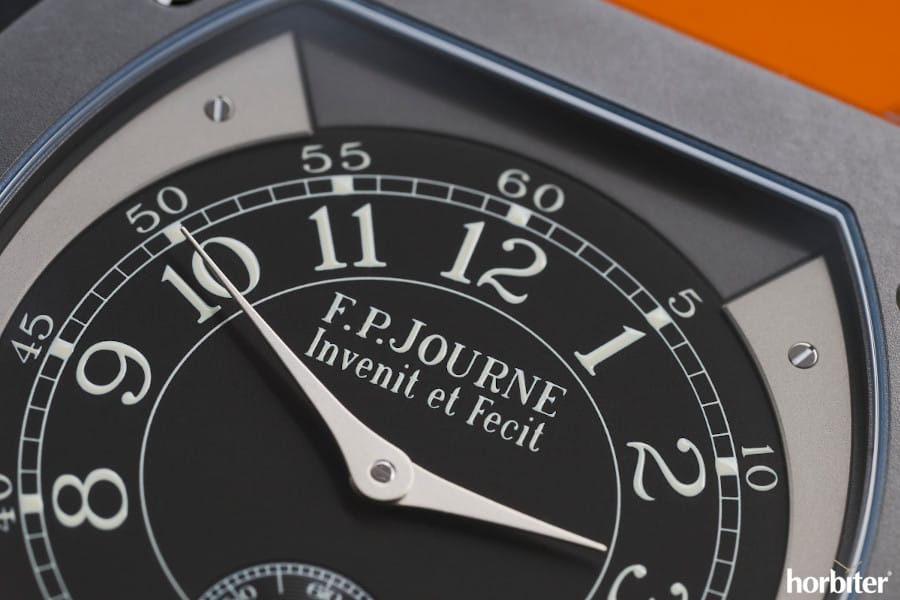
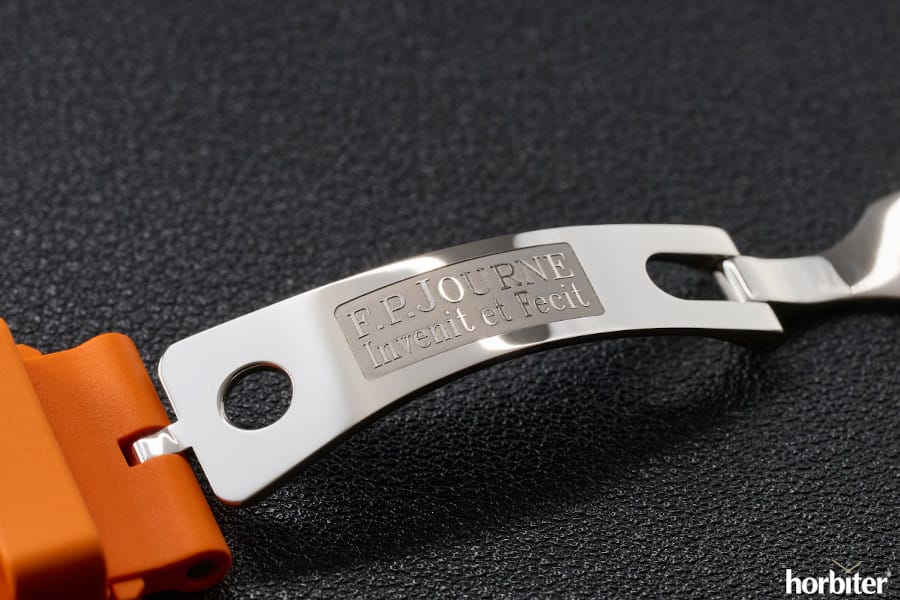
The F.P.Journe élégante 48 Titalyt® adds a plasma electrolytic oxidation layer, making it sportier than ever before and catchy when paired with a contrasting-coloured strap, such as the orange one we picked (there are twelve options available). It offers a quick-release mechanism and stand-out comfort once on the wrist. The project’s duration proves how challenging it was to market the ultimate three-hand quartz watch. In figures, an élégante can run up to eight to ten years, extending to a massive eighteen years thanks to the “built-in” function that stops the gear train if the watch rotates in a collection.
The clever calibre 1210
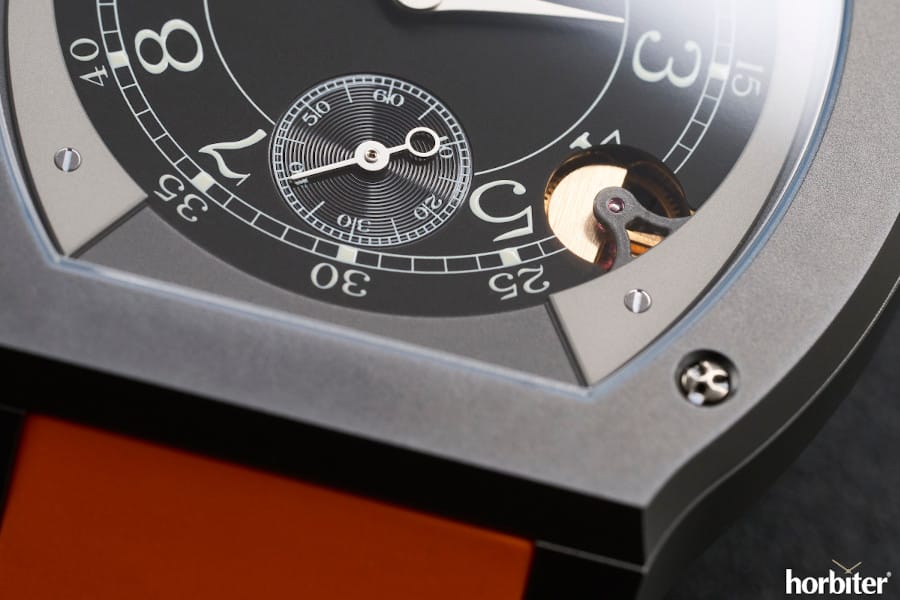
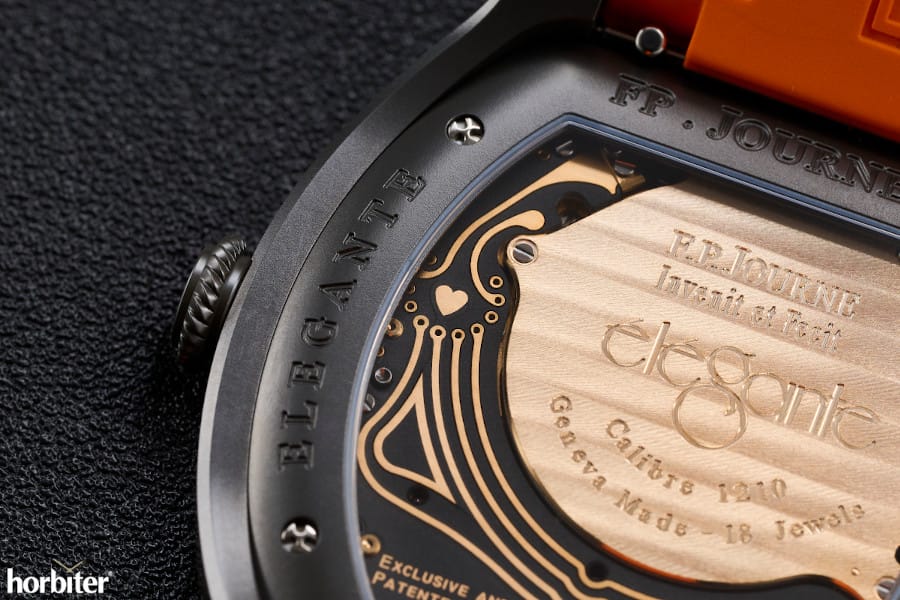
We couldn’t access all the technical details due to intellectual property matters. However, we know that the calibre 1210’s microprocessor (the tiny golden heart visible on the case back) keeps elapsing hours, minutes, and seconds in the background and is ready to display the current time again once the detector at 4:30 triggers the restart.
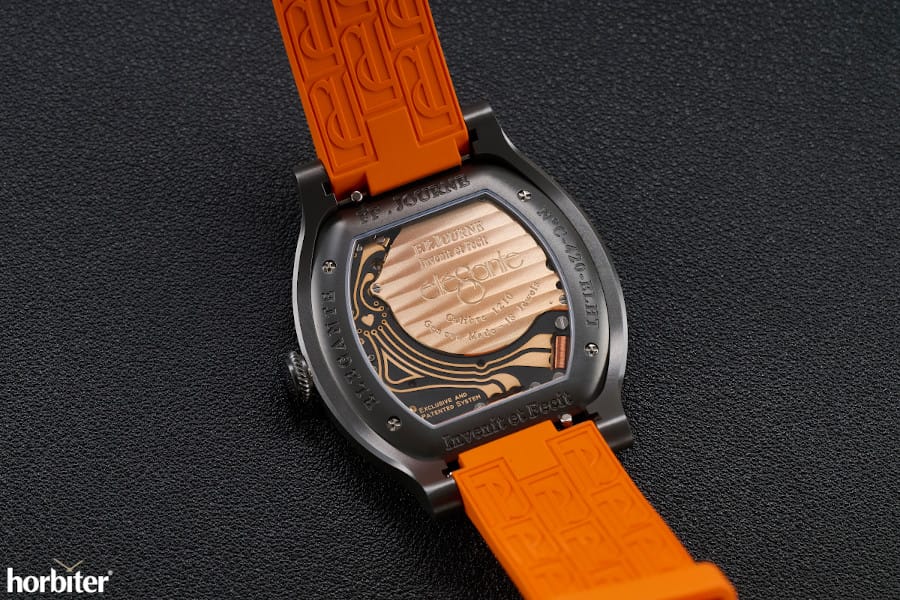
As a result, the hands automatically set the actual time by following the shortest path, taking the most efficient route, whether clockwise or counterclockwise. Yet, the brand assigned EPFL a challenging energy efficiency target. F.P.Journe could not avoid being F.P.Journe regarding the movement’s decoration (on top of assembling its mechanical parts in-house). The case back showcases rose gold traits and a large rose gold Côtes de Genève decorated bridge, thus proving the élégante has an F.P.Journe pedigree.
Final thoughts
The original target audience was women, but men soon joined the fray, making the élégante a men’s favourite. I met at least two persons whose admiration for the watch is high, and in one case, that’s the first-ever F.P.Journe watch. The 48 mm model in Titalyt® proves that men are in the target.
The brand successfully encompassed exclusivity, luxury and elegance in a timepiece that I took some time to appreciate and understand. What matters most is F.P. Journe’s talent to make the extraordinary ordinary and take risks you don’t expect from a brand this small and boutique.
Here is a different luxury experience, nothing comparable to a line-sport-centigraphe-watch-hands-on/">Centigraphe or an Automatique; instead, it is a holistic take on luxury that is easy to use and wear. Once first adjusted, it’ll keep running without possibly needing any adjustment.
Closing note: I hope engineers will raise the standard 30-meter water resistance. It is challenging to achieve on a quartz-powered Tortue case, but you expect a sports luxury watch to extend over ordinary activities. An F.P.Journe élégante Titalyt® retails for €20,800, including VAT.
(Photo credit: Horbiter®)
Giovanni Maria Di Biase @Horbiter®
In this article:
Case
It encases the mechanical movement and is crafted in one or more parts. It can also be a single piece, as with some professional diving watches, or made of unconventional…
Strap
A leather, rubber or other material band that secures the watch to the wearer's wrist.
Case back
It can be screwed in, pressure-fastened, or secured to the case via screws. Occasionally, it comes as a single piece, with the case of specific professional diving watches (for example,…
Calibre
A calibre is the type of watch movement encased in an assigned timepiece. Its name is usually associated with the manufacturer's name and a standard code, e.g., ETA 2824.
Line
It is the measurement unit that identifies the size of a movement. According to this measurement system, one line corresponds to 2,255mm.