After starting off the year 2016 with the VanderbiltCup, it is now time to move on to the novelties that Eberhard & Co. presented in Basel. Do you think we are too late already? From a journalistic point of view we actually are but if you keep in mind that we don’t usually follow step-by-step the standard approach that many other online publications have but that we write exclusively when we get inspired by something, I would then say that we are not late at all!
The good thing with writing about watches is that, most of the time, you can write about whatever you like and whenever you like it, you simply need to keep it original!
At the Basel exhibition, Eberhard & Co. launched their Scafograf 300 that, together with their Scafodat 500 – an old friend of ours that represents the brand’s top offer among Eberhard & Co.’s diver watches – takes the new professional watches collection to a new high. Moreover, this new release, helps us to rebuild a series of timepieces that has included at least four models since the 60s.
The Eberhard & Co. Scafograf 300 is not only the heir of the original model but it also paths the way to a timepiece that, in the brand’s mind, foresees perhaps a complete revamping process. Only time will be able to confirm my impressions but if we consider that the market of professional diver’s watches is currently at its highest, my hypothetical thesis is really not too remote.
Eberhard & Co. crafted different versions of the original Scafograf by taking the 200 series as their entry-level model – the figure indicates the highest depth that the timepiece can reach – the models go up to the series 500 that sports two different references (that is if I look at the hands of the models that I have seen on the second-hand market.)
One of the two references was available at the Eberhard & Co. stand but, unfortunately, I won’t be able to show you a picture of this timepiece because the photo I had taken is in the hands of the person who stole my camera!
The Eberhard & Co. Scafodat 500 takes inspiration from the dial of the original Scafodat200, it sports four glowing arrow-shaped indexes, one of Eberhard’s trademarks that is also featured on other models of the original Scafograf series up to the brand’s top model that was launched in the 80s; the Scafograf1000mQuartzreference51500.
Back in those days, this timepiece had to compete hard against its brother, the Superocean Deepsea reference 81190 that Breitling released in 1985 (they were essentially the same watch according to archives) to maintain the top position on the specific market of diver’s timepieces with a 1000m rating.
While browsing the Internet, I came across a shop in Milan that stores one of these timepieces still in mint conditions. If you consider the ever growing value of Scafograf timepieces – in particular the value of those belonging to the 500series – this purchase could be a good investment in a time when vintage diver’s watches from the 80s are steadily getting more and more interesting during online auctions, the best index still available to gauge how the market of second-hand timepieces is currently doing.
The Eberhard & Co. Scafograf 300 is the almost faithful re-edition of the original model that carried the very same name. Does this timepiece represent the beginning of a new modern Scafograf collection?
Perhaps it does, as I said above, in my personal opinion, Eberhard & Co. preferred starting off with one of their most representative models in a time when the passion for professional diver’s watches and the evolution of scuba-diving technologies had reached its peak thanks to the involuntary contribution of important characters like Cousteau who managed to make the world of deep seas and oceans more accessible to all of us.
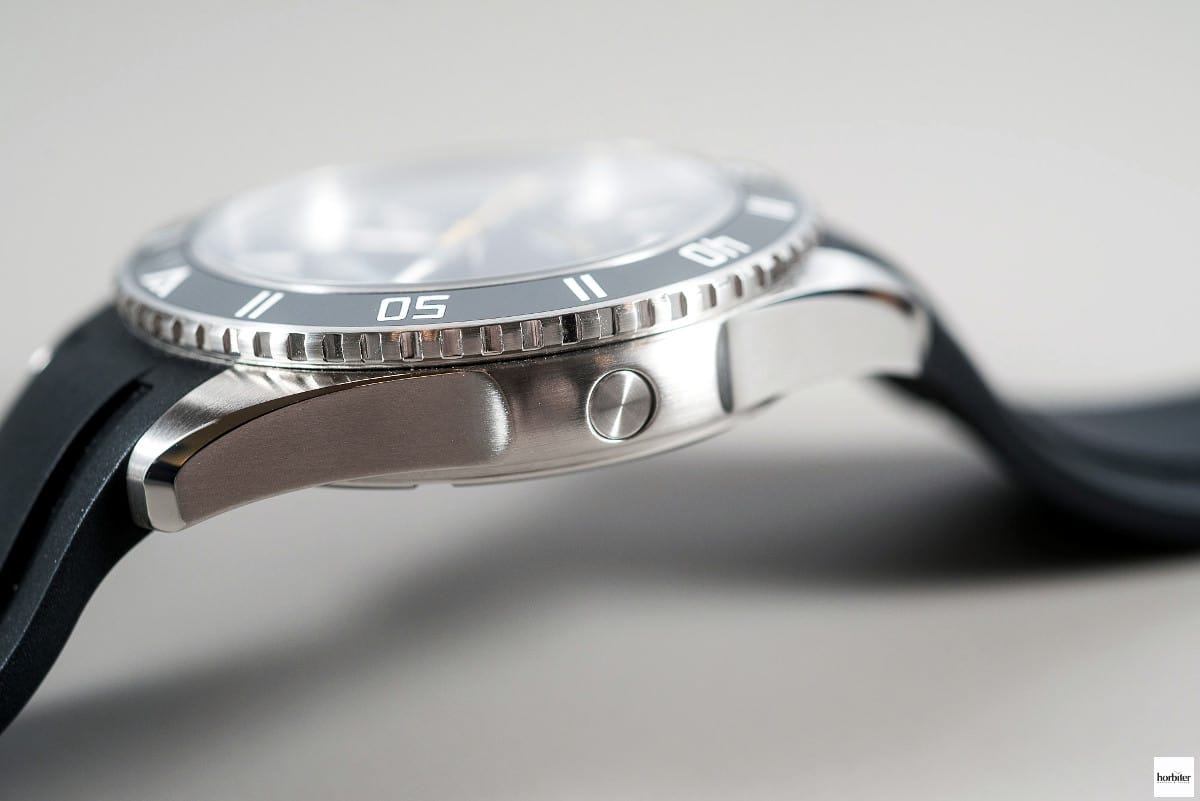
This new model is “almost” faithful to the original timepiece since it doesn’t exactly copy the original geometry of the propeller-shaped lugs, most likely this decision was a brand’s voluntary attempt not to focus on one of the trademarks that have made another manufacturer famous in the industry. I am not sure whether Eberhard & Co. was the first brand that introduced these propeller-shaped lugs on diver’s watches, keeping in mind that the first Seamaster 300 was unveiled to the public in 1957.
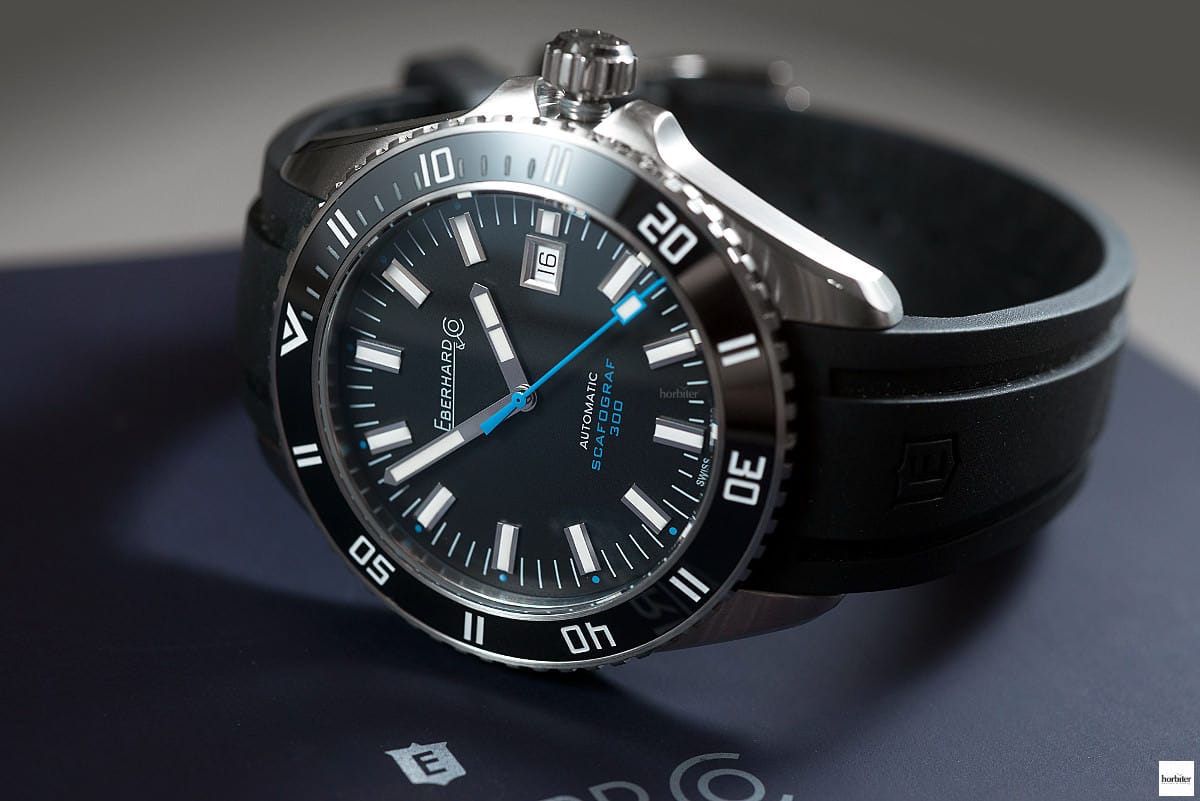
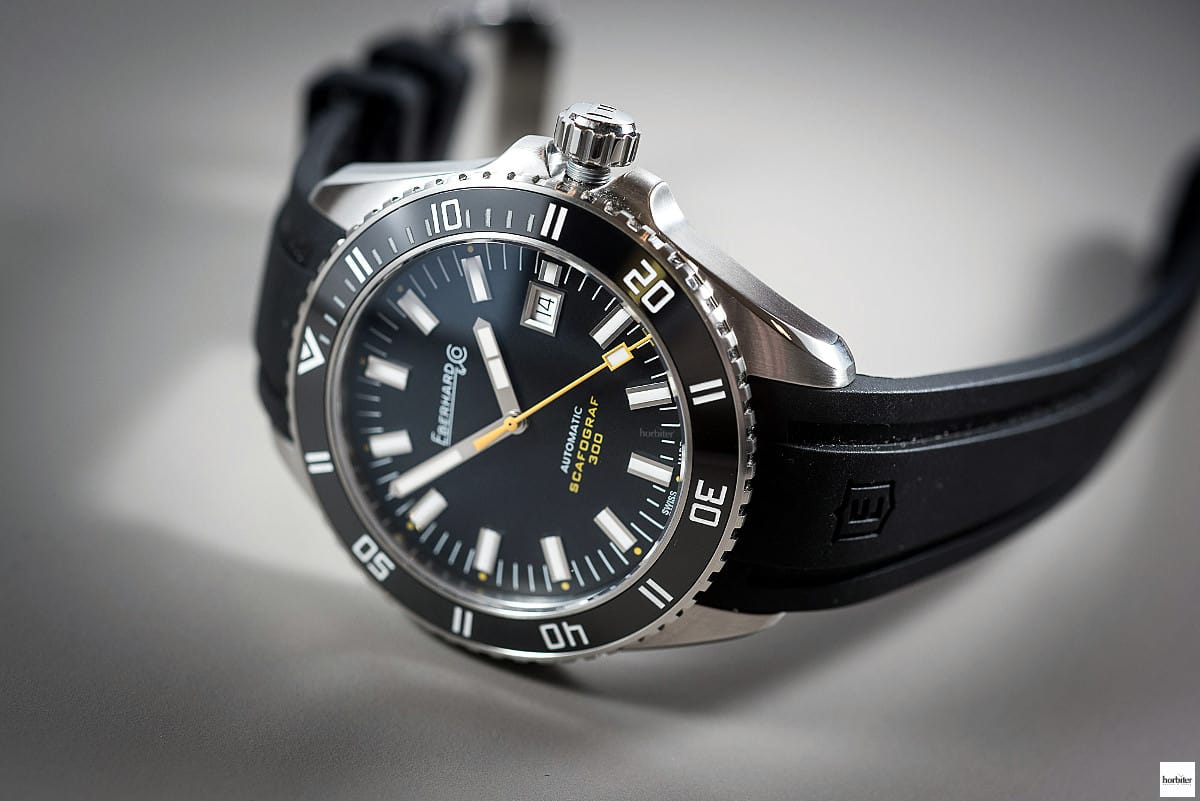
This is a topic that is probably worth going back to, what is clear, however, is that Eberhard & Co. have avoided crafting a re-edition of their original timepiece by creating a thin case featuring elongated and straight lugs and a polished and curved rim that starts off the crown and gets larger until it reaches the point where it is attached to the strap. This is an alternative way to match that special geometric pattern by interpreting it in a different manner.
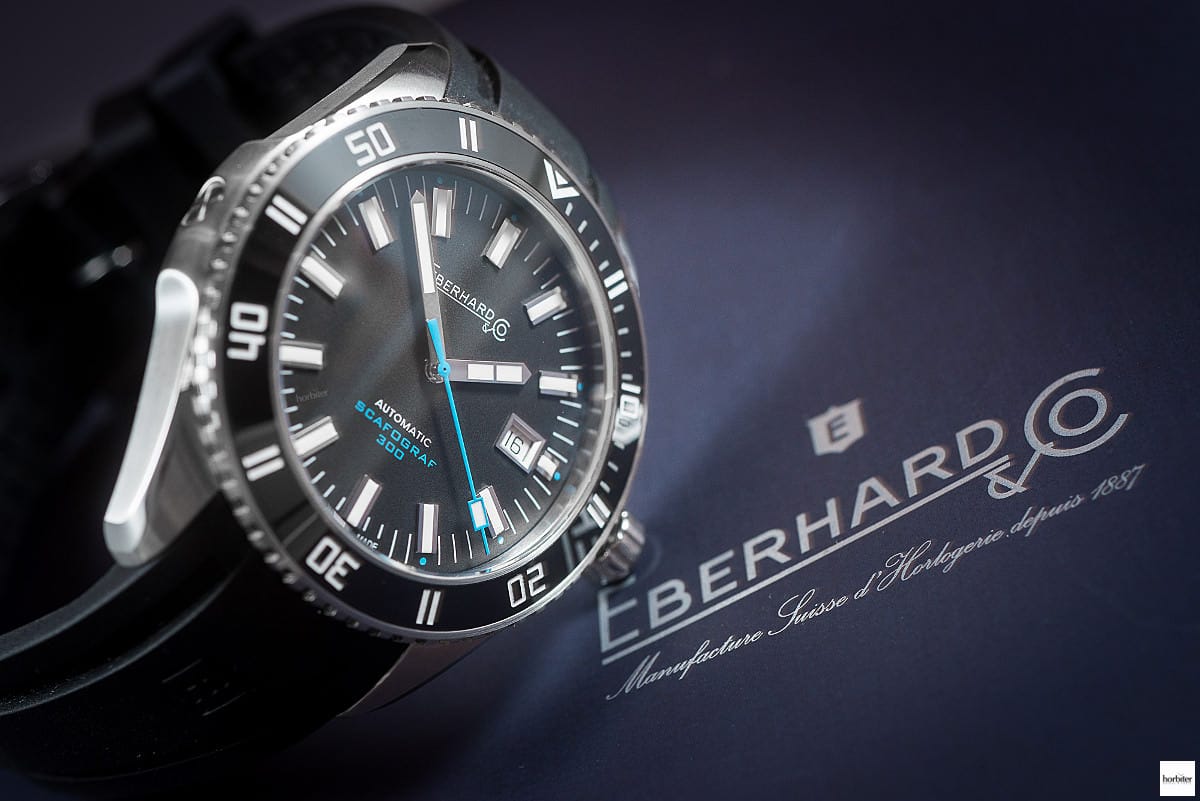
This is the third time that Eberhard & Co. have used ceramic for one of their timepieces’ bezel and the very first time that this material was used on the bezel of a driver’s watch after last year’s attempt with the beautiful two-counter Contrograf and the first one, I guess, with the Nuvolari Edition Limiteé.
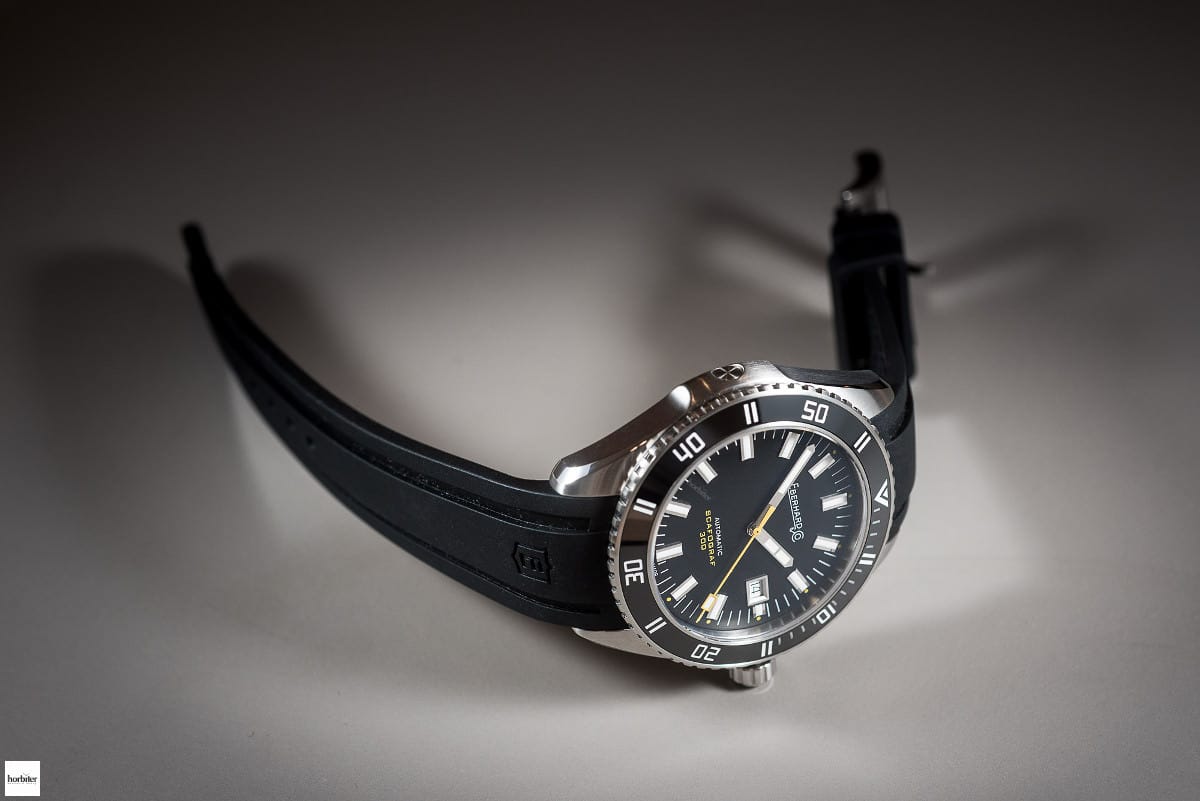
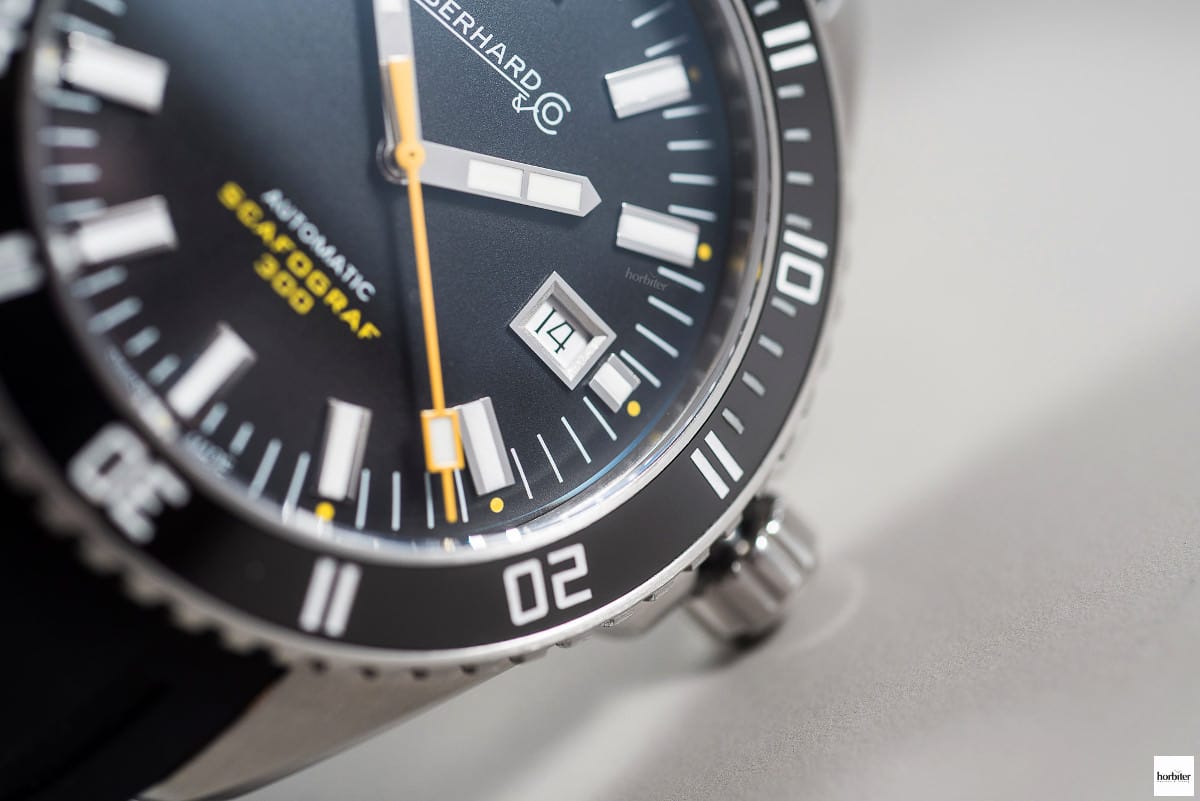
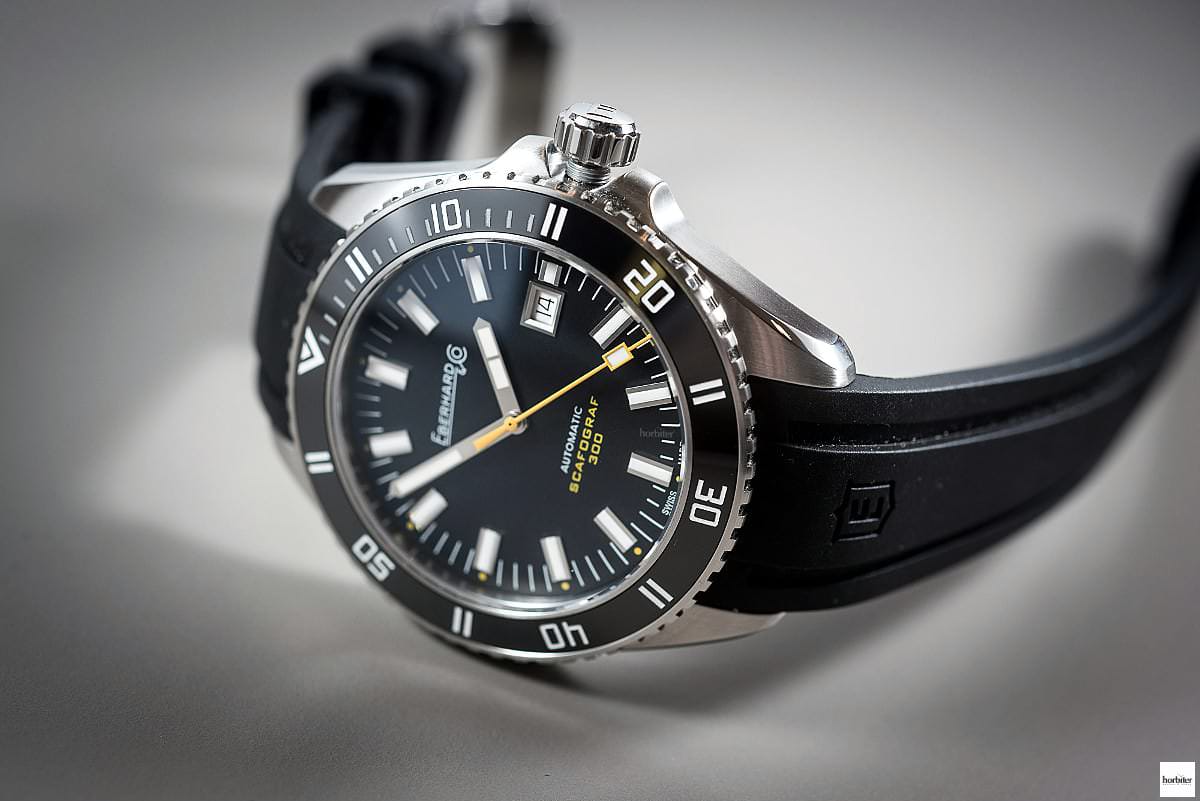
The bezel of the Eberhard & Co. Scafograf 300 features an extremely classic font and style with quite prominent teeth on this mono-directional and extremely robust bezel. The dial, on the other hand, is the part that best matches the very concept of “tradition”. Applied indexes and baton-shaped hands are very similar, even identical, to those present on the original model from the 60s.
This dial is the element that gives this timepiece its very own personality, whoever designed the Eberhard & Co. Scafograf 300 used the very same style as the original dial that was largely used on diver’s watches of the time. The style is generally well-balanced and intentionally not too refined so that this timepiece can suit both a casual, a professional and even a sporty attire.
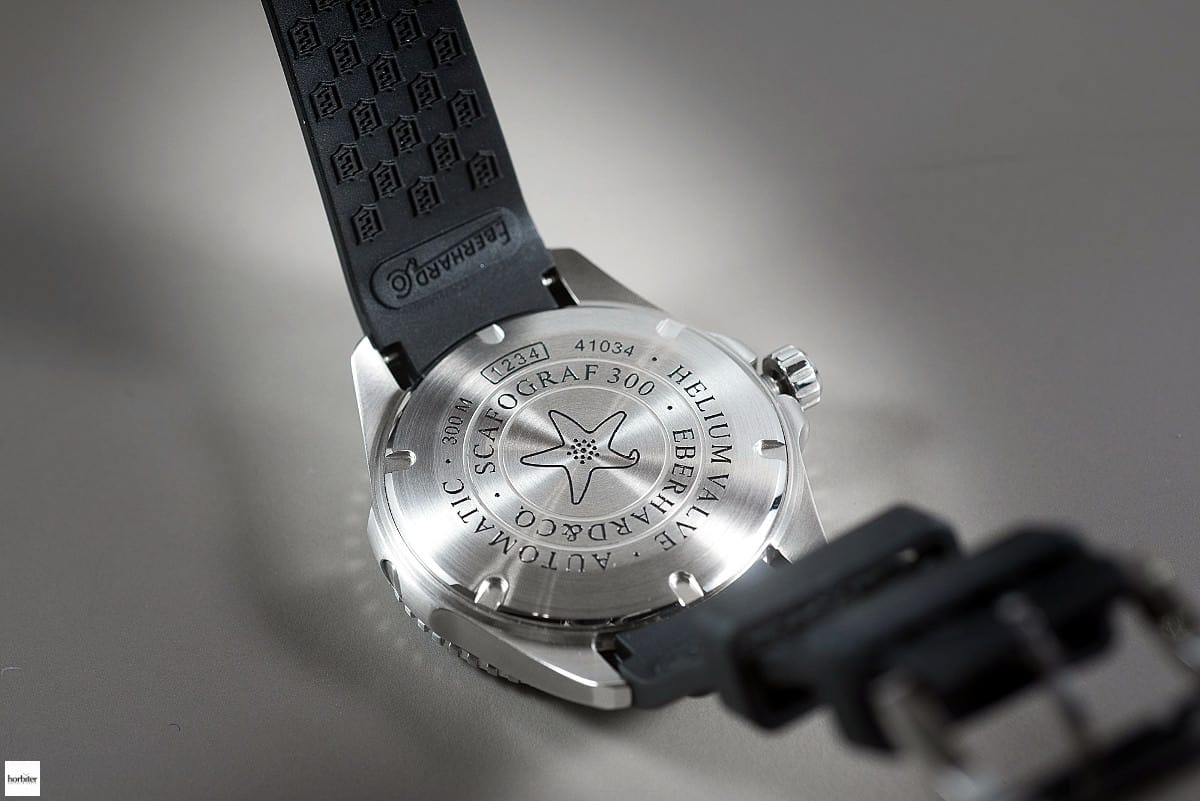
The retail price starts at 2,400 Euros, the Eberhard & Co. Scafograf 300 is Eberhard& Co.’s interpretation of the sport three-hands diver’s watch, it is a no frills timepiece that falls within that specific market segment that I like to call “not in-house”, referred to its movement. This timepiece sports a large 43mm-case, high quality specs and a name that needs to further presentations.
(Photo credit: Google, Horbiter®)
Gaetano C @Horbiter®
In this article:
Strap
A leather, rubber or other material band that secures the watch to the wearer's wrist.
Crown
Placed on the case side, it winds the mainspring. When pulled out, it also sets the time and the date. A screw-down crown increases water resistance and protects the movement…
Case
It encases the mechanical movement and is crafted in one or more parts. It can also be a single piece, as with some professional diving watches, or made of unconventional…
Ceramic
Widely used for crafting a watch case and, in recent years, also for the bezels of diving watches and dials. Obtained from zirconia powder (ZrO2), ceramic offers superior scratch resistance…
Bezel
The bezel is particularly useful on diving watches, allowing you to check dive times. In this case, it unidirectionally rotates and usually comes in two parts: a metal (or ceramic,…

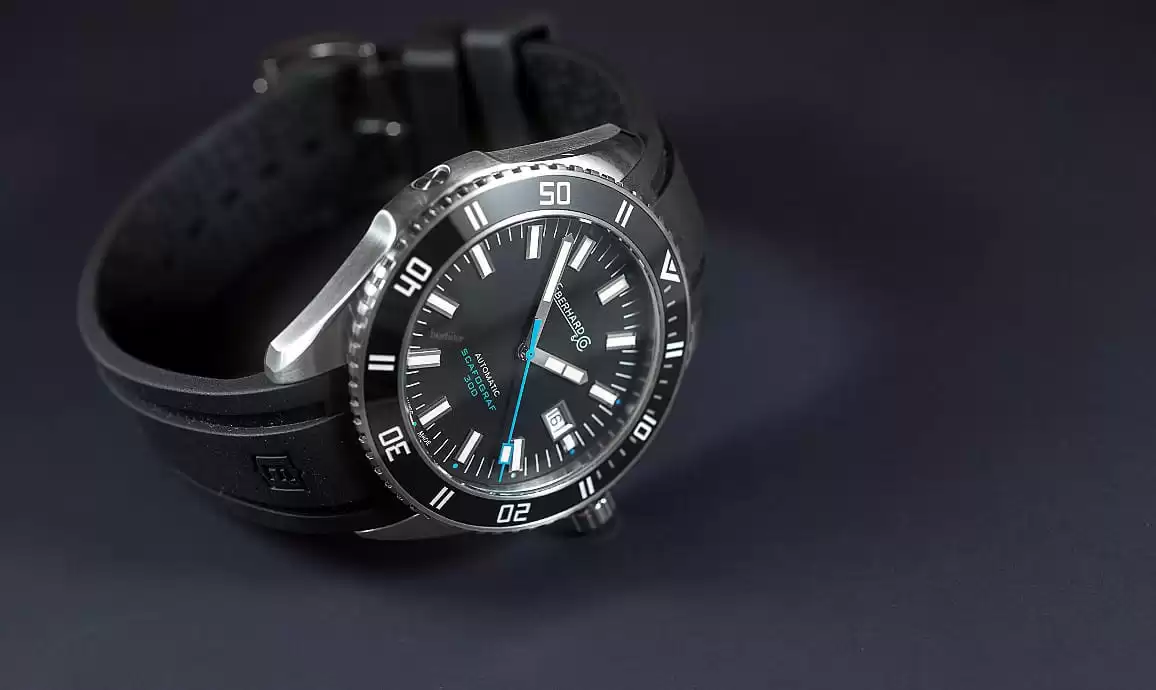

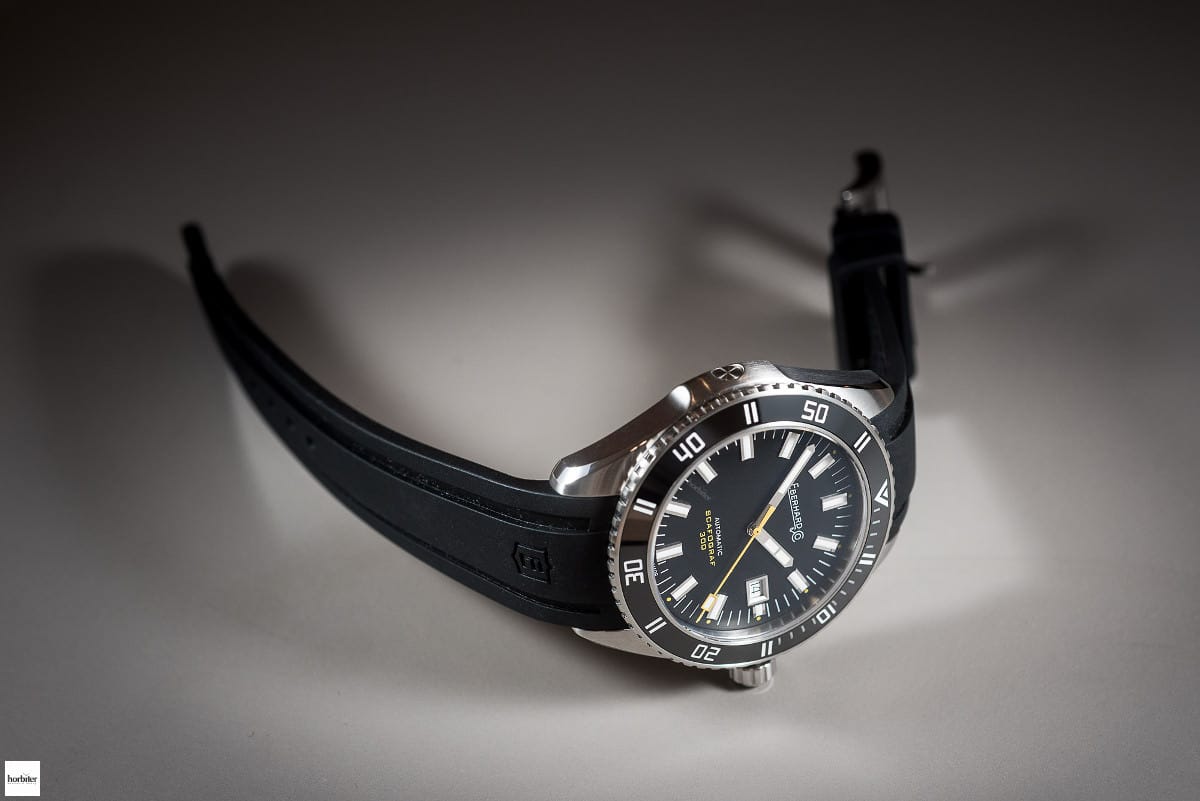 At the Basel exhibition, Eberhard & Co. launched their Scafograf 300 that, together with their Scafodat 500 – an old friend of ours that represents the brand’s top offer among Eberhard & Co.’s diver watches – takes the new professional watches collection to a new high. Moreover, this new release, helps us to rebuild a series of timepieces that has included at least four models since the 60s.
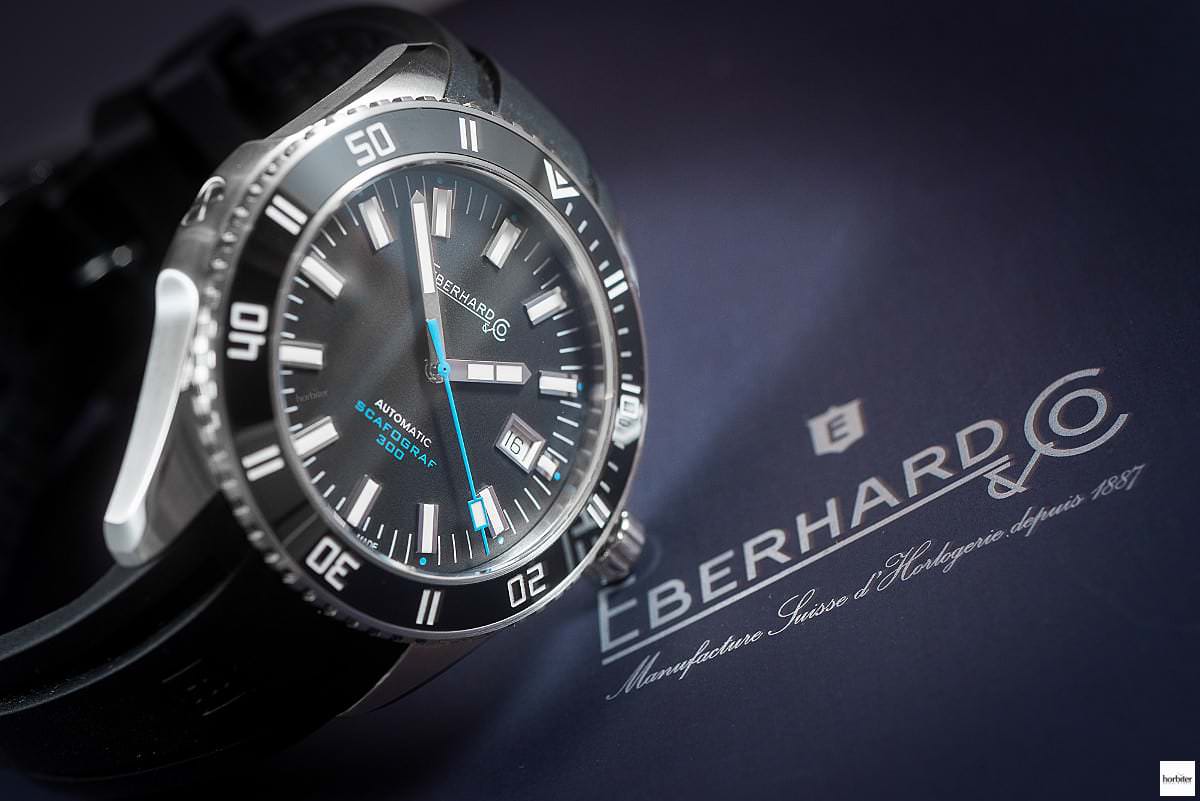 The Eberhard & Co. Scafodat 500 takes inspiration from the dial of the original Scafodat 200, it sports four glowing arrow-shaped indexes, one of Eberhard’s trademarks that is also featured on other models of the original Scafograf series up to the brand’s top model that was launched in the 80s; the Scafograf 1000m Quartz reference 51500.
 While browsing the Internet, I came across a shop in Milan that stores one of these timepieces still in mint conditions. If you consider the ever growing value of Scafograf timepieces – in particular the value of those belonging to the 500 series – this purchase could be a good investment in a time when vintage diver’s watches from the 80s are steadily getting more and more interesting during online auctions, the best index still available to gauge how the market of second-hand timepieces is currently doing.
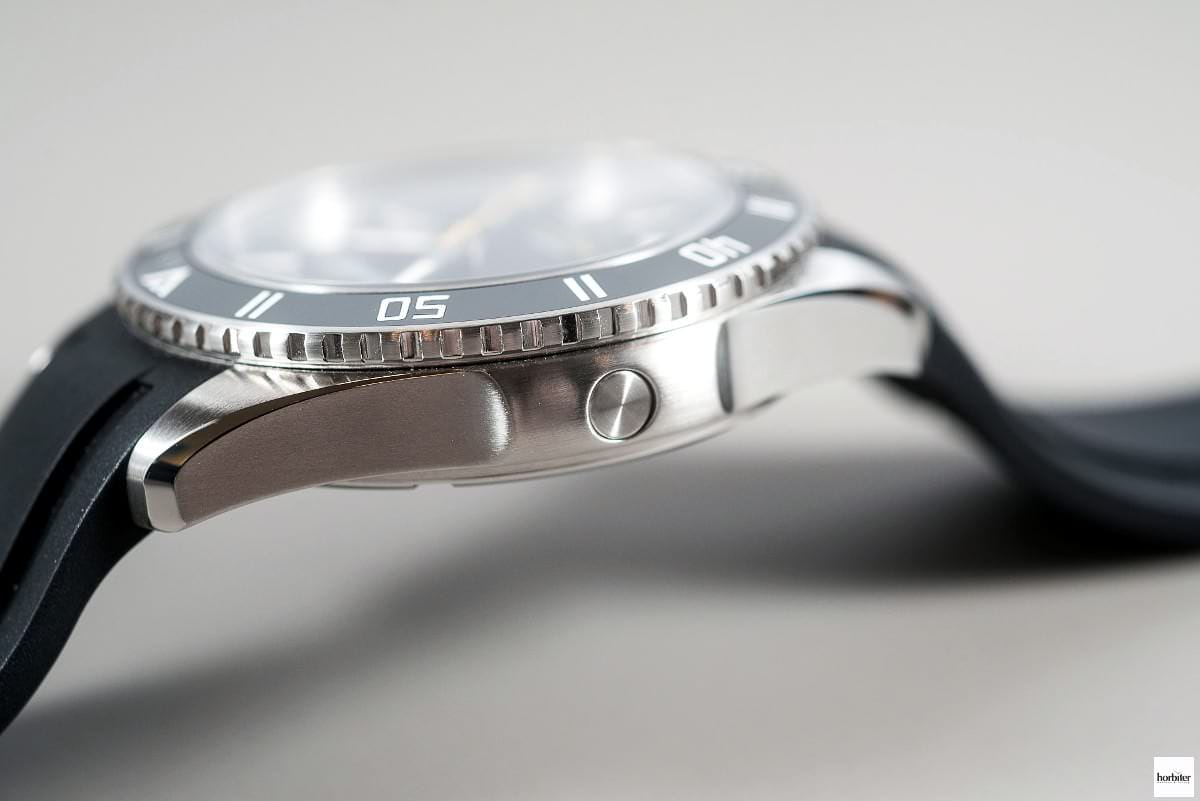 The Eberhard & Co. Scafograf 300 is the almost faithful re-edition of the original model that carried the very same name. Does this timepiece represent the beginning of a new modern Scafograf collection?
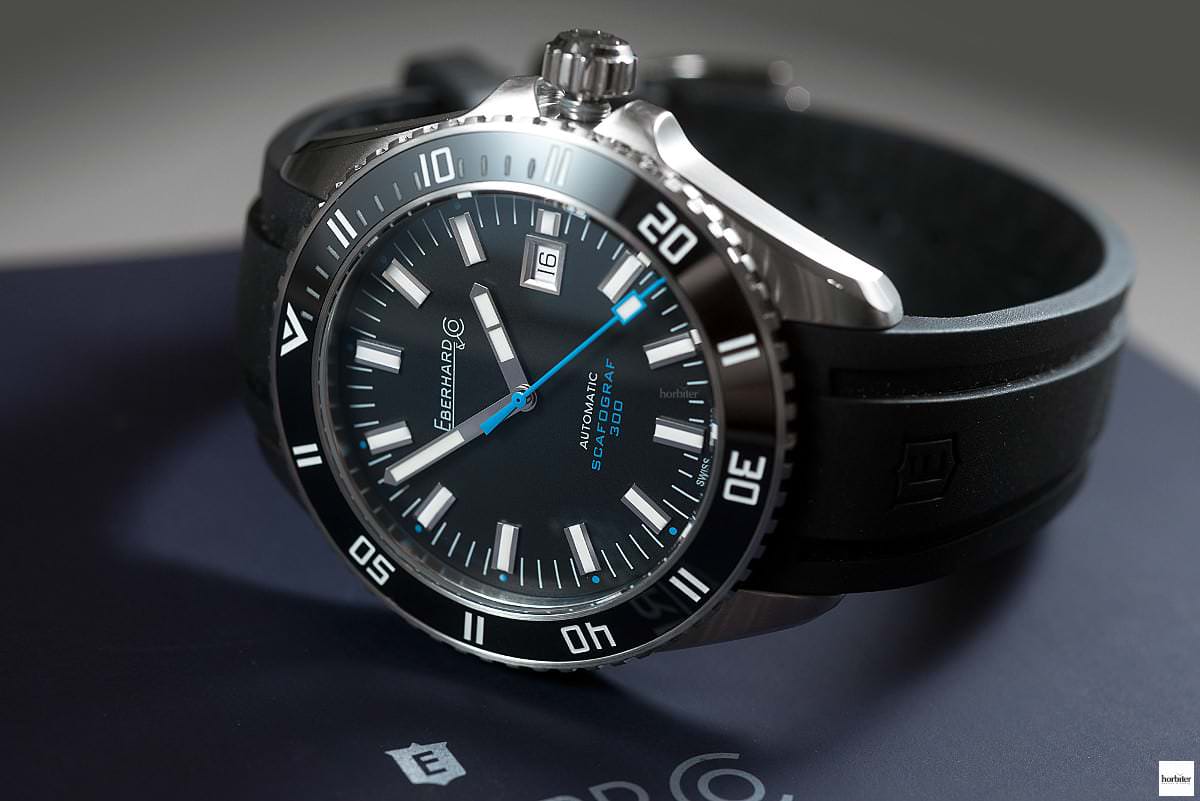 This new model is “almost” faithful to the original timepiece since it doesn’t exactly copy the original geometry of the propeller-shaped lugs, most likely this decision was a brand’s voluntary attempt not to focus on one of the trademarks that have made another manufacturer famous in the industry. I am not sure whether Eberhard & Co. was the first brand that introduced these propeller-shaped lugs on diver’s watches, keeping in mind that the first Seamaster 300 was unveiled to the public in 1957.
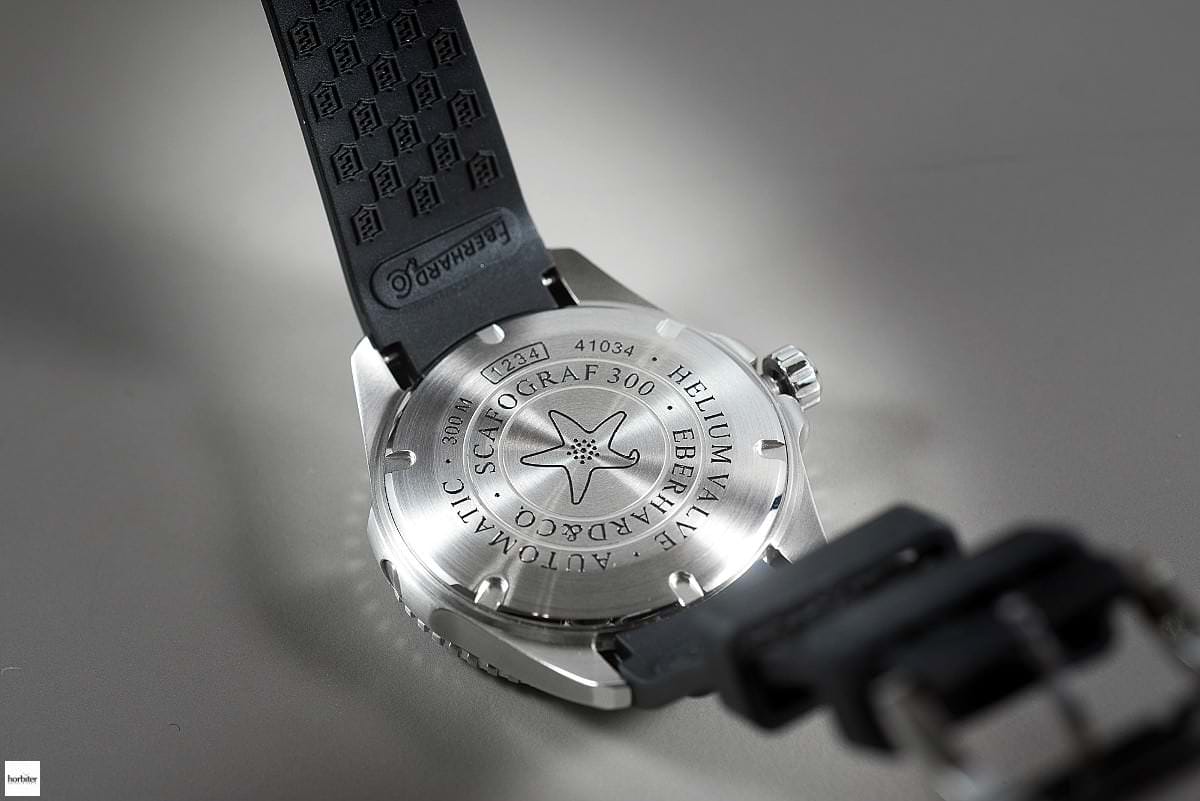 This is the third time that Eberhard & Co. have used
 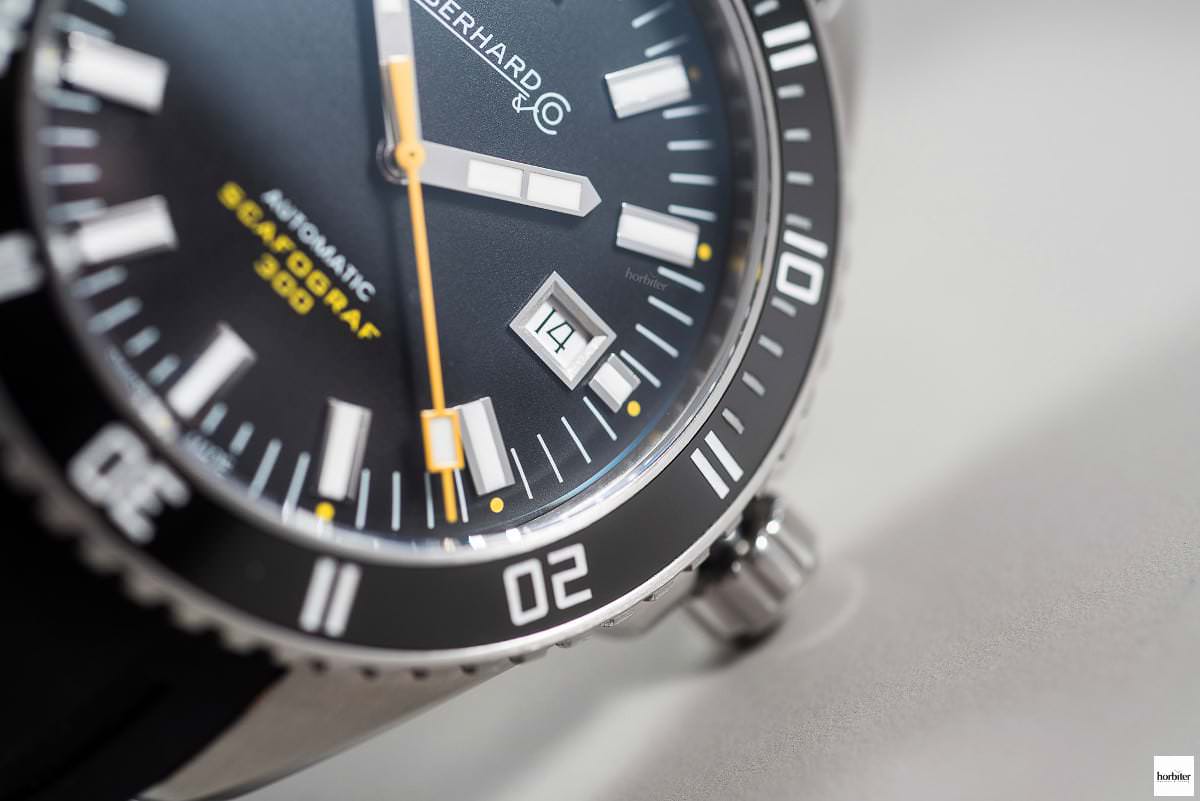 This dial is the element that gives this timepiece its very own personality, whoever designed the Eberhard & Co. Scafograf 300 used the very same style as the original dial that was largely used on diver’s watches of the time. The style is generally well-balanced and intentionally not too refined so that this timepiece can suit both a casual, a professional and even a sporty attire.