I was looking for something out of the ordinary for our Horbiter’s Collectibles column, dedicated to those watches that are out of production and had in my mind an IWC. I was therefore leafing through the pages of an old AD (Architectural Digest) magazine, which is perhaps the most widely read home mag in the world and fills up my studio’s library, as I did remember that often were ads from IWC on its pages, back in the 90s.
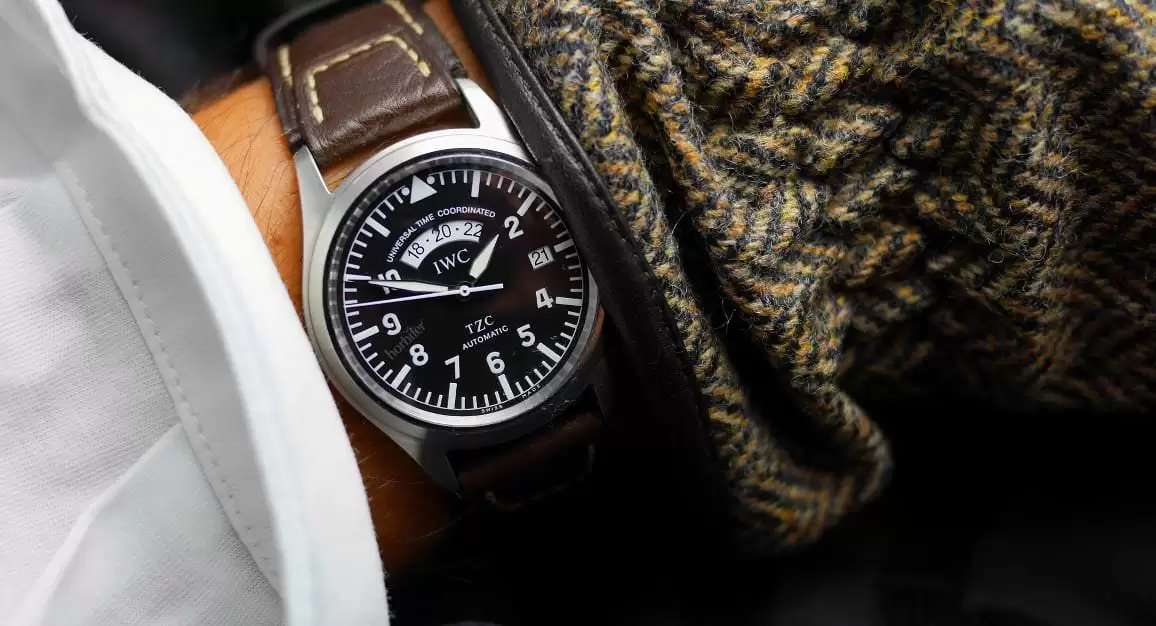
During those years IWC launched an ad campaign, rather ironic, to promote its timepieces. It emphasized that its products were made just for men, a claim that perfectly matched the Pilot’s Watch collection. Among them was one just made for the launch, in 1998, of the IWC UTC Pilot’s Watch ref. 3251.
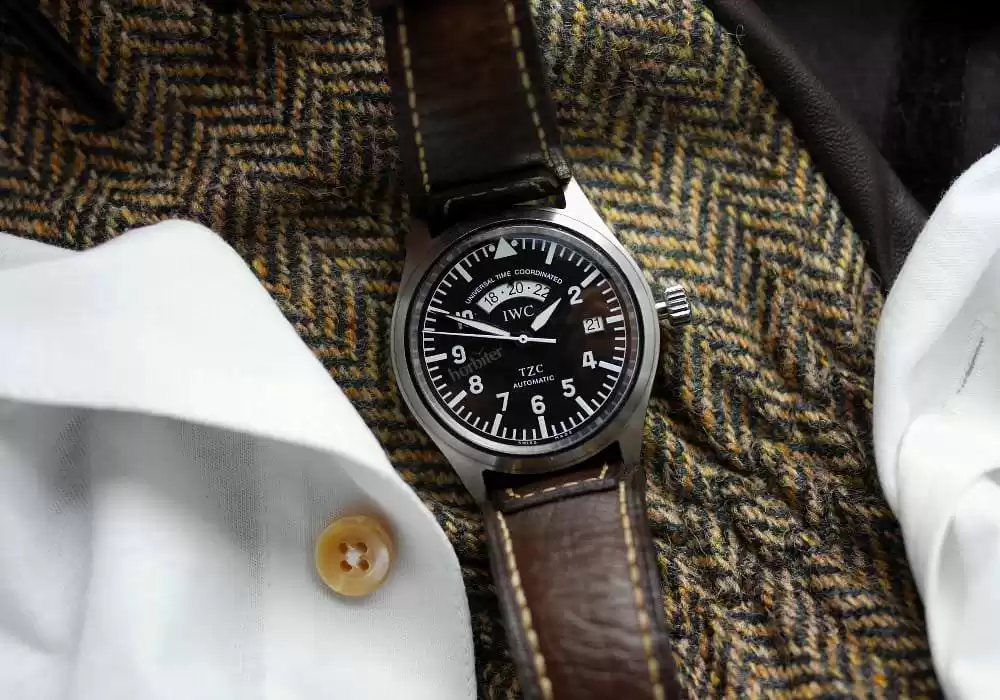
The IWC UTC Pilot’s Watch ref. 3251 seems to be quite basic at first glance, while it allows to set the time according to the UTC, else Universal Time Coordinated, the standard for setting time worldwide officially introduced in 1972, in replacement of the GMT standard. IWC has hence made a mechanical movement, the caliber37526, that lets you set hour and date, wherever on the globe and, most importantly, whatever the travel itinerary.
According to the UTC standard, time set changes by -1 hour while traveling west while it adds one hour towards east, every 15 degrees in longitude. Simmetricaly, on the globe, to the UTC is placed the International DateLine or IDL which marks the date change: if you’re crossing it moving east, you go back one day and viceversa.
The uttermost for a pilot, a frequent traveller or just a watch enthusiast who’s traveling across UTC and IDL is to set simultaneously home time, actual time and date. The IWC UTC Pilot’s Watch performs all these functions and has been, as far as it concerns, the first watch ever to do that.
Pulling out the crown to its external position, it is possible to set the 24 hour disc, visible through an arched disc placed at 12, and move all the hands but the seconds hand. This operation is used to set the home time just before leaving. Moving the crown to its middle position lets you operate, while the seconds hand is still sweeping, the central jumping hour hand (TZC = Time ZoneCorrector) forth or back to set the hour where you’re just landed.
As mentioned above, the IWC UTC Pilot’s Watch is a UTC and IDL compliant timepiece as it manages, all in all, time and date as well across the globe, through a complex system of gears developed by IWC, allows the date disc not just to advance but also to get back, if you’re crossing the International DateLine towards east.
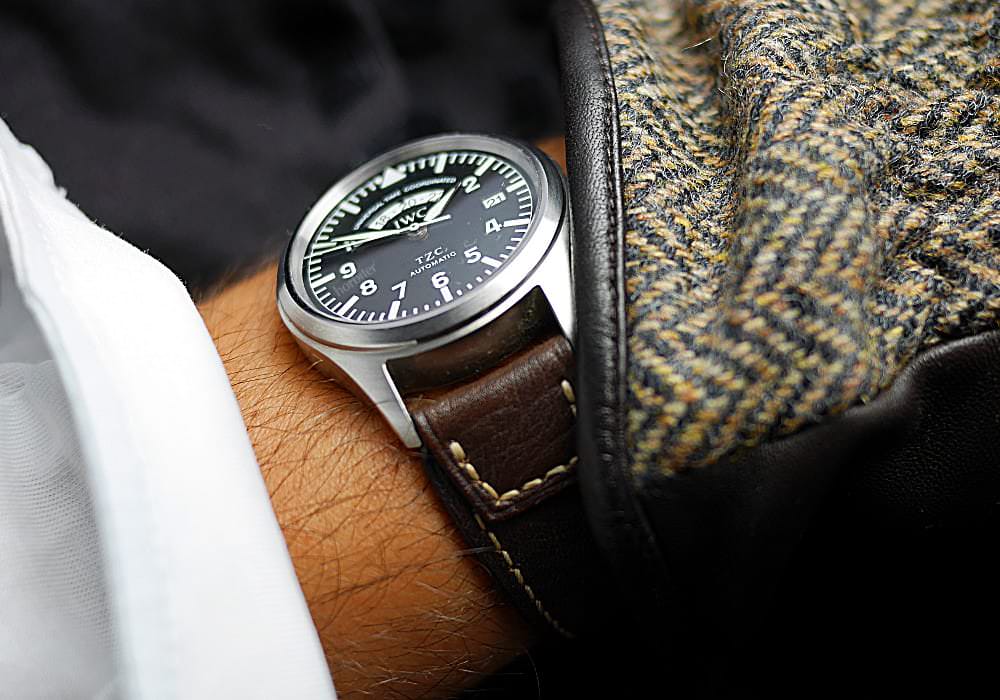
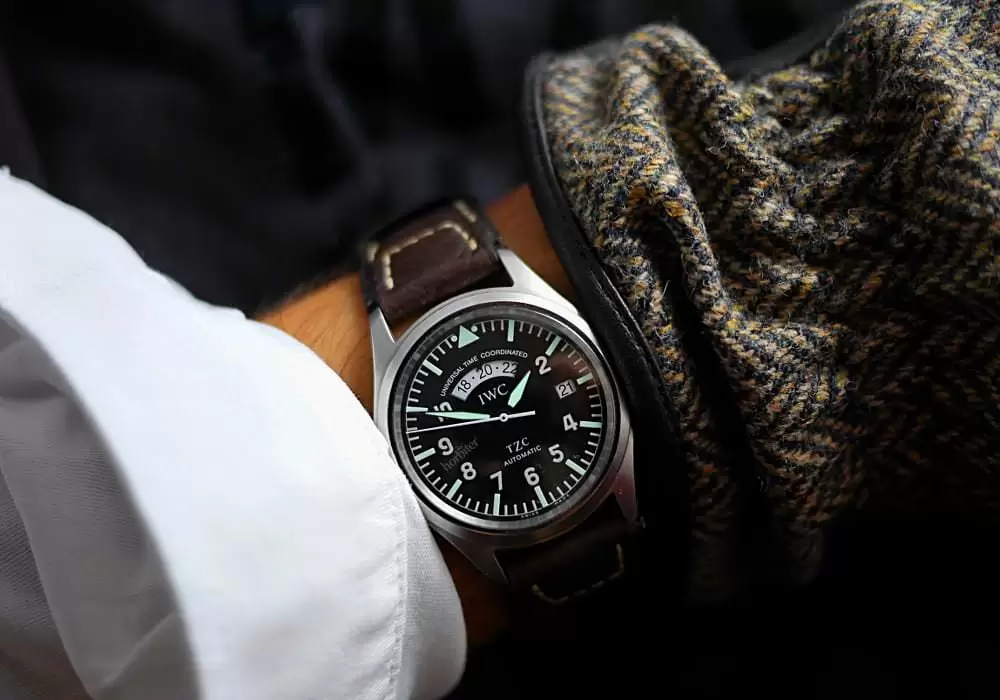
In Schaffausen technicians have deeply reworked an ETA based caliber, making a small mechanical wonder, boasting a design that is as appealing as ever, even 16 years after it has been first unveiled: the round case is nicely brushed, its black dial is unmistakably Pilot’s Watch looking, with a luminous triangular dot applied at 12, indexes and hands treated with Superluminova, and so perfectly, they immediately start to glow as light begins to fade.
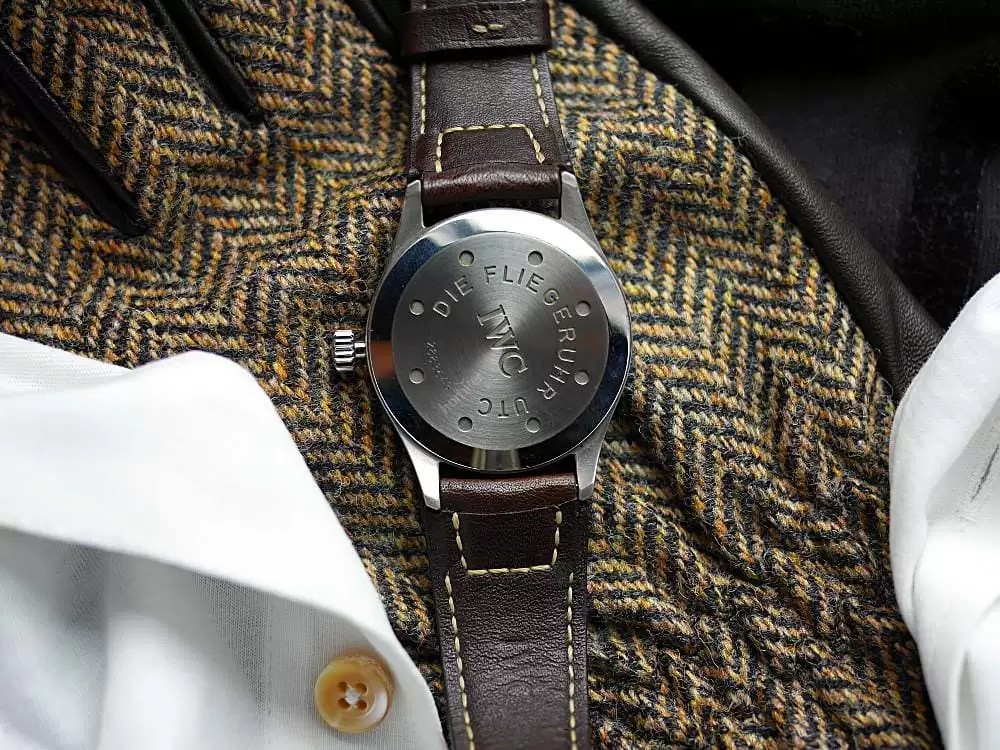
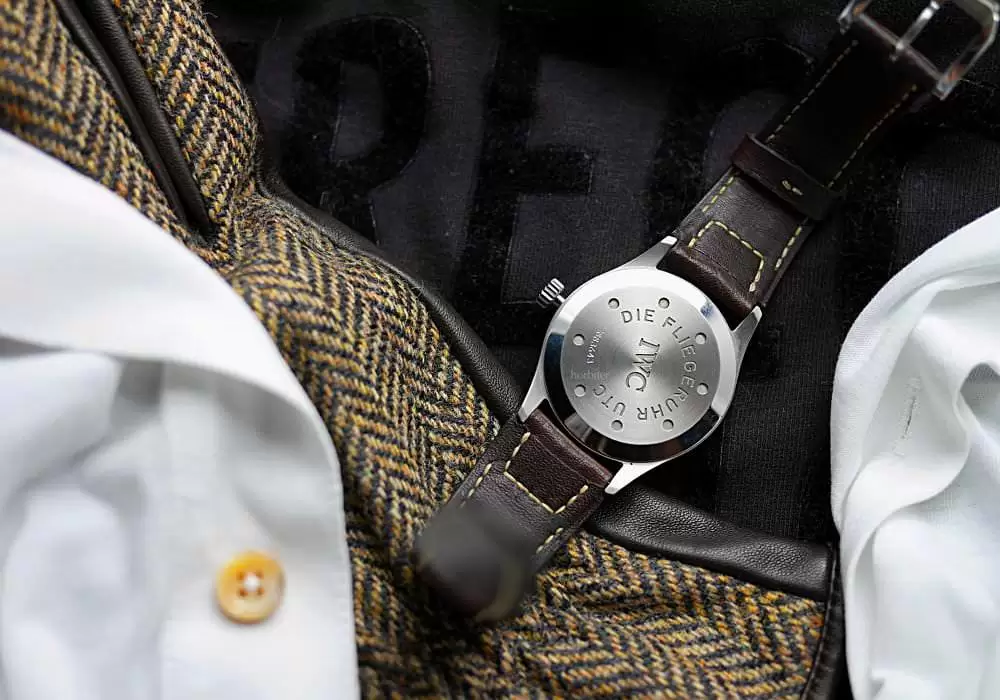
The movement is encased into a soft iron case to protect it against the effect of magnetic fields and the sapphire crystal is secured against decompression up to 16.000meters in height, two of the standard features in any Pilot’s Watch.
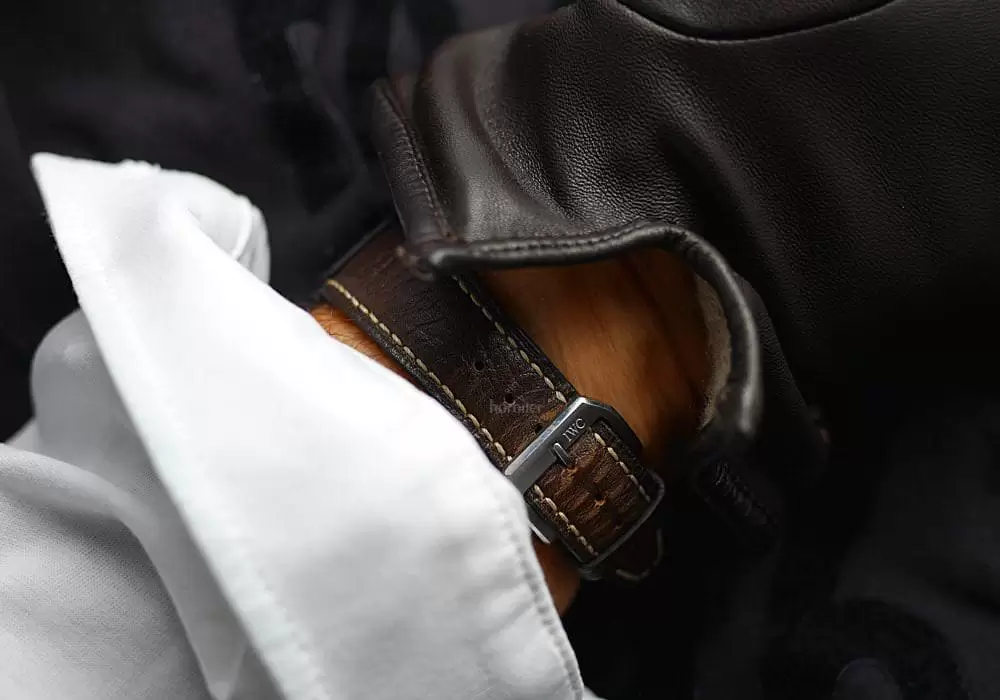
One of the features I do like the most in this watch as in any old IWC Pilot’s Watch timepiece is that nice Buffalo leather strap with bright stitching. It becomes nicer and nicer as time goes by and, as it happens with a pair of leather gloves, acquires that aviator vintage like look over the years.
You may find an IWC UTC Pilot’s Watch ref. 3251 at a market price in the range of 2,500-3,500€, while you have the chance to add to your personal collection a nice Pilot’s Watch, fit for an everyday use with its 39mm wide case, featuring good finishes and an attractive, useful complication.
(Photo credit: Google; Horbiter®)
Gaetano C. @Horbiter®
In this article:
GMT
It is the acronym for Greenwich Mean Time and identifies a complication capable of displaying two or more time zones on the dial. The complication usually couples a 24-hour rotating…
Date
It indicates the date of the month. There are different types of display: via a window or a pointer, where an additional hand is usually placed centrally or on a…
Line
It is the measurement unit that identifies the size of a movement. According to this measurement system, one line corresponds to 2,255mm.
Time zone
Time zones refer to the twenty-four regions of the globe. Milan, Rome or Naples will indicate our time zone here in Italy.
Corrector
The corrector is a tiny button on the case side that allows the wearer to update the watch date with a calendar.
Crown
Placed on the case side, it winds the mainspring. When pulled out, it also sets the time and the date. A screw-down crown increases water resistance and protects the movement…
ETA
Swiss manufacturer of mechanical and quartz movements owned by the Swatch Group.
Case
It encases the mechanical movement and is crafted in one or more parts. It can also be a single piece, as with some professional diving watches, or made of unconventional…
Strap
A leather, rubber or other material band that secures the watch to the wearer's wrist.
Complication
The addition of any mechanical complication to a movement that usually displays the time.