Citizen officially introduced titanium into watchmaking and has since dedicated a section of its product portfolio to maximising the benefits of a material whose lightness is greatly appreciated by enthusiasts, despite not offering the same luxury feel as a similar watch in steel in the past.
The Japanese brand began to address and minimise titanium’s weaknesses soon after launching the legendary 1970 X-8 Chronometerby developing in-house technologies and production methodologies to strengthen it. Titanium is difficult to machine, easily burns during the manufacturing process, and is therefore more expensive to craft than comparable steel models.
In half a century, Citizen has faced and won several challenges, made titanium a popular material and – most importantly – affordable.
55 Years of Super Titanium
2025 marks a moment to celebrate, but it is worth noting that since 1970, Citizen has invested significantly in R&D to introduce Super Titanium, whose official debut dates back to the early 2000s.
Today, the brand’s technology has progressed to such an extent that hardening titanium includes several treatments, including a gold-like surface coating, all of which are collectively referred to under Citizen’s Duratect moniker.
Citizen Watch has embarked on a global tour to introduce enthusiasts to its journey so far and state-of-the-art technology, stopping in Paris after first exhibiting in Tokyo and New York.
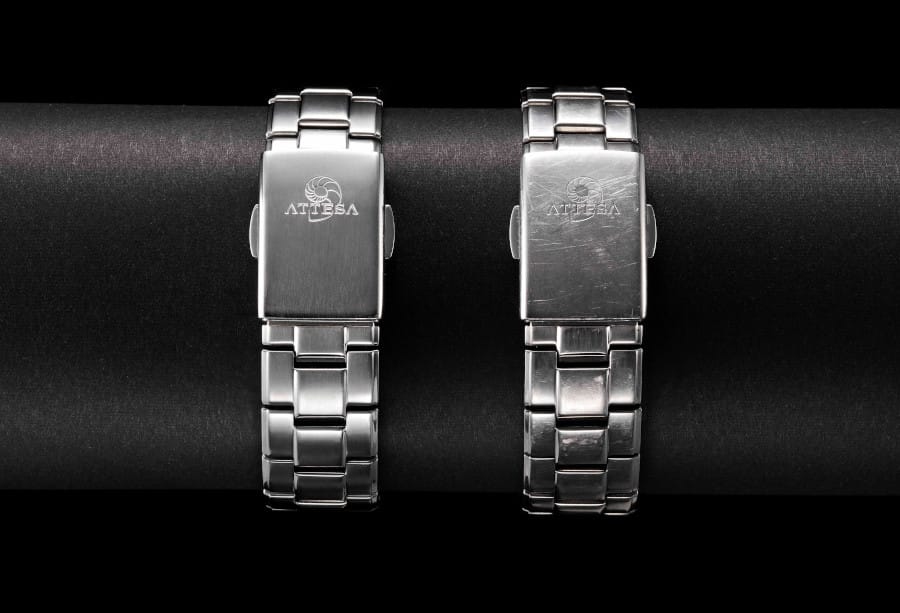
The process of making Super Titanium equally involves the case and bracelet production processes, from pressing to hardening and polishing, to finally releasing a timepiece whose surface hardness is, on average, five times as high as steel (while conversely increasing corrosion resistance).
Suppose we set ceramic watches apart (whose weak point is often poor resilience). In that case, Duratect is a winning proposition, as it leverages titanium’s mechanical properties while enhancing Vickers hardness to a standard that no ordinary surface-treated metal can match.
From pressing to polishing, and everything in between
The stamping process is performed at high temperatures to make the titanium more workable, thereby achieving the desired geometry. Following up is a small hot parts removal process to prevent them from sticking to the die.
If you think that the above-mentioned production step is the most challenging, you won’t believe what comes next. An original rough case shape undergoes a machining process to achieve the desired final product shape.
During this phase, chips can become stuck to the tools due to the soft and viscous nature of titanium. Again, Citizen tested specific fluids and lubricants to overcome this issue.
Last comes the polishing stage, where extensive use of machine tools still requires the human touch, despite Citizen Watch being a large-volume, highly industrialised producer.
Then, the polishing process is carried out by expert technicians using several machines, including the renowned Sallaz polishing machines.
From Titanium to Super Titanium with Duratect™
Once completed, each finished case and bracelet is cleaned before undergoing the assigned Duratect™ treatment.
Super Titanium products range from entry-level, affordable watches to products costing thousands of euros when treated to the most refined surface treatments.
While the entire in-house process that brings a titanium case to life is barely disclosed, the process of making Super Titanium is a closely guarded secret. In brief, Duratect™ comes in three major options: protection, hardening, and a combination of the above.
As stated in the first paragraph, Duratect™ offers an almost limitless range of treatments and colours, including yellow and rose gold tones, guaranteeing a Vickers hardness at least ten times higher than that of other materials.
1970 – 1987: From the X-8 Model to the First Fully Finished Titanium Watch
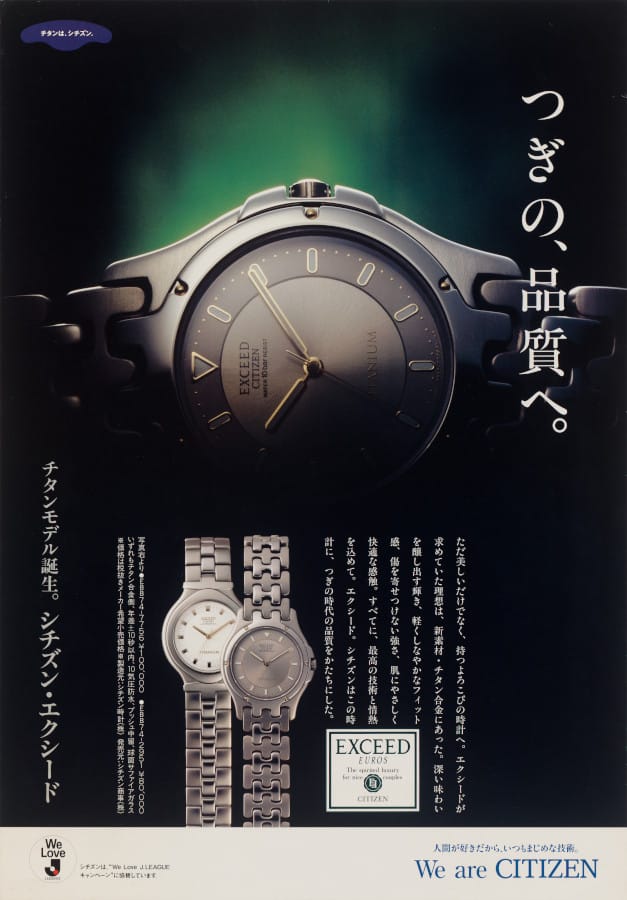
While Citizen X-8 Chronometer opened an era, Citizen took seventeen years to perfect the titanium processing technologies and finally introduced the first fully finished titanium watch.
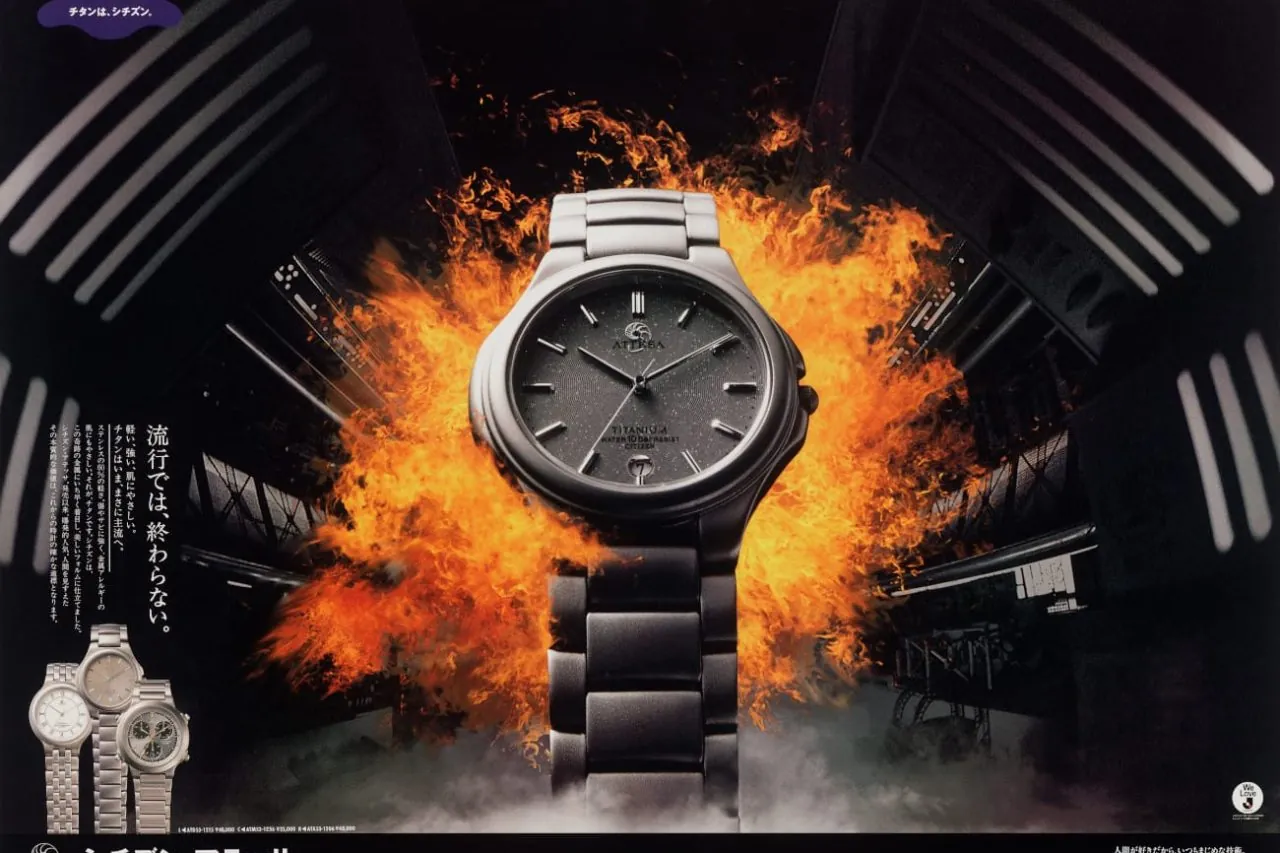
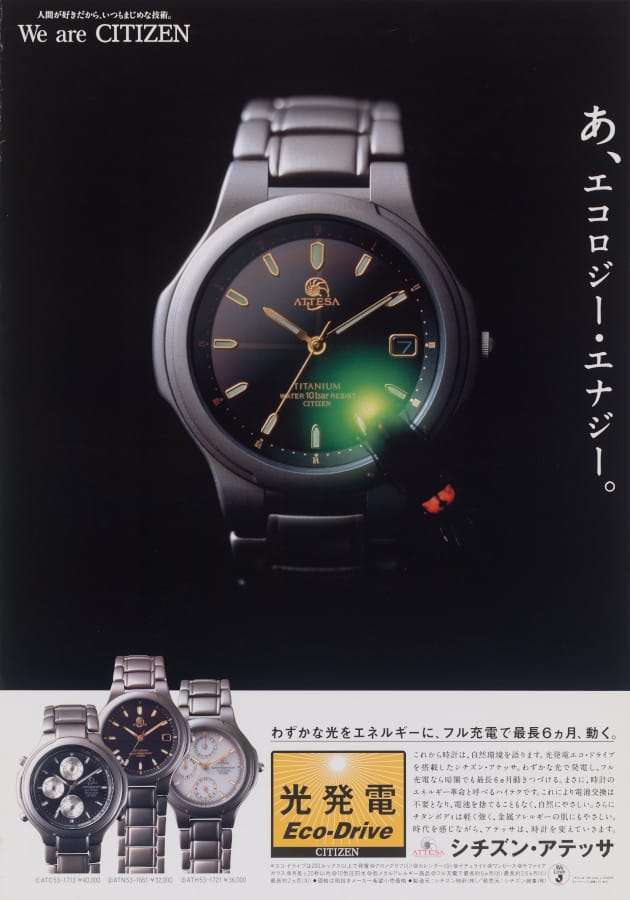
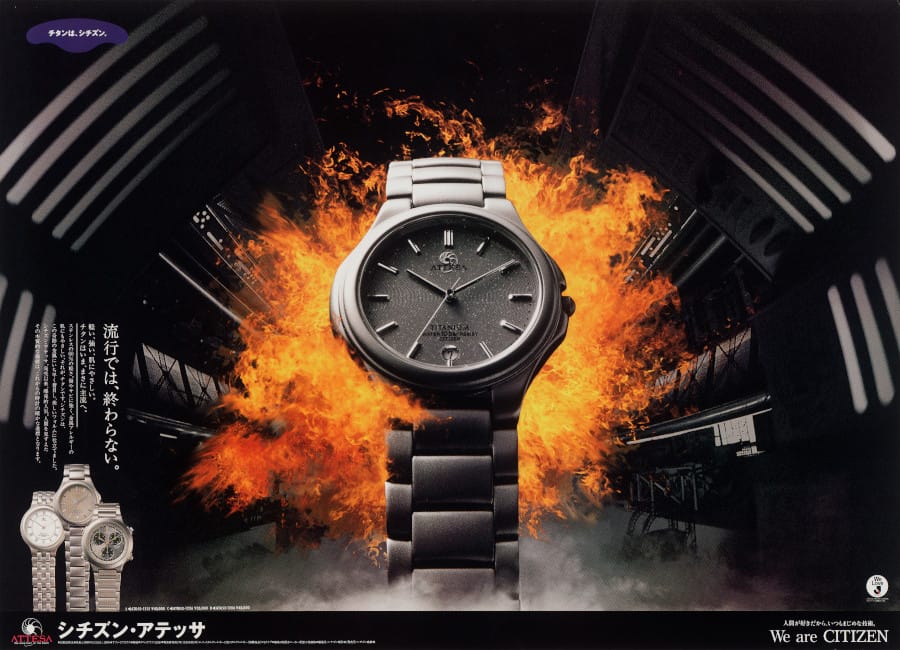
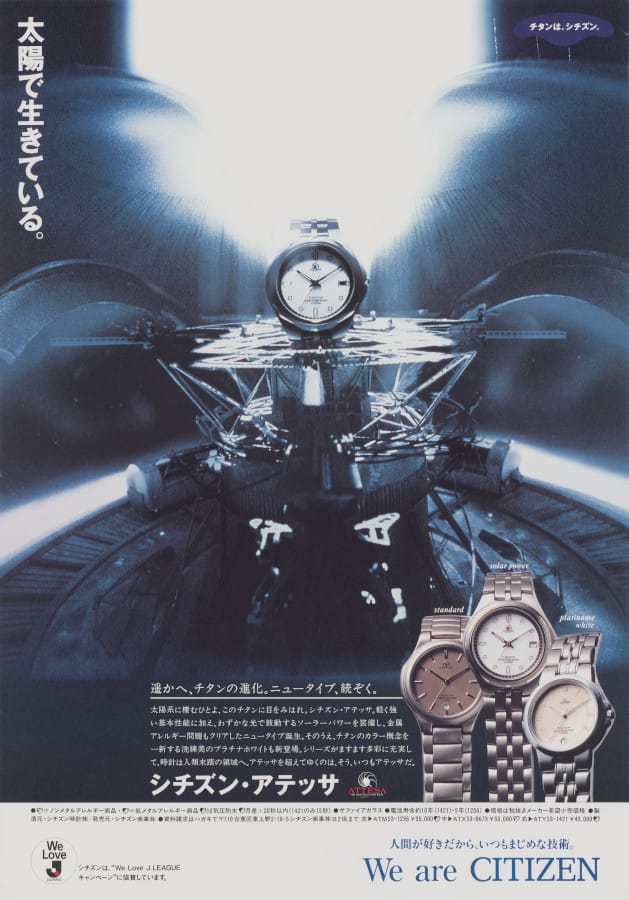
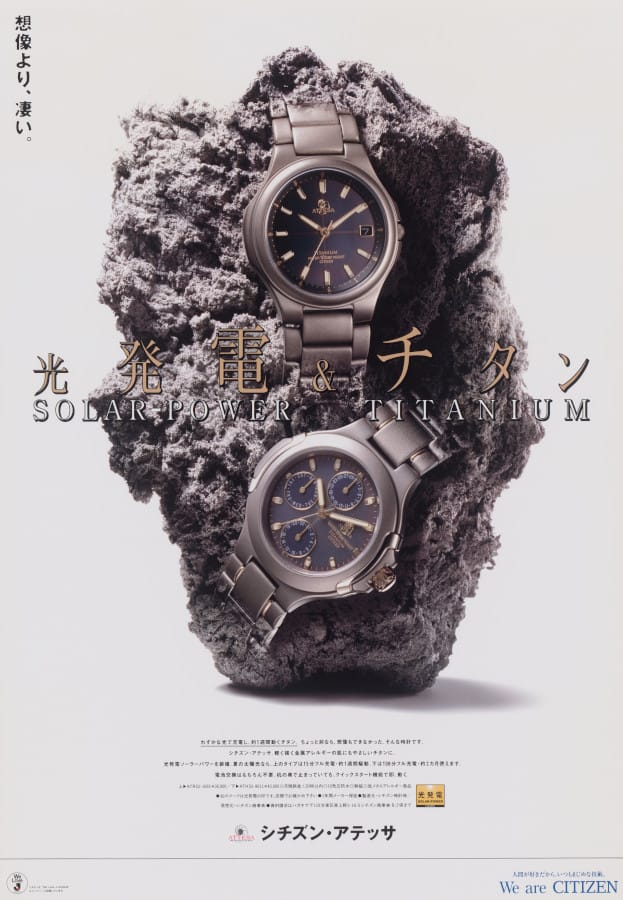
Pictured above is the outcome: the 1987 first-ever fully finished ATTESA on an integrated bracelet, exclusively available in Japan, whose design remains contemporary.
After extensive research aimed at exploring titanium’s hypoallergenic properties and the rollout of large-scale production processes, the Duratect technology broke cover in the early 2000s, and so did Super Titanium.
Fast forward, ATTESA is no longer exclusive to the Japanese and United States markets; the collection is now available across the European market, and so are the brand’s most ambitious GPS satellite watches.
Finally, Super Titanium has far exceeded the expectations of watchmaking, as Citizen Watch is a technological partner to the Hakuto-R project.
(Photo credit: Citizen)
Gaetano C @Horbiter®
In this article:
Chronometer
An instrument for measuring time very accurately. For any watch to be called a chronometer, it must meet the standards set by the C.O.S.C. (Contrôle Officiel Suisse des Chronomètres).
Case
It encases the mechanical movement and is crafted in one or more parts. It can also be a single piece, as with some professional diving watches, or made of unconventional…
Ceramic
Widely used for crafting a watch case and, in recent years, also for the bezels of diving watches and dials. Obtained from zirconia powder (ZrO2), ceramic offers superior scratch resistance…