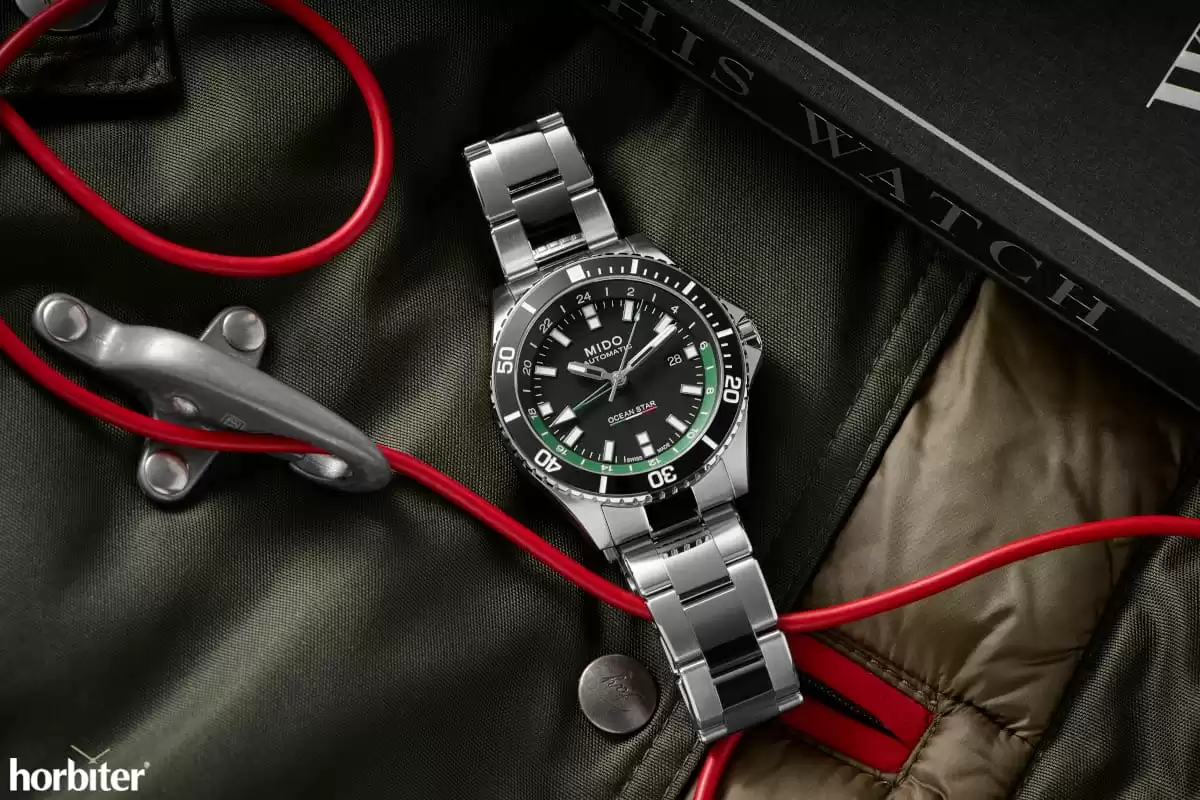
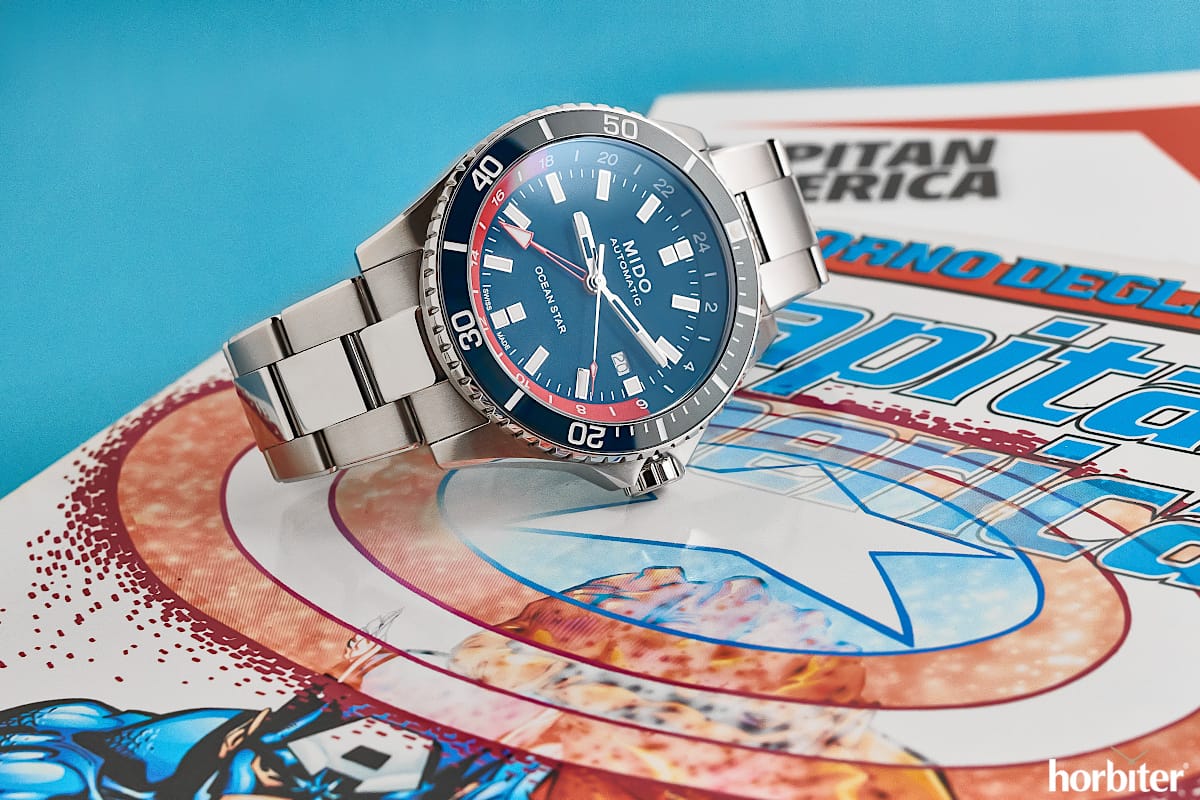
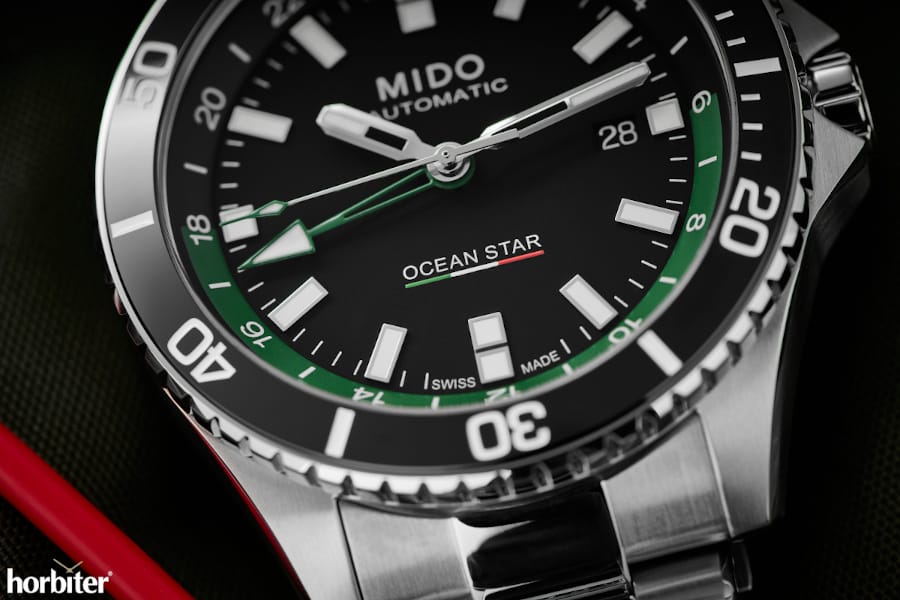
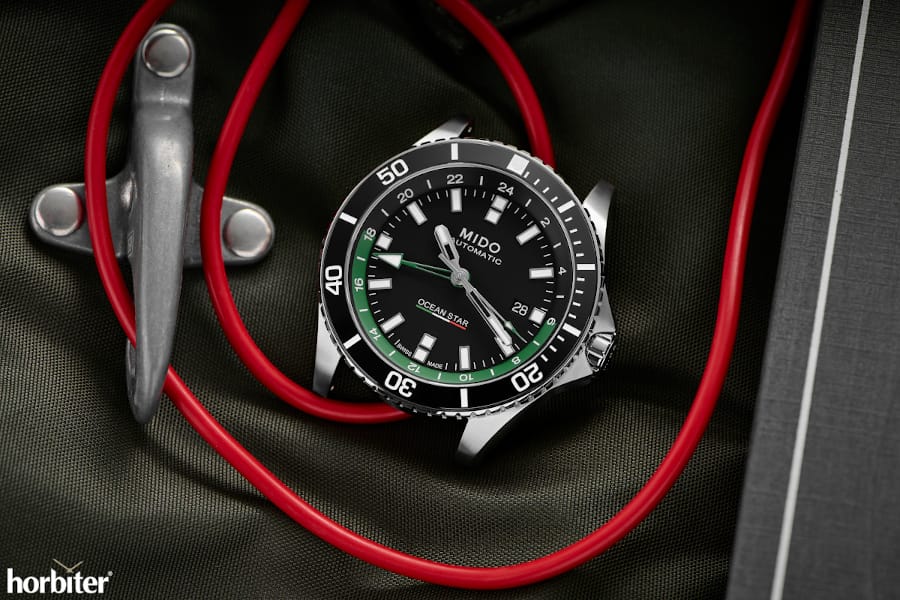
The Mido Ocean Star GMT watch epitomizes the brand’s product evolution so far; unknown to the Italian watch community and a unicorn when hitting the market back then, the brand gained popularity thanks to the slim, relatively affordable Captain Titanium. The product development was so fast that it finally included a diving watch equipped with a GMTcomplication and a ceramicbezel.
Diving and GMT watch
The diving watch base architecture proves the GMT sports model works as a range extender rather than adopting the ubiquitous and barely usable three time zones formula as most manufacturers do. The new Mido Ocean Star GMT builds upon a 200-meter water-resistant timepiece that can adapt to frequent travel when flying across multiple time zones without losing diving capability.
Case and bracelet
The ordinary three-hands Ocean Star prided itself on a rare combination of uncluttered, no-frills style, slim case, eighty hours of power reserve and a clever price point (under the one thousand euros threshold).
The Captain Titanium has long topped the sales list without offering any ISO compliance or specific technical gimmicks. While the GMT variant draws inspiration from its sibling, it is a reasonably different timepiece.
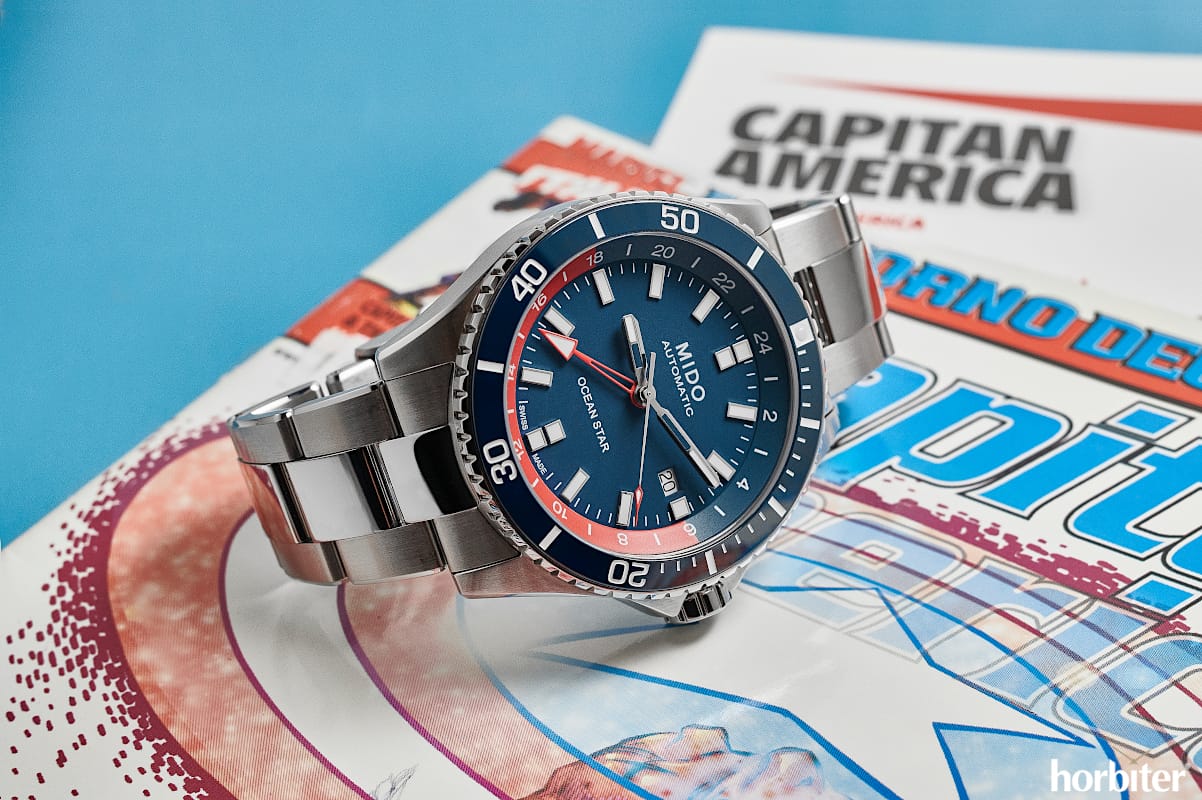
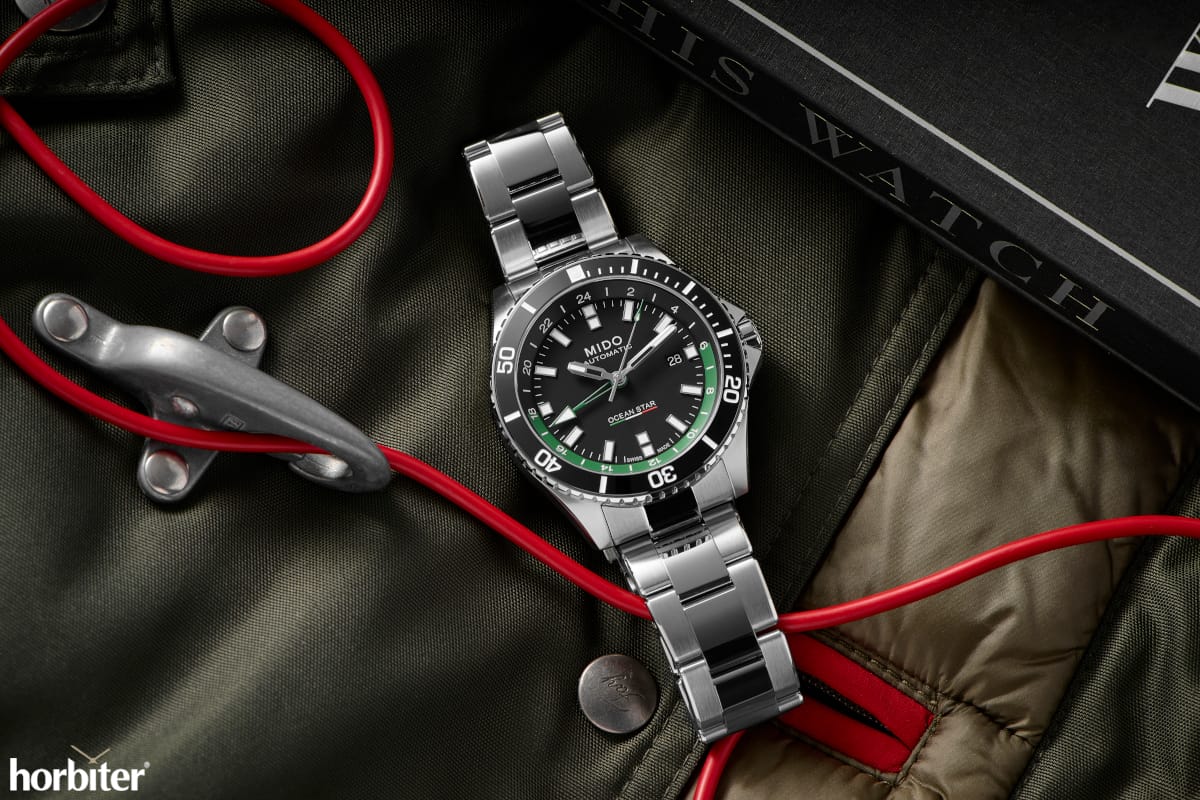
The case and bracelet showcase remarkable build quality; the bracelet is nicely finished and comes with a gap-free coupling with the case; icing on the cake, the extension, designed for diving purposes, works as a multi-option adjuster for your wrist size.
Designers, marketing managers and sales reps are aware that well-designed, comfortable and no-pinching bracelets ensure long-term success (as an example, Seiko had to redesign their steel bracelets inside and out to make their Prospex watches more appealing).
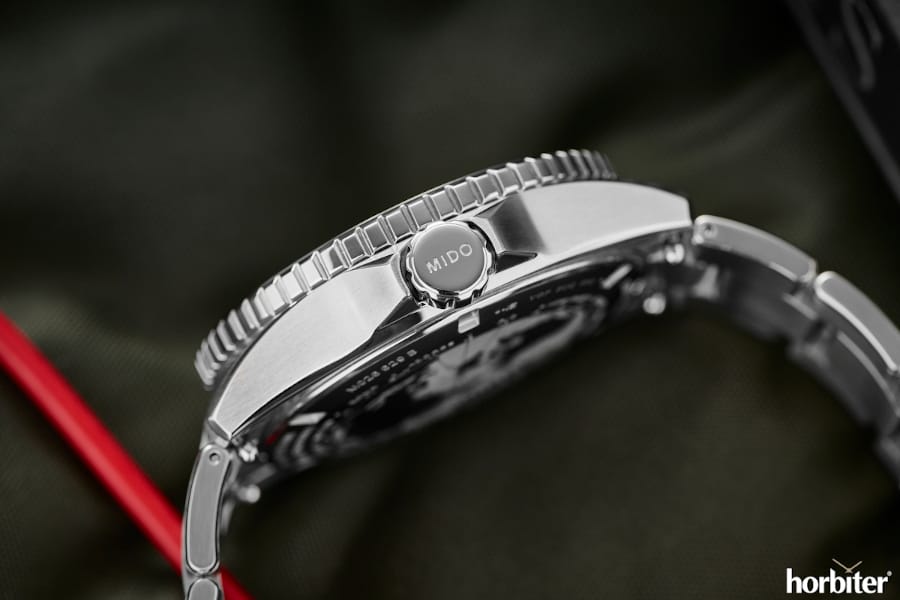
With the wristwatch measuring 44 mm across, being 13,4 mm thick, and weighing 209 grams, the bracelet might end up being a deal breaker. Please consider that the Mido Ocean Star GMT Special Edition is hefty, and the squared case’s side design won’t slim it down.
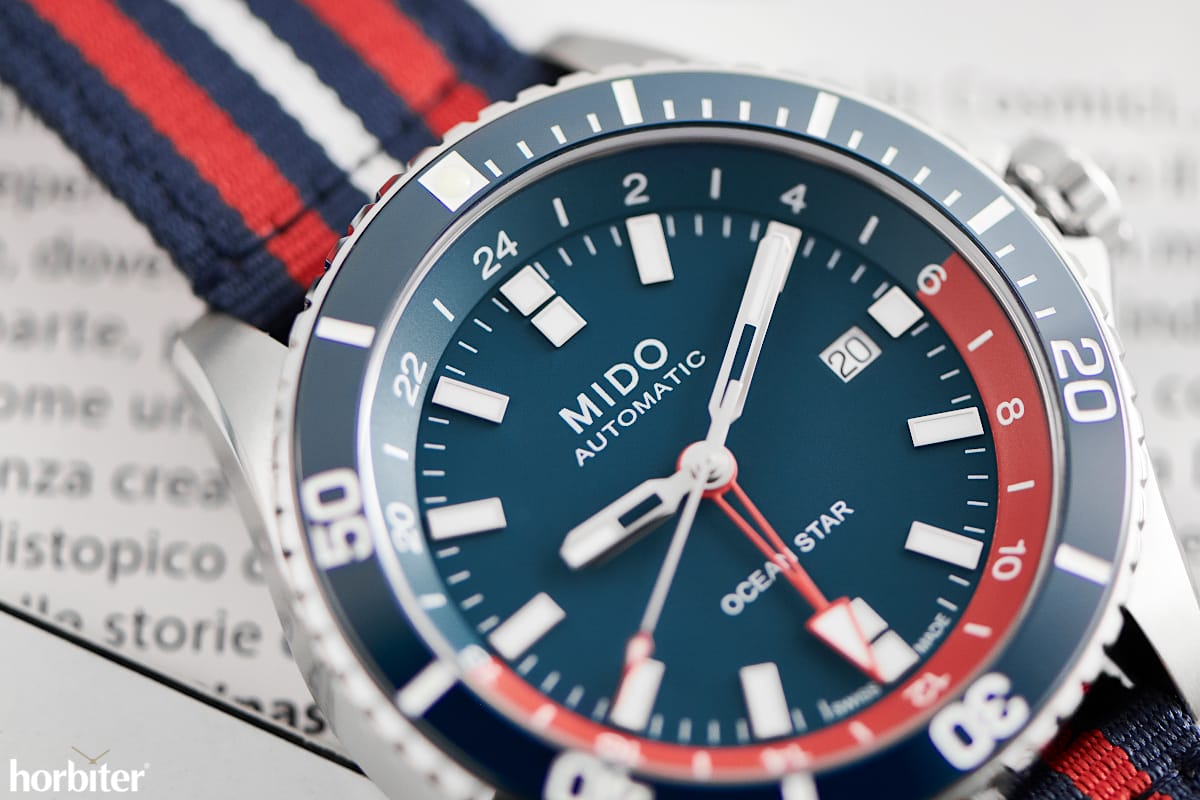
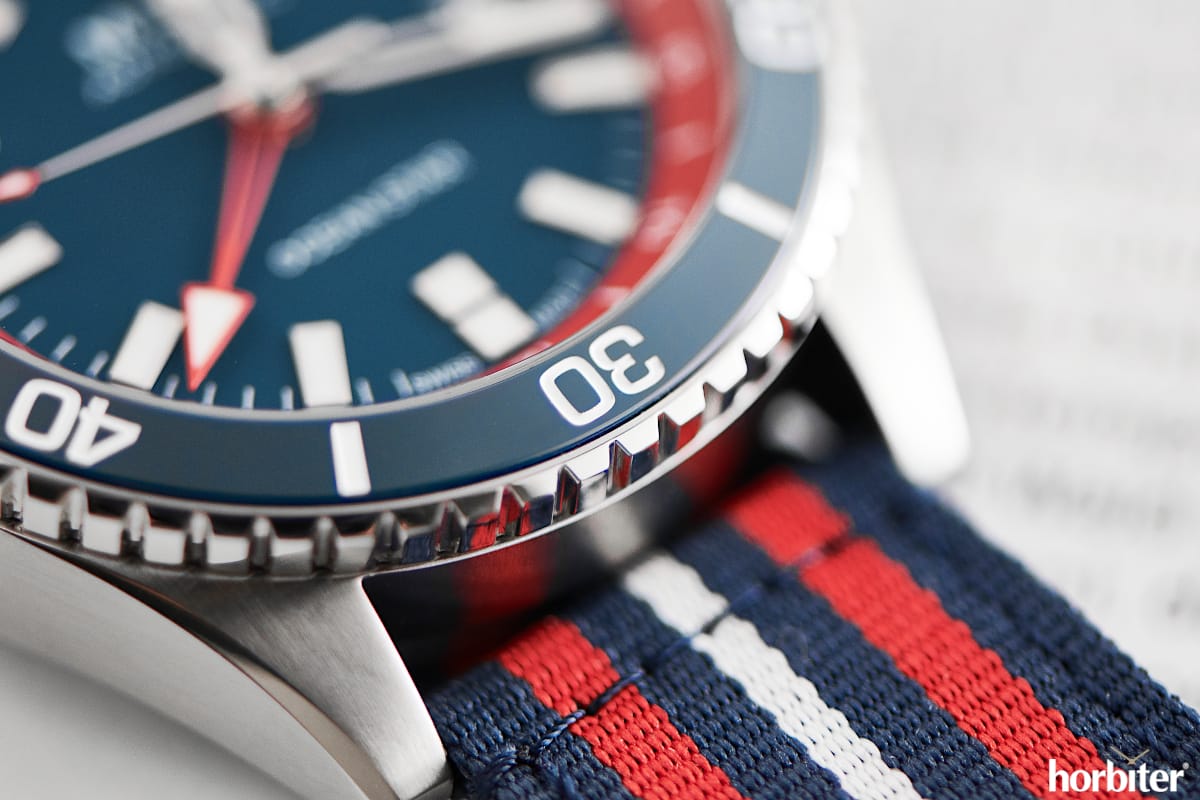
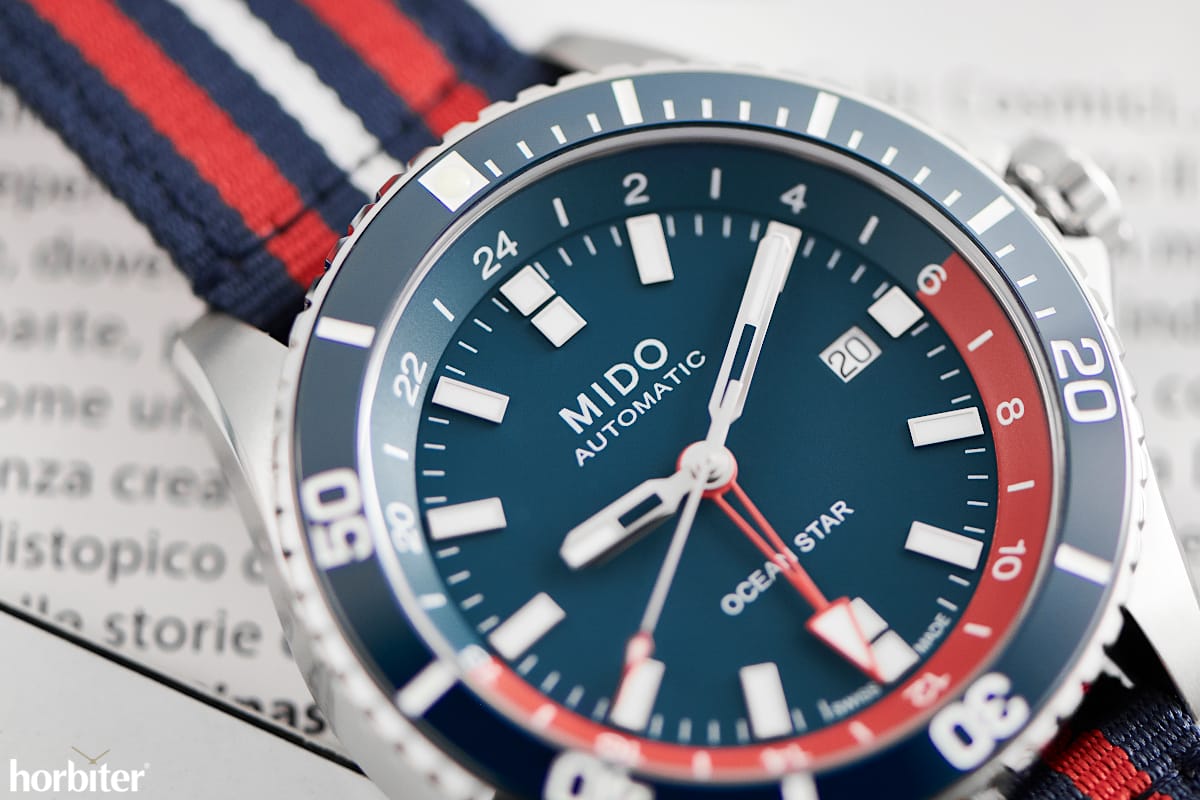
The pros also include a beautifully executed ceramic inlay, a best in class in this product segment and beyond. In contrast, the bezel’s ratcheting experience feels cheap, as we often highlighted in the past. While most brands might argue that this topic is off the agenda, I can assure you it tops the “touch and feel” list and ends up being one of the primary selling points.
Proof positive, let me name two brands so different, like Montblanc and Christopher Ward; when they released their new diver’s watches, the above specification was among their projects’ requirements.
However, it won’t affect performance or usability. I indeed love the mirror-polished line running along the case’s edge and how it contrasts the matte brushed finish, as I also appreciate the bracelet’s mid-links; they add a luxurious upmarket touch.
Calibre 80
Inside the Mido Ocean Star GMT Special Edition beats the class-leading eighty-hour power reservecalibre 80 introduced initially on the Ocean Star and then extended inside the brand and out, according to each brand’s respective requirements submitted to ETA. The Calibre 80 is exclusive to the Swatch Group, but I think it’s time for further technical upgrades.
The Mido Ocean Star GMT special edition models
Mido offers two exclusive variants of its Ocean Star GMT: the Mido Ocean Star GMT Special Edition and the Ocean Star GMT Limited Edition Italy. The name implies that the first is a non-limited model, while the second is specific to the Italian market and comes in 250 pieces.
The Mido Ocean Star GMT Special Edition
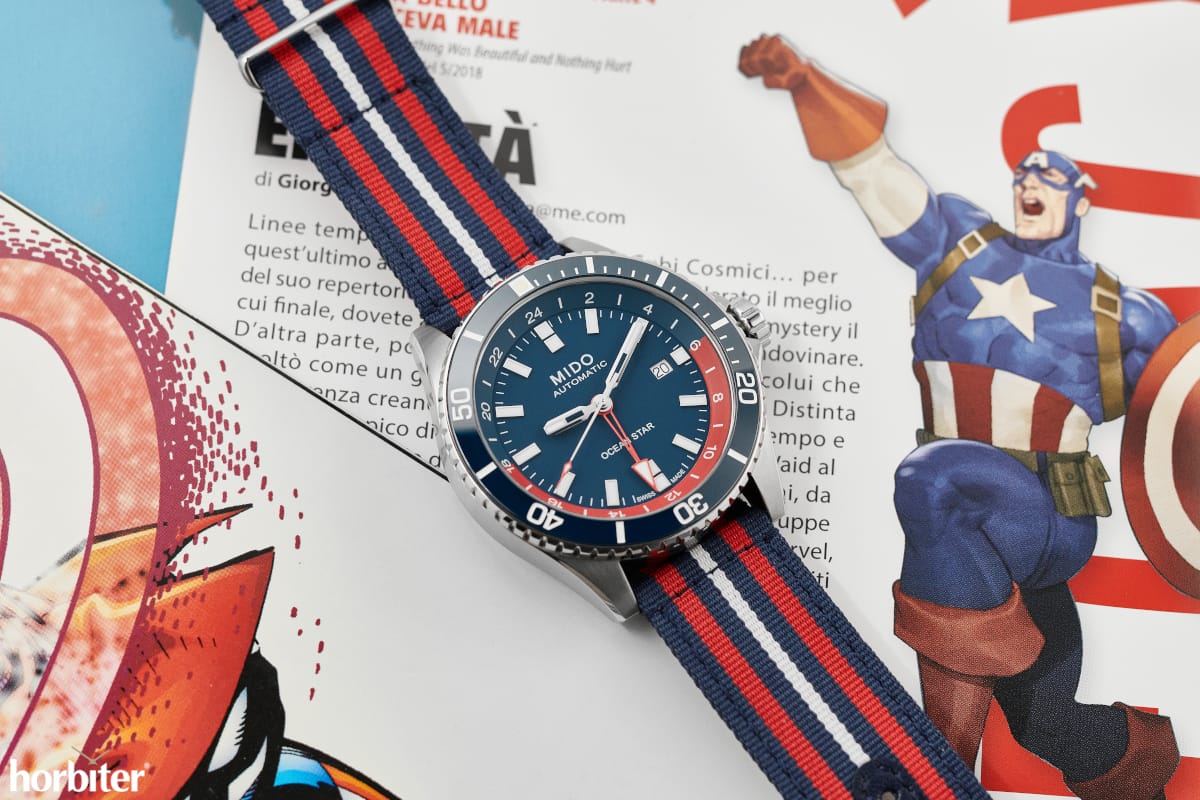
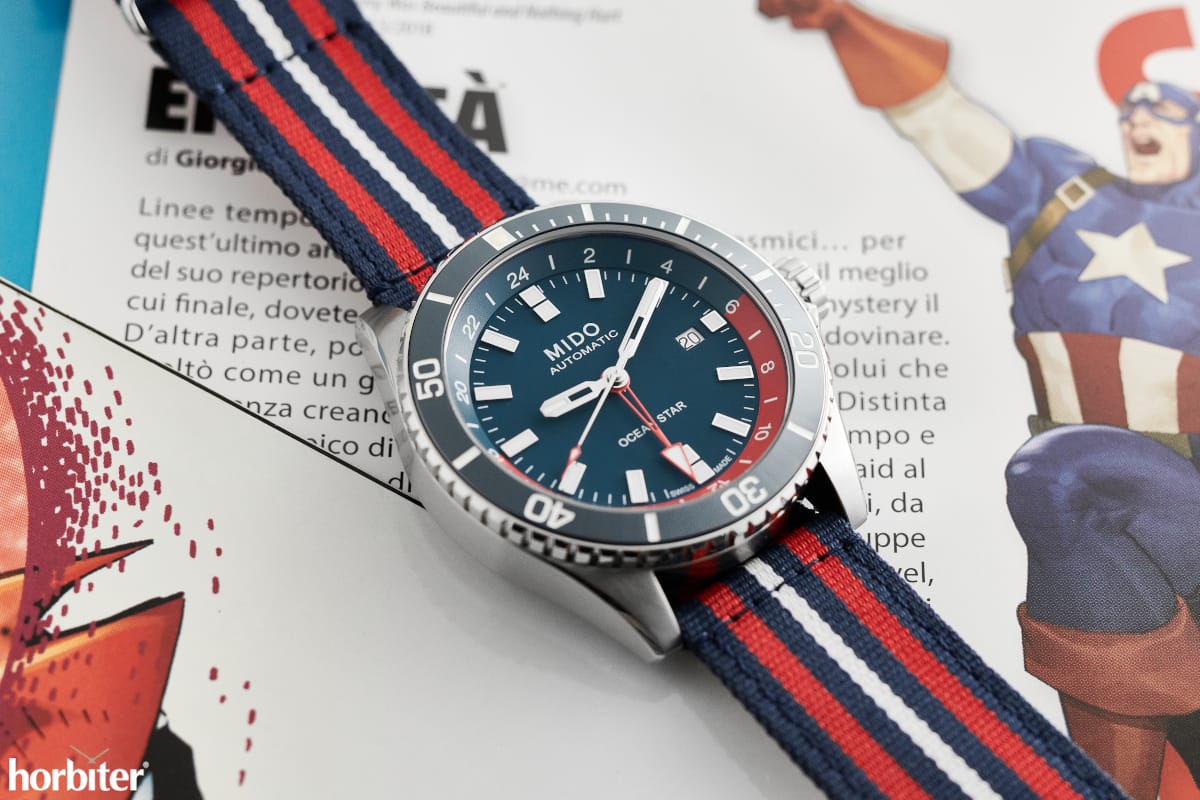
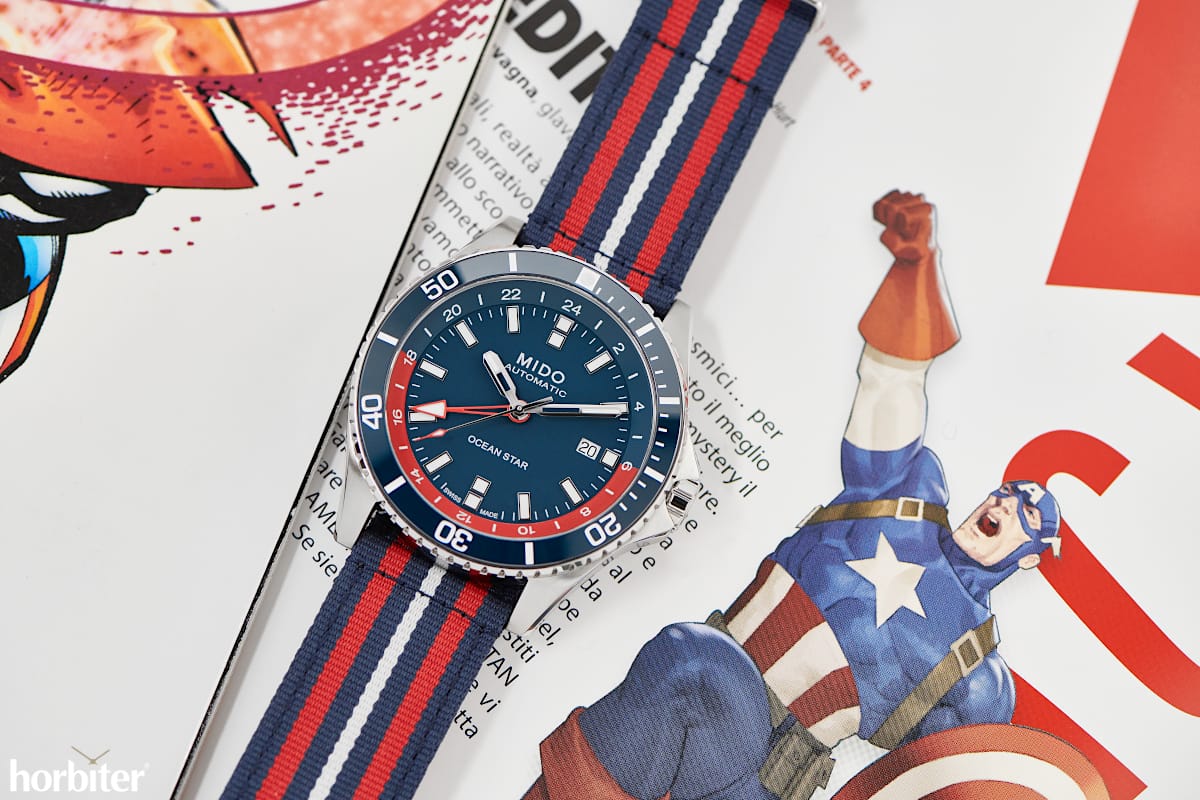
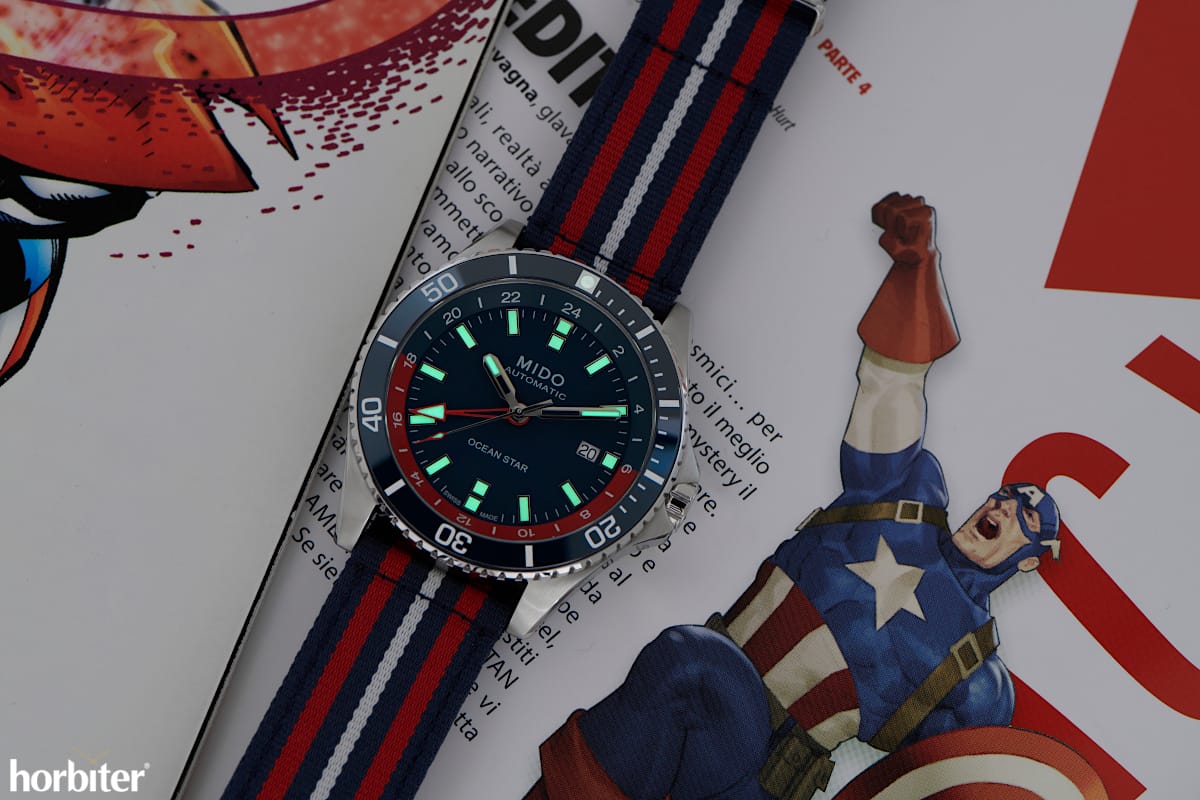
At first glance, the new model pimps up the whole offering by applying the “Pepsi” treatment to an ordinary GMT model.
The outcome is good, with warm blue and red matte tones (the GMT red arrow hand is an eye-catcher), helping this option stand out from the rest of the collection.
The first GMT of its kind – we photo-shot two years ago – originally comes with a blue canvas strap but is a bit boring and outperformed by the new model, which offers a fresher look and a never-seen design. If the designers’ target was to shake things up and make the most out of their Ocean Star GMT, they nailed it.
The Mido Ocean Star GMT Limited Edition Italy
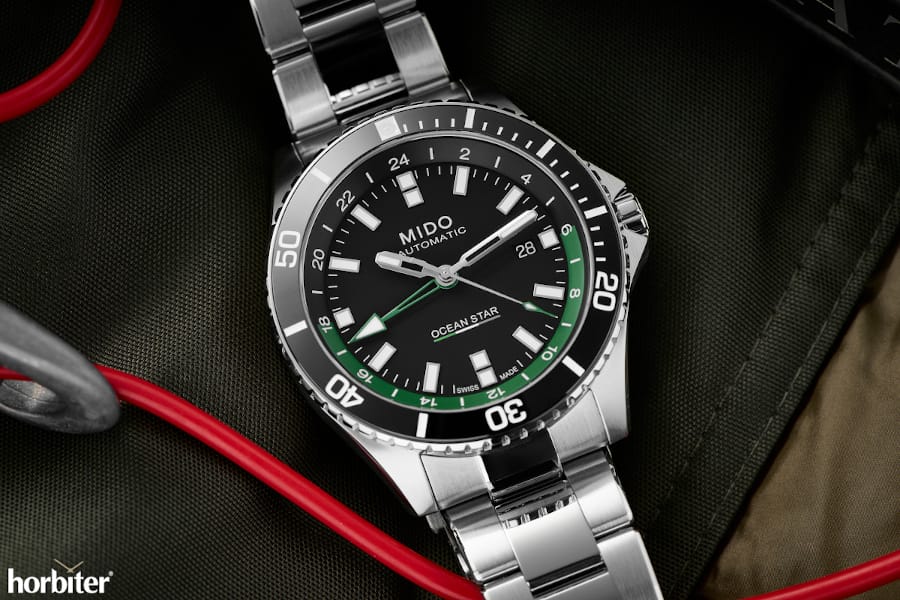
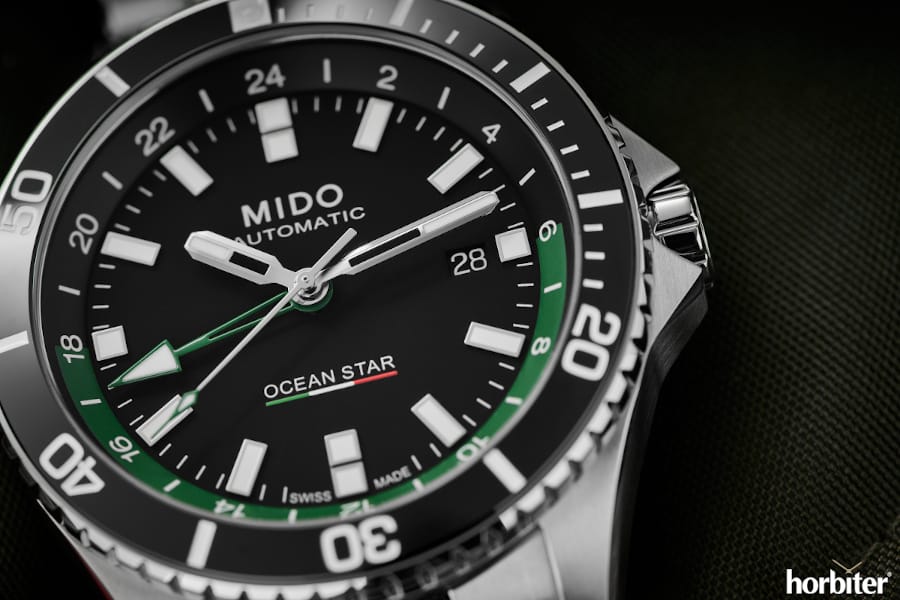
It is exclusively sold on the Italian market. Its colour scheme is less polarizing than the Special Edition model and offers a more classic and sober scheme celebrating the Italian flag; the 24-hour ring features a day and night separation made with green, and the GMT sphere is the same colour.
The Italian flag stands out on the dial. The strap options include a nylon NATO strap, too. It features a fabric strap with two grey lines, a thin green centre line, tone-on-tone stitching, and reinforced adjustment holes with leather appliqué.
It was unavailable during our photo session; however, we believe the bracelet is still the perfect option here, given the hefty case.
Final thoughts
The box includes a quick-change striped NATO replacement strap, a substantial option for the bracelet, especially during summer when a steel bracelet is too hot to handle.
The replacement strap also saves the bracelet from unwanted scratches, dents, and hairlines, especially on the mirror-polished mid-links. What would a Mido Ocean Star GMT Special Edition look like with a rubber strap instead? You won’t find out, and that’s a pity considering it’ll help visually slim that case down, and more than any NATOstrap might ever achieve.
That said, the Mido Ocean Star GMT Special Edition retails for 1,560 Euros and the Limited Edition Italia for 1,490 Euros instead. Both watches offer good perceived quality and technical specs despite the Special Edition price tag growing since its launch.
We prefer the Limited Edition Italia; it’s more original than its Pepsi sibling, limited in numbers and costs slightly less. What’s next? I hope the R&D will slim the watch mimicking an Ocean Star 200 C, moving forward. Meanwhile, I’ll save weight by adding a titanium option, something you can choose when buying a 200 C and not on this GMT model, to my surprise, instead.
(Photo credit: Horbiter®)
Giovanni Di Biase @Horbiter®
In this article:
GMT
It is the acronym for Greenwich Mean Time and identifies a complication capable of displaying two or more time zones on the dial. The complication usually couples a 24-hour rotating…
Complication
The addition of any mechanical complication to a movement that usually displays the time.
Ceramic
Widely used for crafting a watch case and, in recent years, also for the bezels of diving watches and dials. Obtained from zirconia powder (ZrO2), ceramic offers superior scratch resistance…
Bezel
The bezel is particularly useful on diving watches, allowing you to check dive times. In this case, it unidirectionally rotates and usually comes in two parts: a metal (or ceramic,…
Power Reserve
A mechanical watch feature displays, on the dial or the case back, the remaining power in a watch movement, showing the length of time until the timepiece must be rewound.
Case
It encases the mechanical movement and is crafted in one or more parts. It can also be a single piece, as with some professional diving watches, or made of unconventional…
Line
It is the measurement unit that identifies the size of a movement. According to this measurement system, one line corresponds to 2,255mm.
ETA
Swiss manufacturer of mechanical and quartz movements owned by the Swatch Group.
Calibre
A calibre is the type of watch movement encased in an assigned timepiece. Its name is usually associated with the manufacturer's name and a standard code, e.g., ETA 2824.
Strap
A leather, rubber or other material band that secures the watch to the wearer's wrist.