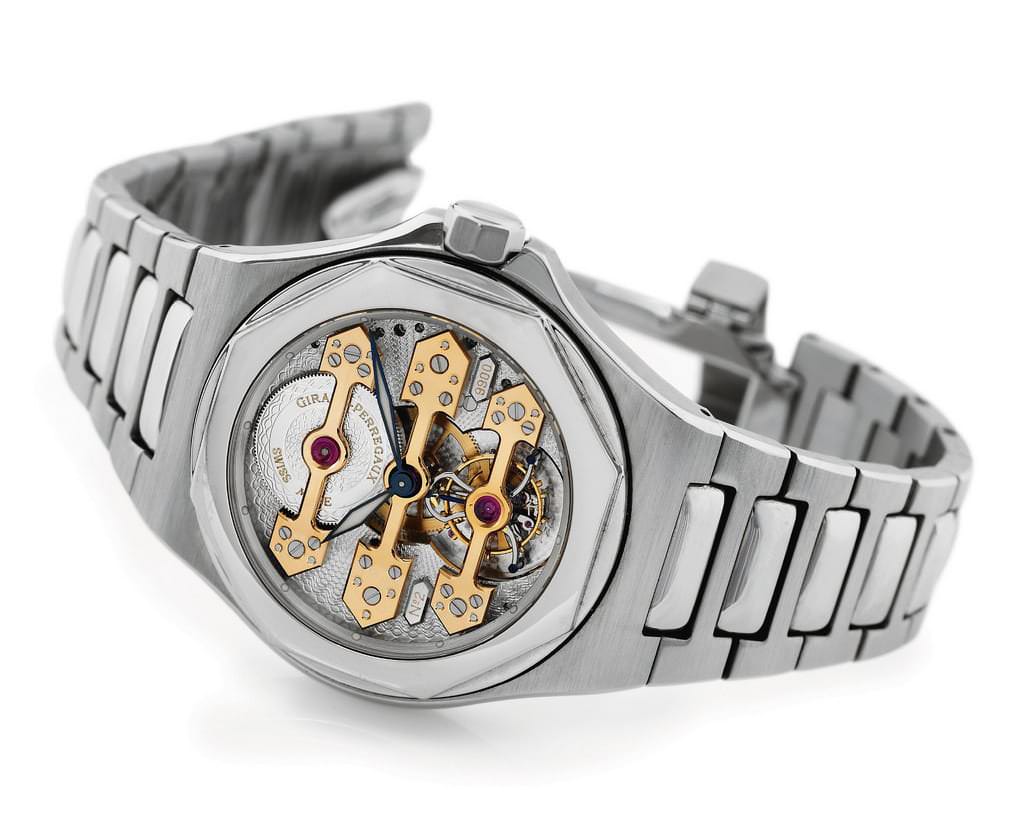
The Girard-Perregaux Laureato Tourbillon watch hands-on
Giovanni Di Biase27 March 2021
0 Comments
The history of the Laureato keeps on getting more and more interesting; what I thought was actually an “experiment” turned out to be much more than that and, one year after the launch of the first modern version of the Laureato, Girard-Perregaux stroke back with a brand new collection.
Among the new items that stand out from the crowd is a high-range version of this timepiece that fuses together the name of the Laureato and a complication that is quite popular in La Chaux de Fonds; the tourbillon.
Has Girard-Perregaux ever crafted a Laureato Tourbillon before? Yes, it did; it happened a few years ago on the exiting version, when the manufacturer came up with at least two variationss with three golden bridges and sapphire, respectively.
It was a masterpiece released as a limited and numbered edition, where the three golden bridges take over the whole dial, from which the current Girard-Perregaux Laureato took inspiration (despite an overall re-editing) blending together the lines of the original model.
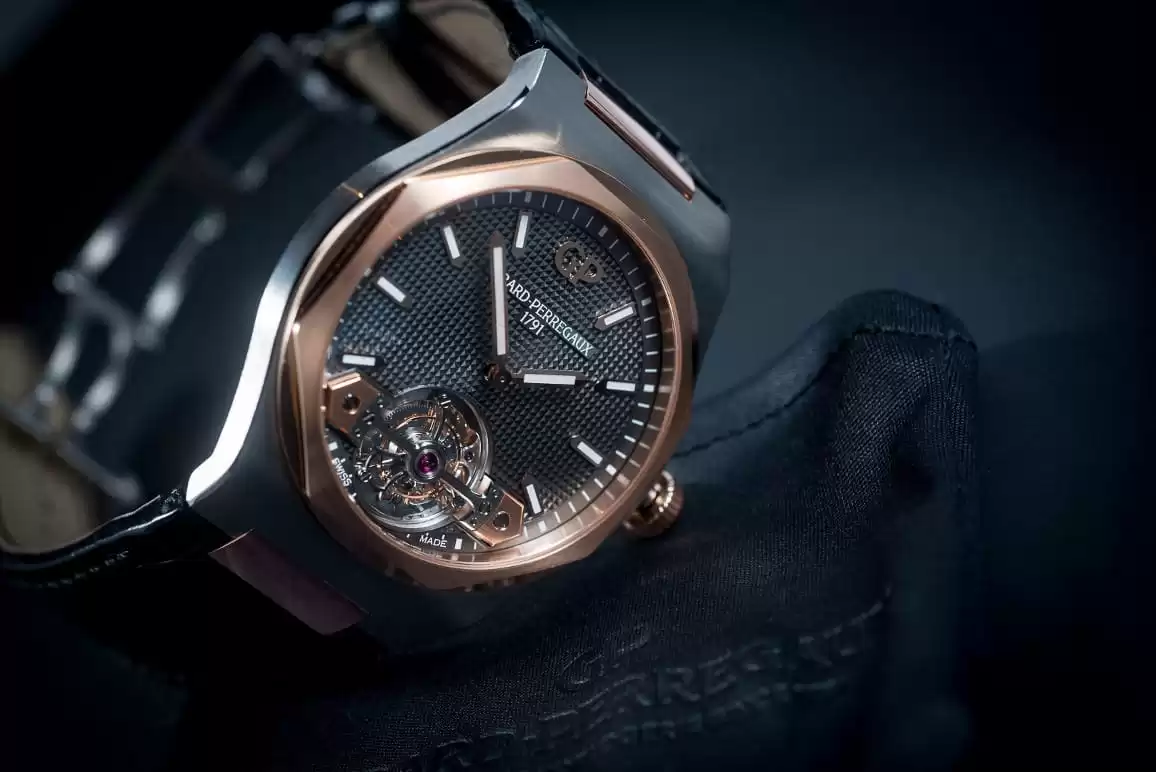
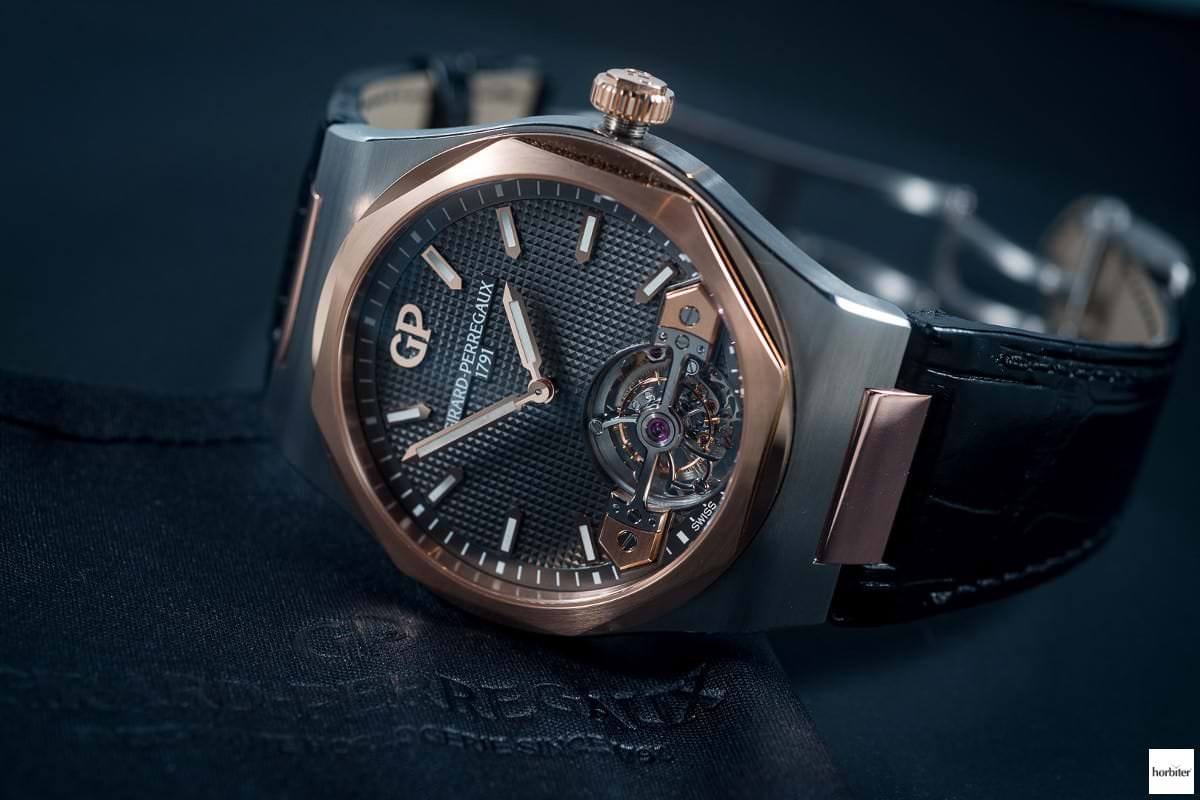
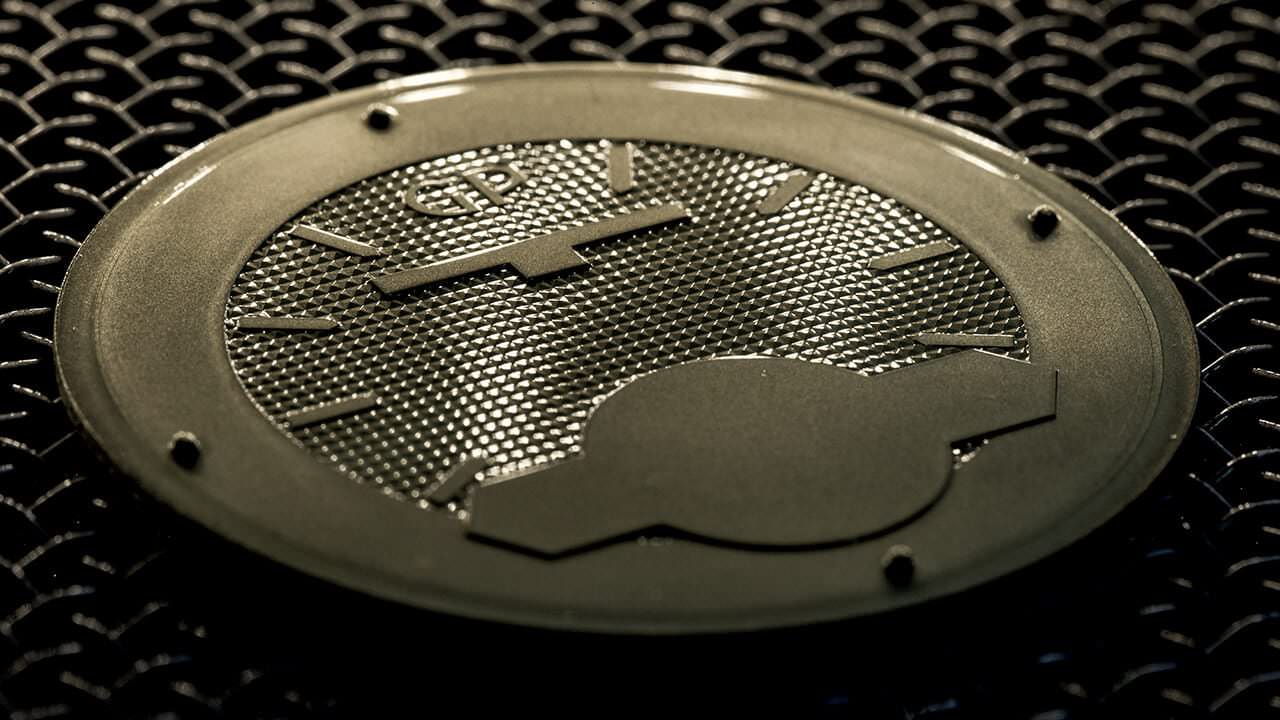
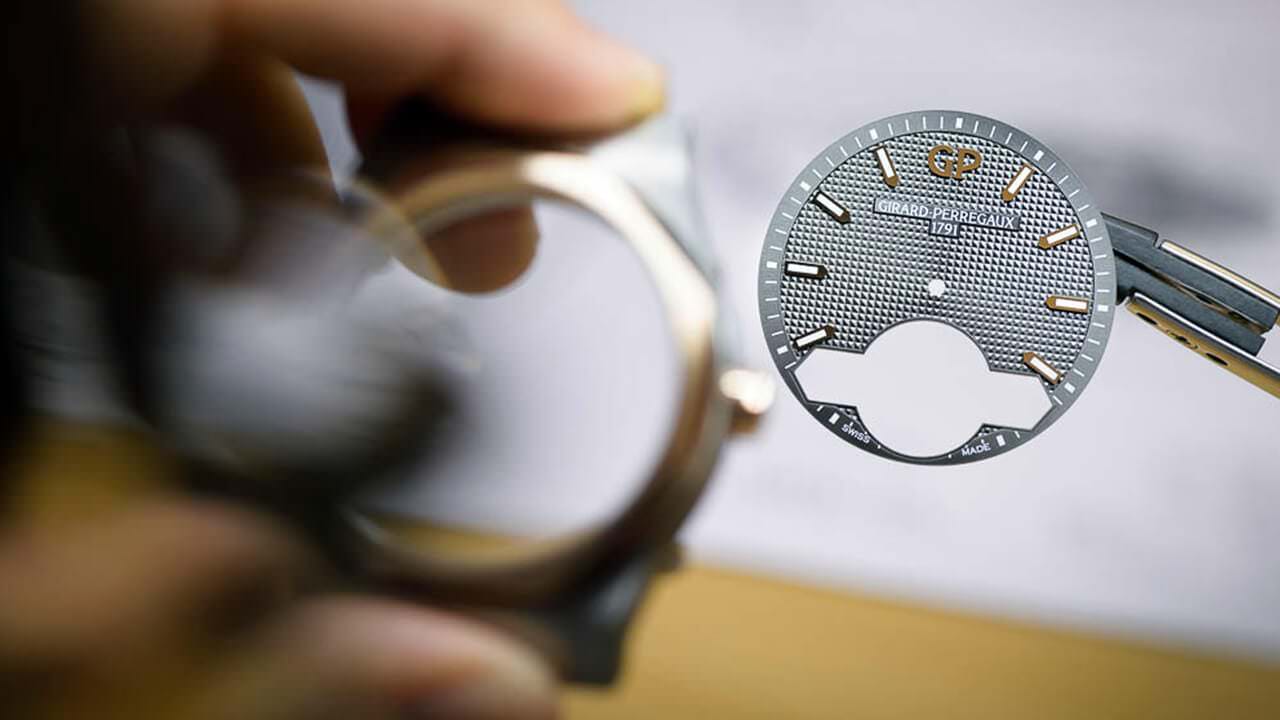
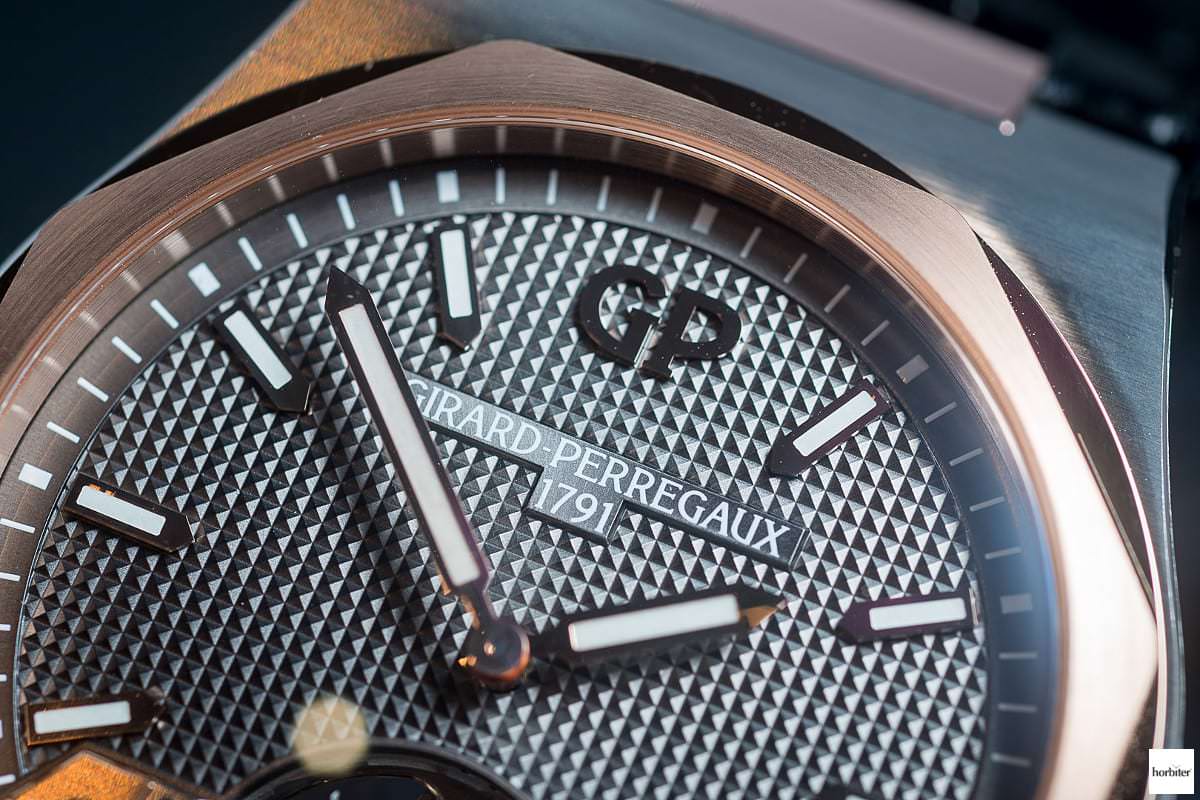
The latest edition of the Laureato has brought back to life the Clous de Paris decoration on the dial that is coupled with the octagonal bezel inserted within a circle.
The case reaches a record size; 45mm and it debuts a new metals combination made of titanium and gold (quite an original blend and, most of all, quite an unusual matching that no other competitor has ever thought of before). It seems like Girard-Perregaux made a very successful and smart choice here.
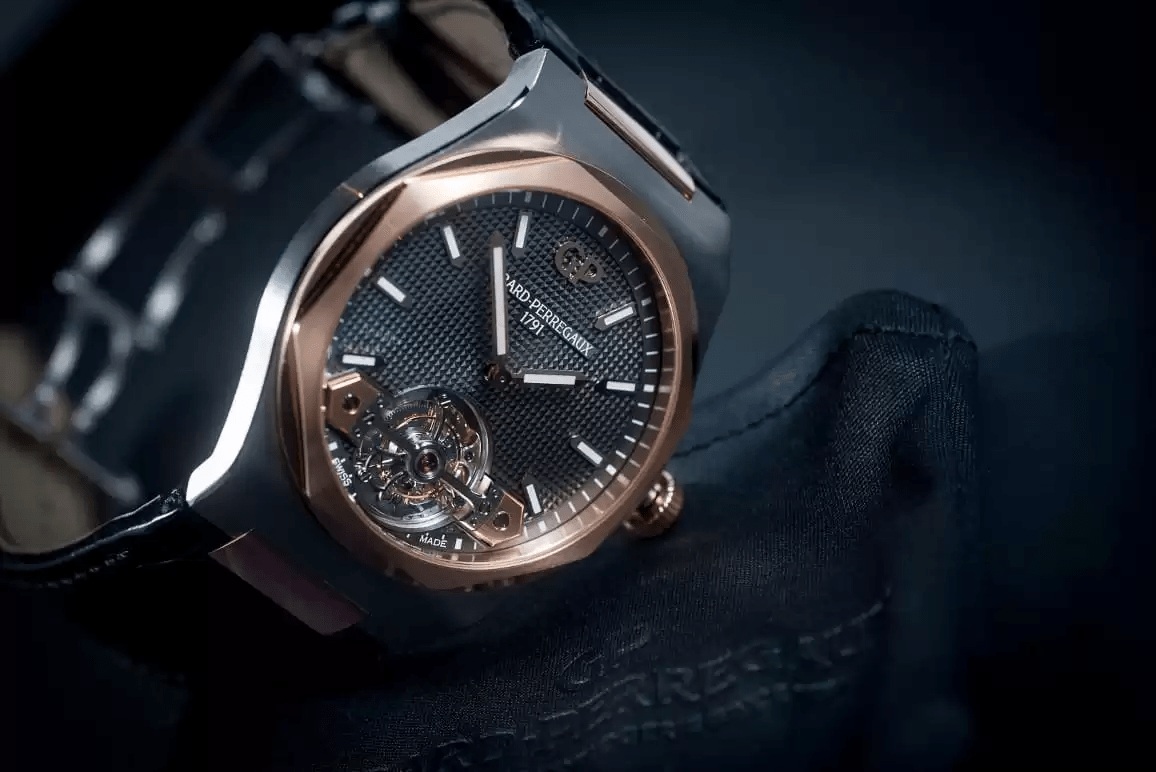
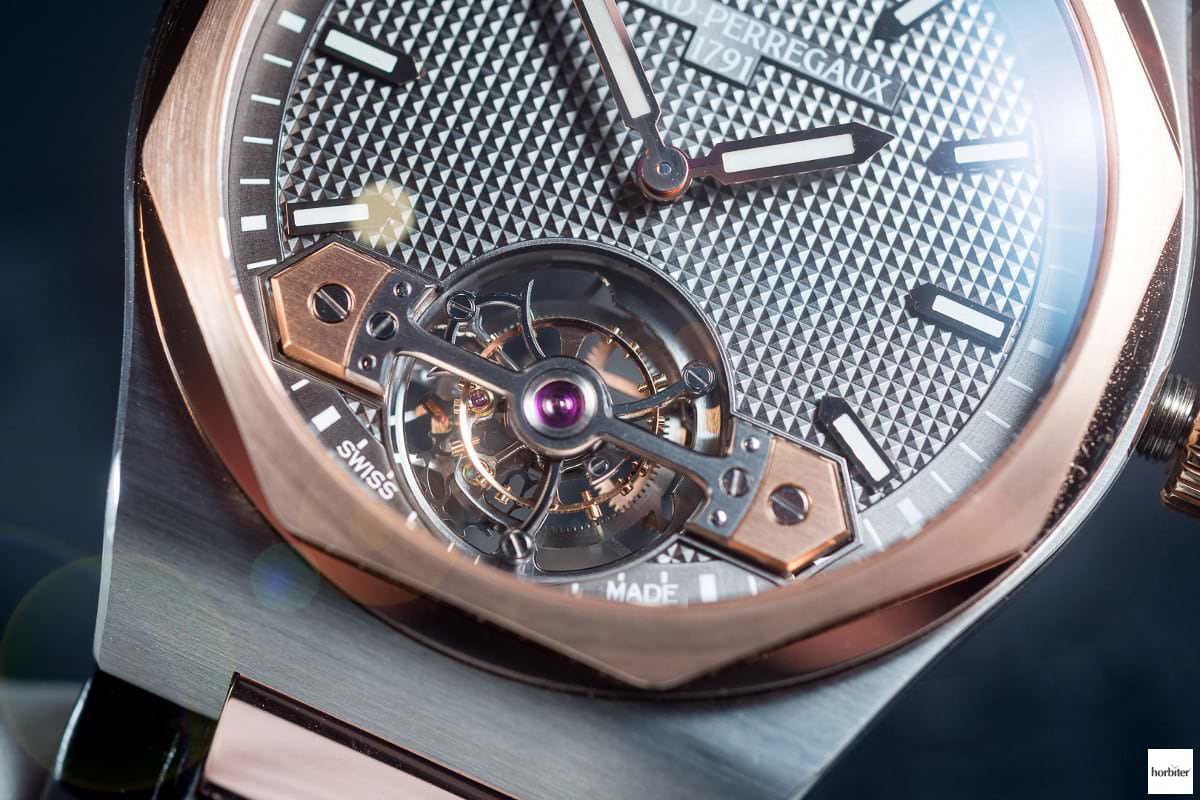
The one-minute-tourbillon has been inserted at 6 o’clock, where the single bridge also appears; the symbol of those tourbillons crafted by Girard-Perregaux. Its presence breaks the geometric balance of the Clous de Paris pattern interrupted by the horizontal bridge made of white gold and it tends to make the dial look cluttered.
It is the very same feeling that I had when I took some pics of one of the Girard-Perregaux Laureato Tourbillon’s natural competitors; the Audemars Piguet Extra-Thin Tourbillon.
On this occasion, however, I could experience a stronger feeling of lightness and style integration of the main piece of the collection and of a complication that Girard-Perregaux has skillfully crafted. Moreover, the matted gray dial is the same colour as the titanium-made case.
In 2013 I was lucky enough to see with my very own eyes the manufacturing company’s master watch-makers busy hand-polishing the bridges of a tourbillon; quite a unique experience for those who are fond of this complication.
Girard-Perregaux is considered one of the manufacturing companies – and history can back this up – with the strongest experience in crafting this romantic complication and its tourbillons rotating on three axes are something unique in the world of watch-making (the next article will deal with the Tri-Axial Planetarium).
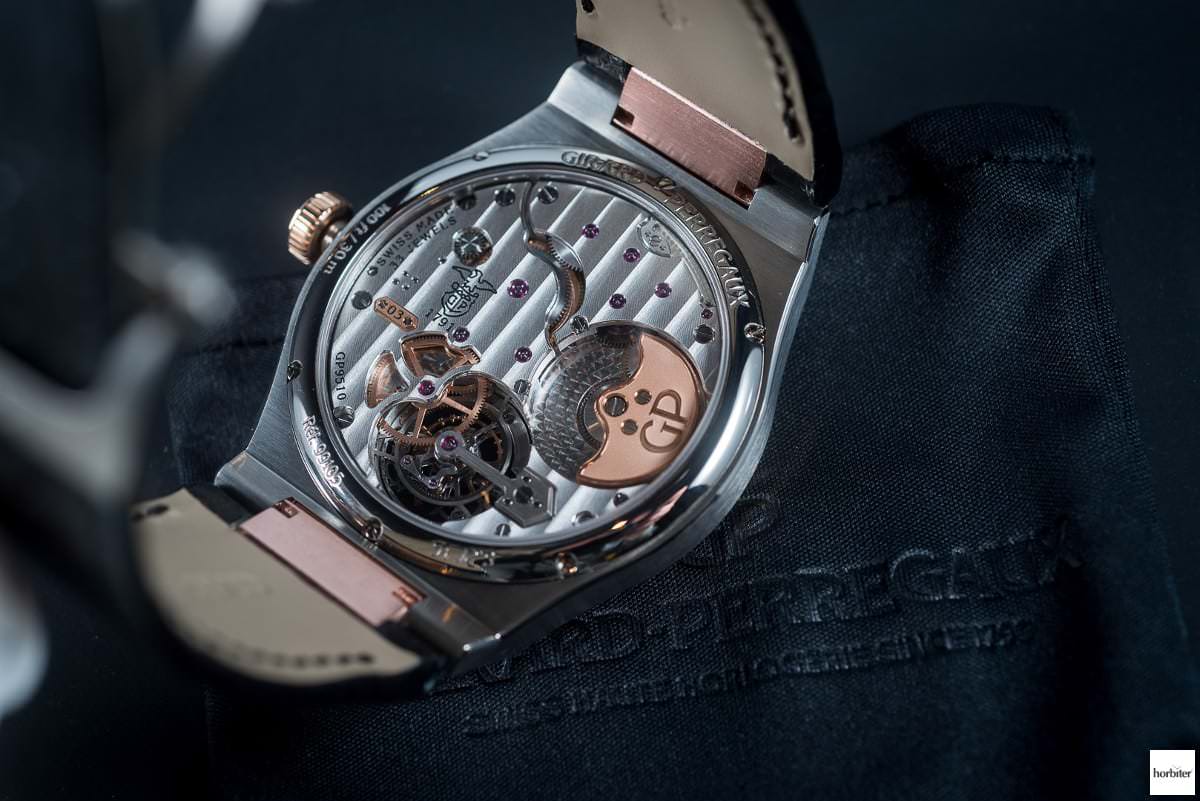
The GP09510 caliber is an automatic caliber running at a frequency of 3Hz and it guarantees at least 49 hours of power reserve, it features a large plate with a Côtes de Genêve decoration and an inner micro-rotor made of gold.
It is quite an odd solution that allows the Girard-Perregaux Laureato Tourbillon to reduce its thickness so that the size of its case falls below 12mm.
Thanks to the Laureato Tourbillon, Girard-Perregaux makes its come back to the world of tourbillons by launching a timepiece with quite a strong personality that lets the brand takes its honour place among the protagonists of high-range sports watch-making after a long hiatus, while making the brand still not fall into that trap of formal classicism that wouldn’t actually suit the Laureato and that, in my opinion, has been of the watch’s weaknesses for the last few years.
This new approach is also quite evident in the non-conventional decision to put together titanium and red gold; for those of you who are hard-core fans there is also a white gold version, both models retail at 95,000 Swiss francs.
(Photo credit: Girard-Perregaux, Horbiter®)
Gaetano C @Horbiter®
In this article:
Complication
The addition of any mechanical complication to a movement that usually displays the time.
Bezel
The bezel is particularly useful on diving watches, allowing you to check dive times. In this case, it unidirectionally rotates and usually comes in two parts: a metal (or ceramic,…
Case
It encases the mechanical movement and is crafted in one or more parts. It can also be a single piece, as with some professional diving watches, or made of unconventional…
Rotor
Part of an automatic watch that winds the mainspring by constantly rotating. Depending on the watch's winding capability, movement design, and value, it comes in various geometries, sizes, and materials.…
Power Reserve
A mechanical watch feature displays, on the dial or the case back, the remaining power in a watch movement, showing the length of time until the timepiece must be rewound.
Frequency
It is the number of oscillations of the regulating organ. It is divided into hours, mechanical watches, and quartz watches.