The vintage-inspired-watch template is a hot topic; raise your hand if you won’t find any vintage-related or Heritage collection on display at your nearest retailer. And we can quickly understand why: the strategy fosters brand image, boosts sales throughout the offering and captures vintage watch enthusiasts, which count a huge, long-forgotten audience. Nonetheless, let’s split the market into two categories; some brands boast a long and respected history with an authentic foothold; others, mainly small, young independent watch brands, are riding the wave without offering any pedigree.
With the recently released Powerwind, belonging to the Multifort collection, Mido keeps uncovering the brand’s rich history by introducing another re-edition to please the eyes of newbies and those unaware of the brand’s DNA. While most contemporary collections have fully set themselves apart from the past and pay tribute to modern architecture as their source of inspiration, the brand’s “Heritage” models are reviving Mido‘s most respected innovations back then. The name “Powerwind” marks Mido‘s impressive engineering and capabilities when it initially hit the market.
The Mido Powerwind
In 1954Mido launched the Powerwindcalibre, whose self-winding’s macro parts were reduced from 16 to 7; as a result, the power reserve increased as much as long-term reliability. Mido‘s mission of crafting reliable yet affordable timepieces has not changed, yet today’s products are light years away from their vintage siblings.
The brand belongs to the Swatch Group‘s portfolio, and its movements roll out of in-house supplier ETA‘s production lines; ETA engineers developed a stepped-up COSC-certified 2836–2 movement. Please consider that you won’t be offered the signature 80-hour power reserve; the platform aims at running precision; therefore, this 4Hz movement winds the barrel’s spring to ensure no more than 38 hours.
However, it is a Chronometer, thus promising it’ll be a precise timepiece as much as was the original Powerwind (and more).
Case and bracelet
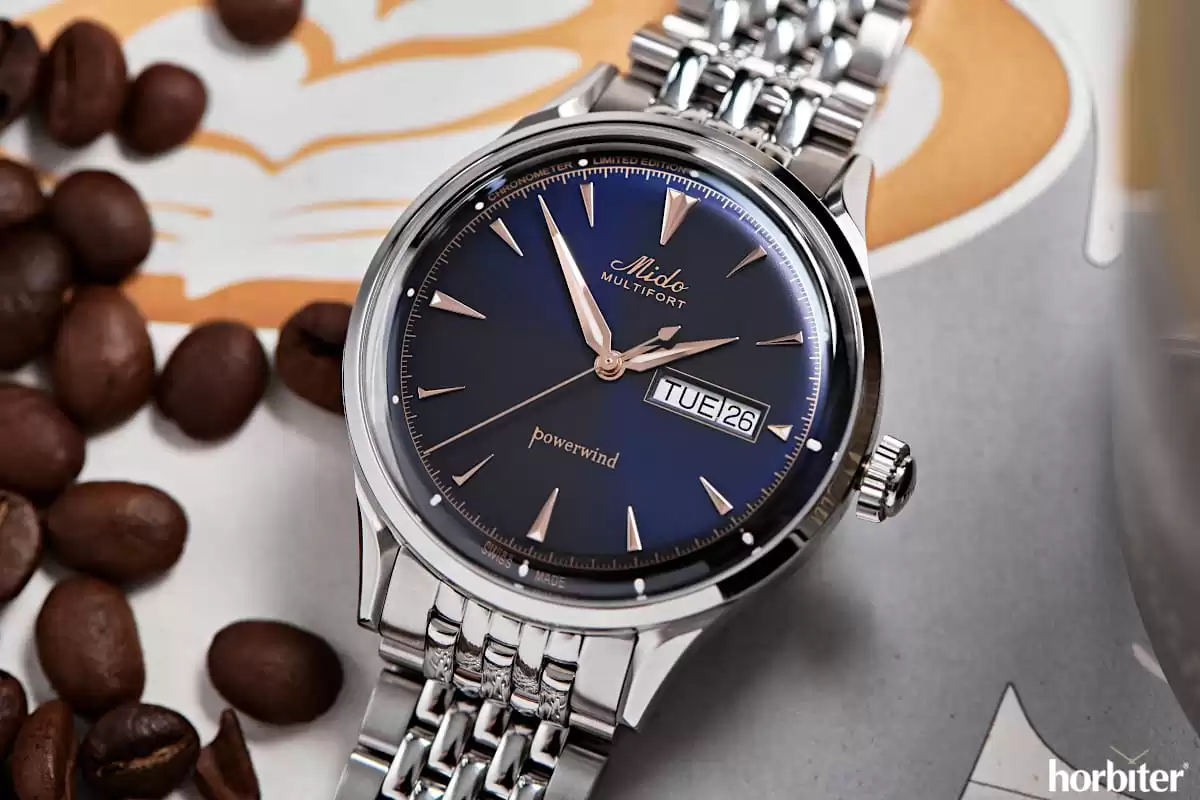
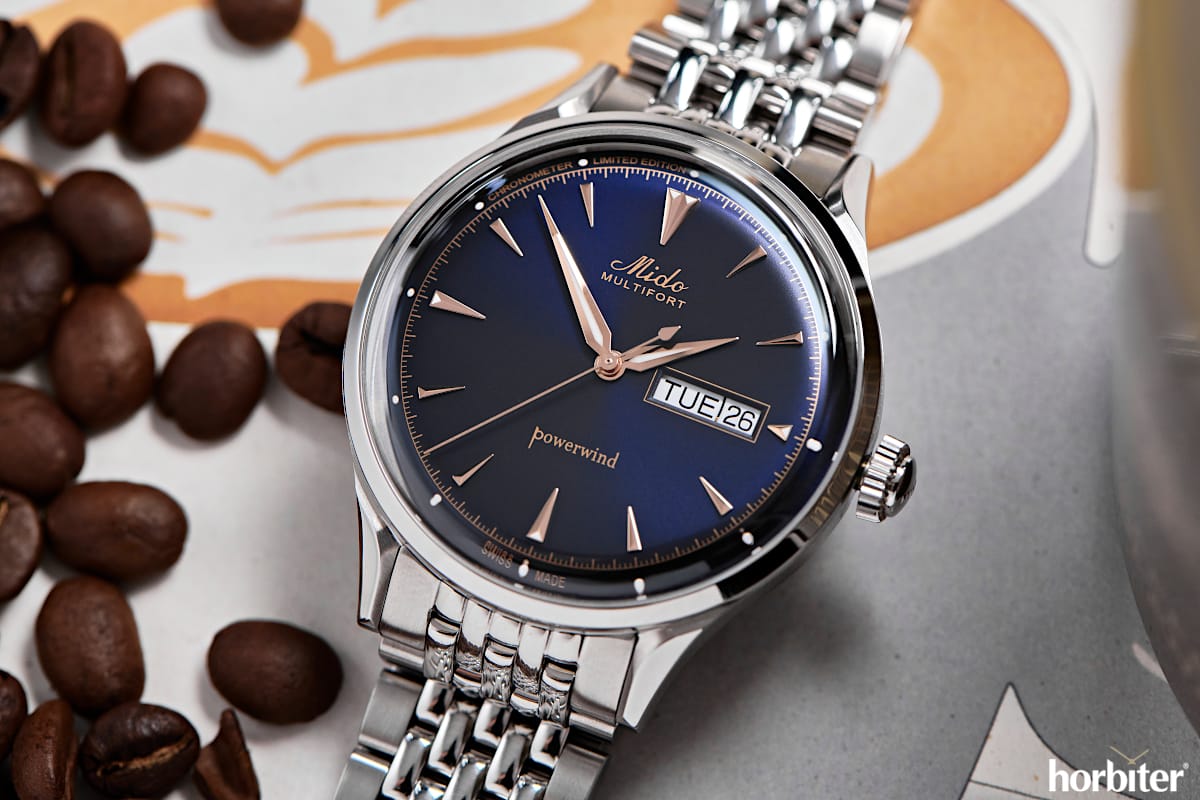
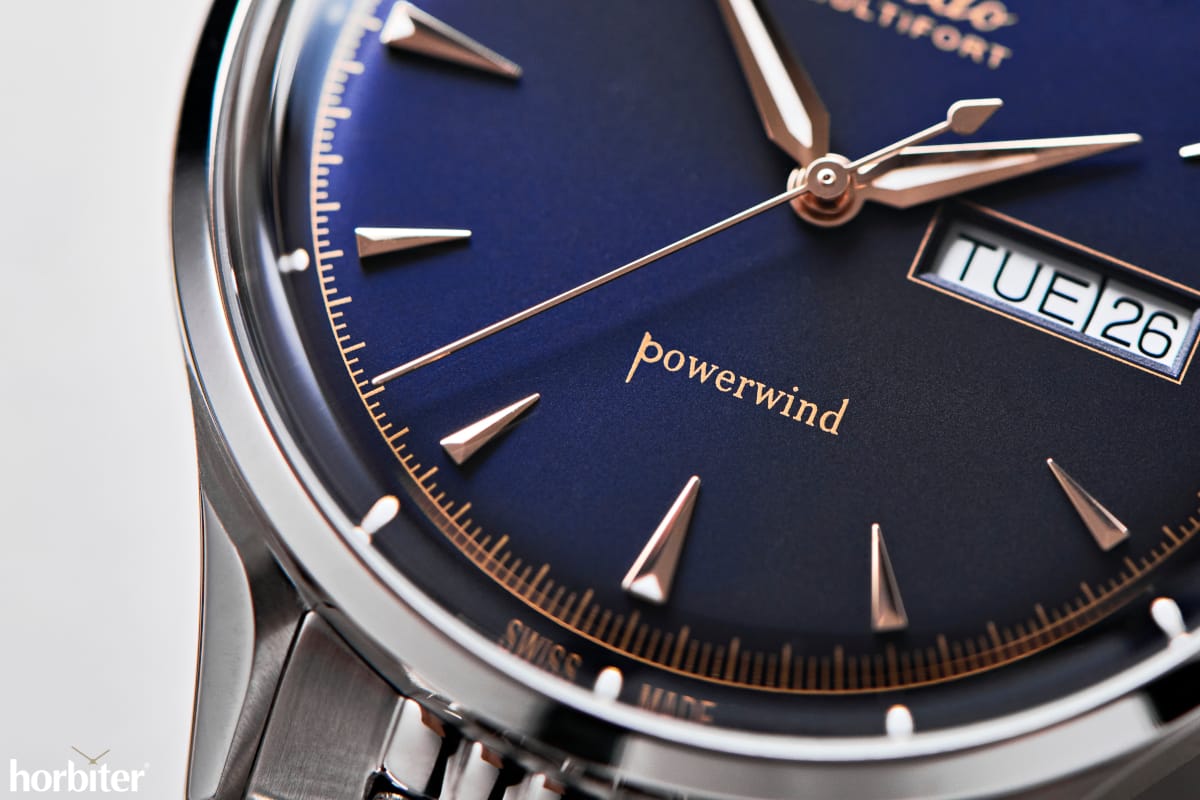
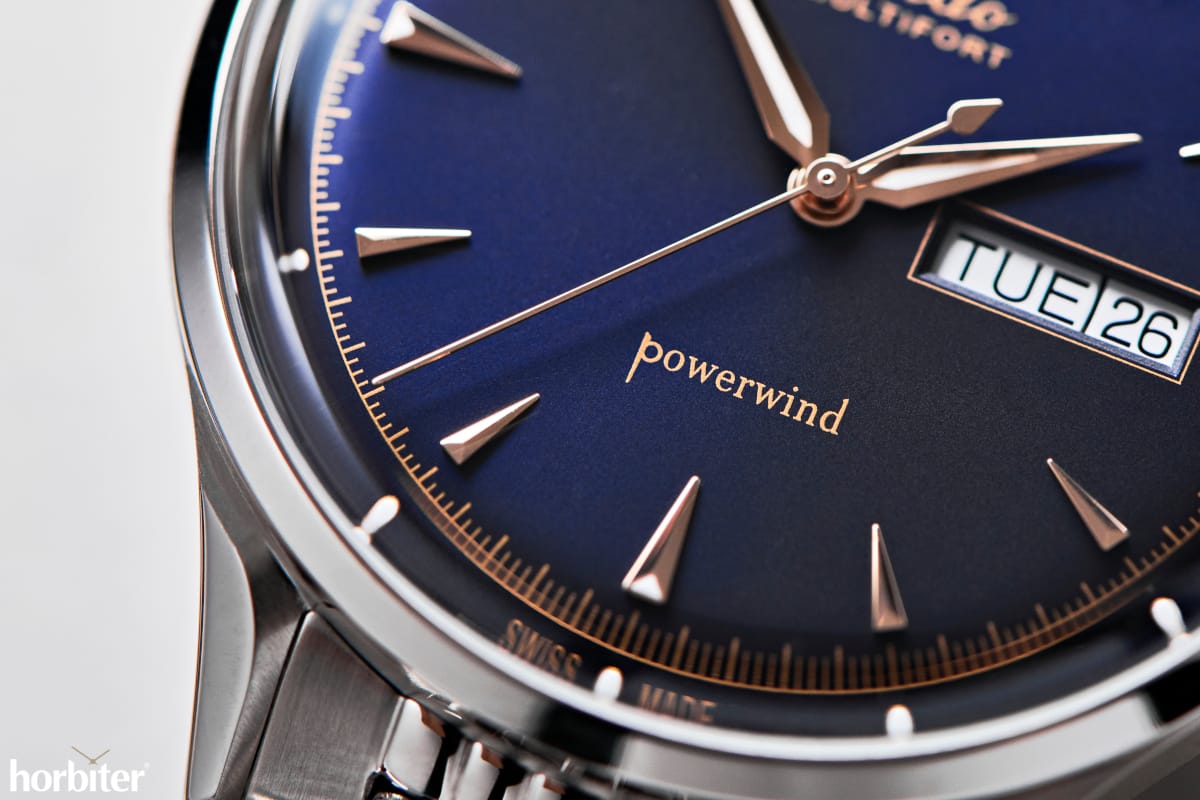
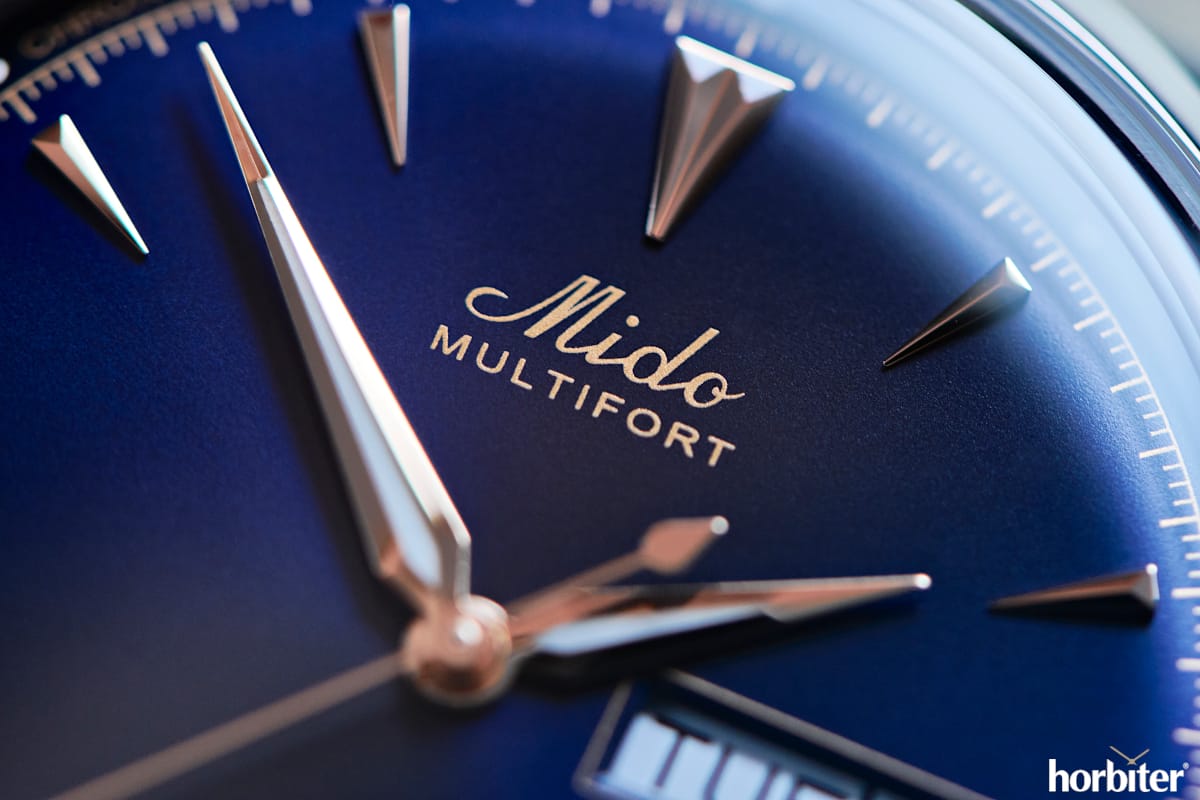
The case design shares the Patrimony hallmark lines: slightly knurled lugs enhance the vintage feel, and the combination with such an alluring dial makes for the most attractive classic Mido dial ever. The historic logo is not breaking news, but I appreciate the gold-bronze Pantone and the word “Powerwind” against the dark blue dial. Let’s bear in mind that the Mido Multifort Powerwind Chronometer Limited Edition has nothing in common with its forefather, but the recipe feels very familiar instead.
The blue dial only lightens under an intense light while it looks somewhat brownish in dim or no lights; arrow-shaped gold-tone applied indexes, and gold-chocolate dots offer a unique vintage look and feel. What a pity you won’t find the historic Mido logo on the folding clasp and winding crown, too. The modern one looks out of context; it’s a choice I can hardly understand.
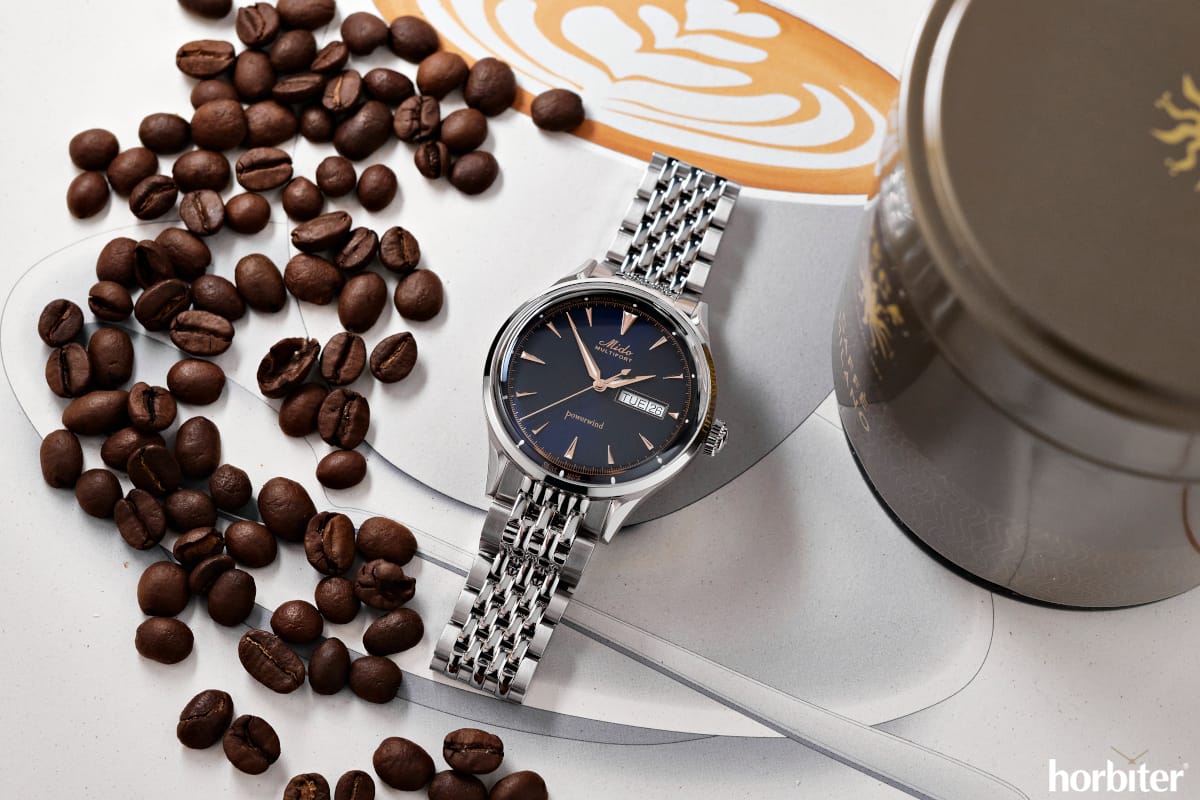
The bracelet adds to the storytelling and won’t miss the primary target: superior comfort. The five mid-central bead-of-rice links are polished and contrast the external links, showcasing enhanced attention to detail. They are exclusive to this 1954-piece limited edition.
The solid screw-down case back is a nice touch and a tribute to classic 1950s three-hands timepieces. Also, it hides a modern self-winding movement, which would clash with Powerwind‘s nostalgia factor. Here are the main specs: the case measures 40mm across and is 12mm thick. Fully loaded, the Multifort Powerwind weighs 121g, an acceptable value for most wrist sizes, and the bracelet helps wrap the case around your wrist smoothly and effortlessly.
Final thoughts
Some of them are listed in the previous paragraphs already. The Mido Multifort Powerwind Chronometer Limited Edition is the best vintage-driven Mido watch ever and perhaps the most accurate re-interpretation of historical Mido watches. Starting from the Patrimony collection, the designers have crafted a curated package, which is limited in numbers for the time being and will most probably do moving forward.
The outcome is a less mainstream watch, offering rich details and a more boutique approach. Unlike its competitors, it provides enough luminescence but is short on water resistance (50 meters). It is a weakness, but here comes, I think, Mido‘s decision to not disrupt its price point strategy, which stops at 1,160 Euros.
(Photo credit: Horbiter®)
Redazione @Horbiter®
In this article:
Power Reserve
A mechanical watch feature displays, on the dial or the case back, the remaining power in a watch movement, showing the length of time until the timepiece must be rewound.
Calibre
A calibre is the type of watch movement encased in an assigned timepiece. Its name is usually associated with the manufacturer's name and a standard code, e.g., ETA 2824.
ETA
Swiss manufacturer of mechanical and quartz movements owned by the Swatch Group.
Barrel
It is a cylindrical metal box closed by a cover that contains a spiral spring called the mainspring, which provides energy to run the timepiece.
Chronometer
An instrument for measuring time very accurately. For any watch to be called a chronometer, it must meet the standards set by the C.O.S.C. (Contrôle Officiel Suisse des Chronomètres).
Case
It encases the mechanical movement and is crafted in one or more parts. It can also be a single piece, as with some professional diving watches, or made of unconventional…
Crown
Placed on the case side, it winds the mainspring. When pulled out, it also sets the time and the date. A screw-down crown increases water resistance and protects the movement…
Case back
It can be screwed in, pressure-fastened, or secured to the case via screws. Occasionally, it comes as a single piece, with the case of specific professional diving watches (for example,…
Luminescence
A luminescent material is applied to numbers, indexes, and hands to read the time in the dark or under dim light. The most renowned manufacturer of luminescent material in the…