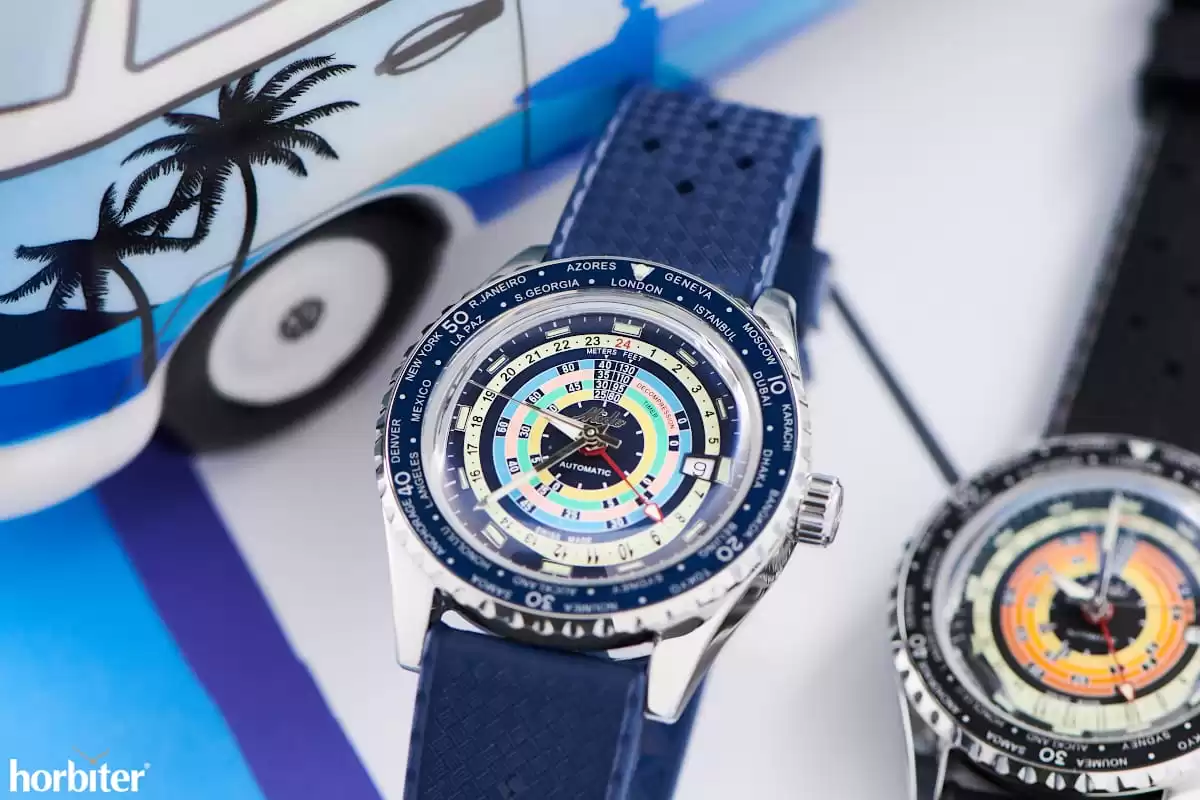
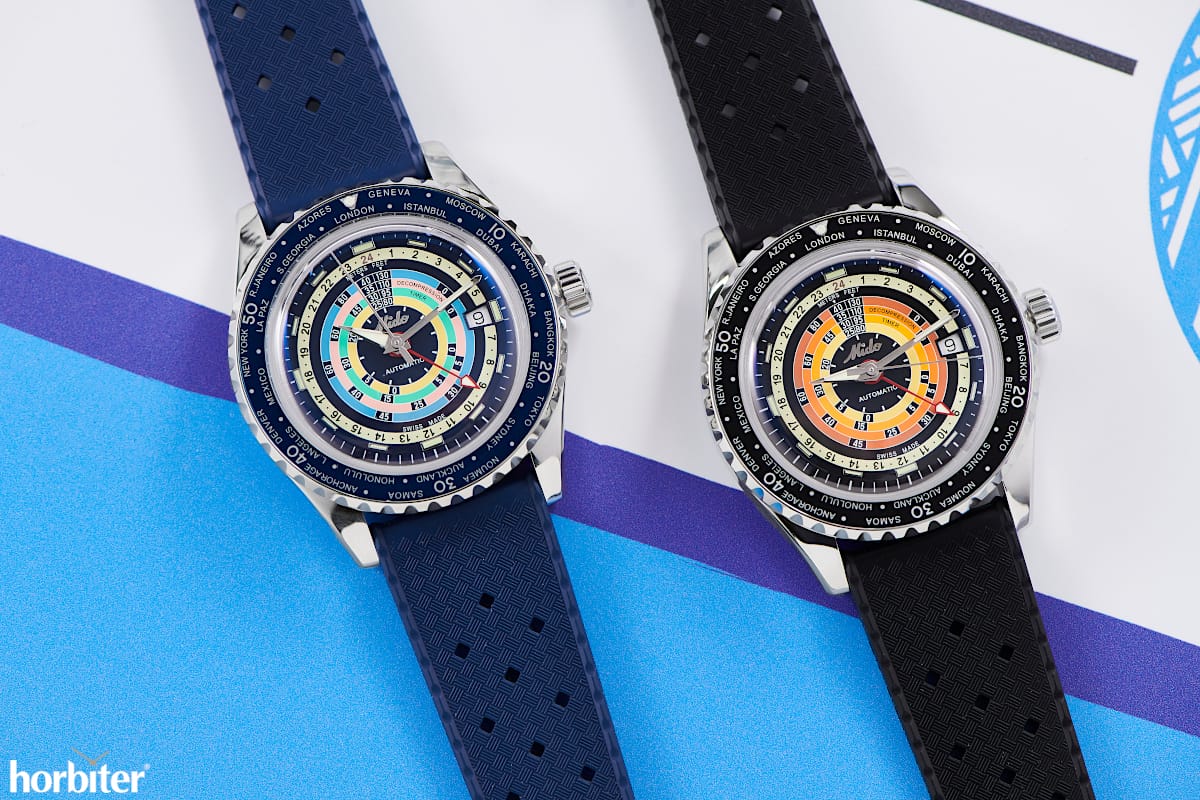
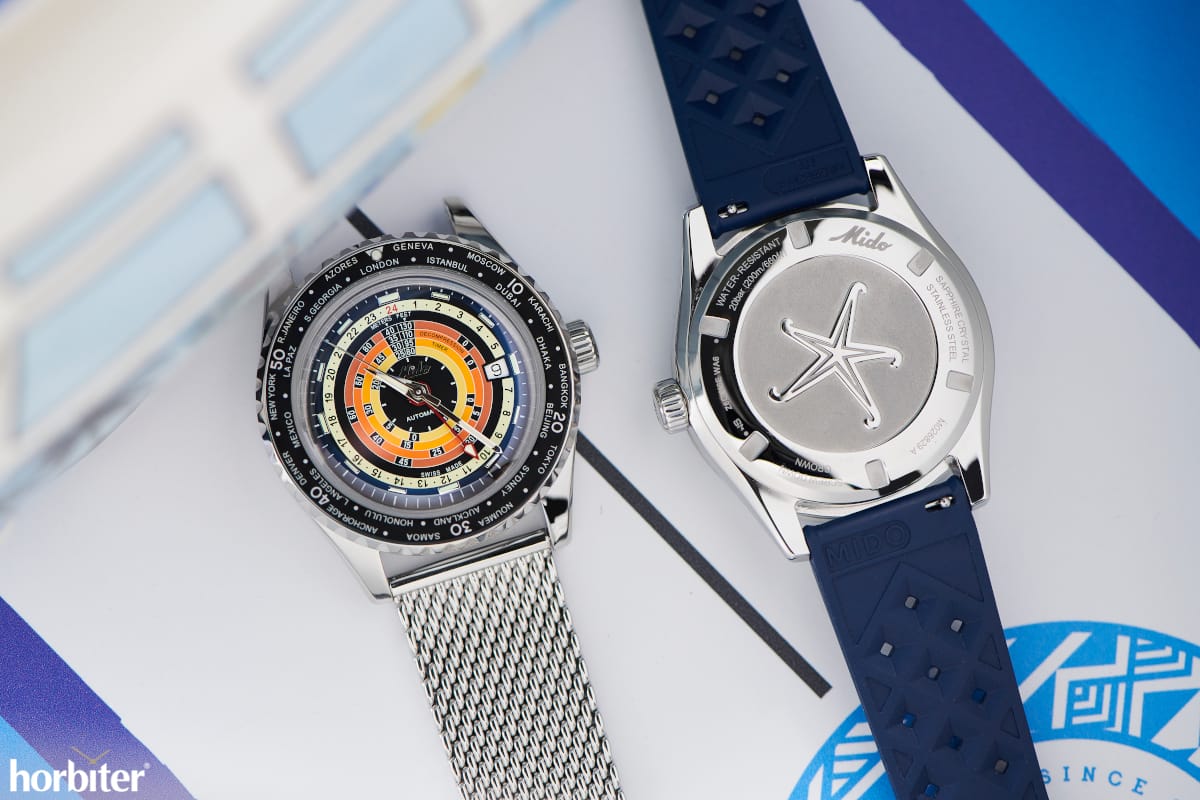
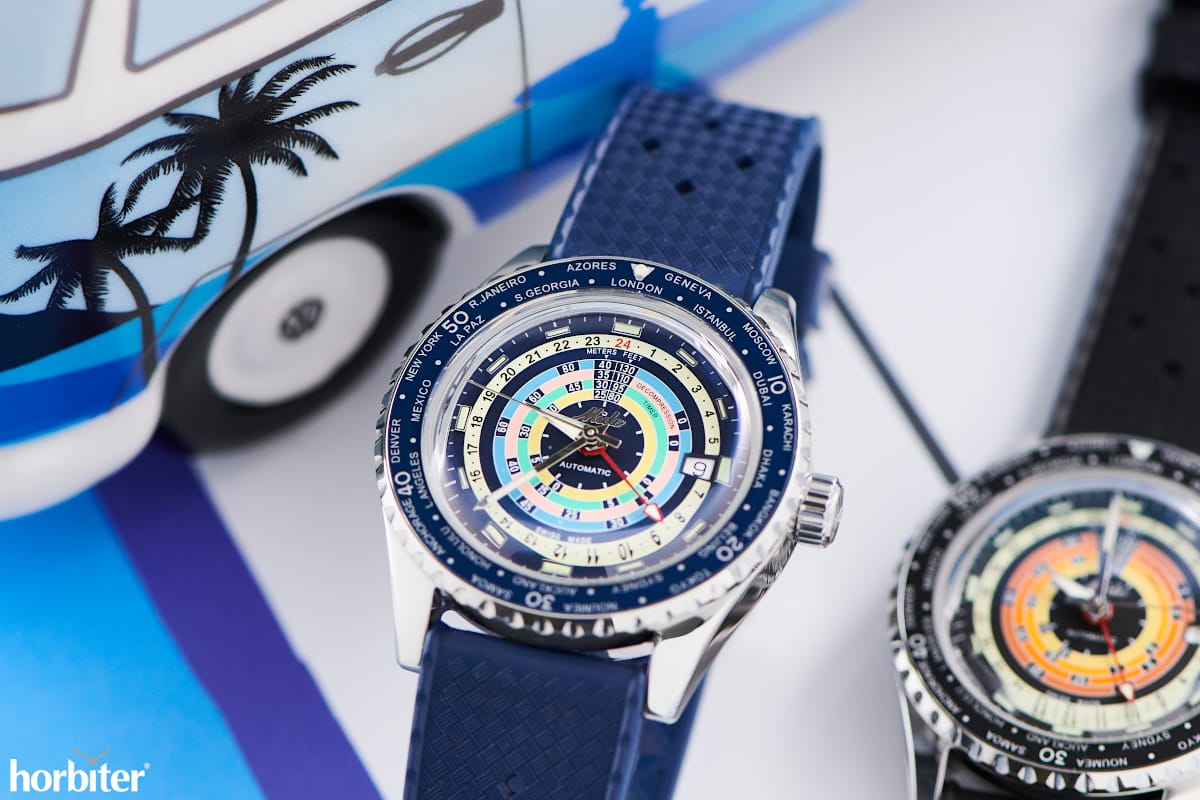
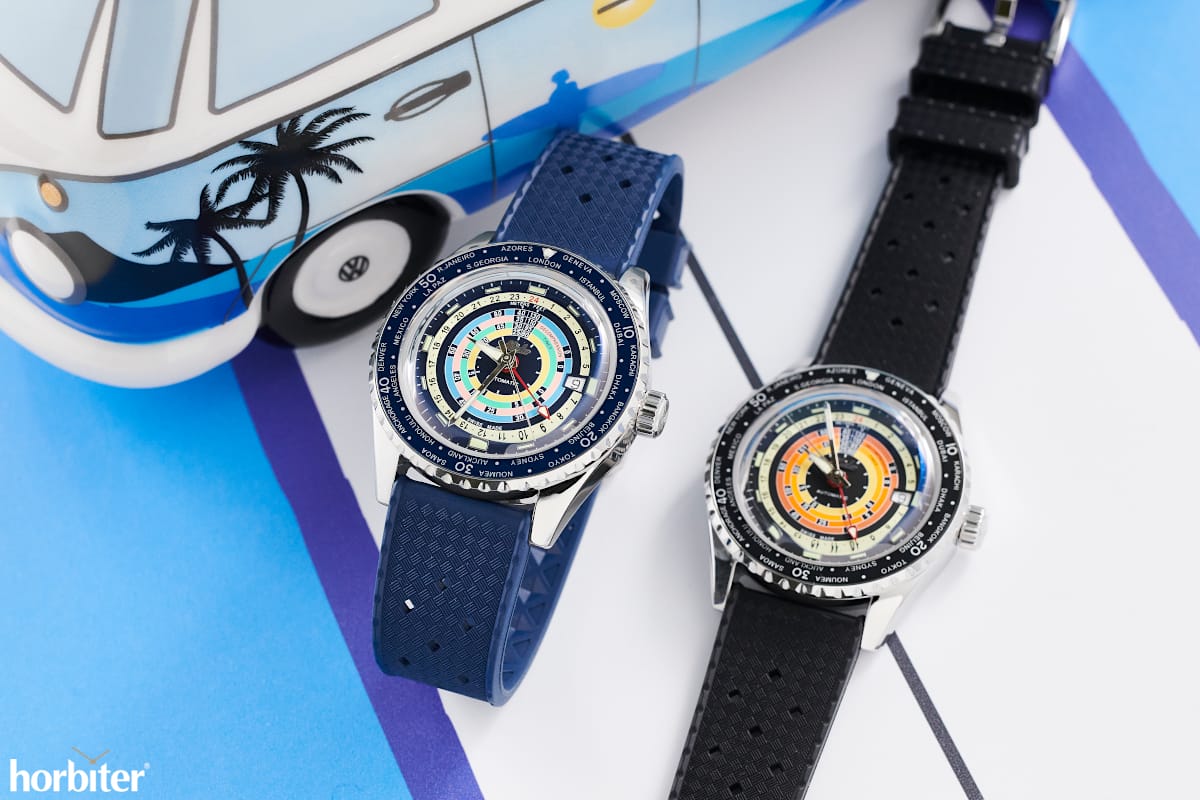
Mido watches hit the spot in 2023 with the new Mido Decompression Worldtimer Special Edition. We purposely excluded “Ocean Star” from the watch’s full-length name since we believe that “Decompression” is more than enough to name a collection whose identity is a class of its own within the larger one, despite all the products sharing most of the components across the board.
The Decompression’s staggering success has helped the brand flourish; the 40,5 mm rookie has rapidly become an outsider; its colourful, decompression-times-themed dial has made it a unicorn in its class of products, something you usually expect from small independently-operated watch brands in an attempt to carve their space among long-established competitors.
Kudos to the Mido management for breaking the rules; their courage paid off, revamped vintage collectors’ passion, and, pretty sure, it attracted new generations of watch lovers in their quest to purchase their first-ever mechanical wristwatch, and not any; here is a timepiece with a bold personality.
We have told the Decompression Timer’s entire story: the first model surfaced in 2020, followed by a second limited edition watch in 2021, yet 2023 marks the first-ever model’s upscale by turning a three-hands timepiece into a somewhat complicated one. We can’t wait to discover the future and what to expect after the here-pictured Decompression Worldtimer Special Edition.
Why a Worldtimer?
The 2021 edition of the Decompression Diver aimed to maximize the first edition’s success while meeting as much as possible unexpected product demand. Both models’ street prices are usually above their listed prices. The attractive retail price has made the first two releases popular, and we won’t expect, according to rumours, any change with the new Worldtimer.
The Mido Decompression Worldtimer Special Edition opens a new perspective and meets, on paper, two targets: it keeps fostering vintage storytelling while raising the bar regarding technical specifications. All in all, it is a more refined take on the Decompression Timer recipe and offers a more commonly-used technical function. Also, it adds consistency to the brand’s growth roadmap.
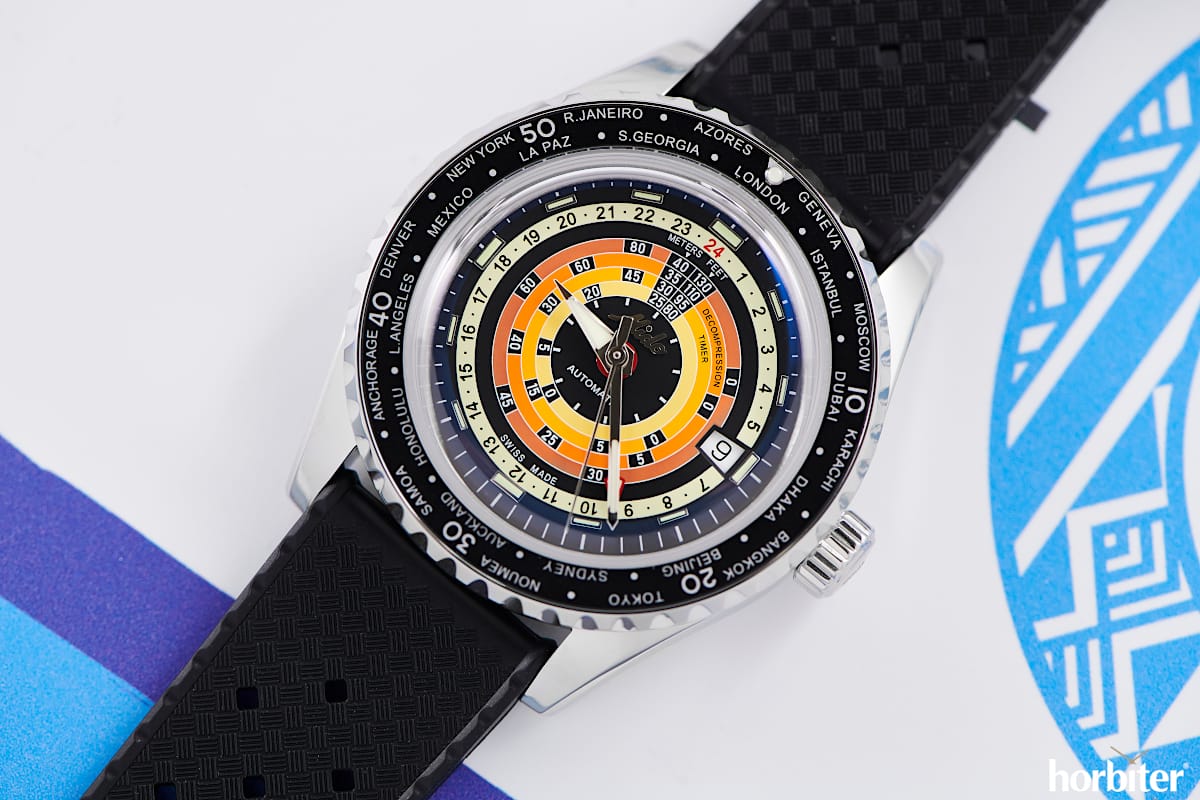
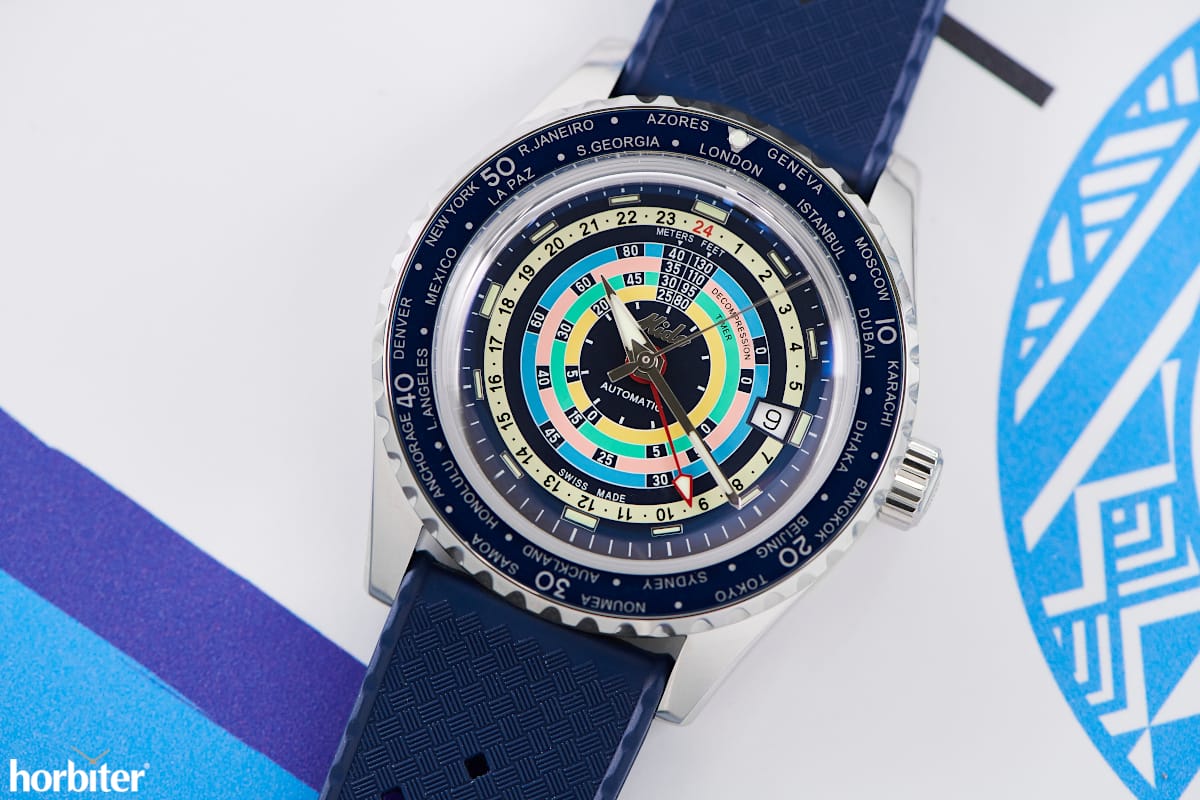
The case has undergone a slight redesign; we won’t call it a diving watch any longer since the rotating bezel is bidirectional and abandons the original Ocean Star Tribute‘s case design; proof of concept, no protective shoulders are surrounding the crown; unscrewing and operating the bezel is as easy as you expect it on any Worldtimer; nonetheless, it still is a 200-meter diving watch. It measures 40.5 mm across with a 46.99 mm lug-to-lug distance.
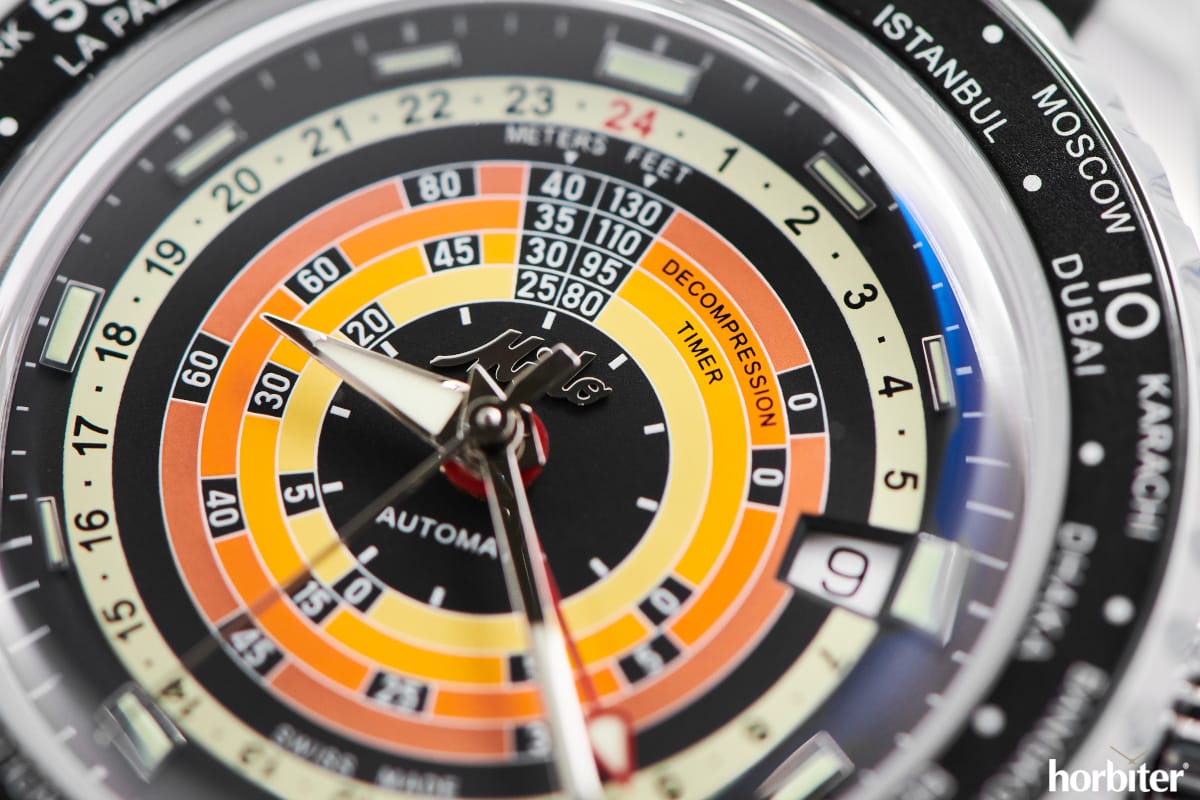
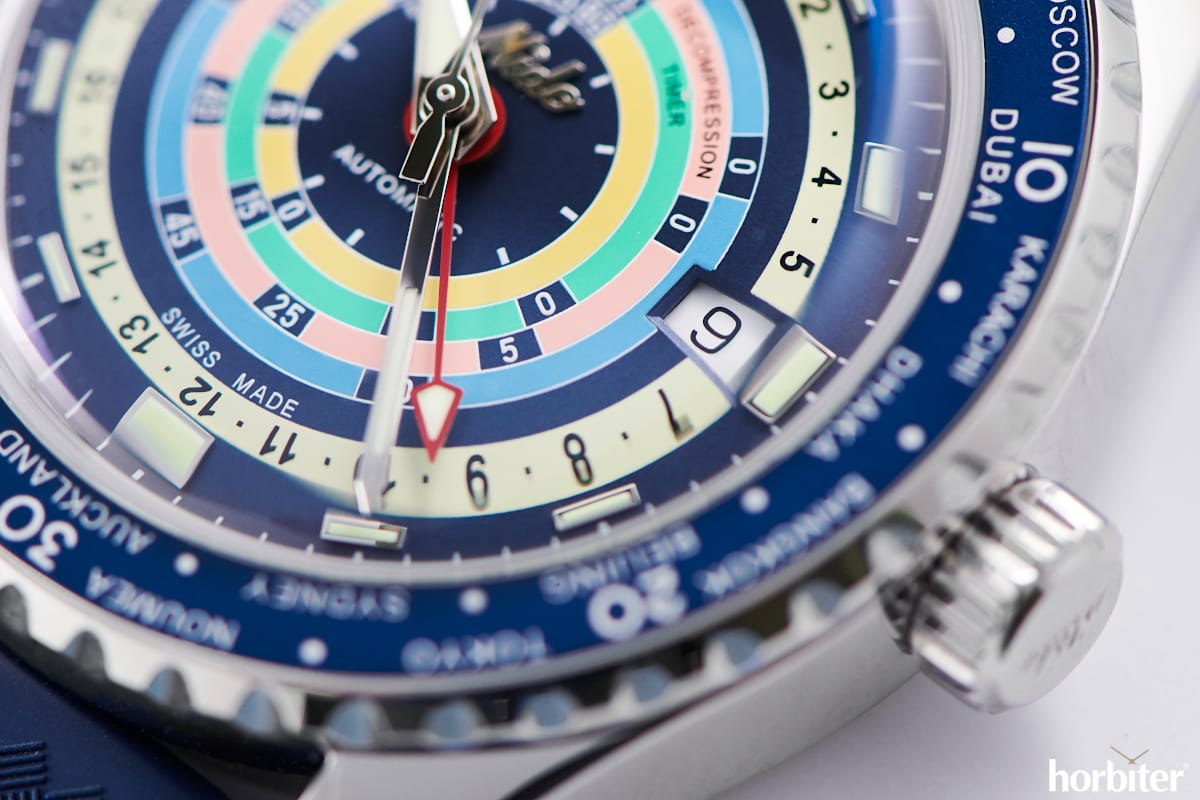
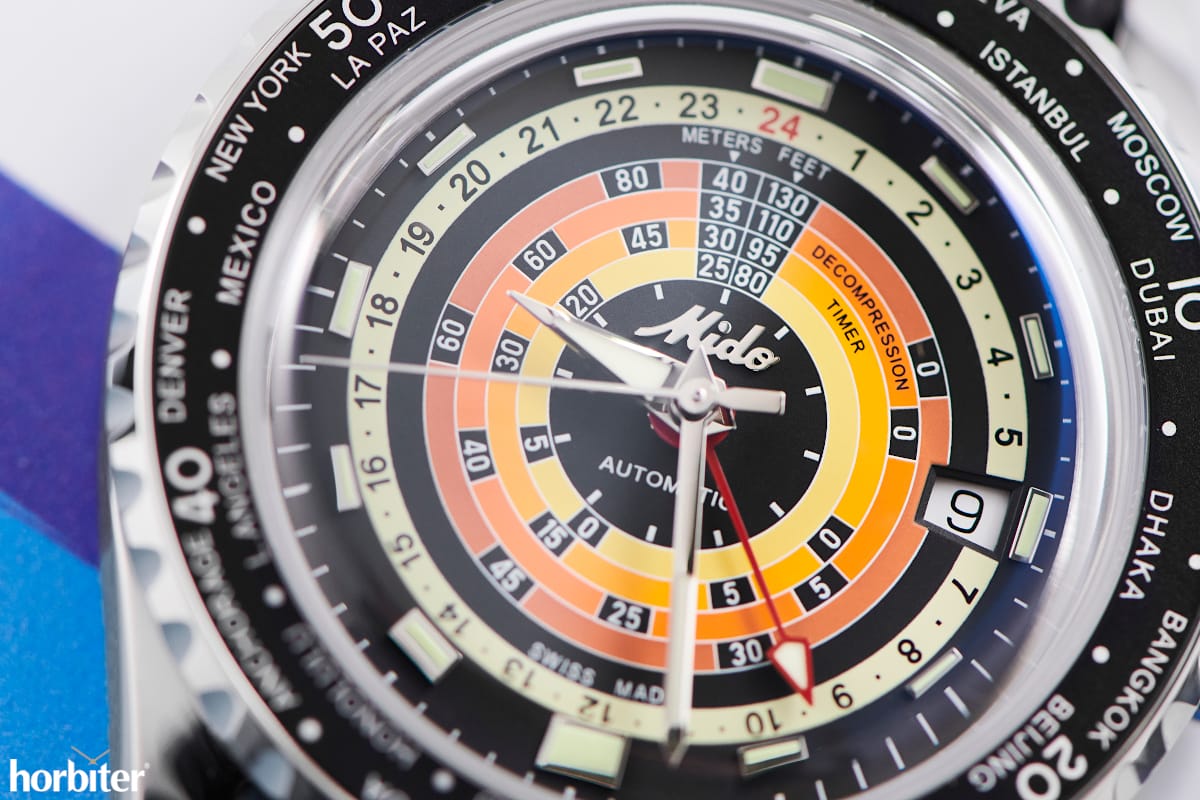
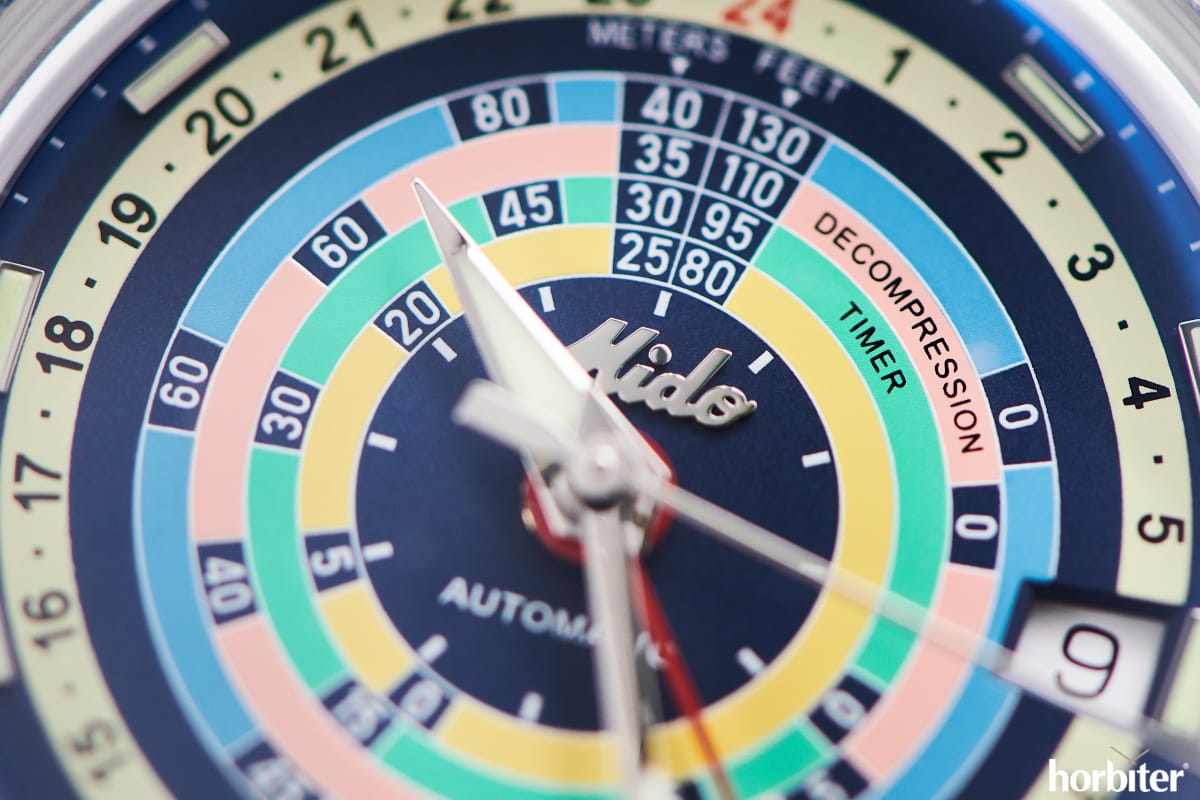
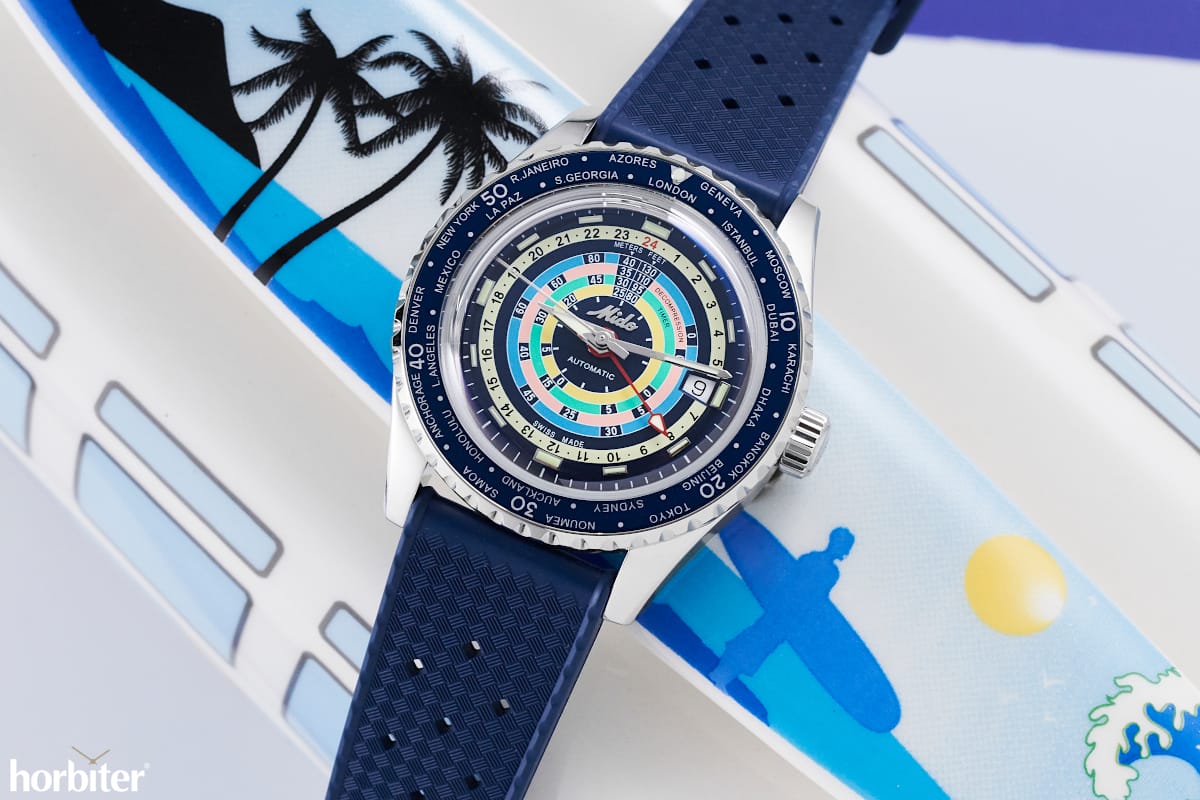
The new design works, but the dial is not the easiest to read, crowded with plenty of scales, colours, city names and numerals. Once pulled out to the outermost position (position nr.2), you can set the home time via the 24-hour red hand. You can then select your local time in one-hour increments and, once you adjust it, read what time (approximately) is available in the remaining 23 time zones.
Let’s consider it is 10:00 PM in La Paz (instead of 10:21 PM as pictured); let’s rotate the bezel to align the city marker with the local hour hand. Once set, we can quickly read the time in Geneva, for instance, by counting five hours on the 24-hour circle; it is 01:00 AM in Geneva, March 10.
To include all the information needed for a diving watch and a world timer, the aluminium inlay on the bezel is broader, with the luminous dot at 12 being smaller when compared to a Decompressione Timer. The designers have slightly restyled the bezel’s grooves to improve grip during quick adjustment operations.
From afar as much as from up close, the watch looks more upscale than ever before, and the watch comes with a set of revamped accessories like the new high-quality soft rubber strap (it first appeared on a Mido Tribute) whose build quality is top notch outside and inside, texture included. It is fast to swap, too.
The Mido Decompression Worldtimer Special Edition also comes with a Milanese mesh bracelet, which we found harder to fasten since the retractable pins are too loose. The mesh bracelet won’t pinch your wrist but feels too “deja vu”; the original Decompression Timer came with a lovely Bonklip bracelet. Both watches come equipped with the Mido calibre 80 to, now housing a Nivachron™ hairspring for enhanced resilience and anti-magnetic resistance. Mido was the SG’s first brand to adopt this new-generation self-winding movement.
Final thoughts
The Mido Decompression WorldtimerGMT will be on sale as of March 15 in two options, one with a black bezel and black matching strap and a more colourful and sporty variant with a blue bezel and strap. We think the former is arguably a more conservative take on the Decomp. Theme; the blue model is our all-time favourite; it’s sportier but harder to read, too; ideally, placing them alongside the diving models, you’ll notice how stuffed all the info on the dial are and how the mid-centre decompression-times dial looks smaller than before.
The price has grown to 1,350 Euros which still is much bang for the buck; at a 200€ price increase, you get a consistent, everyday-useful mechanical complication. Both models are listed as “Special Editions”; hence they’re not limited in numbers and will be permanently sorted on Mido’s website.
We’d love to see Mido design and engineer a modern re-edition of the legendary Bonklip bracelet and equip the watch with a matte ceramicbezel. It will further raise the product’s “touch and feel” without affecting its vintage pedigree.
(Photo credit: Horbiter®)
Editorial Team @Horbiter®
In this article:
Worldtimer
It is a timepiece that displays the 24 time zones of the world's main cities; on premium luxury watches, like those produced by Saxon watchmaker Glashütte Original, it shows all the…
Crown
Placed on the case side, it winds the mainspring. When pulled out, it also sets the time and the date. A screw-down crown increases water resistance and protects the movement…
Case
It encases the mechanical movement and is crafted in one or more parts. It can also be a single piece, as with some professional diving watches, or made of unconventional…
Bezel
The bezel is particularly useful on diving watches, allowing you to check dive times. In this case, it unidirectionally rotates and usually comes in two parts: a metal (or ceramic,…
Strap
A leather, rubber or other material band that secures the watch to the wearer's wrist.
Calibre
A calibre is the type of watch movement encased in an assigned timepiece. Its name is usually associated with the manufacturer's name and a standard code, e.g., ETA 2824.
GMT
It is the acronym for Greenwich Mean Time and identifies a complication capable of displaying two or more time zones on the dial. The complication usually couples a 24-hour rotating…
Complication
The addition of any mechanical complication to a movement that usually displays the time.
Ceramic
Widely used for crafting a watch case and, in recent years, also for the bezels of diving watches and dials. Obtained from zirconia powder (ZrO2), ceramic offers superior scratch resistance…