The Cartier Pasha de Cartier 2020 watches hands-on
Giovanni Di Biase30 July 2020
0 Comments
The story behind the Pasha de Cartier is an interesting one, and is undoubtedly a success story. Commercially introduced in 1985, it quickly gained popularity following the likes of the brand’s icons like the Santos.
The revamped 2020 Pasha had to face a challenging task, too, given it was introduced alongside the exquisite hand-wind Santos Dumont watch. The Cartier Pasha de Cartier has never been my cup of tea, since I used to list it among those watches conceived initially for her, and forcefully adapted to a man’s wrist, it seemed.
The first-ever Pasha was a big hit; I praise Cartier for being so brave, back then (thumbs up to Gérald Genta too for designing another modern classic), while giving credit to the Maison for launching such an original new collection. The eighties were so different; when it first appeared, it quickly became a hot seller, and still is very much coveted today.
The phased-out Cartier Pasha has been offered in two variants, one showcasing a polished bezel, the other featuring a bi-directional graduated bezel instead. Following up were some stunning mechanical complications, too, like a perpetual calendar, a Minute Repeater, and a chronograph tourbillon.
A renewed Pasha was missing from Cartier‘s catalog, and the brand keeps reissuing its most successful timepieces, to attract a more mature audience of watch enthusiasts to the brand. The new Santos Dumont, which pays homage to the original version, is proof positive the brand is paying more attention than ever before to watch aficionados.
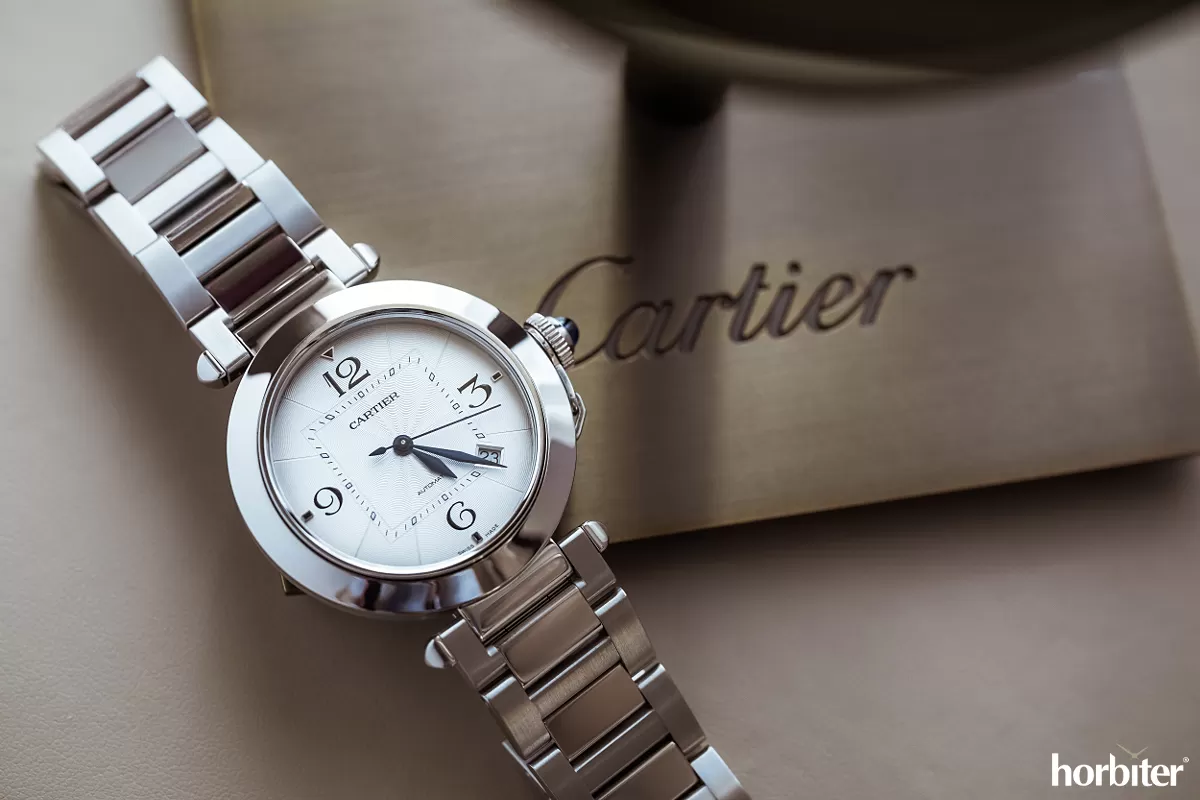
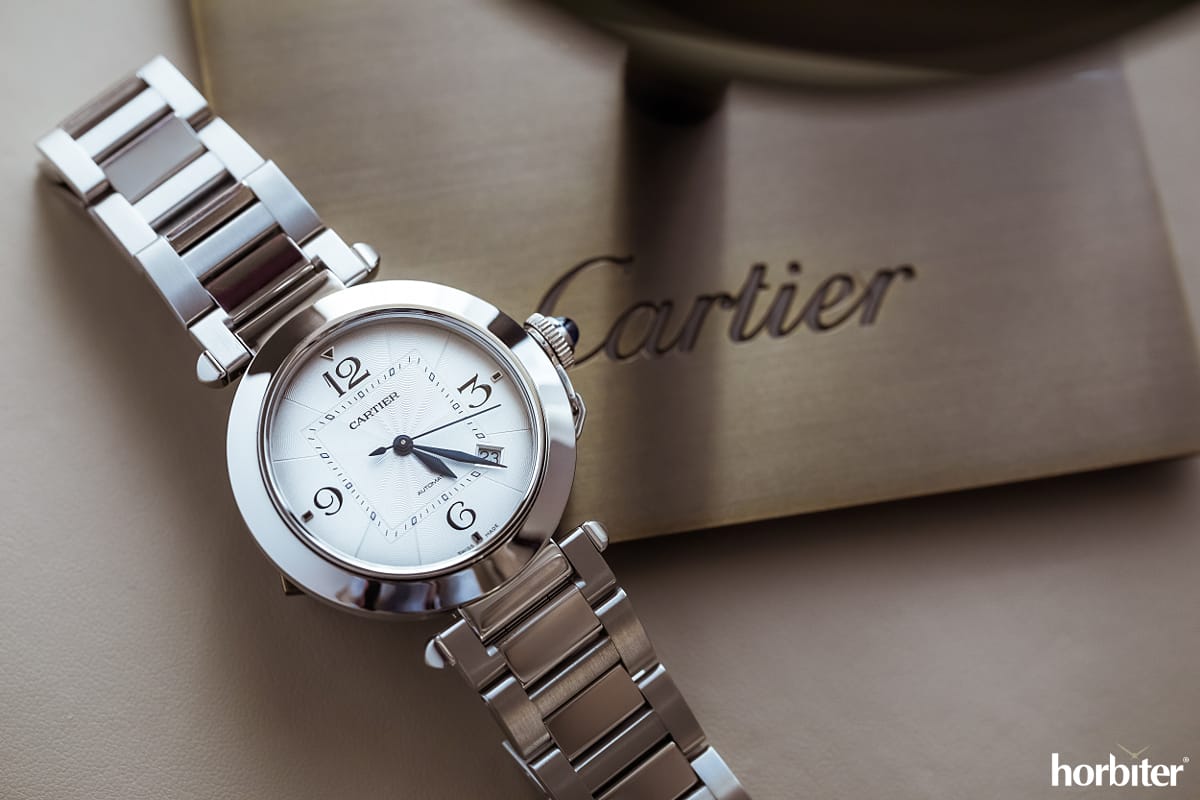
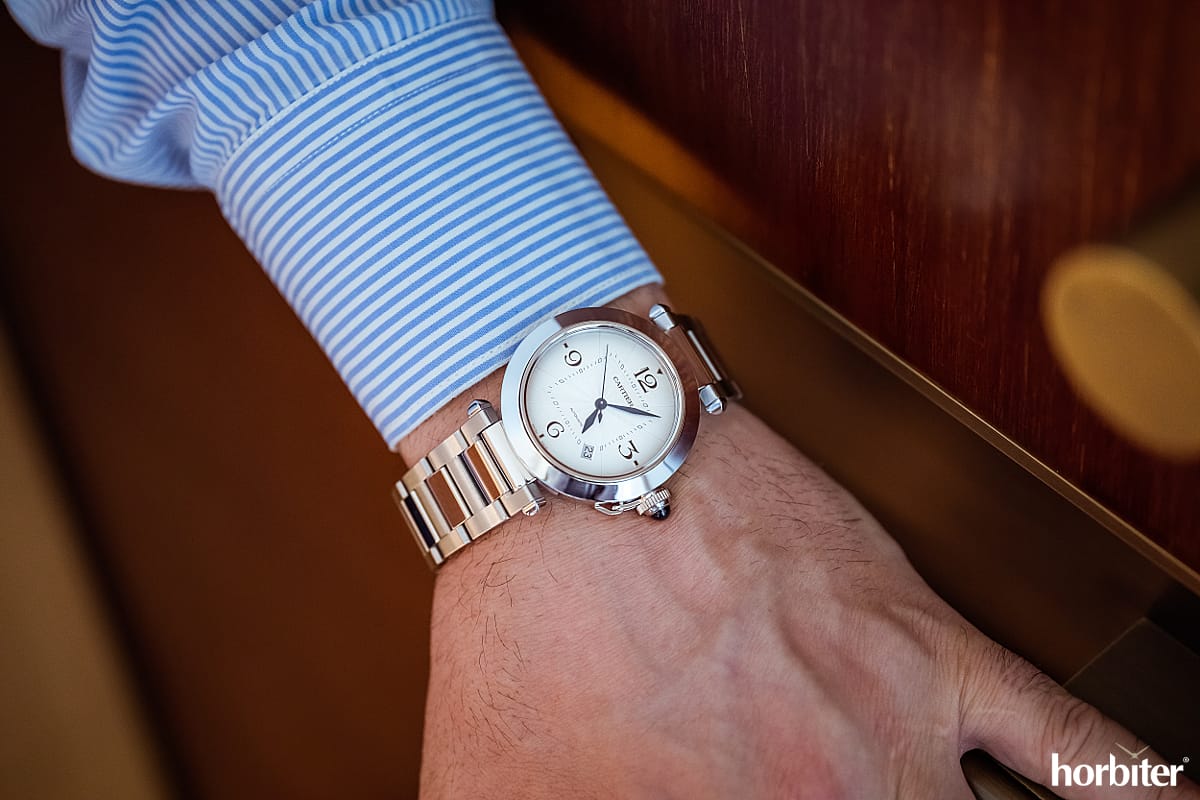
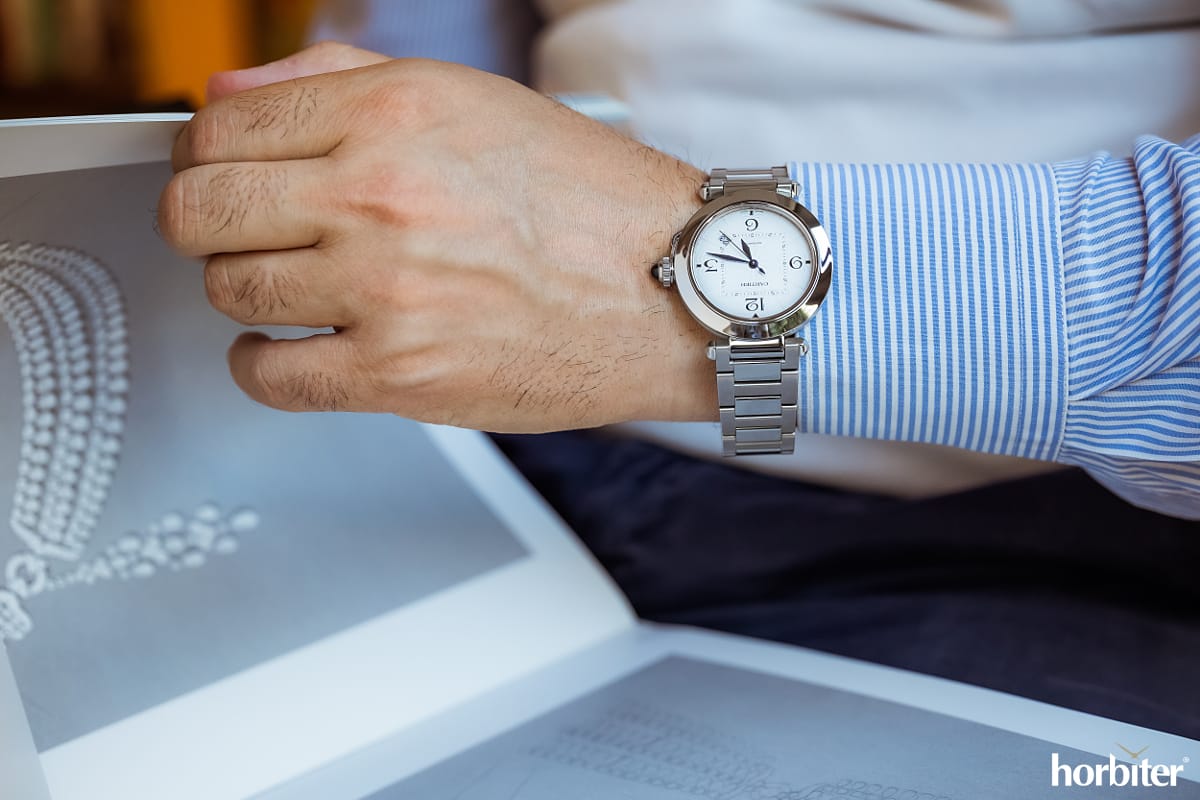
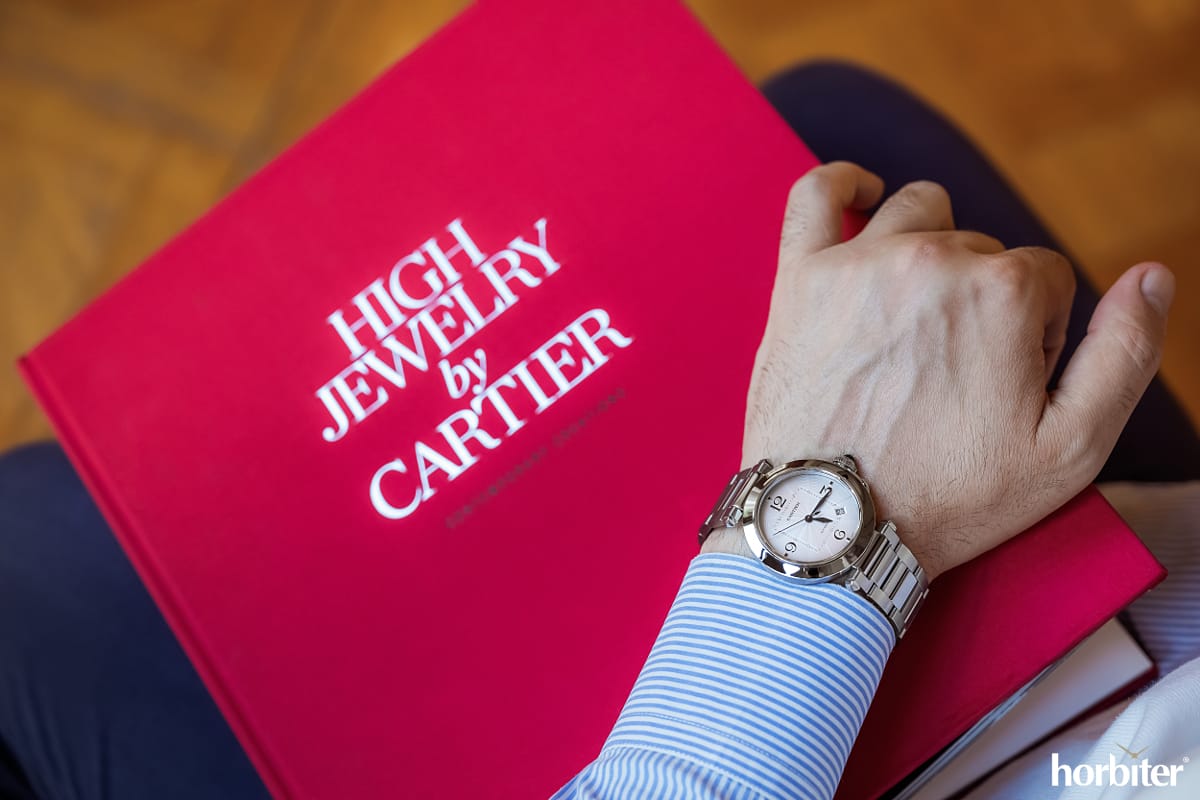
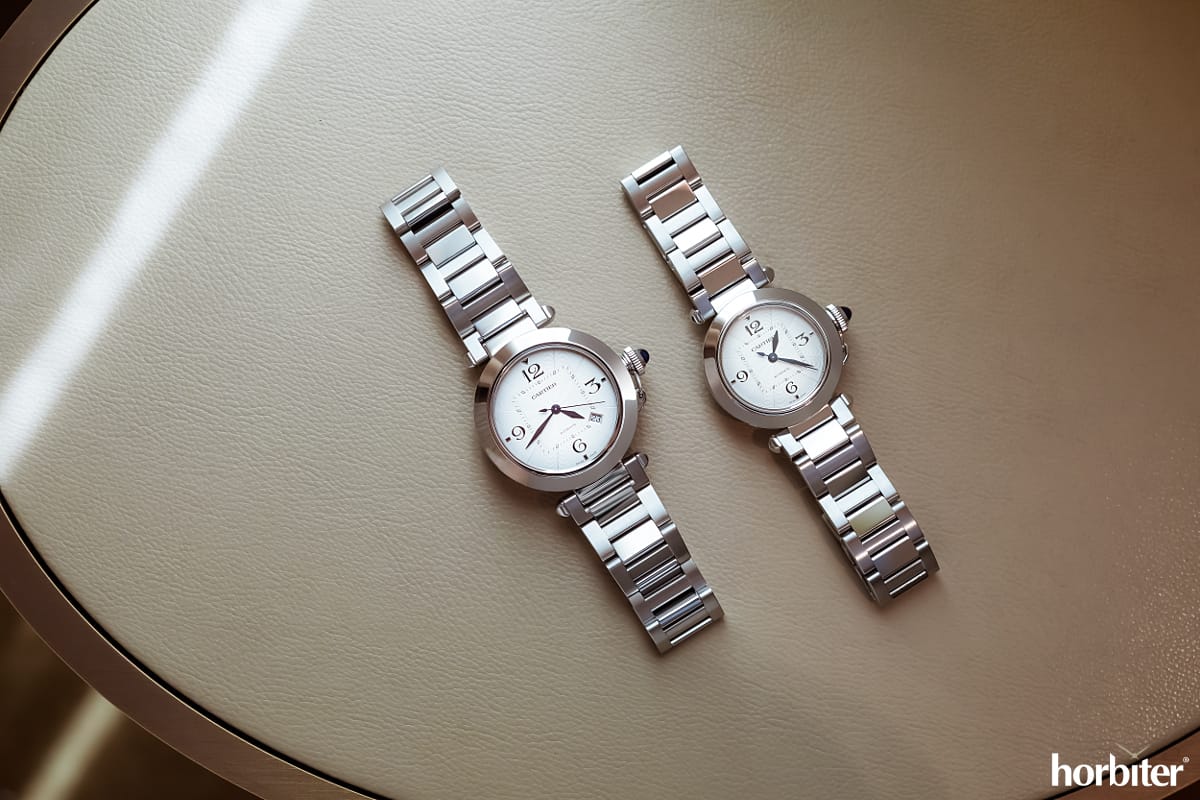
Cartier has barely changed the authentic Pasha‘s look, which was still up to the task, while it has upgraded or replaced what was outdated instead. The designers restyled dial and bezel: the former is sleeker and more sophisticated; the latter is fully polished. The 2020 Cartier Pasha de Cartier comes in two size options (41mm and 35mm, both featuring a thickness under 10mm).
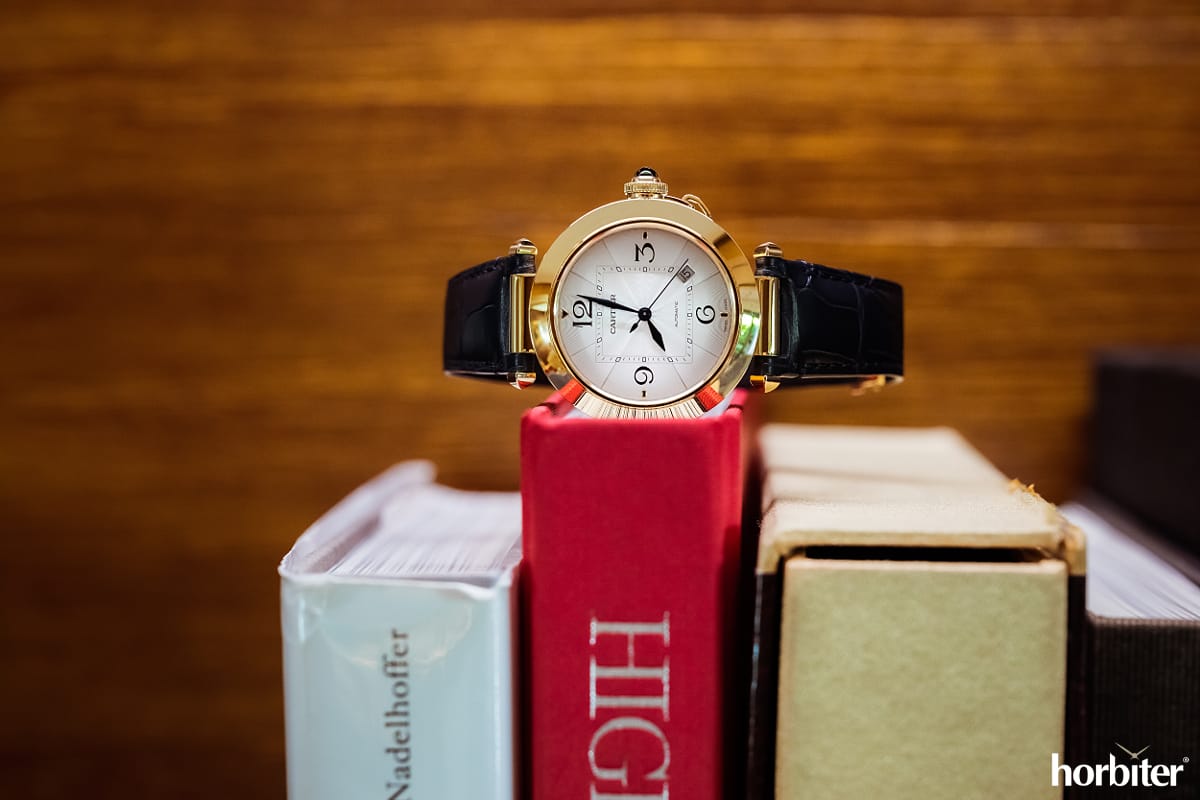
The signature black lines that once crossed the dial have been replaced by embossed lines running across the guilloche pattern, with the squared-in-a-circle design on top.
No date window available if you opt for the 35mm large option. It looks like a missed opportunity, in my opinion. Why shouldn’t a customer be offered with no date, no-frills, 41mmPasha? Four applied hour markers (the one at twelve is triangular) complete the fully overhauled dial, whose style is so recognizable.
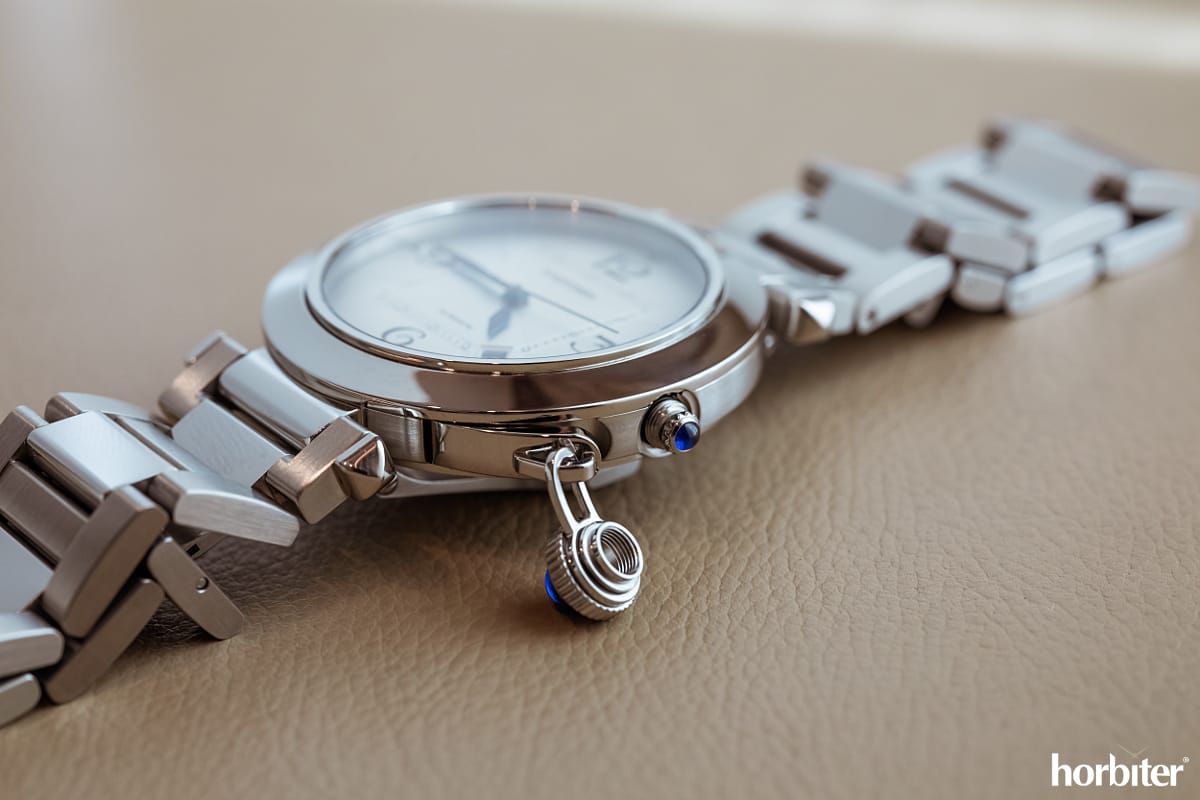
Regarding the new details, the crown has a cabochon-covered cap and a spinel on top; you are now allowed to engrave your initials, hidden behind that cover. All the new Pasha watches house the 4Hz1847 MC movement boasting 40 hours of maximum power reserve; it is automatic and offers excellent magnetic resistance, thanks to an additional soft iron case.
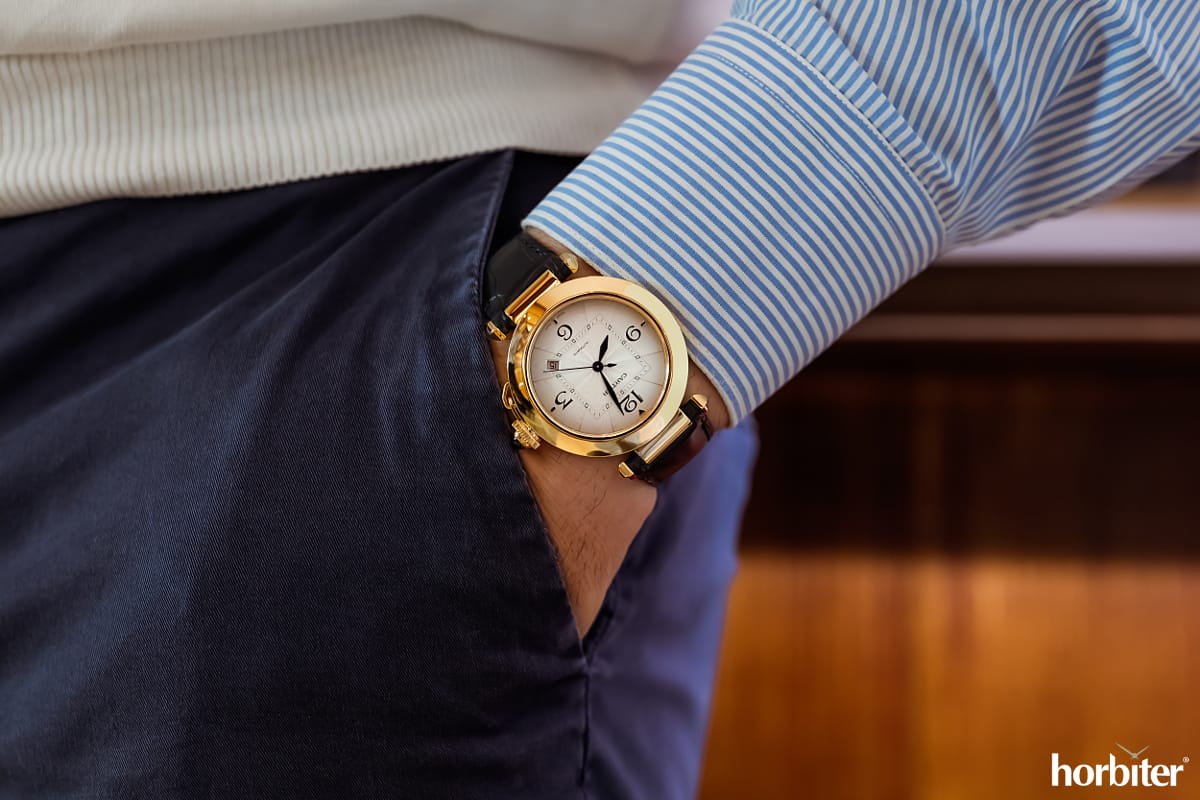
The steel Pasha is also available with a matching steel bracelet. It features Cartier‘s patented QuickSwitch and SmartLink systems to quickly change the bracelet and remove or add links, respectively. The Cartier Pasha de Cartier is available either in steel or gold (pink or yellow). Regarding the gold versions, I can’t understand why is the rose gold version only available as a 35mm sized case, while the yellow gold version comes as a 41mm timepiece instead.
The new Pasha‘s top-end offering includes high-end watches showcasing skeleton dial and movement, with or without a tourbillon. These two ones are not covered in this review but should be mentioned since each Cartier skeletonized wristwatch is highly sought-after and a class of its own.
In summary, I think Cartier has hit the nail on the head with the 2020 Pasha while staying true to the model’s original design codes. The updated and upgraded collection preserves the halo effect while closing the gap with the current Cartier offering.
Finally, I also think the yellow gold on leather strap option is the most attractive, the one to have got the most out of the redesign project. I hope we’ll see a Pashachronograph on sale anytime soon too, and Cartier will add a rubber strap on the likes of the Santos‘s; why not use the QuickSwitch system to turn a gold and ready-for-gala wristwatch into a yacht-club timepiece?
(Photo credit: Horbiter®)
Gaetano C @Horbiter®
In this article:
Perpetual Calendar
The perpetual calendar is a complication that adjusts the watch's calendar for varying months and leap years. This cycle will end in 2100, and the wearer should apply the first manual correction.
Chronograph
Complication that helps the wearer to measure time intervals without affecting the watch's standard time-telling function.
Calendar
A feature that shows the day of the month and, in some cases, the day of the week. Some calendar watches show the date on sub-dials, while others display the…
Bezel
The bezel is particularly useful on diving watches, allowing you to check dive times. In this case, it unidirectionally rotates and usually comes in two parts: a metal (or ceramic,…
Date
It indicates the date of the month. There are different types of display: via a window or a pointer, where an additional hand is usually placed centrally or on a…
Power Reserve
A mechanical watch feature displays, on the dial or the case back, the remaining power in a watch movement, showing the length of time until the timepiece must be rewound.
Crown
Placed on the case side, it winds the mainspring. When pulled out, it also sets the time and the date. A screw-down crown increases water resistance and protects the movement…
Case
It encases the mechanical movement and is crafted in one or more parts. It can also be a single piece, as with some professional diving watches, or made of unconventional…
Strap
A leather, rubber or other material band that secures the watch to the wearer's wrist.